
Texas is several climates in one state. The fence that lasts 20 years in Lubbock may fail in 10 in Beaumont. Here's how the common materials compare, and where each one makes the most sense.
Choosing a fence in Texas starts with three questions: what the fence needs to do, what the ground is like, and what the weather will throw at it. Privacy, pets, pools and livestock all point to different materials, and so do clay soil, coastal salt air and Panhandle wind.
Cedar: the Texas default
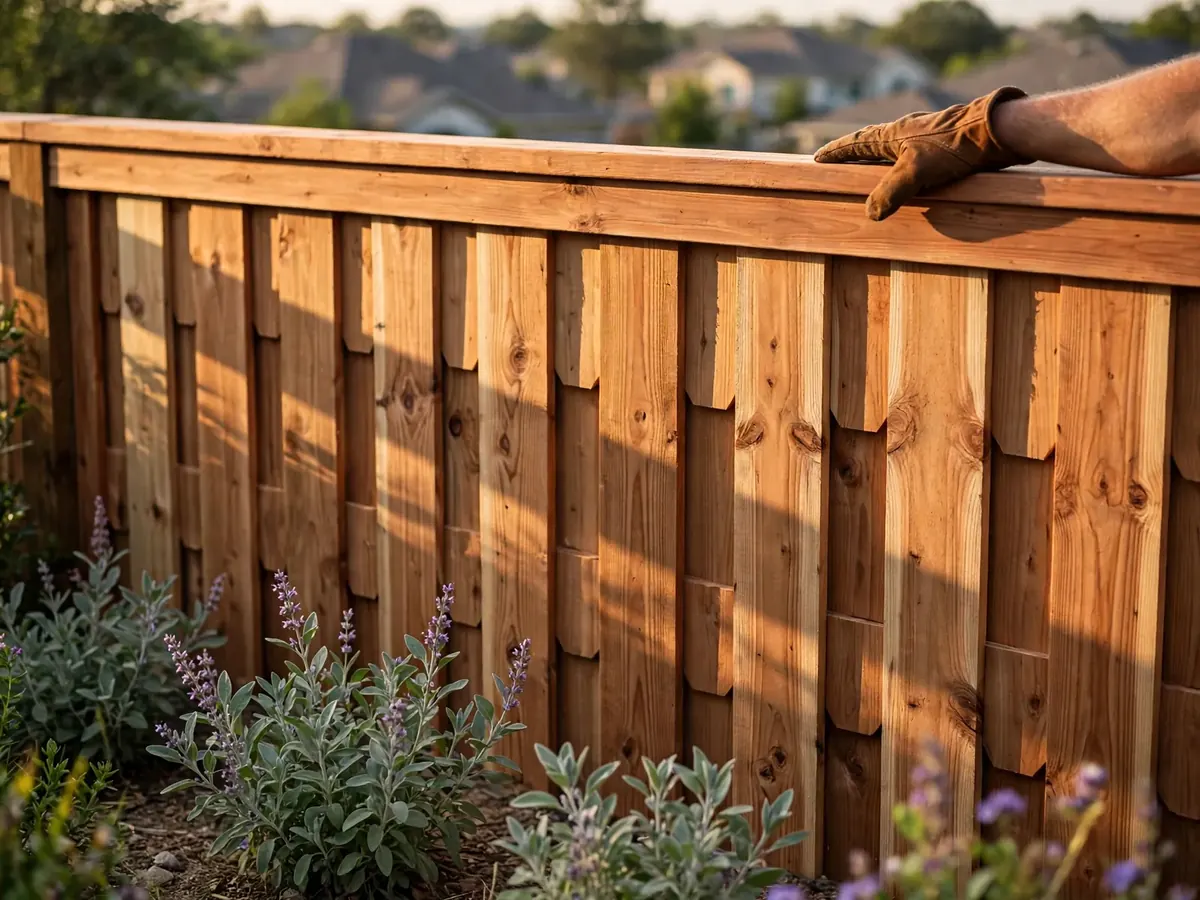
Cedar privacy fences are the most common backyard fence in the state. Cedar is lighter and more stable than pine, its natural oils slow rot and insects, and it takes a semi-transparent stain well. Left unstained, it weathers to silver gray within a season or two of Texas sun.
- Best for: backyard privacy in suburbs from Dallas to Houston to Austin.
- Watch for: wood posts rotting at the ground line, especially in wet clay. Pairing cedar pickets with galvanized steel posts is now common and usually outlasts all-wood construction.
- Upkeep: a stain every few years keeps the wood from drying out and cracking.
Pressure-treated pine
Treated pine costs less than cedar and is common in East and Southeast Texas. It's heavier, more prone to warping and shrinking as it dries, and needs sealing to look good. Treated posts resist rot better than untreated wood but still fail eventually in constantly wet soil.
Wrought iron, steel and aluminum
Ornamental metal fences define a yard without blocking the view. Most "wrought iron" fences sold today are welded steel with a powder coat; they're strong but rust where the coating is scratched. Powder-coated aluminum never rusts and is the better choice near the coast in places like League City, Kemah, Port Arthur and Corpus Christi.
- Best for: front yards, pools, greenbelts and estate entrances.
- Watch for: city front-yard height limits and pool barrier rules on height and picket spacing.
Vinyl
Vinyl doesn't rot, splinter or need stain, which appeals in humid, termite-prone areas. In sustained Texas heat, though, thin vinyl can sag or become brittle. If you choose vinyl, look for heavier-gauge, UV-stabilized products and lighter colors that absorb less heat.
Composite
Composite fencing blends wood fiber and plastic. It's denser than vinyl, handles heat better and resists rot and insects, but costs more up front than cedar. It suits homeowners who want the look of wood without restaining.
Masonry and block
In El Paso and parts of West Texas, concrete block walls topped with iron are the norm, because they handle desert sun and wind far better than wood. Elsewhere, masonry columns are often paired with wood or iron panels in upscale subdivisions. Cities usually require permits for masonry walls.
Pipe, cable and wire for acreage
On ranch land, steel pipe fencing, often built from used oilfield pipe, is a Texas tradition and lasts for decades. Pipe-and-cable costs less per foot. Barbed wire suits cattle; no-climb wire or pipe is safer for horses; woven field fence holds goats and sheep. On any wire fence, strong corner braces keep the run tight.
Match the material to your region
| Region | Main challenges | Materials that hold up well |
|---|---|---|
| Dallas–Fort Worth | Shrink-swell clay, hail, HOAs | Cedar on steel posts, ornamental iron |
| Houston and Gulf Coast | Humidity, termites, hurricanes, salt air | Cedar with galvanized hardware, aluminum, vinyl |
| Austin and Hill Country | Limestone, clay east of I-35 | Cedar on steel posts, pipe and wire on acreage |
| West Texas and Panhandle | Wind, caliche, dry heat | Steel-framed fences, masonry, pipe fencing |
| El Paso | Desert sun, wind | Block walls, wrought iron |
Before you choose
Check your HOA's guidelines and your city's height rules, find your property survey and think about what the fence must do in ten years, not just today. If you're unsure, talk with a fence builder who works in your area; they'll know which materials have held up on the lots around you.