
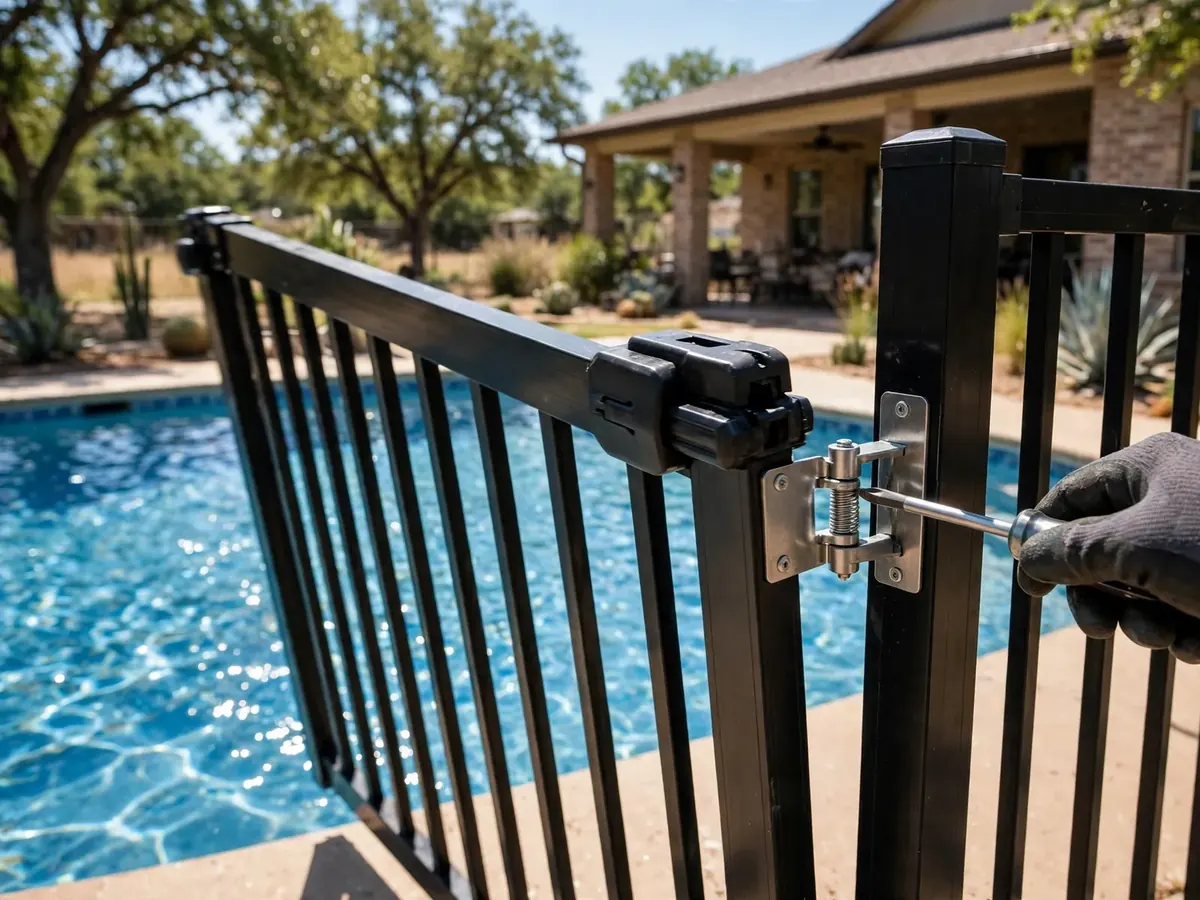
Backyard pools are part of Texas life. A properly built barrier and gate are the most important safety features around them.
Most Texas cities base their residential pool barrier rules on national model codes, and many HOAs add their own. The details vary by city, so always confirm with your local building department, but the core requirements are similar almost everywhere.
The barrier
- Height: model codes commonly require a barrier at least 48 inches high, measured on the side away from the pool. Some cities require more.
- Gaps: openings in the fence should be small enough that a young child can't slip through; model codes commonly use a 4-inch sphere as the test.
- Climbability: horizontal rails on the outside of the fence can act like a ladder. Designs with rails on the pool side, or closely spaced pickets, reduce that risk.
- Bottom gap: the space between the bottom of the fence and the ground must be limited, so a child can't crawl under.
The gate
The gate is the weak point of most pool barriers. Model codes typically require pedestrian pool gates to:
- open outward, away from the pool;
- close on their own from any open position;
- latch automatically, with the release mounted high enough to be out of a small child's reach.
Spring hinges and magnetic latches designed for pools meet these requirements. Ordinary gate hardware usually doesn't.
Materials that work well
Ornamental aluminum is a common choice for pool fences because it doesn't rust around pool water and is designed with code-compliant spacing. Powder-coated steel also works inland. Solid wood privacy fences can serve as part of a barrier if they meet height and climbability rules.
Rental properties
Texas has specific pool enclosure requirements for many residential rental properties under the Health and Safety Code. If you rent out a home with a pool, check those rules as well as your city's.
Test it monthly
Open the gate fully and let go. It should swing closed and latch every time. Check hinges, latches and any gaps that have opened up as posts shift. In clay soil, posts can move enough to stop a latch from catching.
Plan before you build
If you're adding a pool, plan the fence and gate with the pool, not after. A gate installer or fence builder familiar with local pool barrier rules can help you choose a layout that meets code and still looks good.