
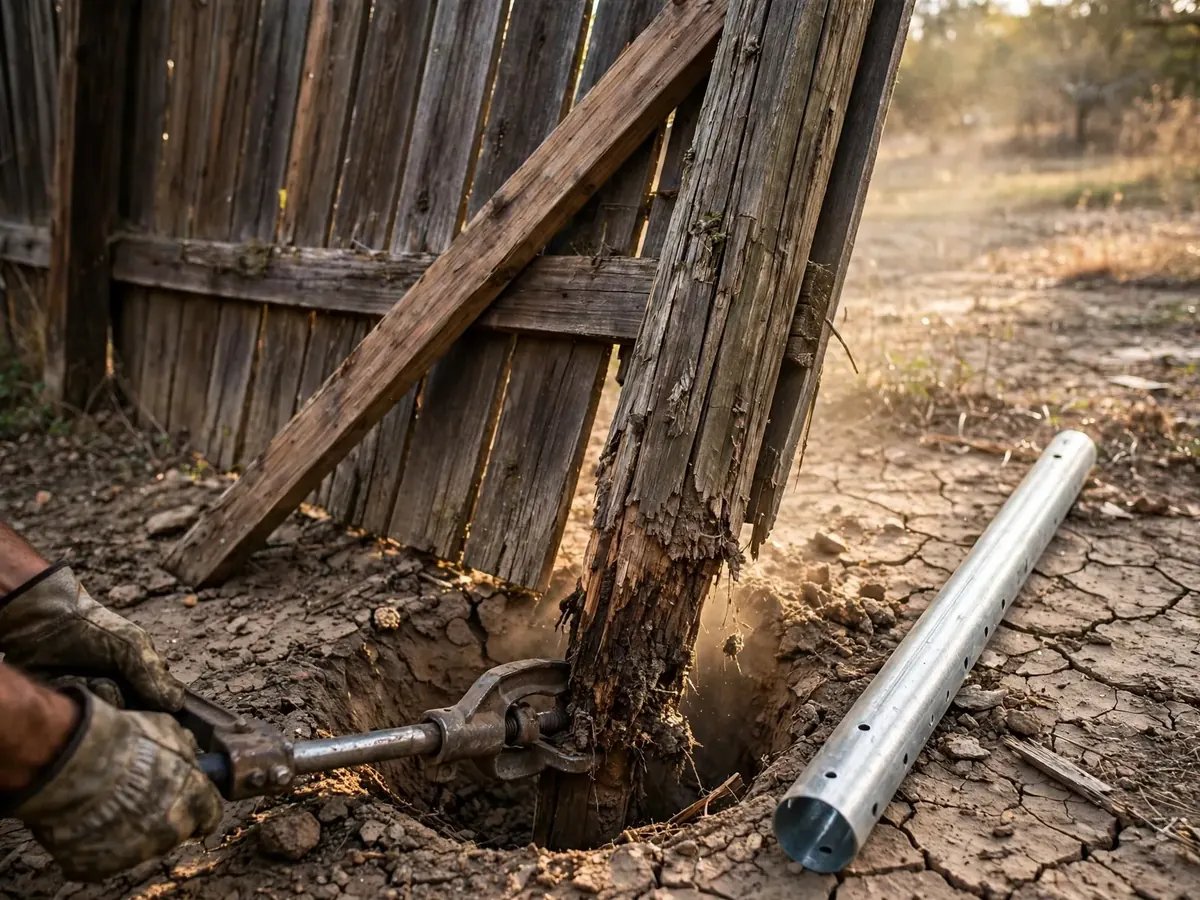
If every fence on your street leans a little more each year, the ground is probably to blame. Here's what's happening under your posts and how to fix it.
Much of North and Central Texas, from Dallas and Fort Worth to Waco, Temple and the east side of Austin, sits on the Blackland Prairie, where clay soils swell when wet and shrink and crack in drought. Houston's gumbo clay behaves similarly. That seasonal movement is hard on anything set in the ground, especially fence posts.
How clay pushes posts
When clay absorbs water it expands and grips the post and its concrete footing. As it dries, it shrinks and pulls away, leaving gaps. Over several wet and dry cycles, the footing works loose, tilts and lifts. Add a solid privacy fence catching wind, and the post leans.
Rot makes it worse
Wood posts set in clay sit in soil that stays wet after rain. Rot starts at the ground line, where air and moisture meet, and termites follow. A post can look fine above ground and be hollow at the base. If a section sways more at the bottom than the top, suspect rot.
Warning signs
- A fence line that's no longer straight, or that leans more after wet springs.
- Gaps around posts at the soil line in dry weather.
- Gates that latch in spring but not in late summer.
- Posts that move when you push them near the ground.
- Cracked or lifted concrete around post bases.
Repairs that last
Replace rotted posts with steel
Galvanized steel posts don't rot or attract termites. Wood rails attach with brackets, and the steel can be hidden behind the pickets. Replacing failed wood posts with steel is the most common lasting fix.
Go deeper
Deeper footings reach soil that moves less. A fence builder familiar with local soil will know how deep posts need to go on your lot.
Shape the concrete to shed water
Concrete crowned at the top so water runs away from the post, rather than pooling in a cup around it, keeps wood posts drier. A little gravel at the bottom of the hole helps drainage.
Manage water near the fence
Downspouts and sprinklers that soak the fence line make soil movement and rot worse. Redirecting water away from posts helps both.
When to repair and when to replace
If most posts are sound and only a few have failed, replacing those posts and straightening the line is usually the best value. If half the posts are rotted and the pickets are brittle and gray, a new fence on steel posts will often cost less over its life than repeated repairs.
A fence repair pro can check a few posts at the ground line and tell you which situation you're in.