
Local Conditions That Shape Fence Repair in Mesquite
Older neighborhoods here mix 1950s–1970s ranch homes with alley-access lots, where the back fence often runs along a shared alley. Much of Dallas County sits on Blackland Prairie clay that swells when wet and shrinks in drought, which slowly pushes fence posts and deck footings out of line. North Texas is one of the most hail-prone metro areas in the country, and spring storms regularly bring damaging straight-line winds.
- Older neighborhoods often have fences on wood posts that are near the end of their life.
- Cities set rules on front-yard fence height, corner-lot sight lines and masonry walls, so check before building.
Choosing Materials in Mesquite
Board-on-board cedar on steel posts is the default backyard fence here; ornamental iron or aluminum shows up in front yards and around pools, and masonry columns are common in newer subdivisions.
Repair or Replace?
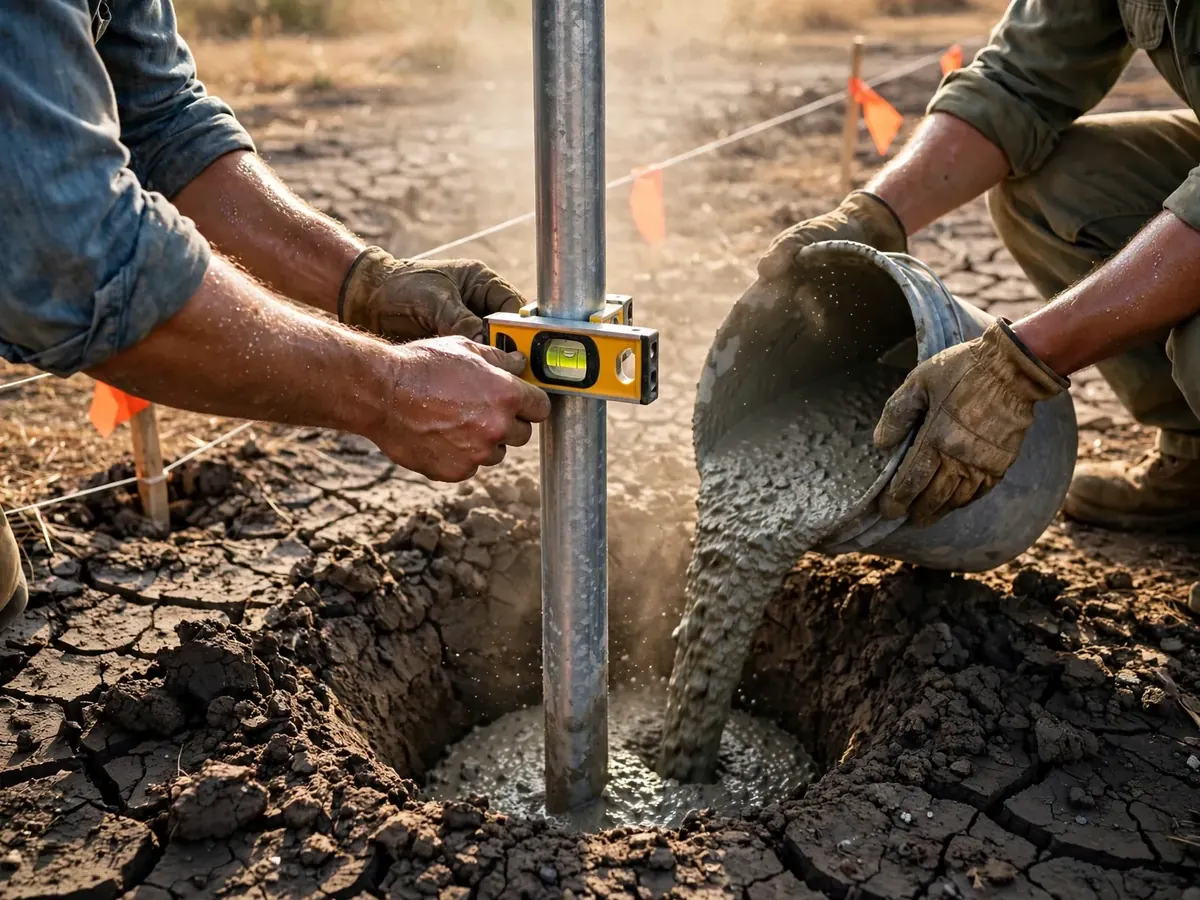
A quick way to decide: count the posts that move at the base. If it's one or two, repair. If it's most of them, the money is better spent on a new fence with steel posts.
Broken Pickets, Rails and Sagging Sections
Pickets crack and warp in dry heat, and rails split where they're nailed. If the posts are solid, replacing a few pickets or a rail is a small job. Matching weathered cedar is hard, but new wood blends in after a season, and a stain evens the look.
Storm-Damaged Fences in Mesquite
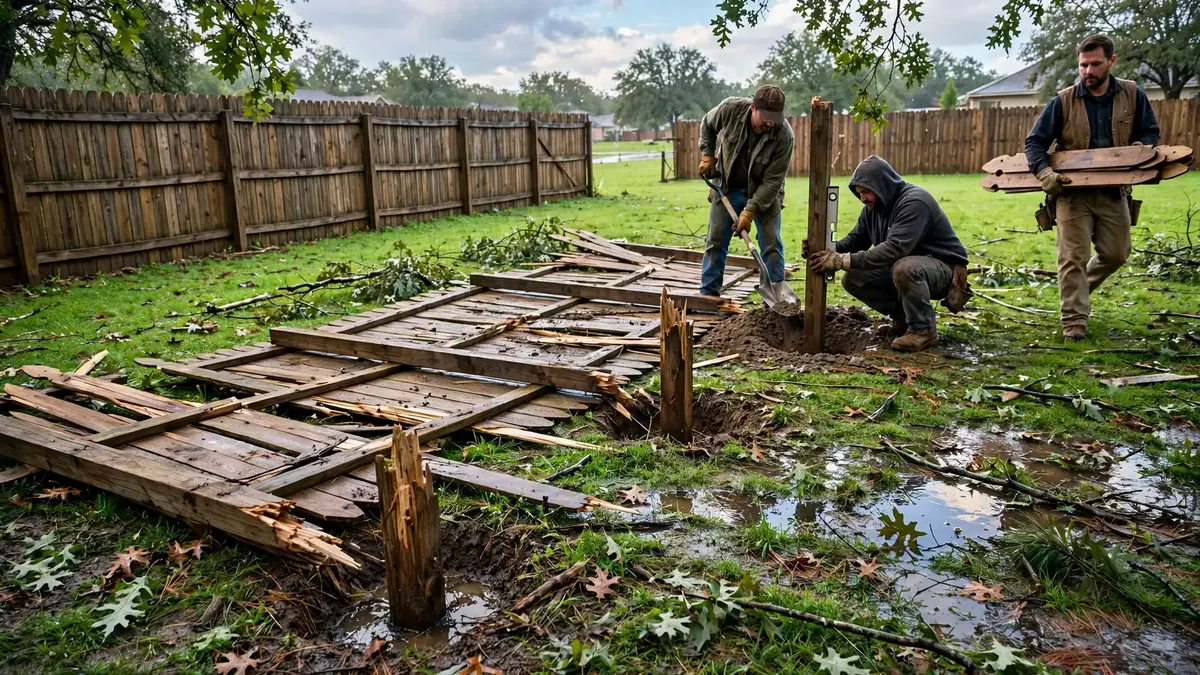
After a strong storm, look at where the fence failed. Posts snapped at ground level usually mean rot; posts pulled out with the concrete mean shallow footings or saturated soil. Replacing only the broken posts with steel posts can make the repaired section stronger than the rest.
Fence Damage From Trees and Roots
If a neighbor's tree damaged your fence, Texas law and your insurance policy determine who pays; take photos and talk with your insurer.
Rotted Post Replacement
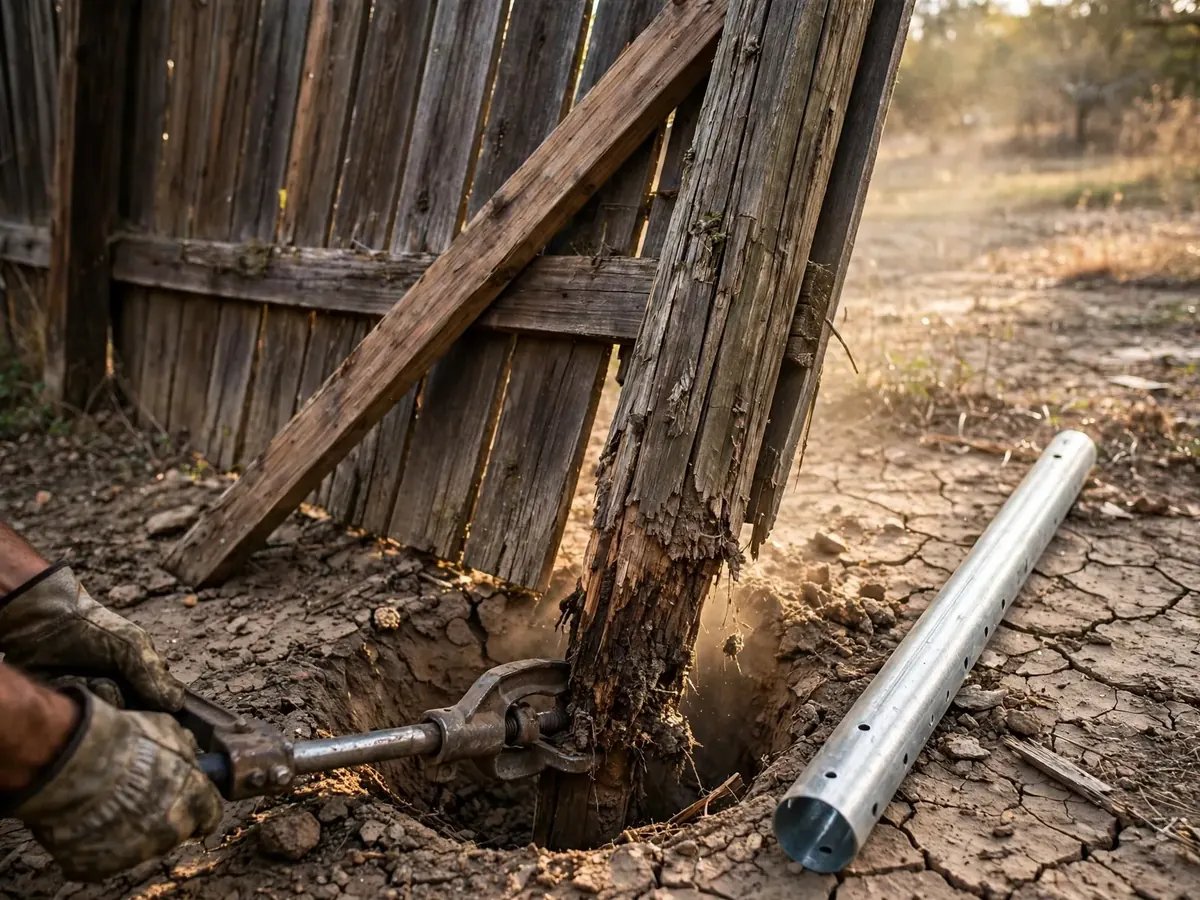
Termites and moisture are the main reasons wood posts fail early in humid parts of Texas. Steel posts with brackets are a common replacement that won't rot again.
Leaning Fences and Shifting Posts
Lean is worst after wet springs and dry summers, as the ground swells and shrinks. Fixing a leaning section early keeps it from pulling down the panels on either side.
When to Pick Up the Phone
- Sections leaning or swaying
- Storm or tree damage
- Broken or missing pickets
- Posts loose at the base
What to Have Ready
- Check whether pets can get out
- Find your survey if posts must be moved
- Note how many posts and feet of fence are affected
- Photograph damaged sections
Planning Fence Repair in Mesquite: What to Expect
Have the details from the checklist above ready, then call 877-753-1892. A fence repair pro serving Mesquite can tell you what the job involves, what affects the cost and whether anything needs attention right away.
877-753-1892Fence Questions From Mesquite Homeowners
Is storm damage to my fence covered by insurance in Mesquite?
Many homeowner policies cover fences damaged by wind or falling trees. Check your policy and document the damage.
Why does my fence keep leaning?
Rot at the base of wood posts and shifting clay soil are the usual causes. Deeper footings or steel posts fix it.
What should Mesquite homeowners know about fence projects?
Strong winds push on solid privacy fences, so closer post spacing and steel posts help them stay upright. HOA guidelines often set fence height, style, stain color and which side faces out.