
Local Conditions That Shape Fence Repair in Missouri City
Sugar Land, Missouri City, Pearland and Manvel are large suburban areas with master-planned communities, while farther south the land turns rural. Flat, low ground and heavy clay mean water sits around posts after storms, which speeds up rot at the base of wood posts.
- Humidity keeps wood damp longer, so rot at the base of posts is the most common failure.
- Cities set rules on front-yard fence height, corner-lot sight lines and masonry walls, so check before building.
What Holds Up Around Missouri City
Cedar privacy fences on steel posts in subdivisions, with ornamental iron around retention ponds and pools; wire and pipe fencing on acreages to the south.
Leaning Fences and Shifting Posts
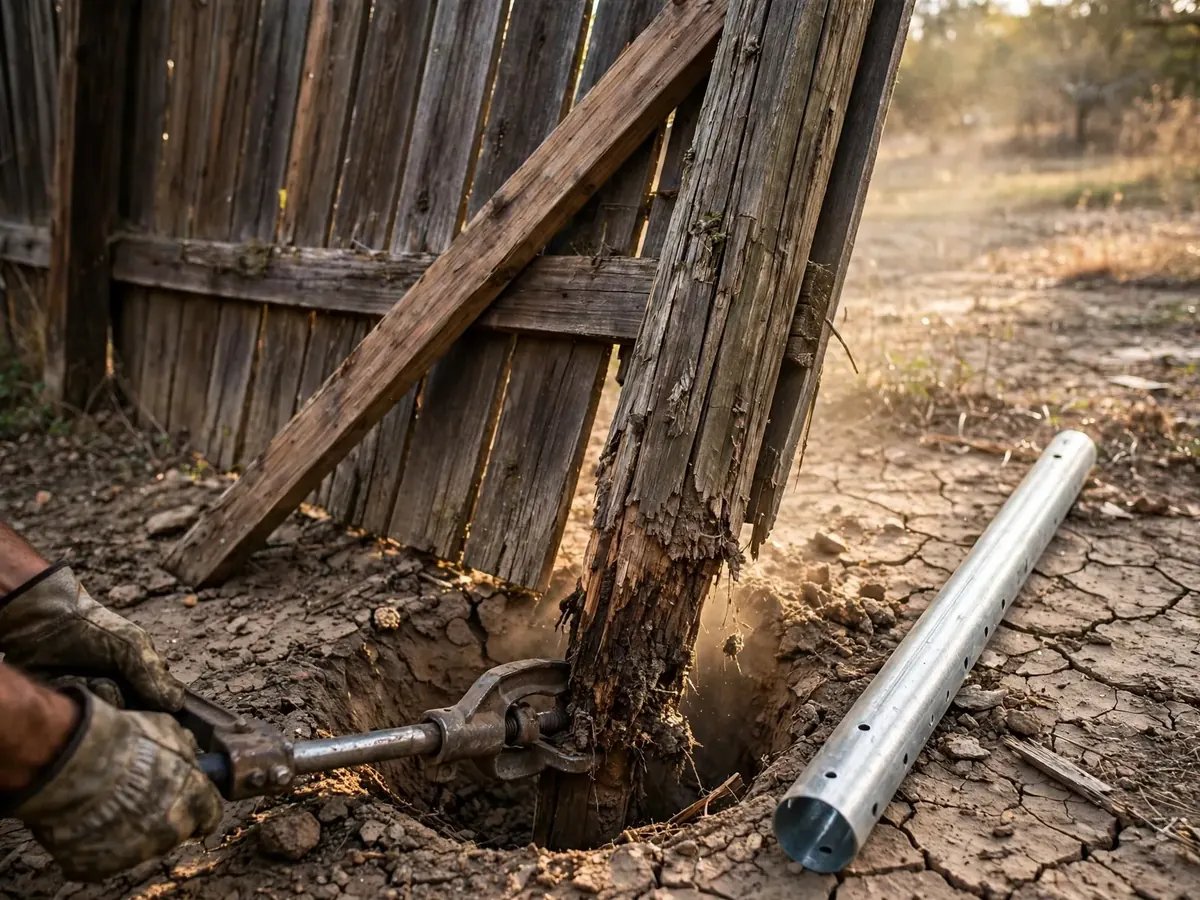
A fence that leans a little more each summer is telling you something about the ground underneath. Resetting the worst posts deeper, or switching them to steel, usually stops the drift without replacing the whole run.
Repair or Replace?
A quick way to decide: count the posts that move at the base. If it's one or two, repair. If it's most of them, the money is better spent on a new fence with steel posts.
Rotted Post Replacement
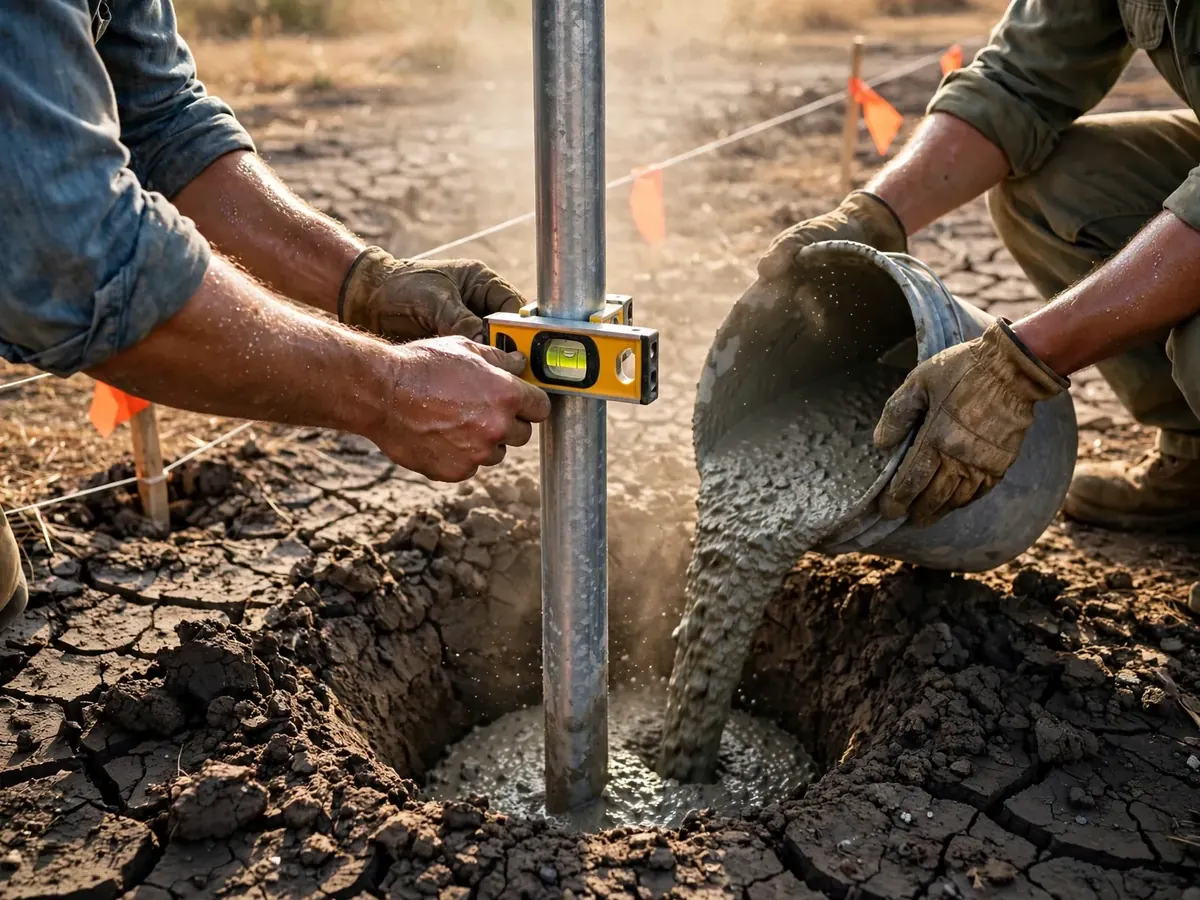
Dig a few inches around the base of a suspect post. Dark, soft wood that crumbles under a screwdriver means the post is done. Replacing it promptly keeps the rails and pickets on either side from cracking under the extra load.
Fence Damage From Trees and Roots
When roots have lifted a post, it can sometimes be shifted a foot or two along the line to clear them, with a short rail adjustment. That keeps the tree and the fence both healthy.
Storm-Damaged Fences in Missouri City
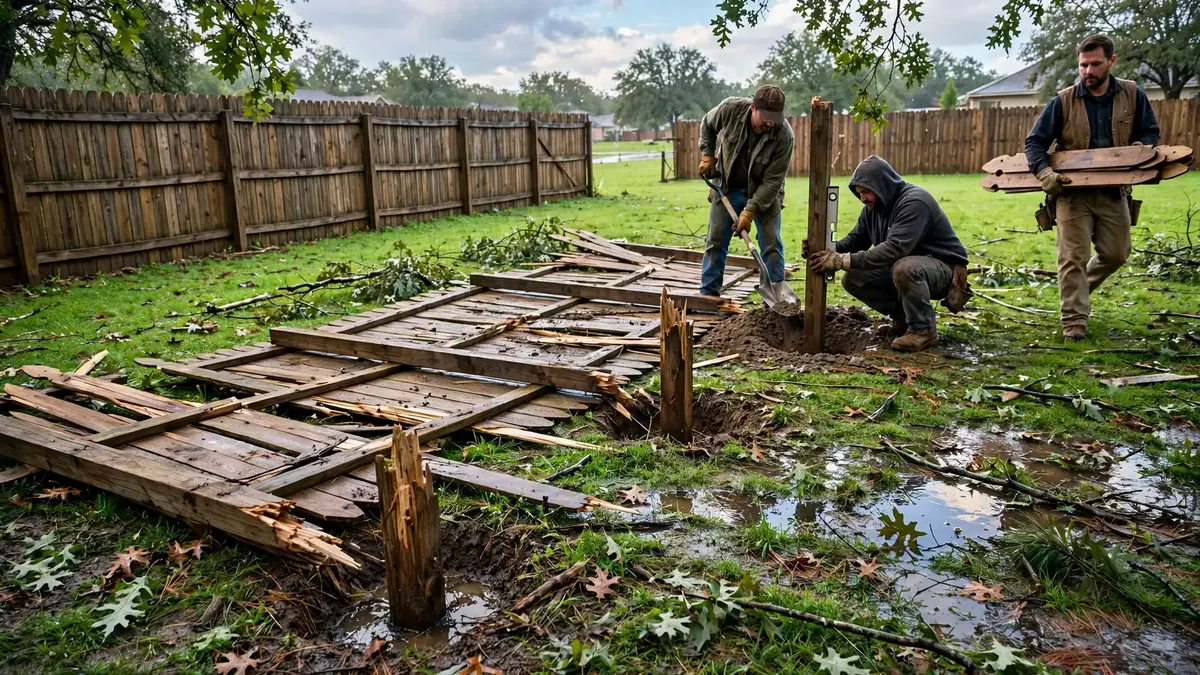
After a strong storm, look at where the fence failed. Posts snapped at ground level usually mean rot; posts pulled out with the concrete mean shallow footings or saturated soil. Replacing only the broken posts with steel posts can make the repaired section stronger than the rest.
Broken Pickets, Rails and Sagging Sections
A sagging section between posts usually has a broken or undersized rail. Adding a third rail or a center support stops the sag.
When to Pick Up the Phone
- Storm or tree damage
- Broken or missing pickets
- Posts loose at the base
- Sections leaning or swaying
Before You Call
- Find your survey if posts must be moved
- Check whether pets can get out
- Photograph damaged sections
- Note how many posts and feet of fence are affected
Planning Fence Repair in Missouri City: What to Expect
One call to 877-753-1892 gets the conversation started with a fence repair pro who works around Missouri City. Bring your measurements, photos and any HOA requirements.
877-753-1892Fence Questions From Missouri City Homeowners
Why does my fence keep leaning?
Rot at the base of wood posts and shifting clay soil are the usual causes. Deeper footings or steel posts fix it.
Is storm damage to my fence covered by insurance in Missouri City?
Many homeowner policies cover fences damaged by wind or falling trees. Check your policy and document the damage.
What should Missouri City homeowners know about fence projects?
Low ground that stays wet after storms speeds up rot at the base of wood posts. Hurricane and tropical storm winds flatten weak fences, so post depth and spacing are the first line of defense.