
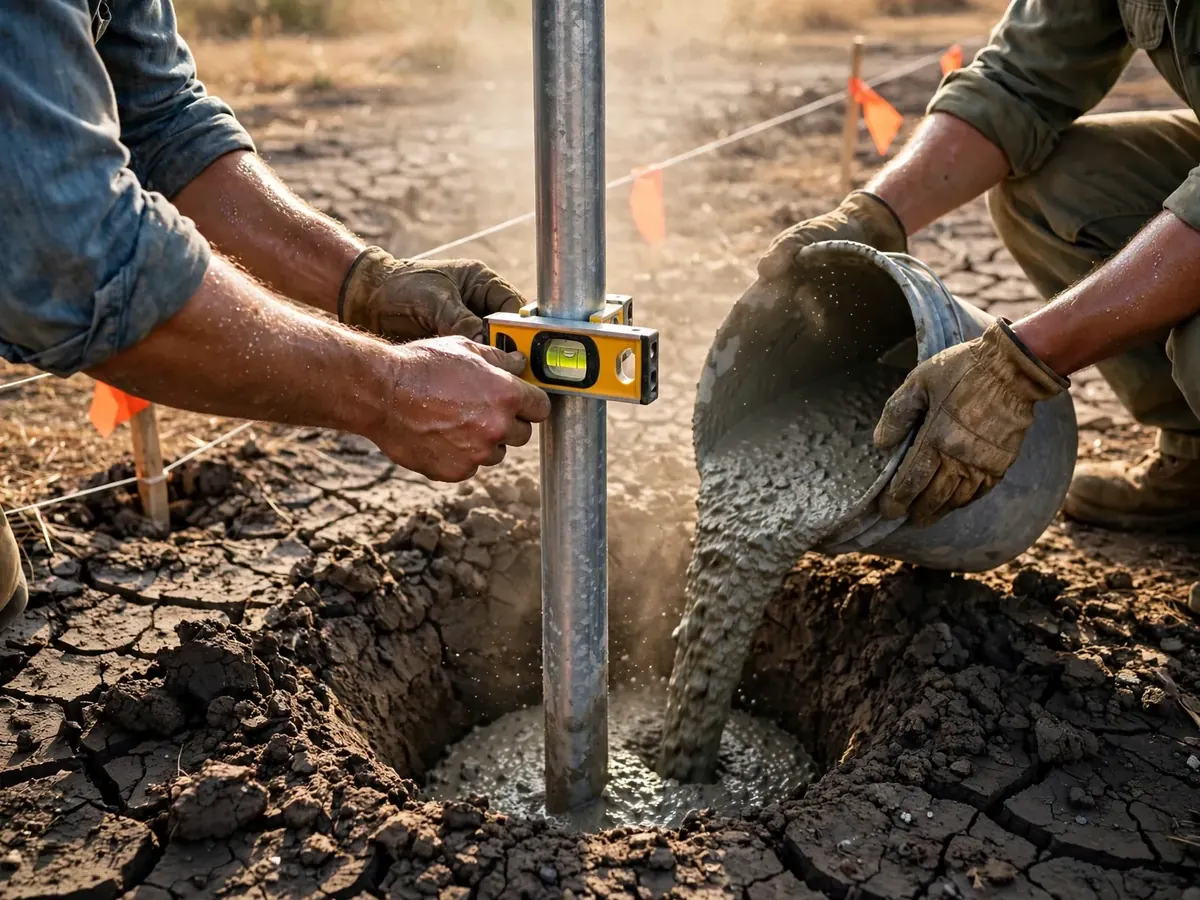
Fence Repair in San Antonio: Local Conditions
San Antonio's north side sits on limestone and caliche near the Hill Country, while the south side has heavier soils and older homes. Beyond the city, towns like Floresville, Pleasanton, Hondo and Devine are surrounded by ranchland. Summers are long and hot, which dries out and grays wood fences quickly without stain.
- Cities set rules on front-yard fence height, corner-lot sight lines and masonry walls, so check before building.
- Shrink-swell clay moves posts every season, so post depth, footing shape and steel posts matter more than picket style.
Materials That Suit San Antonio
Cedar privacy fences and wrought iron in the city; pipe, wire and pipe-and-cable fencing on ranch land to the south and west.
Broken Pickets, Rails and Sagging Sections
Loose pickets usually come from nails that rusted or backed out as the wood dried. Refastening with exterior screws and replacing cracked boards keeps the fence tight without a full rebuild.
Repair or Replace?
The answer depends on the posts. If most are solid and only a few sections are damaged, repair makes sense. If half the posts are rotten, pickets are gray and brittle, and the fence leans everywhere, replacement usually costs less over time.
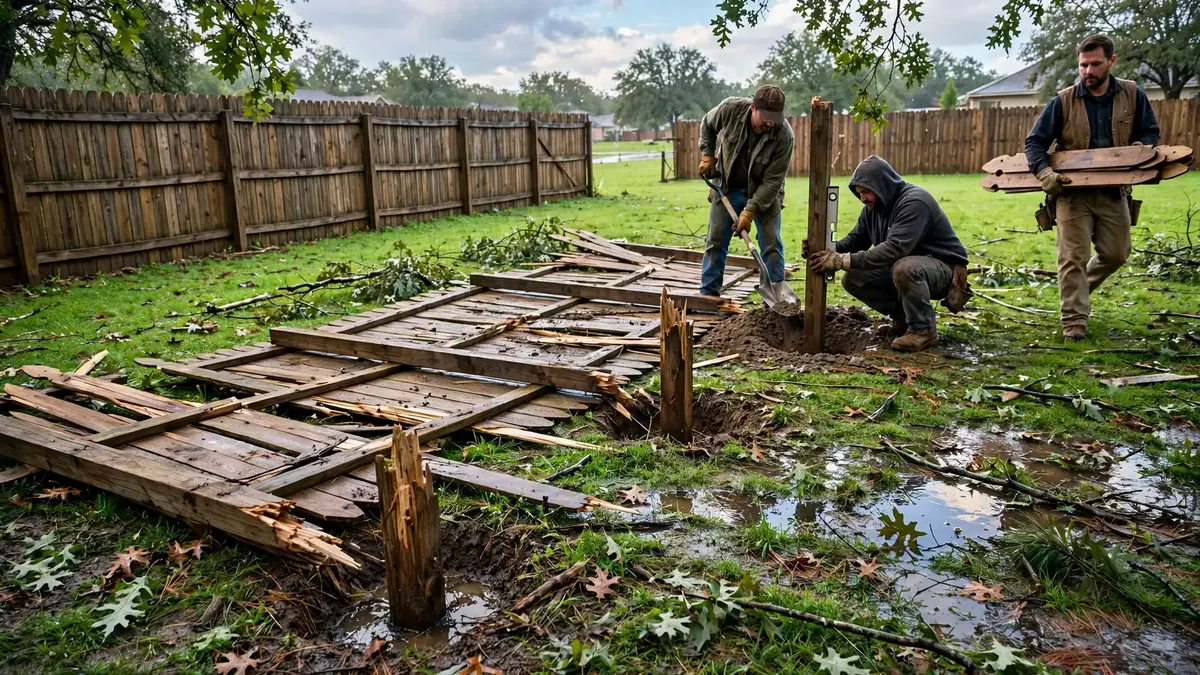
Storm-Damaged Fences in San Antonio
After a strong storm, look at where the fence failed. Posts snapped at ground level usually mean rot; posts pulled out with the concrete mean shallow footings or saturated soil. Replacing only the broken posts with steel posts can make the repaired section stronger than the rest.
Leaning Fences and Shifting Posts
A fence that leans a little more each summer is telling you something about the ground underneath. Resetting the worst posts deeper, or switching them to steel, usually stops the drift without replacing the whole run.
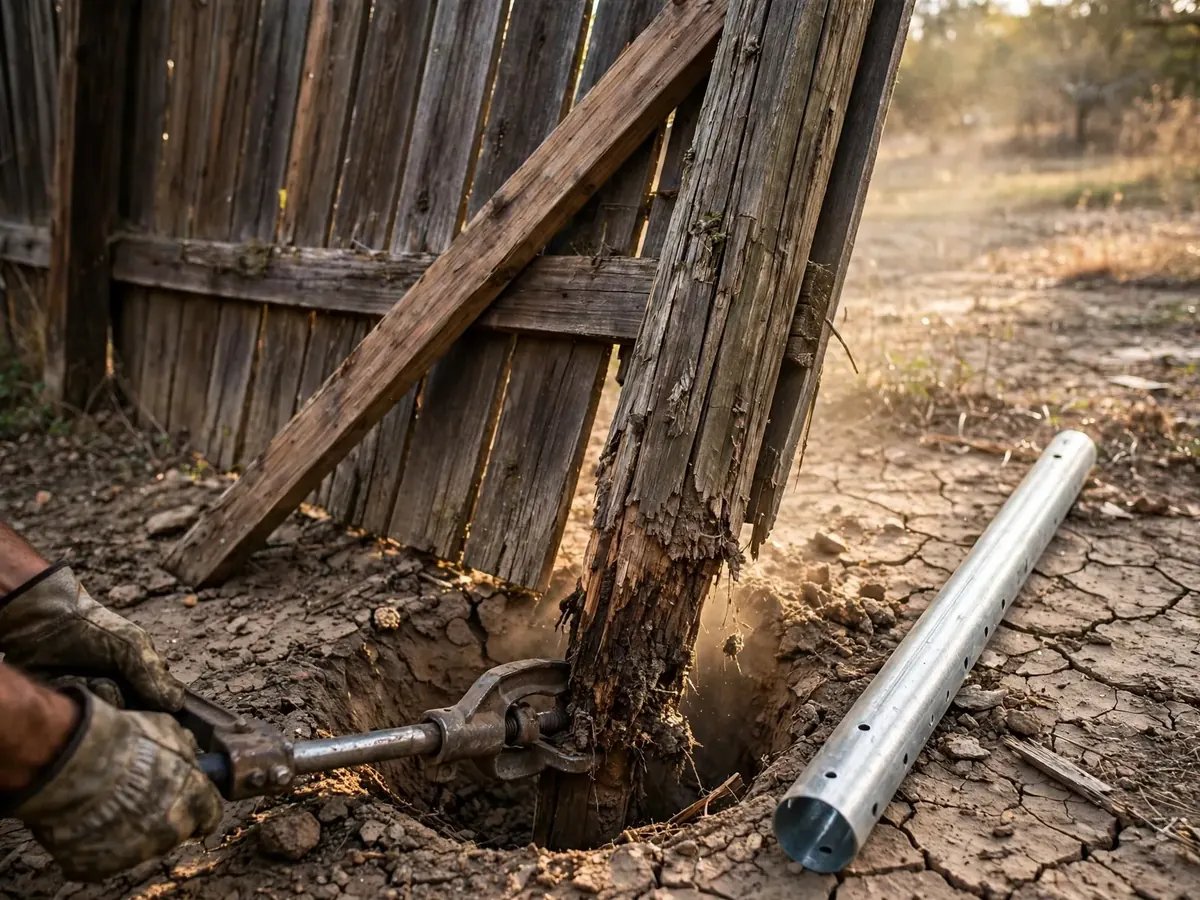
Fence Damage From Trees and Roots
Big trees near a fence line are beautiful but hard on fences. Roots lift posts and footings, and storms drop limbs onto panels. A fence repair pro can reroute posts around roots and rebuild crushed sections.
Rotted Post Replacement
Termites and moisture are the main reasons wood posts fail early in humid parts of Texas. Steel posts with brackets are a common replacement that won't rot again.
Signs It's Time to Call in San Antonio
- Sagging between posts
- Sections leaning or swaying
- Broken or missing pickets
- Storm or tree damage
Quick Checks Before the Call
- Photograph damaged sections
- Find your survey if posts must be moved
- Check whether pets can get out
- Note how many posts and feet of fence are affected
Fence Repair in San Antonio: Talk to a Local Fence Repair Pro
Call 877-753-1892 and describe the project, your city and your timeline. You'll be pointed to a fence repair pro who works in San Antonio. Ask about scheduling, permits and how the job will be priced before work begins.
877-753-1892Fence Questions From San Antonio Homeowners
Is storm damage to my fence covered by insurance in San Antonio?
Many homeowner policies cover fences damaged by wind or falling trees. Check your policy and document the damage.
Can one rotted post be replaced without replacing the fence?
Usually. The panels are detached, the old post and concrete are removed, a new post is set and the rails are reattached.
What should San Antonio homeowners know about fence projects?
Intense sun dries and grays unprotected wood quickly, so staining every few years pays off. Spring hail splits and pits pickets and dents metal fencing, so storm repairs are routine.