
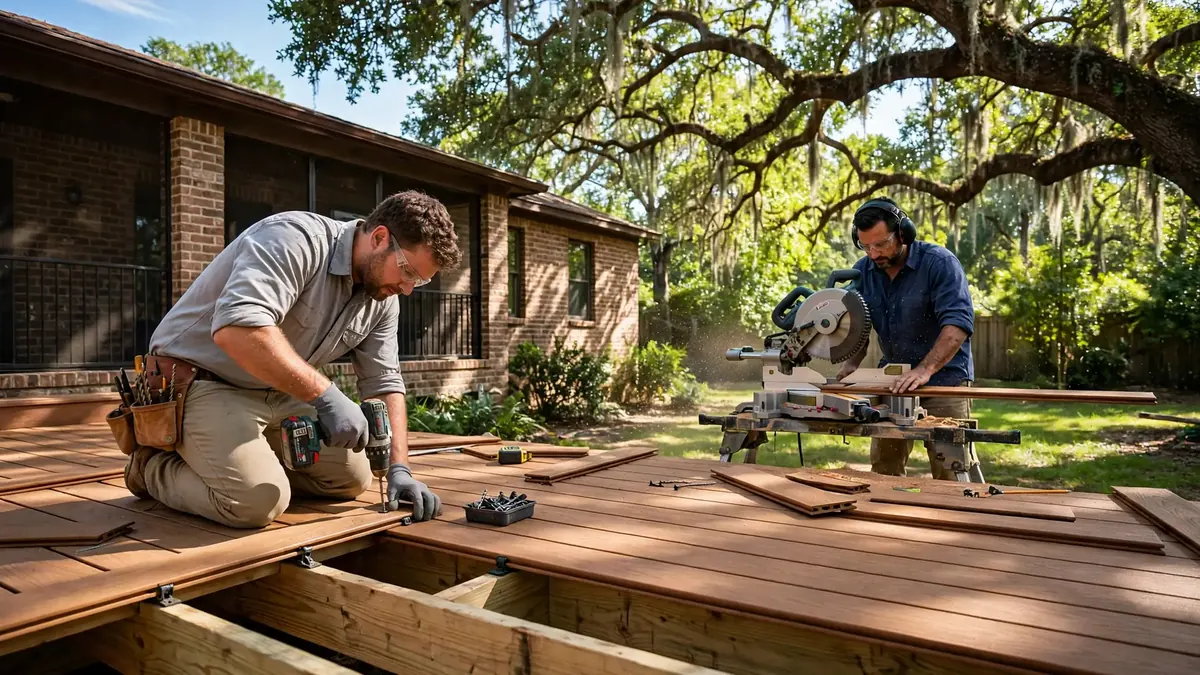
What to Know About Deck Installation in Burnet
Burnet sits in the Highland Lakes area of the Hill Country, on rocky ground west of Georgetown. Many homes sit on rocky acreage near Inks and Buchanan lakes.
Burnet is the Burnet County seat. Many Burnet neighborhoods have HOAs, so check their guidelines before choosing styles and colors. A deck that suits Del Valle's shifting clay isn't automatically right for Burnet, where shallow limestone matters more.
- Newer homes often have bare backyards ready for a first deck.
- Associations often review deck plans, colors and railings.
Railings, Stairs and Code Requirements
Cable and metal baluster railings keep views open; wood railings are more traditional. Check what your HOA allows. Stairs need consistent rise and run and a graspable handrail.
Stair rise and run are set by code so steps are comfortable and safe. In Burnet's newer neighborhoods, upgrades often replace the original builder materials.
One practical point: Ordering materials early helps avoid delays during busy seasons.
Permits and HOA Approval
Getting HOA approval and city permits started early keeps the project on schedule. Keep the permit and inspection records.
HOAs often review materials, colors and height before approving a deck. Burnet has its own rules on height, setbacks and permits, so check before building.
Composite vs. Wood Decking in Burnet
Ask the deck builder about heat ratings and surface temperatures. Capped composite boards have a protective shell that resists stains and fading.
Composite skips sanding and staining, but darker colors can get hot in full sun. In rocky parts of Burnet, drilling rather than digging is normal, and it's worth asking how the crew handles it.
One practical point: Composite boards last a long time, but the framing underneath still needs care.
Shade, Covers and Outdoor Living
Plan electrical outlets, lighting and fans during construction; it's easier than adding them afterward. Ceiling fans under a covered deck keep air moving on still summer evenings.
Track the sun on your yard before deciding where shade goes.
Footings in Clay and Limestone
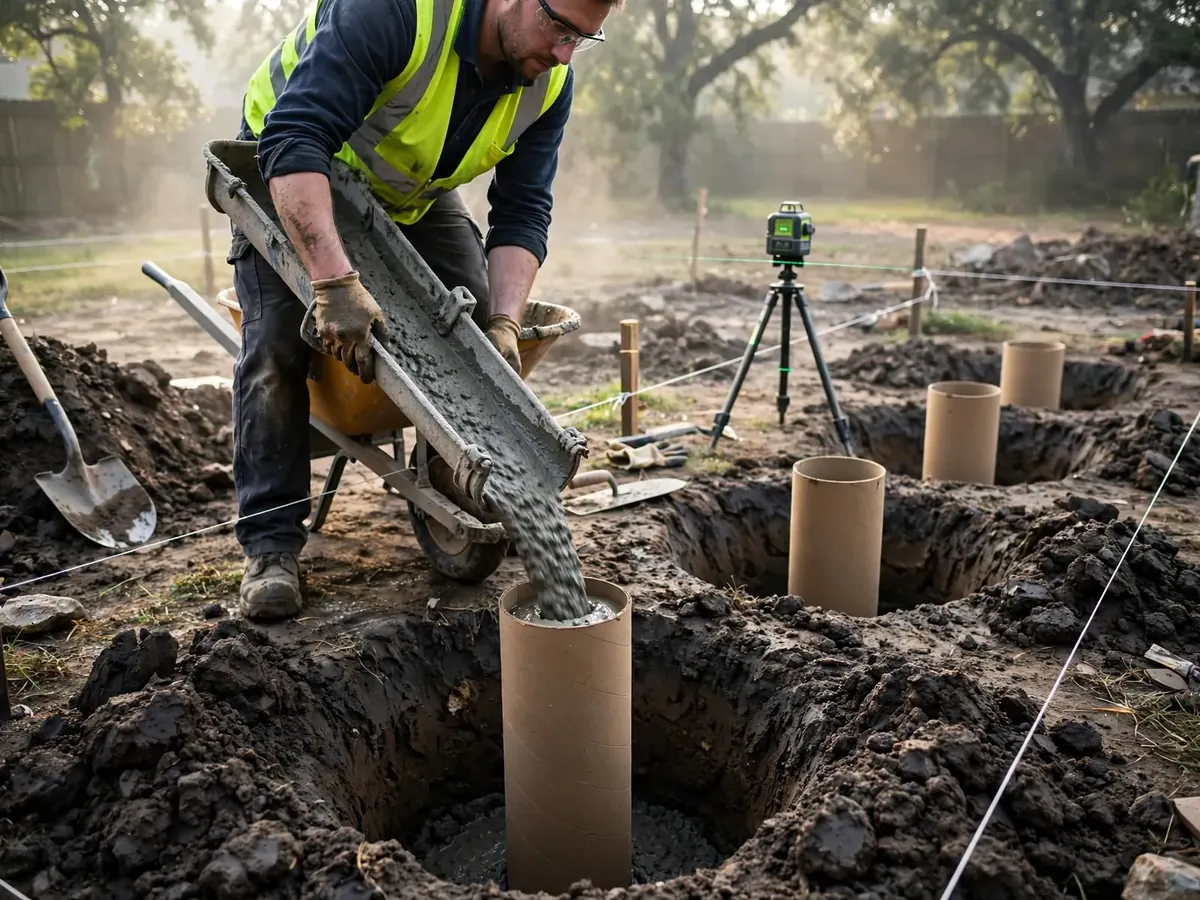
Footings are usually inspected before concrete is poured on permitted decks. Post bases keep wood posts off the concrete so they don't wick up water.
On rock, footings are often pinned into the stone instead of dug deep.
One practical point: Get the materials, dimensions and scope in writing.
More Deck Questions Around Burnet
Framing, Joists and the Ledger
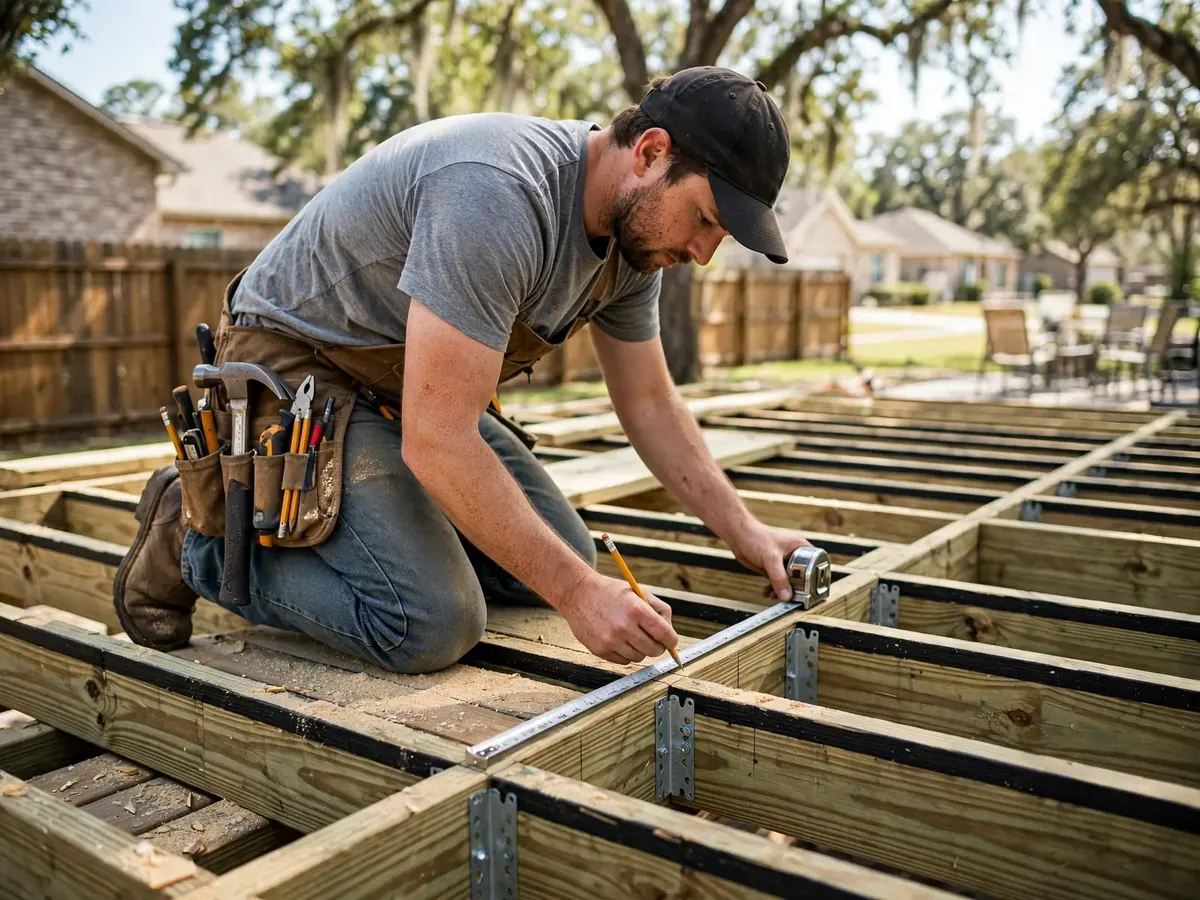
Joist spacing affects how the deck feels underfoot; closer spacing feels firmer, especially with composite boards.
Common Reasons Burnet Homeowners Call
Burnet homeowners usually reach out when one of these shows up:
- Old deck too far gone to repair
- Planning for shade and entertaining
- HOA-approved plans in hand
What to Have Ready
- Choose wood or composite
- Check HOA rules and get approval
- Note where the sun hits in the afternoon
- Note whether rock shows at the surface where work will happen
- Walk the property line or gate location and note slopes, creeks and rock outcrops
Planning Deck Installation in Burnet: What to Expect
Calling 877-753-1892 puts you in touch with a deck builder who knows Burnet. Expect questions about length, height, access and soil; the more you can answer, the more useful the conversation. Have a question about your deck? A quick call is the fastest way to get it answered.
877-753-1892Deck Questions From Burnet Homeowners
Is composite decking too hot for Texas?
It can get hot in full sun, especially darker colors. Lighter colors and shade help. Ask about this on your first call, since conditions vary across Burnet.
Is a deck a good DIY project in Burnet?
Framing and footings are where most DIY decks have problems. Low, simple decks are common DIY projects; elevated decks and ledger connections are where pros earn their keep.
What should Burnet homeowners know about deck projects?
Hail storms are common enough in Burnet that many owners plan for occasional repairs. Winter Storm Uri in February 2021 brought days of hard freeze across Central Texas. Compared with Hutto, where shifting clay is the bigger factor, Burnet projects are shaped more by shallow limestone.