
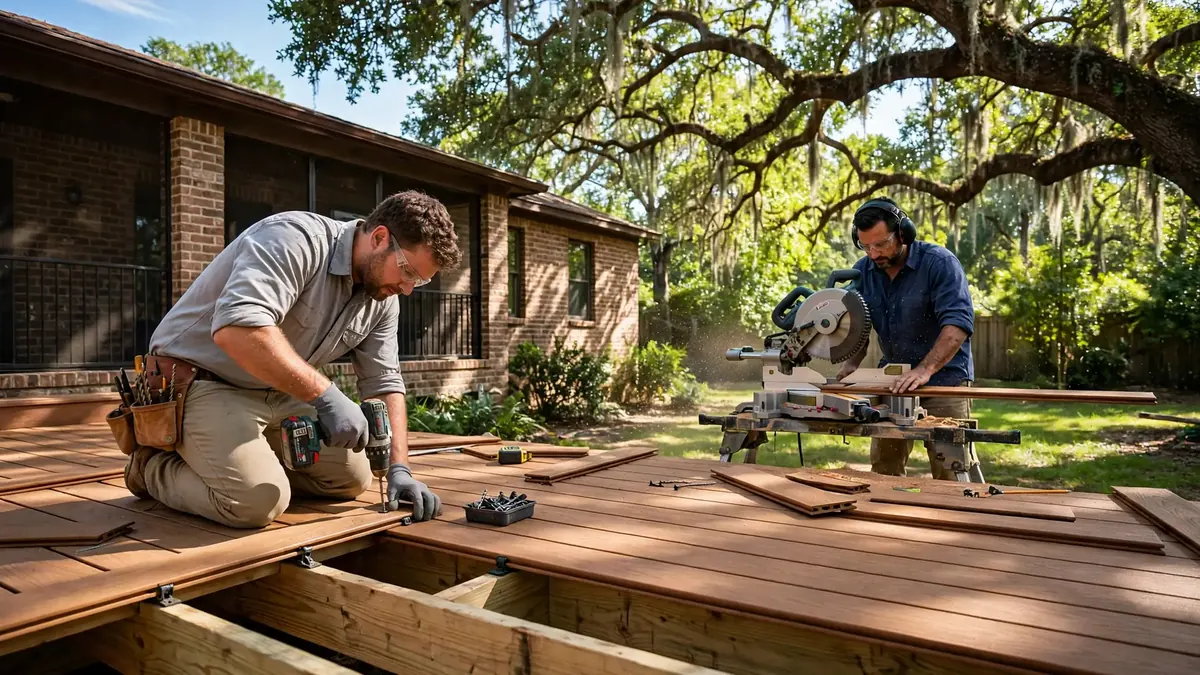
Common Situations Behind Deck Installation Services
Composite vs. Wood Decking in Texas
Composite resists rot and needs little upkeep but gets hot in full sun; wood costs less but needs regular sealing.
Footings in Clay and Limestone
Deck footings must sit on stable ground; clay moves and limestone may need drilling.
Framing, Joists and the Ledger
Joist spacing, hangers and a properly flashed ledger board make a deck safe and long-lasting.
Railings, Stairs and Code Requirements
Decks above a certain height need guardrails, and stairs need proper rise, run and handrails.
Shade, Covers and Outdoor Living
Pergolas, shade covers and fans make a Texas deck usable in summer.
Permits and HOA Approval
Attached decks, larger decks and higher decks usually need a city permit; HOAs may need to approve plans.
Signs It's Time to Call
- Bare backyard with no outdoor living space
- Old deck too far gone to repair
- Planning for shade and entertaining
- Sloped yard that needs a raised deck
- HOA-approved plans in hand
What to Have Ready When You Call
- Decide on size and how you'll use the deck
- Choose wood or composite
- Check HOA rules and get approval
- Note where the sun hits in the afternoon
Deck Installation Services by City
Open your city for local conditions, the options that hold up there and the number to call.
No matching city. Try another spelling, or call 877-753-1892.
Deck Installation Services: Common Questions
Do I need a permit to build a deck in Texas?
Often, especially if it's attached to the house, larger than about 200 square feet or more than 30 inches high. Check with your city.
Is composite decking too hot for Texas?
It can get hot in full sun, especially darker colors. Lighter colors and shade help.
How long does a wood deck last?
With good framing and regular sealing, many years; neglected decks wear out much faster in Texas sun.
What's the most important part of a deck?
The structure: footings, framing and a properly attached and flashed ledger.