
What to Know About Deck Installation in Round Rock
Round Rock sits along I-35 north of Austin, mostly on Blackland Prairie clay. Round Rock is a Williamson County city known for its sports complexes and tech employers.
Most homes are in subdivisions built since the 1980s. Freeze events in Round Rock can crack concrete that holds water, so drainage helps. A deck that suits Cedar Park's estate-size lots isn't automatically right for Round Rock, where shifting clay matters more.
- Newer homes often have bare backyards ready for a first deck.
- Associations often review deck plans, colors and railings.
Permits and HOA Approval
Building without a required permit can cause problems when you sell. Keep the permit and inspection records.
Permit review can take longer than building the deck, so start early. Many Round Rock neighborhoods have HOAs, so check their guidelines before choosing styles and colors.
A common concern: A good deck builder will talk about footings, ledgers and flashing, not just boards.
Composite vs. Wood Decking in Round Rock
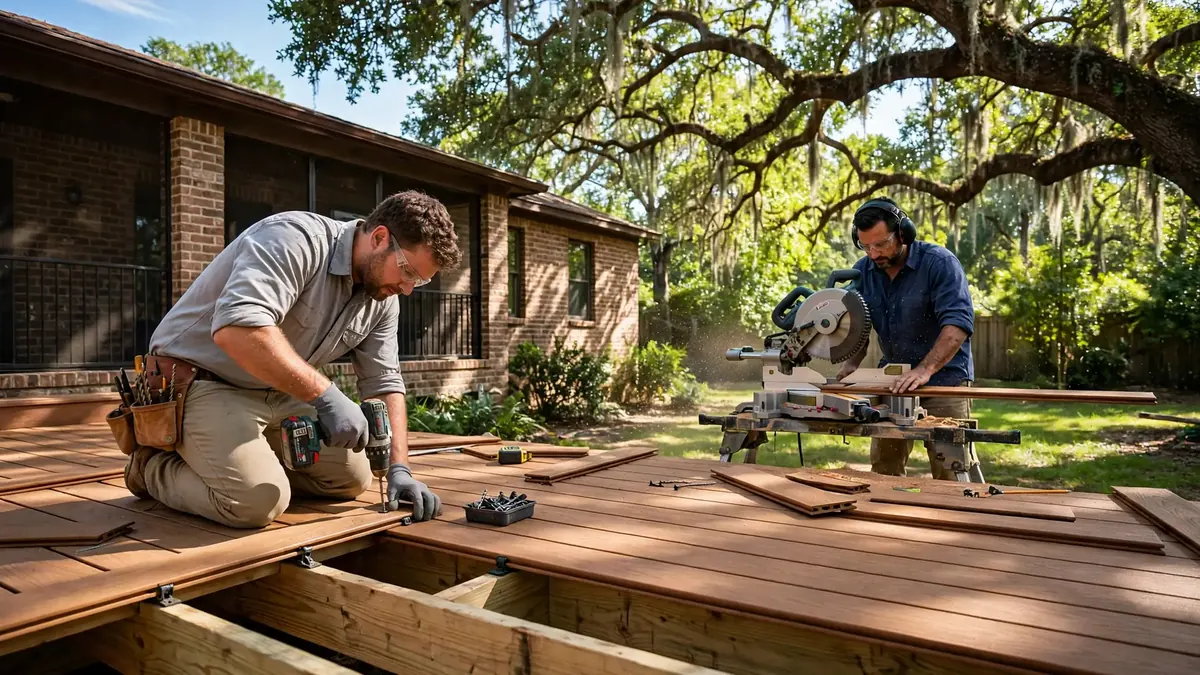
Many Round Rock homeowners pick wood for the frame and composite for the surface. The frame stays hidden and affordable while the boards you walk on need little upkeep.
Many homeowners use pressure-treated framing with composite boards on top. In Round Rock's newer neighborhoods, upgrades often replace the original builder materials.
Railings, Stairs and Code Requirements
Balusters are spaced closely so a small sphere can't pass through, a common code test. Stair handrails need to be easy to grip along their full length.
Decks more than about 30 inches above grade usually need railings. Round Rock has its own rules on height, setbacks and permits, so check before building.
If you're weighing it up: Once approved, many decks are built in a week or two.
Footings in Clay and Limestone
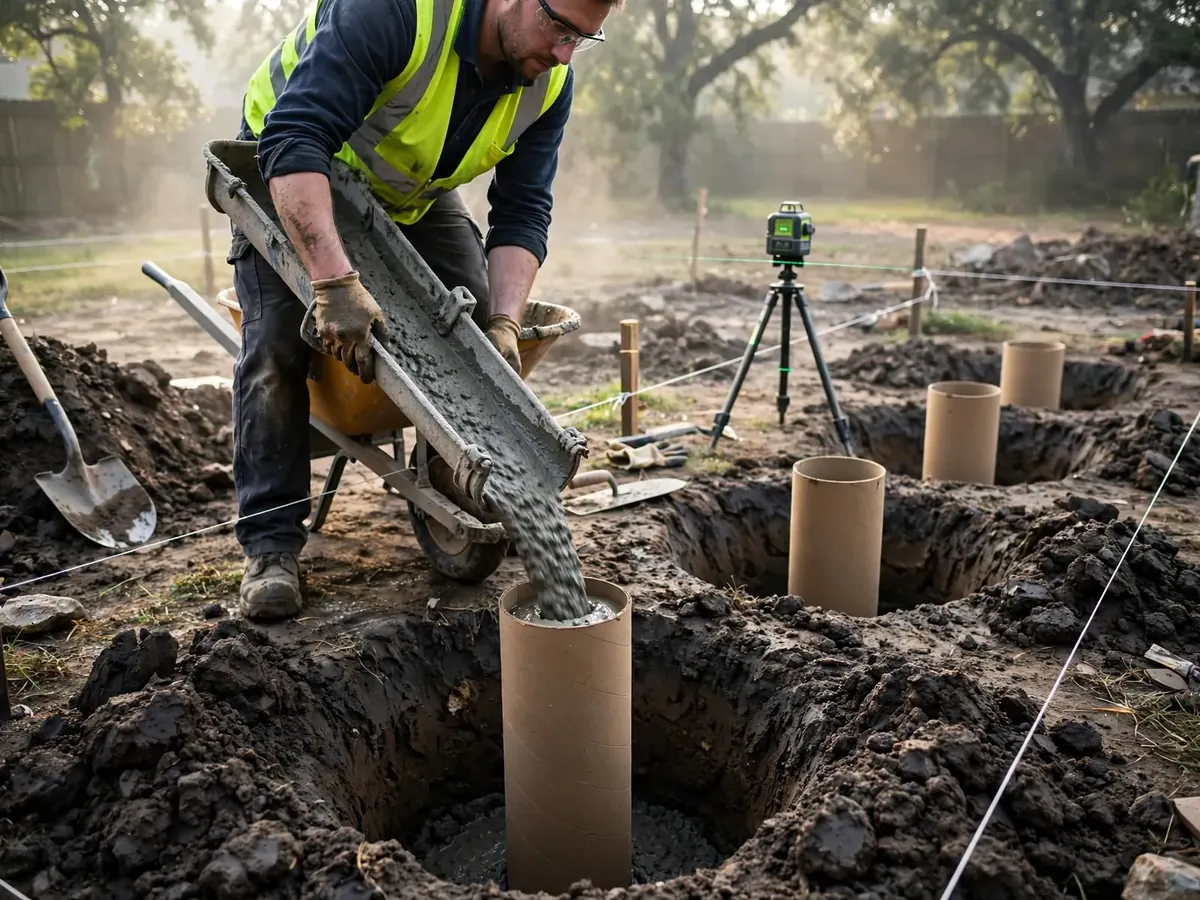
Footings are usually inspected before concrete is poured on permitted decks. Post bases keep wood posts off the concrete so they don't wick up water.
In clay, footings are set deeper to get below the most active soil. Round Rock's clay is the reason so many local decks lean; building deeper avoids joining them.
Framing, Joists and the Ledger
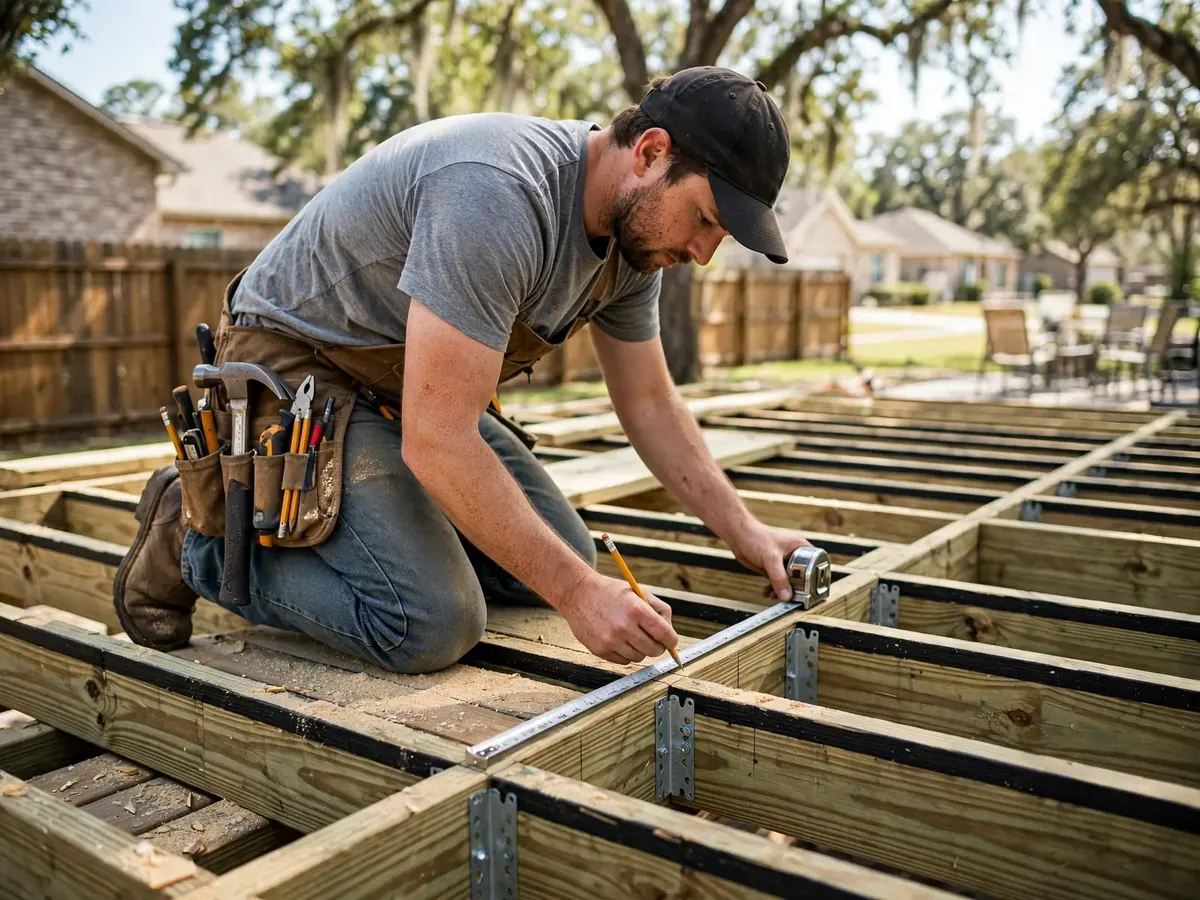
Joist hangers and structural screws make connections stronger than nails alone. Composite decking often requires closer joist spacing than wood.
Freestanding decks avoid a ledger entirely by using their own beam next to the house.
A question many homeowners raise: Sealing wood decks on schedule and keeping them clean adds years.
Shade, Covers and Outdoor Living
Plan electrical outlets, lighting and fans during construction; it's easier than adding them afterward. Outdoor kitchens on decks need fire-safe surfaces and clearances around grills.
Plan outlets, lights and fans before building, since adding them later is harder.
Signs It's Time to Call in Round Rock
Watch for these around your Round Rock property:
- Old deck too far gone to repair
- Sloped yard that needs a raised deck
- Planning for shade and entertaining
What to Have Ready
- Choose wood or composite
- Note where the sun hits in the afternoon
- Check HOA rules and get approval
- Ask neighbors whether they hit rock when they built
- Mention any leaning or settling you've seen nearby
Getting Deck Installation in Round Rock Started
Call 877-753-1892 and describe the project, your city and your timeline. You'll be pointed to a deck builder who works in Round Rock. Ask about scheduling, permits and how the job will be priced before work begins. Whether you're ready to book or just comparing options, call today.
877-753-1892Deck Questions From Round Rock Homeowners
How long does a wood deck last?
With good framing and regular sealing, many years; neglected decks wear out much faster in Texas sun. Ask about this on your first call, since conditions vary across Round Rock.
Should I build the deck myself?
Mistakes in footings and ledgers are expensive to fix later. Low, simple decks are common DIY projects; elevated decks and ledger connections are where pros earn their keep.
What should Round Rock homeowners know about deck projects?
Round Rock's limestone holds footings firmly once they're set, which is one advantage of the hard digging. West of I-35, Austin sits on Hill Country limestone that often needs a rock auger to set posts; east of I-35, Blackland Prairie clay swells and shrinks. Unlike Bastrop, where sandy soil drives most decisions, in Round Rock it's shallow limestone that deserves the closest attention.