
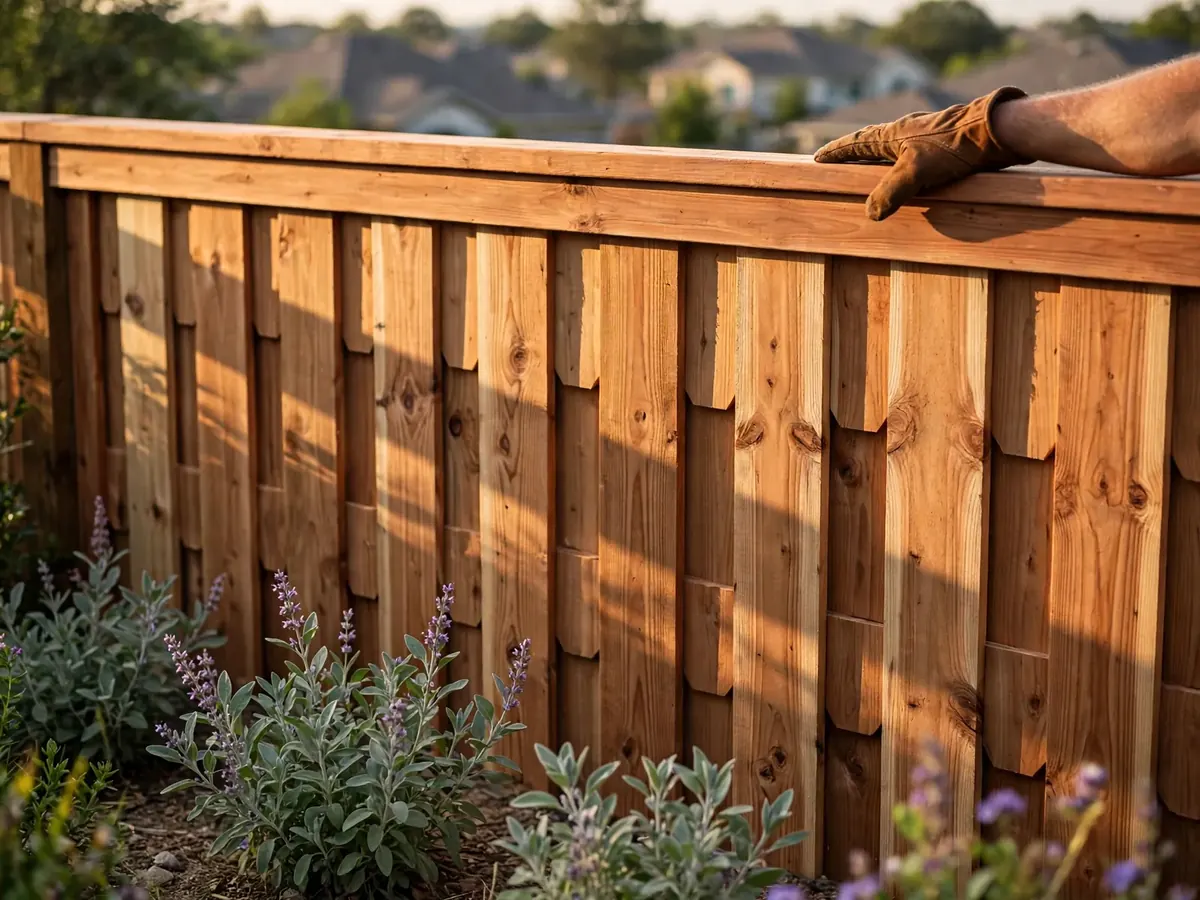
What to Know About Fence Installation in Cedar Park
Cedar Park sits northwest of Austin on Hill Country limestone. Cedar Park is a Williamson County suburb northwest of Austin.
Most homes are in HOA subdivisions on shallow, rocky soil. In Cedar Park's newer neighborhoods, upgrades often replace the original builder materials. Cedar Park and Taylor sit in the same part of the state, but Cedar Park deals more with shallow limestone, while Taylor contends with shifting clay.
- First-generation fences in newer neighborhoods are reaching the age where repairs give way to replacement.
- City ordinances cover fence height, front-yard placement and sight lines at intersections.
Materials That Suit Cedar Park
Cedar privacy fences on steel posts lead, modern horizontal designs are popular closer to the urban core, and pipe or wire fencing appears on acreage to the east and northwest. Spring hail around Cedar Park makes it worth choosing materials that are easy to repair.
HOA Rules, Permits and Property Lines
Many fence disputes start with a few inches. A survey or plat shows where the line is.
A short email to your HOA before choosing materials can save a rejected application. If your Cedar Park neighborhood has an HOA, approval is usually the first step and sets the style.
Something to keep in mind: Ask who handles permits, utility locates and HOA paperwork so nothing falls through the cracks.
Pet and Pool Fencing
If you're fencing for a pool, check your city's pool barrier rules for height, gaps and self-closing, self-latching gates. A mow strip of concrete under the fence line stops digging and makes trimming easier.
Pool fencing is a safety barrier, so gate hardware that self-closes and self-latches matters as much as the fence itself. Cedar Park's permit and zoning rules can shape the design, so check them early.
Cedar Privacy Fences in Cedar Park
Six-foot cedar privacy fences are the standard backyard choice around Cedar Park. Western red cedar costs more than the more common Texas or Japanese cedar but holds its shape better; ask which species you're getting.
Ask for ring-shank or screw fasteners rather than smooth nails; as cedar dries and swells through the seasons, smooth nails slowly back out and pickets start to rattle.
Before you decide: Rain delays are common in the spring storm season, so build a little slack into your plans.
Wrought Iron and Aluminum Fences
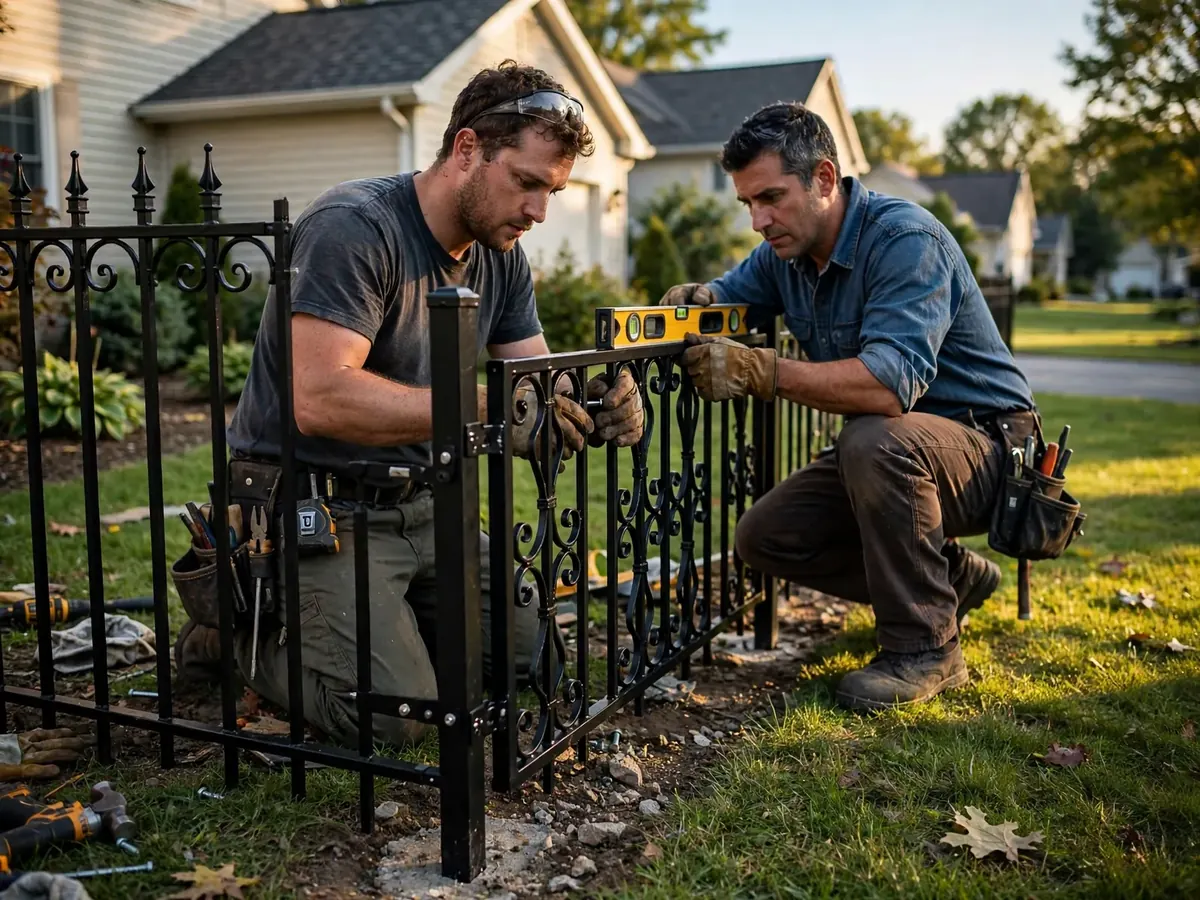
Ornamental fencing is common in Cedar Park for front yards, along greenbelts and around pools. Ornamental aluminum and steel panels are designed with those rules in mind; confirm the requirements with your city.
Ornamental fencing is a good fit where you want security without blocking breezes or views. On larger Cedar Park properties, the fence is part of the home's curb appeal, so design and materials get more attention.
Horizontal and Modern Fence Designs
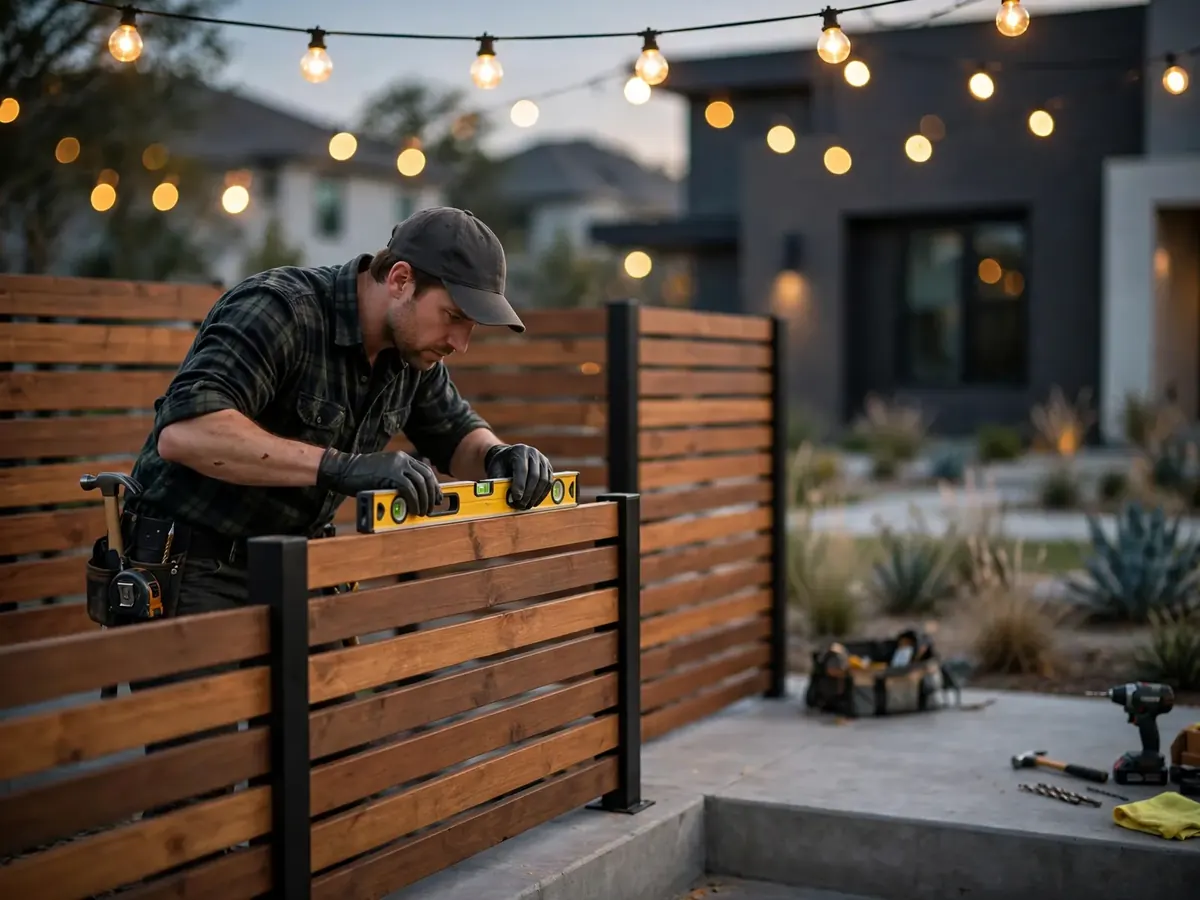
A center support post or vertical stiffener between posts keeps long horizontal boards straight. Horizontal fences are popular in newer and remodeled homes around Cedar Park.
Mixing materials, such as horizontal cedar with black metal posts, gives a clean architectural look.
Something to keep in mind: If budget is the sticking point, consider phasing the work: replace the sections that face the street or the dog run first, and finish the rest when it makes sense.
Board-on-Board and Shadowbox Styles
Many HOAs around Cedar Park specify board-on-board with a top cap and require the finished side to face the street or the neighbor. Shadowbox fences use the same pickets as board-on-board but alternate them on opposite sides of the rails.
On windy lots, shadowbox gives a little relief to the posts while still blocking most views.
Other Fence Situations in Cedar Park
Building a Fence That Stands Up to Wind
Bracing corners and ends is especially important on long, solid runs exposed to open fields.
Drilling Posts Into Limestone and Caliche
A post anchored into solid rock is about as stable as a fence post gets, which is the payoff for the extra effort.
Ranch, Pipe and Wire Fencing on Acreage
Long fences are built in stages: corners and braces first, then line posts, then wire or rails.
Signs It's Time to Call in Cedar Park
These are the moments that push Cedar Park homeowners to pick up the phone:
- Moving onto acreage that needs livestock fencing
- Old fence leaning or sagging
- HOA requires an approved style
Quick Checks Before the Call
- Find your survey or plat showing property lines
- Check HOA fence guidelines and stain colors
- Measure the rough length of fence needed
- Note your HOA's approved colors and styles so the fence builder can quote the right materials
- Ask neighbors whether they hit rock when they built
Planning Fence Installation in Cedar Park: What to Expect
Calling 877-753-1892 puts you in touch with a fence builder who knows Cedar Park. Expect questions about length, height, access and soil; the more you can answer, the more useful the conversation. Call now and get your Cedar Park fence project moving.
877-753-1892Fence Questions From Cedar Park Homeowners
Do I need a permit for a fence in Cedar Park?
Texas has no statewide fence permit, but cities set rules on height, front-yard fences and masonry, and HOAs add their own. Check with your city and HOA before building. For a Cedar Park home, it's worth confirming this before work starts.
What if my neighbor shares the fence?
Many neighbors are happy to share the cost of a shared fence when asked early. If the fence is on the property line, talk to your neighbor before work starts about access and debris.
What should Cedar Park homeowners know about fence projects?
In rocky parts of Cedar Park, drilling rather than digging is normal, and it's worth asking how the crew handles it. Winter Storm Uri in February 2021 brought days of hard freeze across Central Texas. Compared with Hutto, where shifting clay is the bigger factor, Cedar Park projects are shaped more by shallow limestone.