
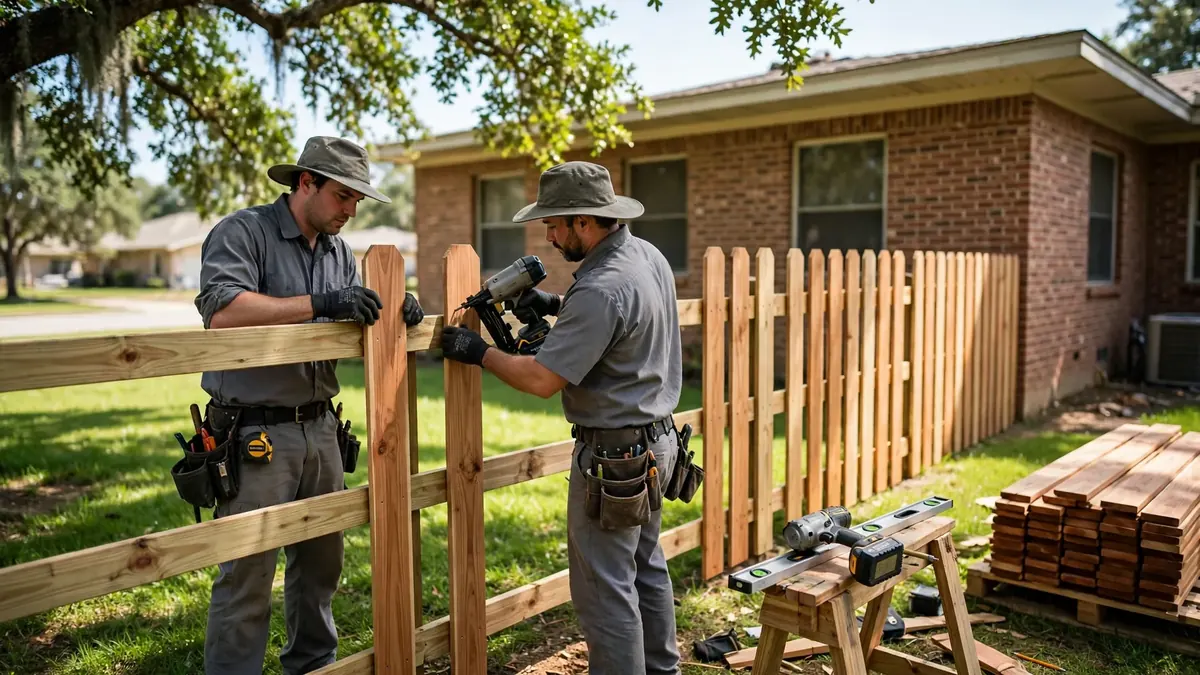
Common Situations Behind Fence Installation Services
Cedar Privacy Fences in Texas
Cedar is the most common privacy fence in Texas because it resists rot and insects better than pine and takes stain well.
Board-on-Board and Shadowbox Styles
Overlapping board-on-board pickets close gaps as wood shrinks; shadowbox alternates sides so both neighbors see a finished face.
Steel Posts vs. Wood Posts
Galvanized steel posts don't rot and resist movement in shifting soil; wood posts are cheaper but usually fail first.
Setting Posts in Shifting Clay Soil
Expansive clay swells and shrinks with moisture, slowly pushing posts out of plumb unless they're set deep.
Drilling Posts Into Limestone and Caliche
Rocky ground needs a rock auger or core drill, which changes the equipment, time and cost of setting posts.
Wrought Iron and Aluminum Fences
Ornamental iron and aluminum mark boundaries, secure pools and keep views open; aluminum resists rust near the coast.
Vinyl and Composite Fences in Texas Heat
Vinyl and composite resist rot and insects; in sustained heat, choose products rated for high temperatures.
Ranch, Pipe and Wire Fencing on Acreage
Acreages use pipe, pipe-and-cable, barbed wire or no-climb wire depending on livestock, pets and budget.
Horizontal and Modern Fence Designs
Horizontal slat fences give a modern look but need tighter post spacing to keep long boards from sagging.
HOA Rules, Permits and Property Lines
Cities set height and front-yard rules, HOAs add style and color rules, and a survey prevents building on the wrong side of the line.
Building a Fence That Stands Up to Wind
Solid privacy fences catch wind like a sail, so post depth, spacing and rail strength matter in storm-prone areas.
Pet and Pool Fencing
Dogs need fences without gaps at the bottom or footholds to climb; pools need barriers with self-closing gates.
Signs It's Time to Call
- Old fence leaning or sagging
- Planning a pool, a dog or new privacy
- HOA requires an approved style
- Moving onto acreage that needs livestock fencing
- Neighbors replacing a shared fence
What to Have Ready When You Call
- Find your survey or plat showing property lines
- Check HOA fence guidelines and stain colors
- Measure the rough length of fence needed
- Mark gates and where you need access for mowers or vehicles
- Call 811 to have utility lines marked before digging
Fence Installation Services by City
Open your city for local conditions, the options that hold up there and the number to call.
No matching city. Try another spelling, or call 877-753-1892.
Fence Installation Services: Common Questions
How long does a cedar fence last in Texas?
A well-built cedar fence often lasts many years, longer with steel posts and regular staining. Wood posts and unstained pickets in wet or shifting soil wear out sooner.
Do I need a permit for a fence in Texas?
Texas has no statewide fence permit, but cities set rules on height, front-yard fences and masonry, and HOAs add their own. Check with your city and HOA before building.
Are steel posts worth it?
In most of Texas, yes. Galvanized steel posts don't rot or attract termites and resist movement in clay soil better than wood posts.
What fence material is best near the coast?
Aluminum, vinyl and cedar with stainless or galvanized fasteners hold up best in salt air and humidity.