
Local Conditions That Shape Fence Installation in Denton
Older homes near the square and new subdivisions on the edges both sit on clay. The area shares North Texas's expansive clay and frequent spring hail.
Denton is the Denton County seat, home to the University of North Texas and Texas Woman's University. In Denton's newer neighborhoods, upgrades often replace the original builder materials. Shifting clay is a common thread between Denton and Pilot Point.
- First-generation fences in newer neighborhoods are reaching the age where repairs give way to replacement.
- Associations commonly dictate fence height, style, stain color and the side facing out, so approval comes first.
Materials That Suit Denton
HOA-approved cedar privacy fences with a top cap, ornamental iron along greenbelts and ponds, and masonry columns at corners are the usual mix here. Occasional hard freezes in Denton are a reason to make sure water can drain away from footings.
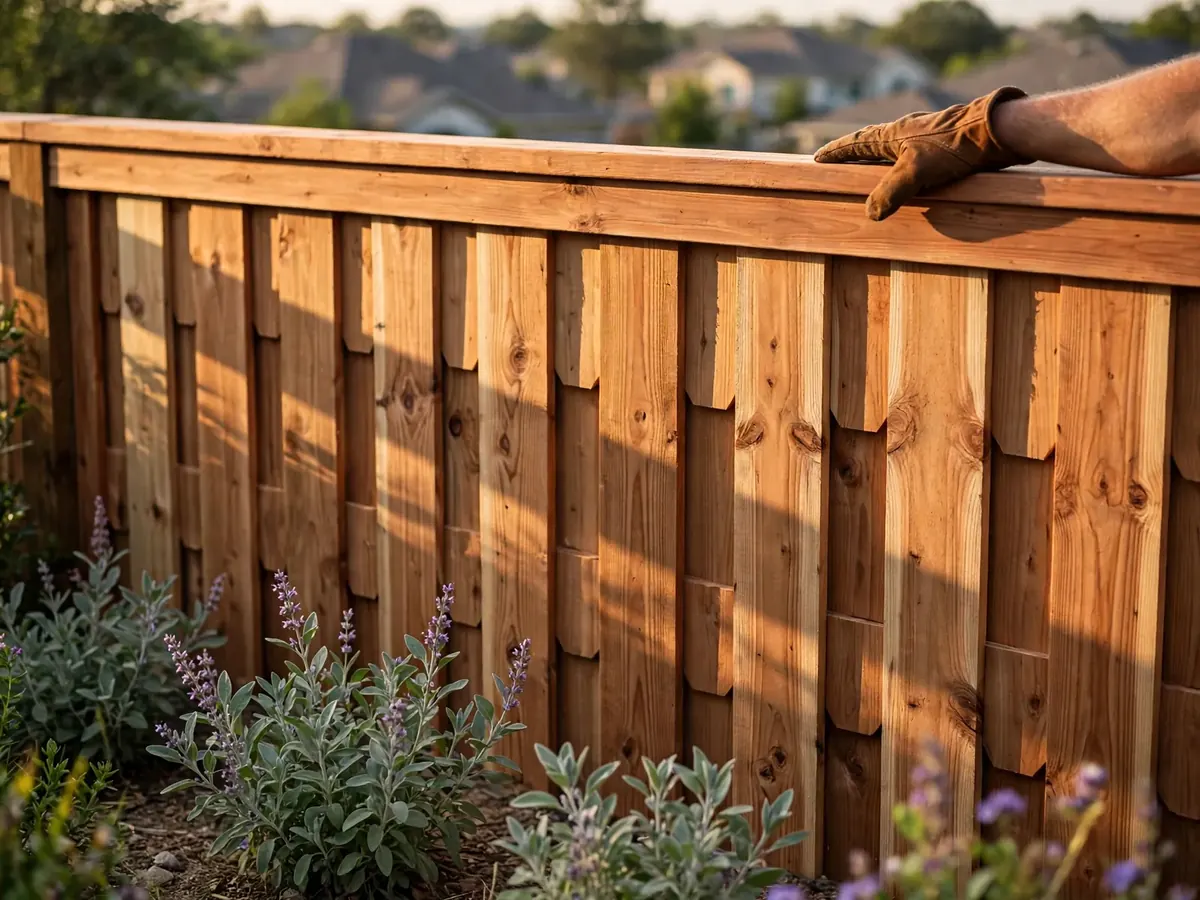
Board-on-Board and Shadowbox Styles
Board-on-board gives complete privacy but acts more like a solid wall in a storm, so post spacing and depth matter more. Standard side-by-side pickets shrink in Texas heat and open small gaps.
On windy lots, shadowbox gives a little relief to the posts while still blocking most views. In HOA communities around Denton, approval comes before scheduling a crew.
Sharing a fence with a neighbor? A short conversation before work starts about style, height and which side faces out heads off most disputes.
Cedar Privacy Fences in Denton
Six-foot cedar privacy fences are the standard backyard choice around Denton. A kickboard, a horizontal board along the bottom, keeps pickets off the soil and is easy to replace when it eventually wears.
A top cap and trim board add a finished look and also shed rain off the end grain of the pickets, which is where cedar takes on water first. Denton's permit and zoning rules can shape the design, so check them early.
HOA Rules, Permits and Property Lines
Texas has no statewide fence permit, but cities set their own rules on height, front-yard fences, corner-lot sight lines and masonry. Utility easements along the back of a lot can limit where posts go or allow utilities to remove sections.
Most HOAs need a written approval before work starts, so build their review time into your schedule rather than booking a crew first. Estate lots around Denton often call for custom designs that match the house.
If you're weighing it up: Setting a long line of posts straight and plumb takes practice; many DIY fences wander and lean within a few years.
Pet and Pool Fencing
A mow strip of concrete under the fence line stops digging and makes trimming easier. A rot board or a strip of wire along the bottom stops diggers, and smooth, tall pickets discourage climbers.
Dogs that dig can be stopped with a buried wire apron or a concrete mow strip along the base of the fence.
Wrought Iron and Aluminum Fences
Ornamental aluminum and steel panels are designed with those rules in mind; confirm the requirements with your city. Iron and aluminum fences go up as panels between posts set in concrete.
Powder coating is baked onto the metal, which makes it far tougher than paint brushed on site; scratches should still be touched up so rust can't creep underneath.
Before you decide: Spring is busy for fence crews; booking a little ahead of the season gives you more scheduling choices.
Horizontal and Modern Fence Designs
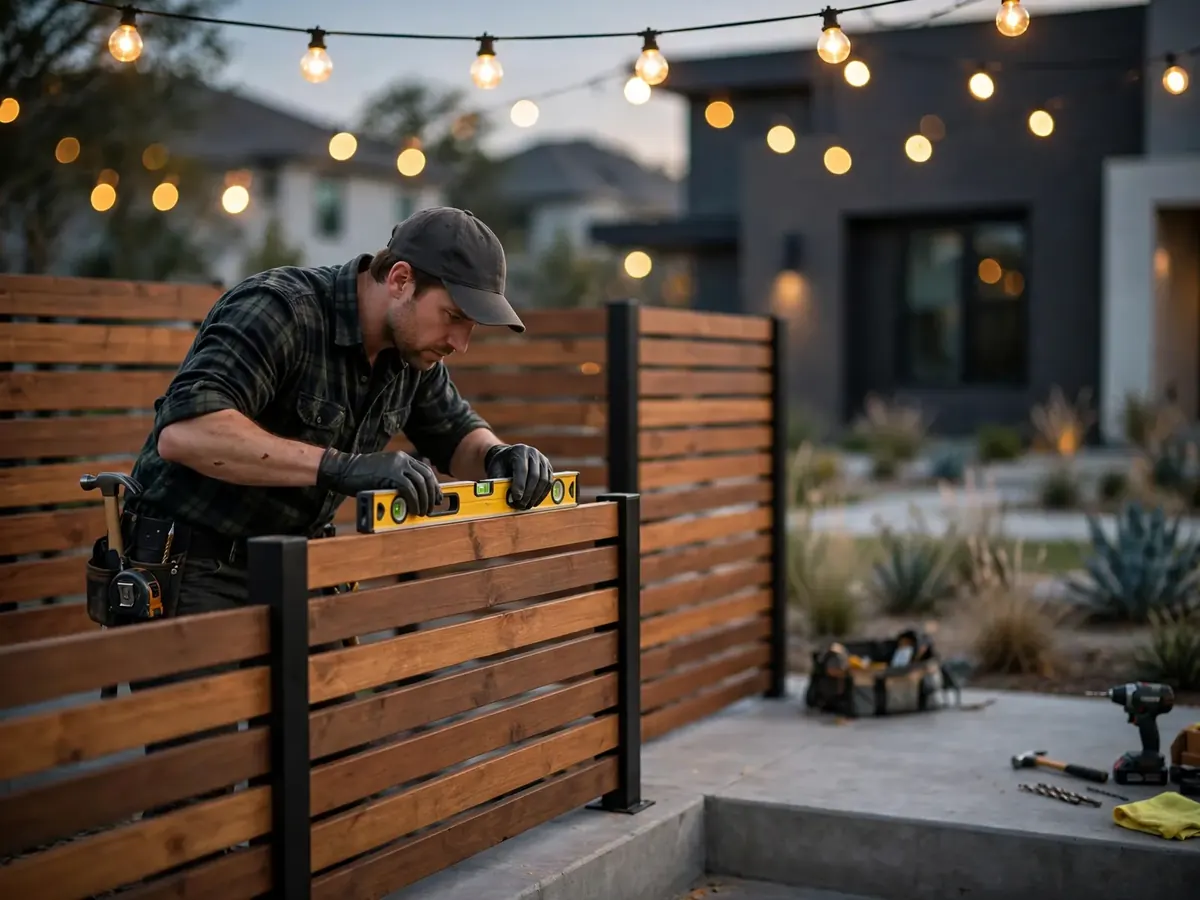
A modern fence often pairs stained wood or composite slats with black steel posts. It's more labor-intensive than a standard picket fence, and HOA approval may be needed if the neighborhood's guidelines call for vertical cedar. Spacing between boards can be tight for privacy or wider for airflow.
Horizontal boards make a yard look wider, much as horizontal stripes do on a wall.
More Fence Questions Around Denton
Steel Posts vs. Wood Posts
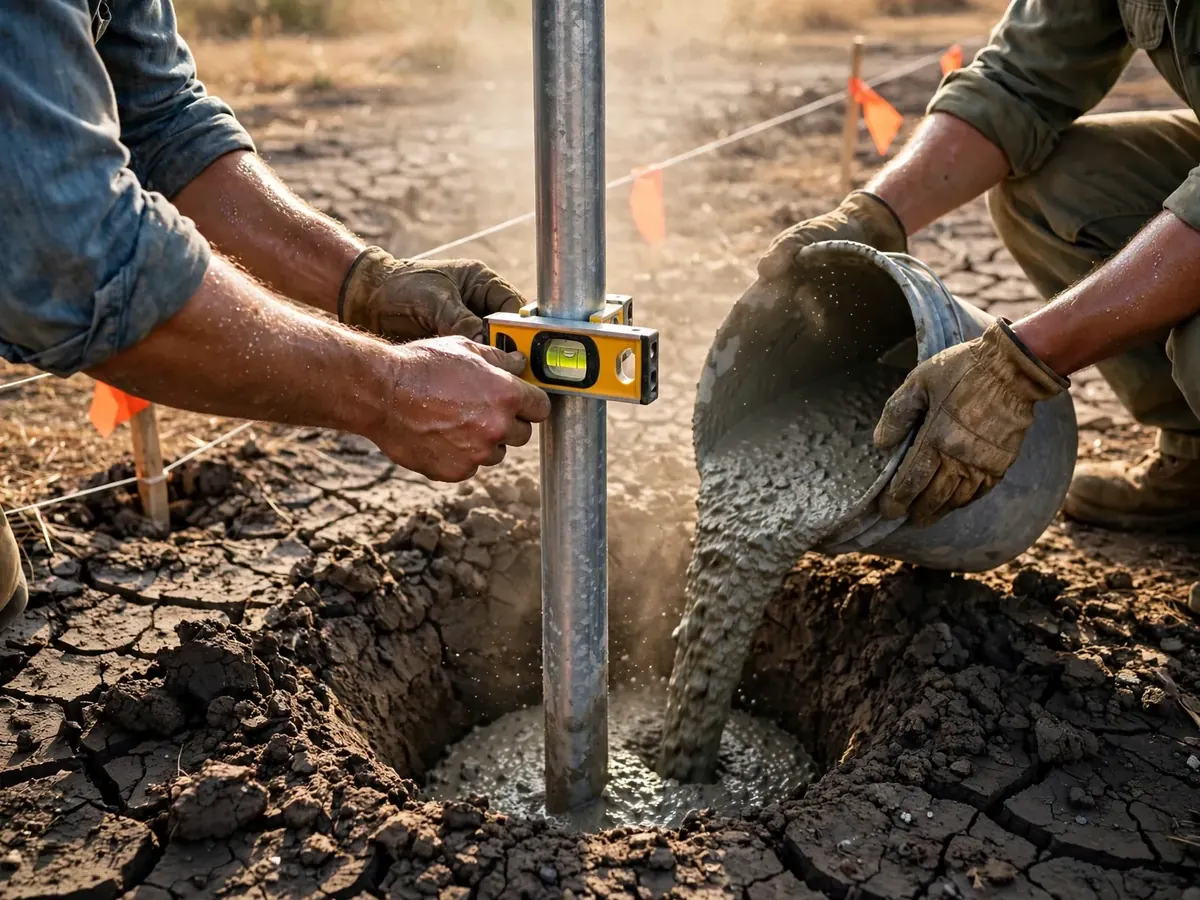
Galvanized steel posts don't rot and resist movement in shifting soil; wood posts are cheaper but usually fail first.
Building a Fence That Stands Up to Wind
Solid privacy fences catch wind like a sail, so post depth, spacing and rail strength matter in storm-prone areas.
Setting Posts in Shifting Clay Soil
Builders who know clay talk about depth and drainage before they talk about pickets; that's a good sign.
Common Reasons Denton Homeowners Call
These are the moments that push Denton homeowners to pick up the phone:
- Old fence leaning or sagging
- Neighbors replacing a shared fence
- Moving onto acreage that needs livestock fencing
What to Have Ready
- Check HOA fence guidelines and stain colors
- Measure the rough length of fence needed
- Mark gates and where you need access for mowers or vehicles
- Mention any leaning or settling you've seen nearby
- Pull your HOA's architectural guidelines and the approval form; most Denton associations want them before work is scheduled
Fence Installation in Denton: Talk to a Local Fence Builder
Dial 877-753-1892 to talk to a fence builder who works in Denton. Have your questions ready, from permits to materials, and take notes. Ready to get started? Call now to book a visit for your Denton property.
877-753-1892Fence Questions From Denton Homeowners
Are steel posts worth it?
In most of Texas, yes. Galvanized steel posts don't rot or attract termites and resist movement in clay soil better than wood posts. Ask about this on your first call, since conditions vary across Denton.
What makes a fence last longer in Denton?
Wondering how long it will last? In Denton's conditions, posts and drainage decide that more than the pickets, so ask about both. Ask what the fence builder expects to fail first on your lot, and how they've built to delay it.
What should Denton homeowners know about fence projects?
In Denton's clay, a fence that looks perfect on day one can drift out of line within a few seasons if the footings are shallow. Homeowners associations are the norm in these subdivisions, and most set rules on fence height, stain color and which side of the pickets faces out.