
What to Know About Fence Installation in New Braunfels
New Braunfels sits on the Comal and Guadalupe rivers and has grown rapidly between Austin and San Antonio. Flash flooding along creeks and rivers is a known risk in this part of Texas. The Hill Country has thin soil over limestone, so setting posts often means drilling into rock.
- Cities set rules on front-yard fence height, corner-lot sight lines and masonry walls, so check before building.
- Larger lots and estate homes often pair cedar privacy fencing with ornamental iron and masonry columns.
Materials That Suit New Braunfels
Cedar post and wire, game fencing, pipe fencing and stone columns on acreages; cedar privacy and ornamental iron near town.
Ranch, Pipe and Wire Fencing on Acreage
Pipe fencing is strong and long-lasting and is often welded on site. Wire fences cost less per foot but need well-built H-braces at corners and gates to stay tight. Ask the fence builder how they'll handle long runs and changes in grade.
Drilling Posts Into Limestone and Caliche
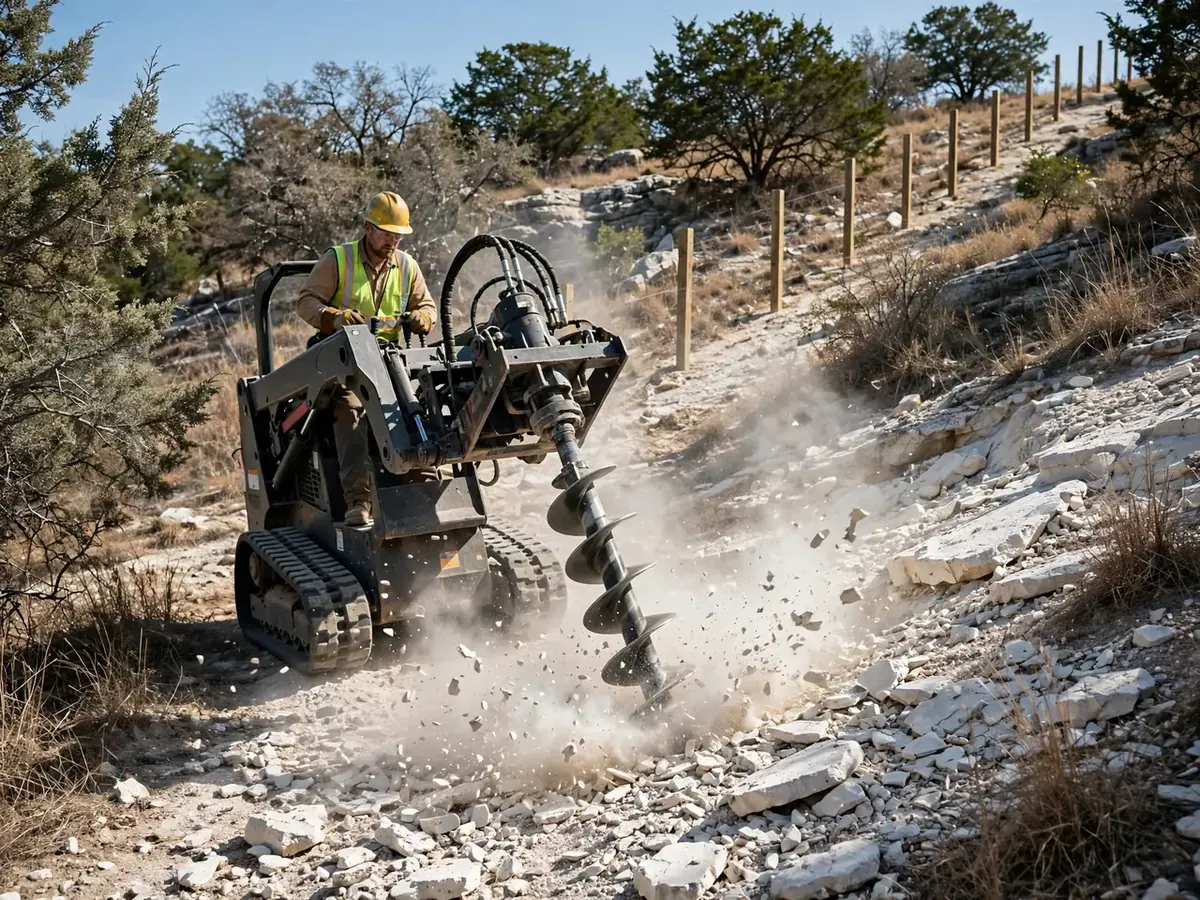
On limestone or caliche, a standard auger stops a few inches down. Fence crews use rock augers, jackhammers or core drills to reach a solid depth. It takes longer, but posts anchored in rock hold very well once they're in.
Horizontal and Modern Fence Designs
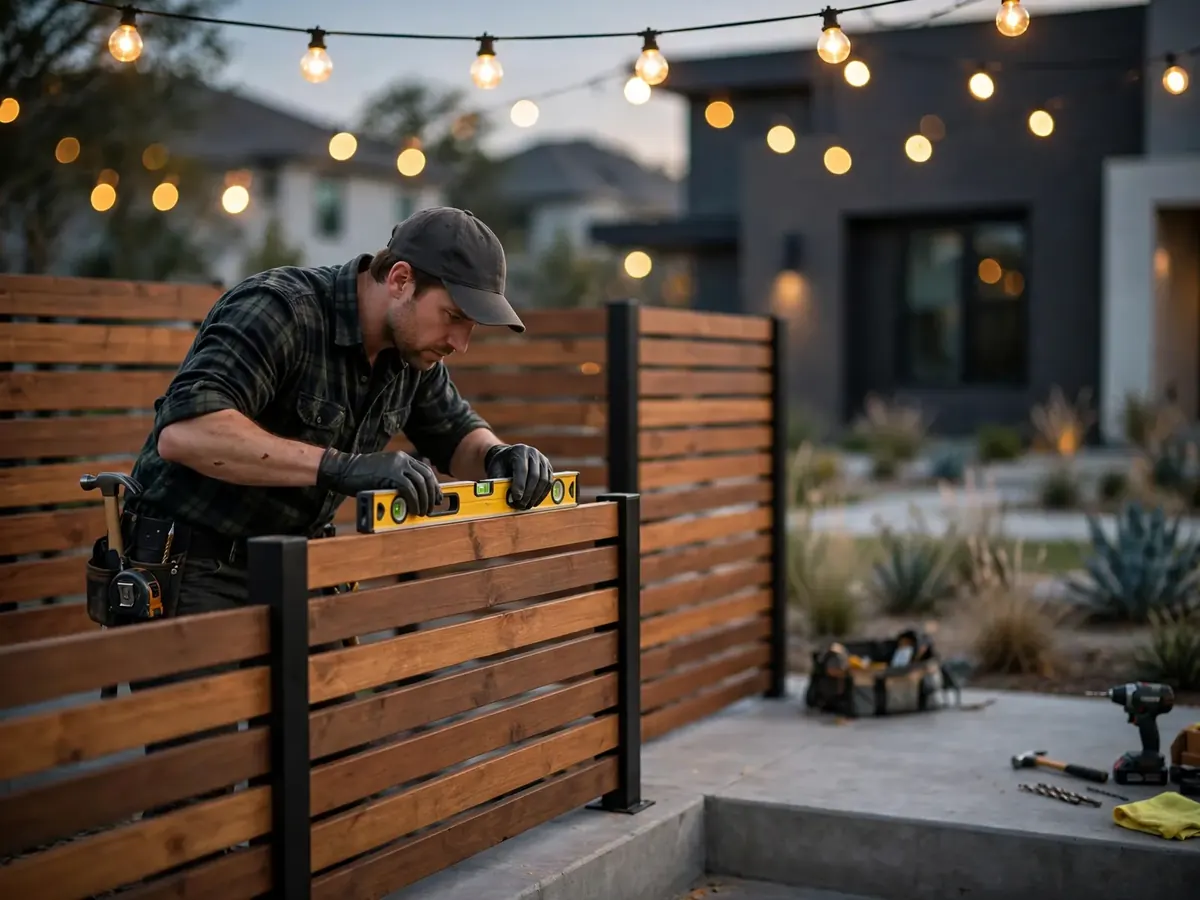
A modern fence often pairs stained wood or composite slats with black steel posts. It's more labor-intensive than a standard picket fence, and HOA approval may be needed if the neighborhood's guidelines call for vertical cedar.
Pet and Pool Fencing
For dogs, the gap at the bottom of the fence matters as much as the height. A rot board or a strip of wire along the bottom stops diggers, and smooth, tall pickets discourage climbers. If you're fencing for a pool, check your city's pool barrier rules for height, gaps and self-closing, self-latching gates.
Wrought Iron and Aluminum Fences
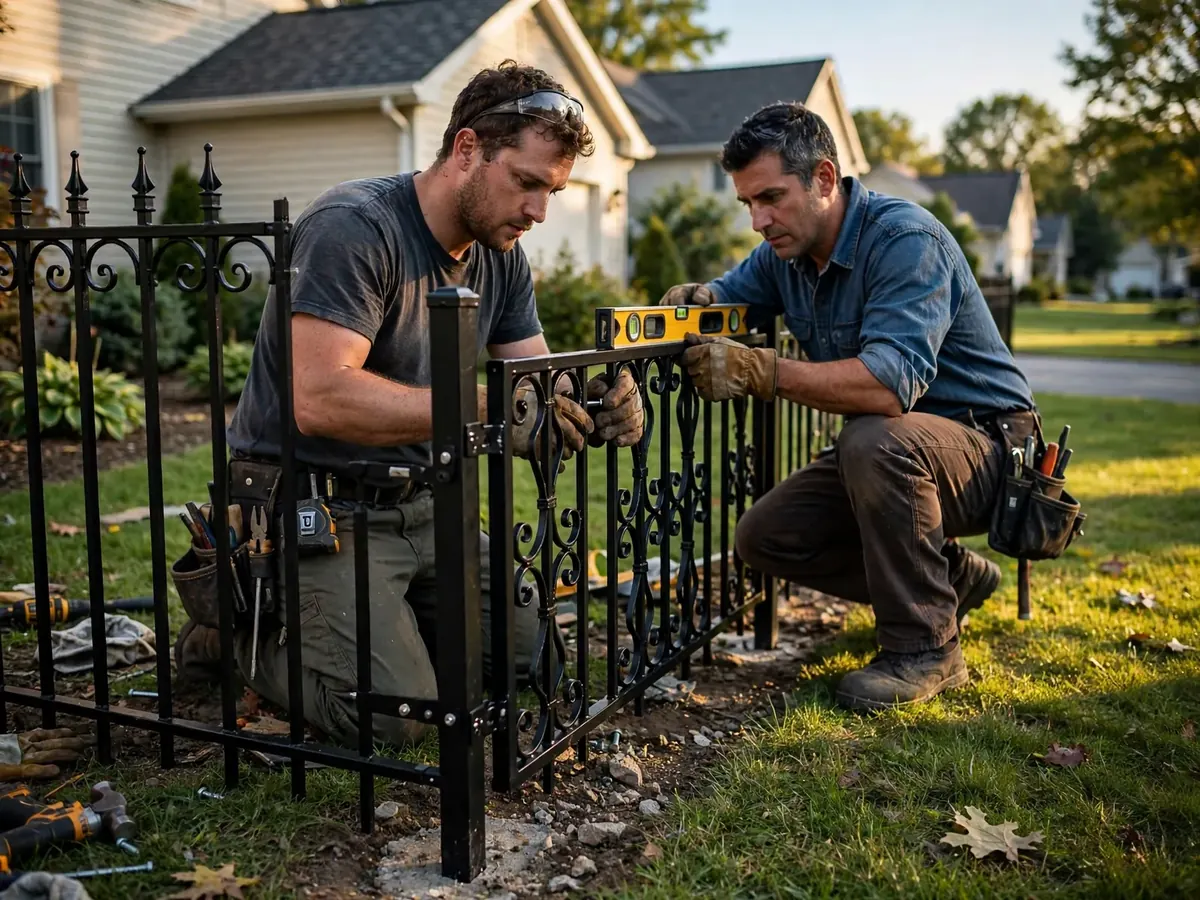
Ornamental fencing is common in New Braunfels for front yards, along greenbelts and around pools. True wrought iron and welded steel are strong but need paint touch-ups to prevent rust; powder-coated aluminum never rusts and suits humid or coastal areas. Both keep views open while defining the yard.
HOA Rules, Permits and Property Lines
Many fence disputes start with a few inches. Before the crew sets the first post, confirm the line, any easements along the back of the lot and whether your city requires a permit for the height you want.
Other Fence Situations in New Braunfels
Building a Fence That Stands Up to Wind
Solid privacy fences catch wind like a sail, so post depth, spacing and rail strength matter in storm-prone areas.
Vinyl and Composite Fences in Texas Heat
Vinyl and composite resist rot and insects; in sustained heat, choose products rated for high temperatures.
Board-on-Board and Shadowbox Styles
Overlapping board-on-board pickets close gaps as wood shrinks; shadowbox alternates sides so both neighbors see a finished face.
Common Reasons New Braunfels Homeowners Call
- Moving onto acreage that needs livestock fencing
- Neighbors replacing a shared fence
- HOA requires an approved style
- Old fence leaning or sagging
Quick Checks Before the Call
- Measure the rough length of fence needed
- Check HOA fence guidelines and stain colors
- Call 811 to have utility lines marked before digging
- Mark gates and where you need access for mowers or vehicles
- Find your survey or plat showing property lines
Planning Fence Installation in New Braunfels: What to Expect
One call to 877-753-1892 gets the conversation started with a fence builder who works around New Braunfels. Bring your measurements, photos and any HOA requirements.
877-753-1892Fence Questions From New Braunfels Homeowners
Are steel posts worth it?
In most of Texas, yes. Galvanized steel posts don't rot or attract termites and resist movement in clay soil better than wood posts.
What fence material is best near the coast?
Aluminum, vinyl and cedar with stainless or galvanized fasteners hold up best in salt air and humidity.
What should New Braunfels homeowners know about fence projects?
Rock close to the surface means posts are drilled rather than dug, which affects equipment and timing. Intense sun dries and grays unprotected wood quickly, so staining every few years pays off. Many properties here are acreages with deer, goats or horses, which changes fence height and wire choice.