
What to Know About Fence Repair in Cleveland
Wooded rural lots are common. West toward Waller, Hempstead and Sealy, the suburbs turn into acreages and ranchland.
Cleveland is a Liberty County city northeast of Houston near the Sam Houston National Forest. In Cleveland, building for tropical storm winds means deeper posts, stronger connections and closer spacing. Constant humidity is a common thread between Cleveland and Katy.
- Wet, slow-drying conditions mean wood at ground level stays damp for days after rain.
- Ground that stays soggy after storms speeds up rot at the base of wood posts.
What Holds Up Around Cleveland
HOA-approved cedar privacy fences with a top cap in subdivisions; wire, pipe and wood rail fencing on acreages farther out. Termites are active around Cleveland, so keeping wood off the soil and using treated lumber helps.
Rotted Post Replacement
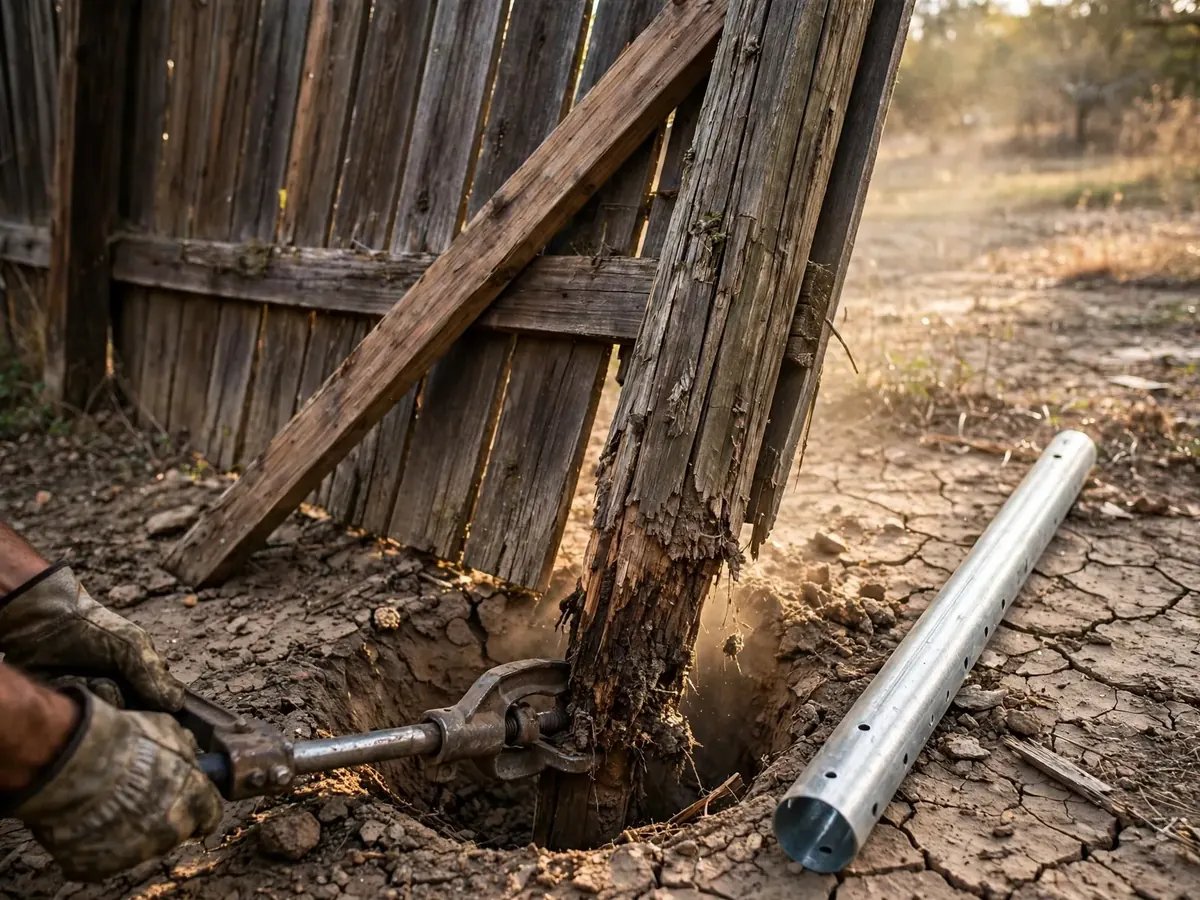
Rot tends to start just below the soil line, where the post stays wet but gets air. Push on the fence near each post. If it moves more at the base than at the top, the post is likely rotted at ground level.
A screwdriver test at the base of each post finds rot quickly: if the tip sinks in easily, the post is failing. In humid Cleveland, pressure-treated or naturally rot-resistant materials make a real difference.
A question many homeowners raise: If you're working around an event or a new pet, say so on the first call; it helps the fence repair pro plan materials and crew time.
Fence Damage From Trees and Roots
Big trees near a fence line are beautiful but hard on fences. Roots lift posts and footings, and storms drop limbs onto panels.
Overhanging limbs that touch the fence will rub through pickets over time, so trimming them is cheap prevention. Mature trees in Cleveland drop limbs in storms and push footings with their roots, so placement matters.
Repair or Replace?
Replacing pickets on bad posts is rarely money well spent. The answer depends on the posts.
Repair makes sense when the posts are sound and the damage is limited to pickets, rails or one section. In newer parts of Cleveland, replacing the original builder fence is a common first upgrade.
Something to keep in mind: Good fence repair pros explain how they'll set posts and handle your soil without being asked; vague answers are a warning sign.
Storm-Damaged Fences in Cleveland
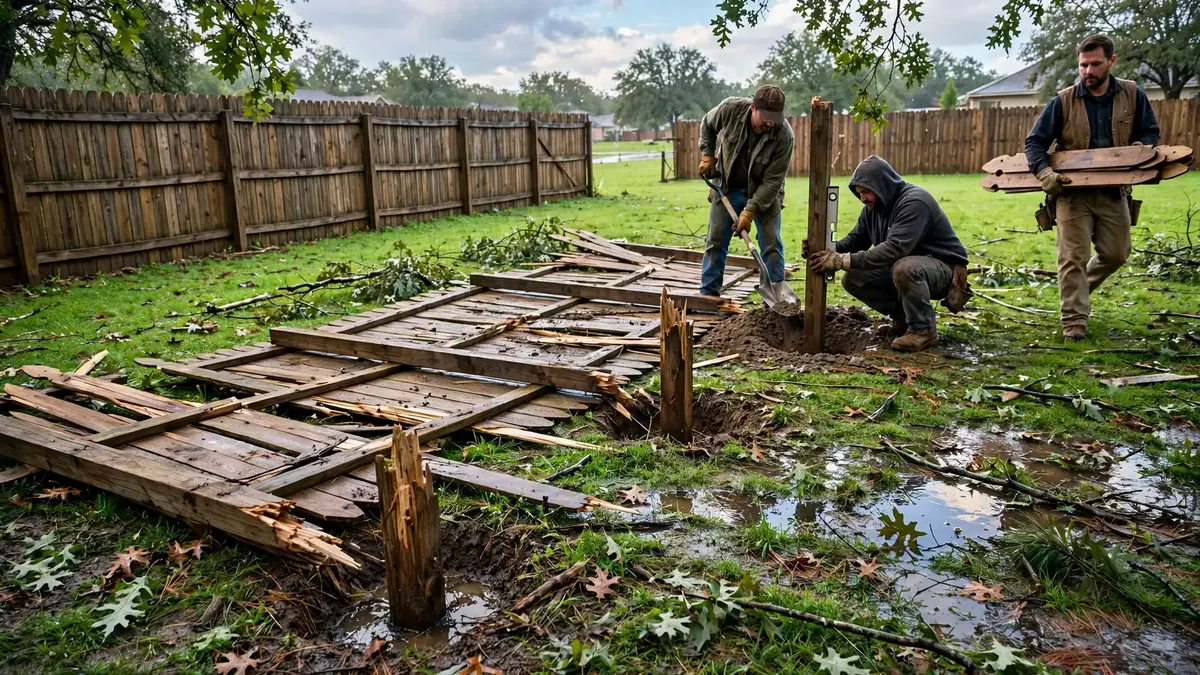
A fence repair pro can document what failed and why. Posts snapped at ground level usually mean rot; posts pulled out with the concrete mean shallow footings or saturated soil.
If your neighbor's fence fell into yours, sort out who's responsible before the repair starts.
Leaning Fences and Shifting Posts
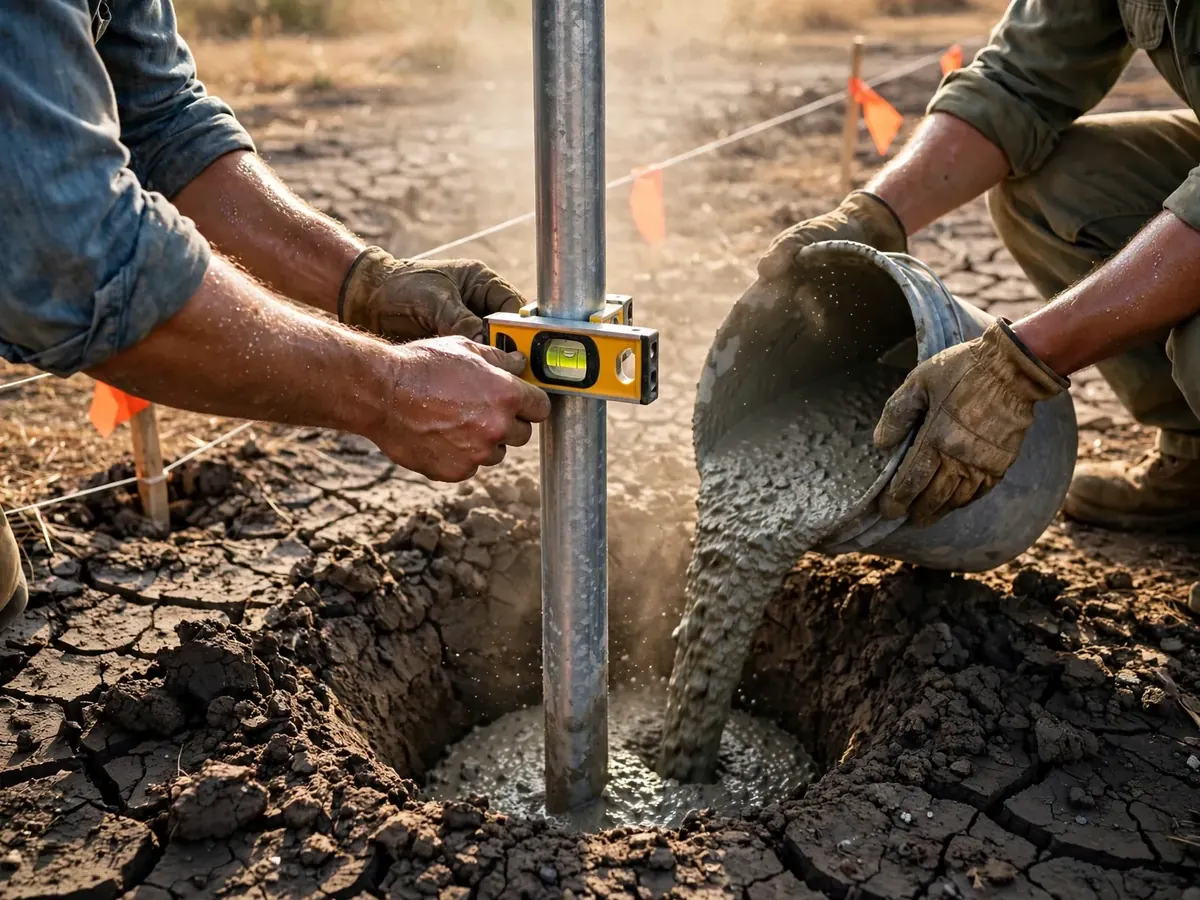
Leaning that gets worse after rain usually points to soil movement rather than rot. In shifting clay, posts can lean even when they're not rotted.
If several posts lean the same way, check for a common cause, such as a downspout, sprinkler or slope sending water along that side. Cleveland lots that hold water need materials that tolerate wet conditions.
One practical point: If you DIY, consider hiring out just the posts and footings, which is where experience matters most.
Other Fence Situations in Cleveland
Broken Pickets, Rails and Sagging Sections
A rail that's cracked near a post can often be sistered with a new board rather than replaced entirely.
Signs It's Time to Call in Cleveland
Cleveland homeowners usually reach out when one of these shows up:
- Sections leaning or swaying
- Sagging between posts
- Broken or missing pickets
Quick Checks Before the Call
- Photograph damaged sections
- Check whether pets can get out
- Find your survey if posts must be moved
- Pull your HOA's architectural guidelines and the approval form; most Cleveland associations want them before work is scheduled
- Mention roots that have lifted the ground nearby
Planning Fence Repair in Cleveland: What to Expect
Calling 877-753-1892 puts you in touch with a fence repair pro who knows Cleveland. Expect questions about length, height, access and soil; the more you can answer, the more useful the conversation. Call today to talk through your fence plans and set a date.
877-753-1892Fence Questions From Cleveland Homeowners
Is storm damage to my fence covered by insurance in Cleveland?
Many homeowner policies cover fences damaged by wind or falling trees. Check your policy and document the damage. Your fence repair pro can tell you what applies on your specific Cleveland property.
Do I need to talk to my neighbor before replacing a shared fence in Cleveland?
Neighbors usually care most about access during the work and which side gets the finished face, so settle both up front. Many neighbors are happy to share the cost of a shared fence when asked early.
What should Cleveland homeowners know about fence projects?
Most Cleveland HOAs publish guidelines that settle style questions before you start. Katy, Cypress, Tomball, Spring, The Woodlands and Conroe include some of the fastest-growing master-planned communities in Texas.