
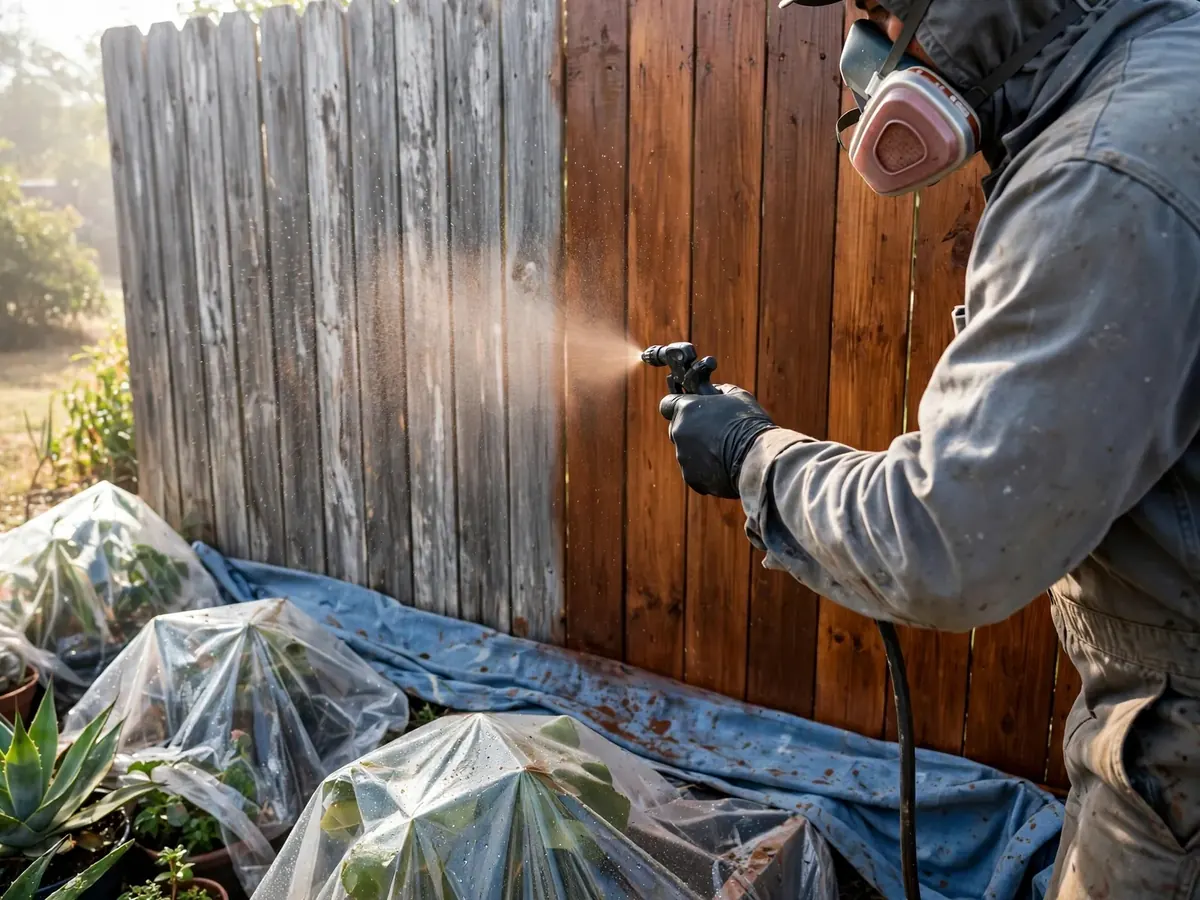
Common Situations Behind Fence Staining Services
Why Texas Fences Gray So Fast
UV breaks down the surface of wood, turning it gray and making it more prone to cracking and moisture damage.
Cleaning and Prep Before Stain
Washing off gray fibers, mildew and dirt lets stain soak in evenly; skipping prep is the main reason stain fails.
Choosing a Stain Color and Type
Semi-transparent oil-based stains are popular in Texas; HOAs often specify approved colors.
Spraying vs. Brushing
Spraying covers fast; back-brushing works stain into the grain; overspray protection matters near cars and plants.
When to Restain
In Texas, many fences need a maintenance coat every two to three years, sooner in full sun.
Signs It's Time to Call
- Gray, faded wood
- Water soaking in instead of beading
- Mildew or black spots
- Splintering pickets
- HOA notice about fence color
What to Have Ready When You Call
- Check HOA-approved stain colors
- Note whether you want one or both sides stained
- Trim plants back from the fence
- Plan to move cars and outdoor furniture
Fence Staining Services by City
Open your city for local conditions, the options that hold up there and the number to call.
No matching city. Try another spelling, or call 877-753-1892.
Fence Staining Services: Common Questions
How soon can a new fence be stained in Texas?
Usually after the wood has dried out for a few weeks to a couple of months, depending on the lumber and weather.
How often should a fence be restained?
In Texas sun, many fences need a maintenance coat every two to three years.
Should I use a clear sealer or a stain?
Pigmented semi-transparent stains block more UV and last longer than clear sealers in Texas sun.
Do I need my neighbor's permission to stain the fence?
To stain their side or work from their yard, yes. Many homeowners stain only their side.