
Fence Repair in Clute: Local Conditions
Clute is a Brazoria County city near Lake Jackson and Freeport. These towns sit along Galveston Bay and the Brazoria County coast, where salt air corrodes fasteners and steel faster than inland.
Coastal humidity and storms are part of life. In Clute, steel posts and treated lumber reduce termite risk. Salt air is a common thread between Clute and Freeport.
- Older fences frequently stand on posts set decades ago, without gravel or crowned concrete.
- Wet, slow-drying conditions mean wood at ground level stays damp for days after rain.
Materials That Suit Clute
Near the coast, cedar goes up with stainless or hot-dip galvanized fasteners, ornamental sections switch from steel to aluminum, and vinyl appears where salt is heaviest. In Clute's older neighborhoods, many structures are near the end of their life and due for replacement.
Rotted Post Replacement
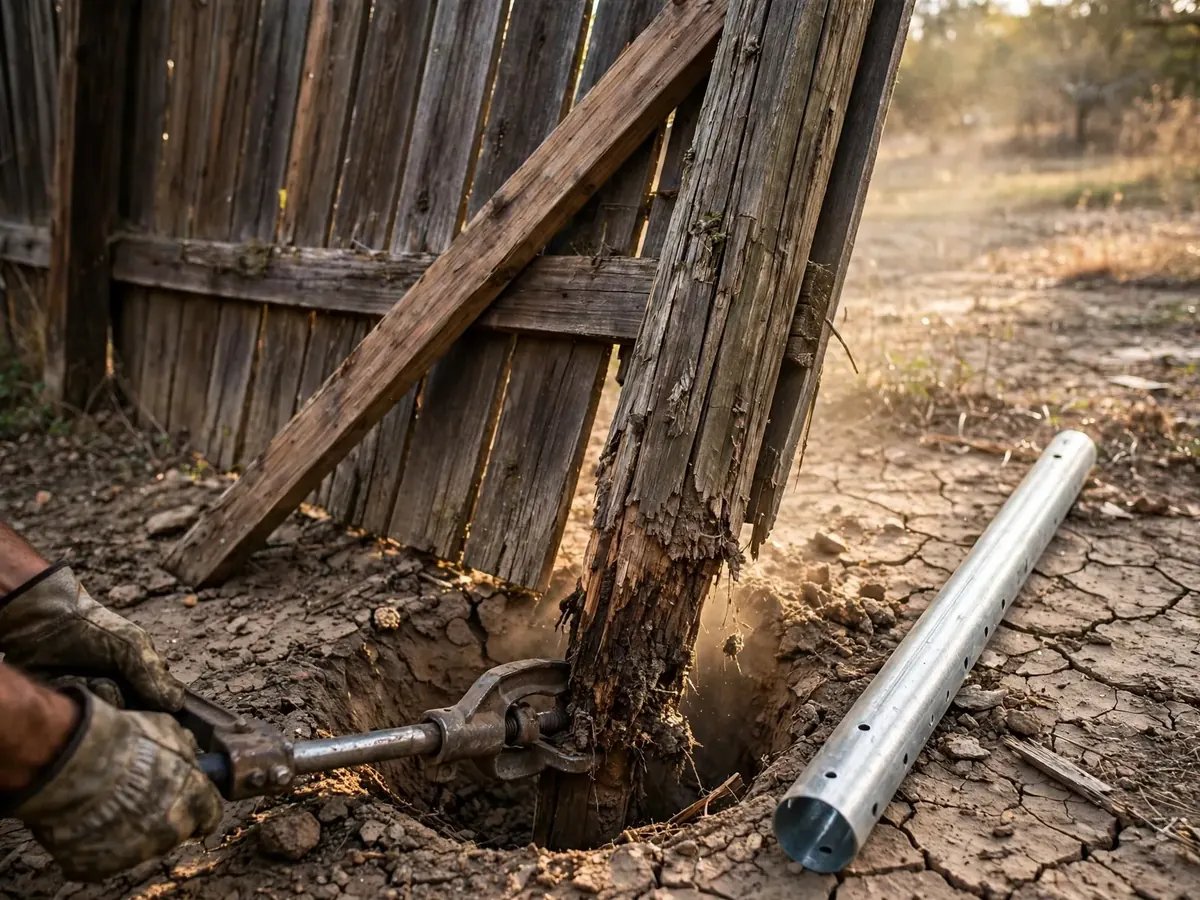
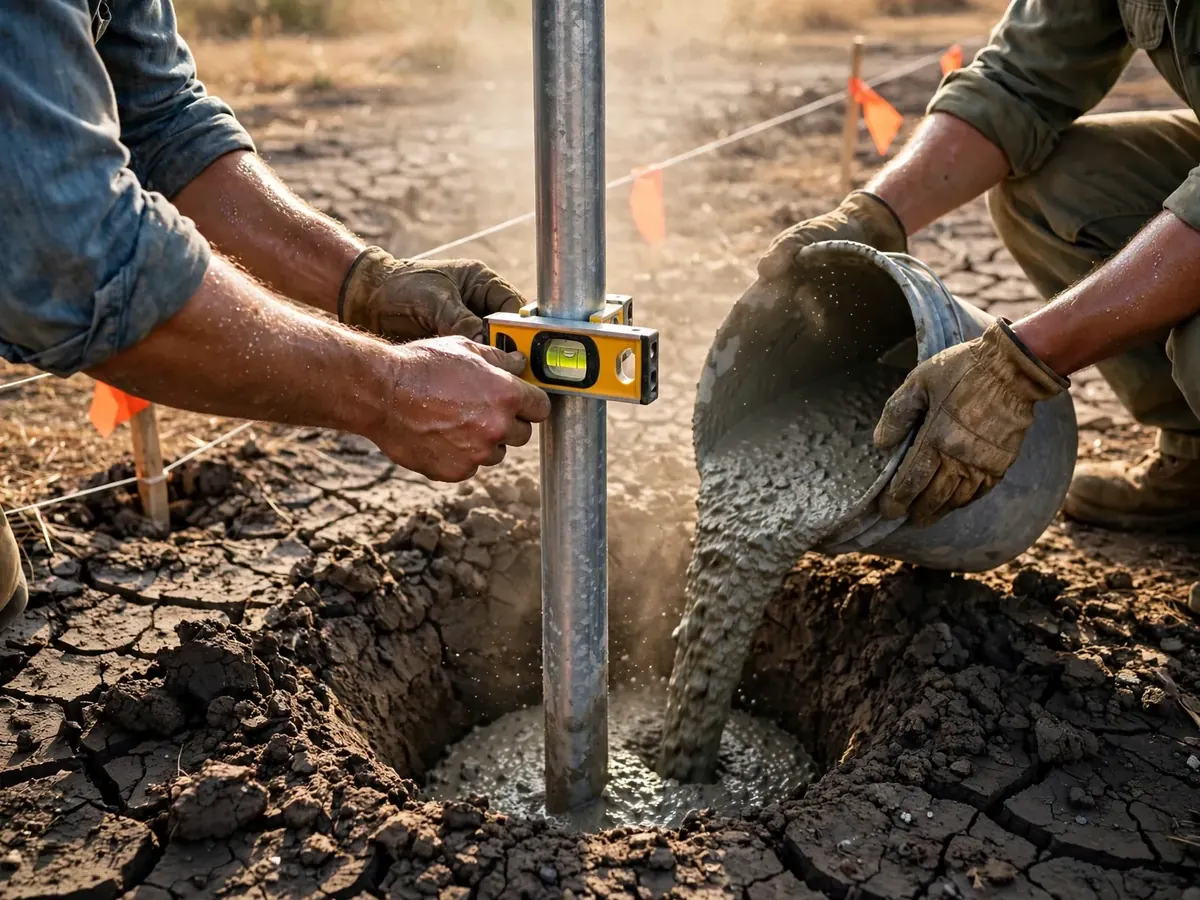
Steel posts with brackets are a common replacement that won't rot again. A post can often be replaced without removing the panels: the old post comes out, a new one goes in with concrete, and the rails are reattached.
Posts near sprinklers or downspouts rot first, so check those spots. In Clute, moisture management matters as much as the material itself.
One practical point: Setting a long line of posts straight and plumb takes practice; many DIY fences wander and lean within a few years.
Leaning Fences and Shifting Posts
Leaning that gets worse after rain usually points to soil movement rather than rot. In shifting clay, posts can lean even when they're not rotted.
Pushing a leaning section upright without fixing the post usually lasts only until the next wet season. In flood-prone parts of Clute, materials that tolerate wet conditions last longer.
Storm-Damaged Fences in Clute
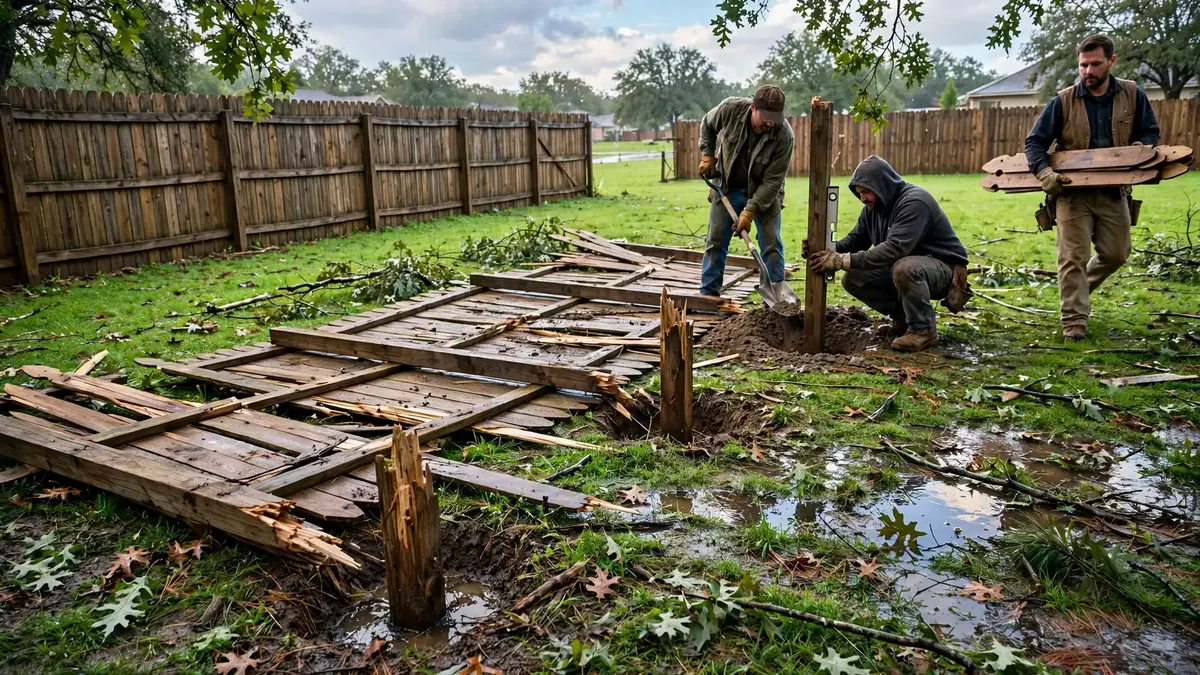
After a strong storm, look at where the fence failed. Have the neighboring posts checked before reattaching panels.
Rebuilding storm-damaged sections with steel posts reduces the chance of the same failure next time. Hurricane season makes wind resistance a practical concern in Clute, not just a design detail.
One practical point: Many neighbors are happy to share the cost of a shared fence when asked early.
Fence Damage From Trees and Roots
When roots have lifted a post, it can sometimes be shifted a foot or two along the line to clear them, with a short rail adjustment. That keeps the tree and the fence both healthy. Roots lift posts and footings, and storms drop limbs onto panels.
If a neighbor's tree caused the damage, talk to them before the repair; responsibility is often settled more easily before work starts. In Clute's older neighborhoods, many structures are near the end of their life and due for replacement.
Repair or Replace?
If half the posts are rotten, pickets are gray and brittle, and the fence leans everywhere, replacement usually costs less over time. Fences built on wood posts usually start failing post by post after 10 to 15 years.
A useful rule: if more than about a third of the posts are loose or rotted, a new fence often costs only a little more than patching and lasts far longer.
One practical point: A good fence builder will tell you what they don't know until they start digging, such as rock or roots.
Other Fence Situations in Clute
Broken Pickets, Rails and Sagging Sections
Cracked pickets and loose or broken rails make sections sag; replacing them is quick if the posts are sound.
Signs It's Time to Call in Clute
In Clute, these are the signs that most often lead to a call:
- Broken or missing pickets
- Sections leaning or swaying
- Sagging between posts
Quick Checks Before the Call
- Note how many posts and feet of fence are affected
- Photograph damaged sections
- Check whether pets can get out
- Mention any rusted hardware on the existing structure
- Mark where vehicles, trailers and animals need to pass
Fence Repair in Clute: Talk to a Local Fence Repair Pro
Pick up the phone and dial 877-753-1892. A fence repair pro familiar with Clute can talk through materials, timing and what affects the price. The sooner you call, the sooner your fence work can be scheduled.
877-753-1892Fence Questions From Clute Homeowners
Is storm damage to my fence covered by insurance in Clute?
Often, if wind or a falling tree caused it, though deductibles and policies vary. Photograph the damage and review your policy before repairs. Ask about this on your first call, since conditions vary across Clute.
How long will a fence last in Clute?
A fence on steel posts, kept stained, often outlives two fences built on wood posts. Ask what the fence repair pro expects to fail first on your lot, and how they've built to delay it.
What should Clute homeowners know about fence projects?
Coastal air in Clute corrodes steel faster, which tilts the choice toward aluminum, vinyl or well-coated metal. Hurricane Ike in 2008 and Hurricane Harvey in 2017 caused widespread wind and flood damage here, and Hurricane Beryl hit the area in 2024.