
Local Conditions That Shape Fence Repair in Fort Worth
Fort Worth mixes historic neighborhoods near downtown with new master-planned communities on its northern and western edges. Housing ranges from early 1900s homes near downtown Fort Worth to newer master-planned communities to the north. Fort Worth and the Mid-Cities share North Texas clay soils and some of the heaviest spring hail in the state.
- Older neighborhoods often have fences on wood posts that are near the end of their life.
- Cities set rules on front-yard fence height, corner-lot sight lines and masonry walls, so check before building.
Materials That Suit Fort Worth
Cedar privacy fences dominate backyards, with wrought iron and aluminum in front yards and around pools; Southlake, Colleyville and Westlake lean toward ornamental iron and masonry.
Repair or Replace?
The answer depends on the posts. If most are solid and only a few sections are damaged, repair makes sense. If half the posts are rotten, pickets are gray and brittle, and the fence leans everywhere, replacement usually costs less over time.
Storm-Damaged Fences in Fort Worth
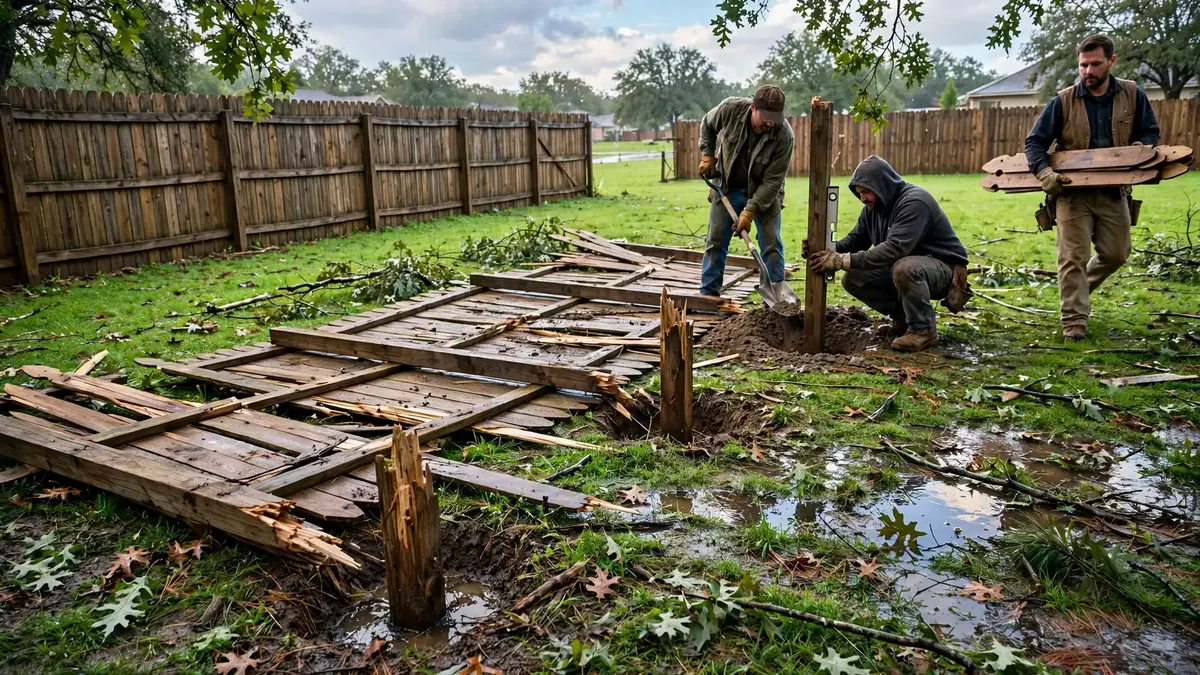
After a storm passes Fort Worth, walk the whole fence line, not just the section that fell. Panels that are still standing may have cracked posts or pulled brackets that will give way in the next blow.
Broken Pickets, Rails and Sagging Sections
A sagging section between posts usually has a broken or undersized rail. Adding a third rail or a center support stops the sag.
Leaning Fences and Shifting Posts
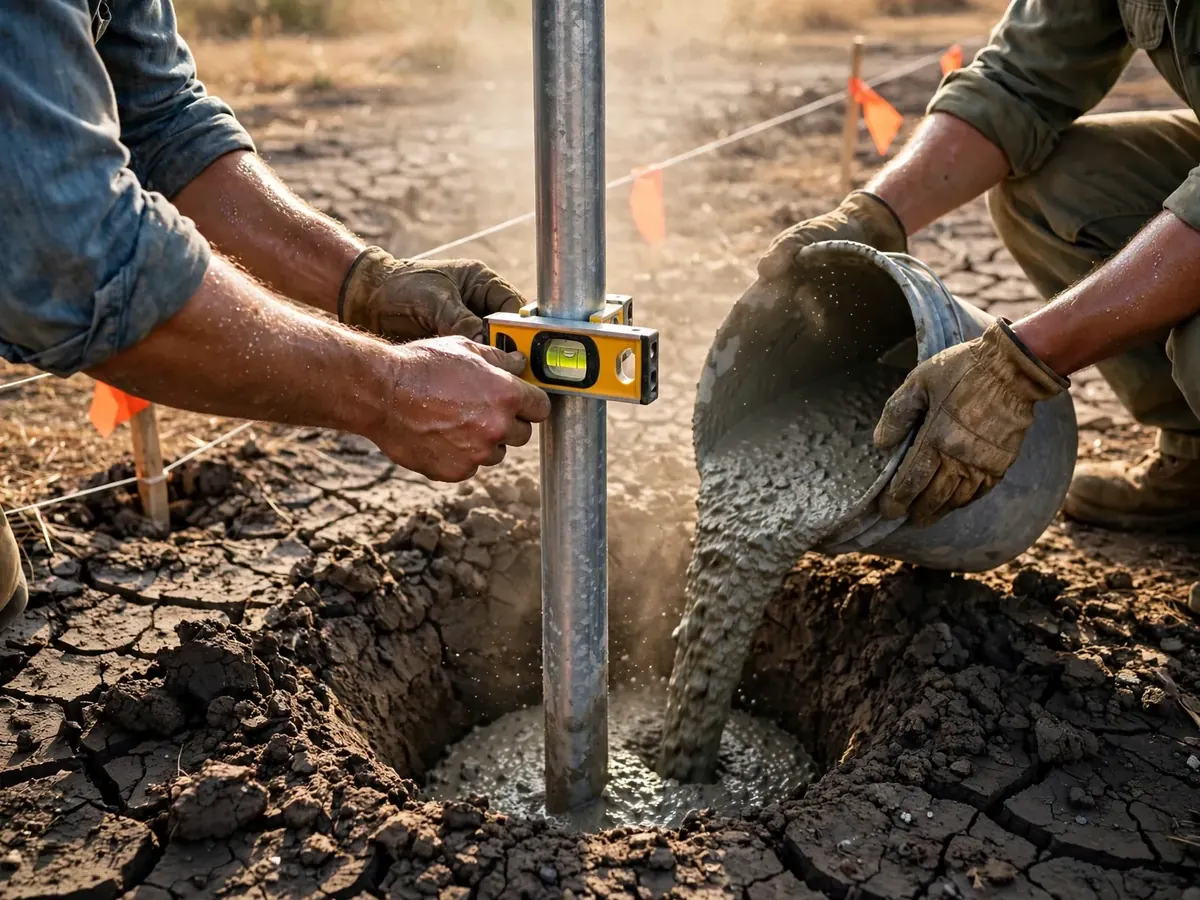
A leaning fence usually means one or more posts have rotted at the ground line or the soil has shifted. Pushing it back and bracing it only lasts until the next wet season. Resetting the post with a deeper footing, or replacing it with steel, fixes the cause.
Fence Damage From Trees and Roots
Big trees near a fence line are beautiful but hard on fences. Roots lift posts and footings, and storms drop limbs onto panels. A fence repair pro can reroute posts around roots and rebuild crushed sections.
Rotted Post Replacement
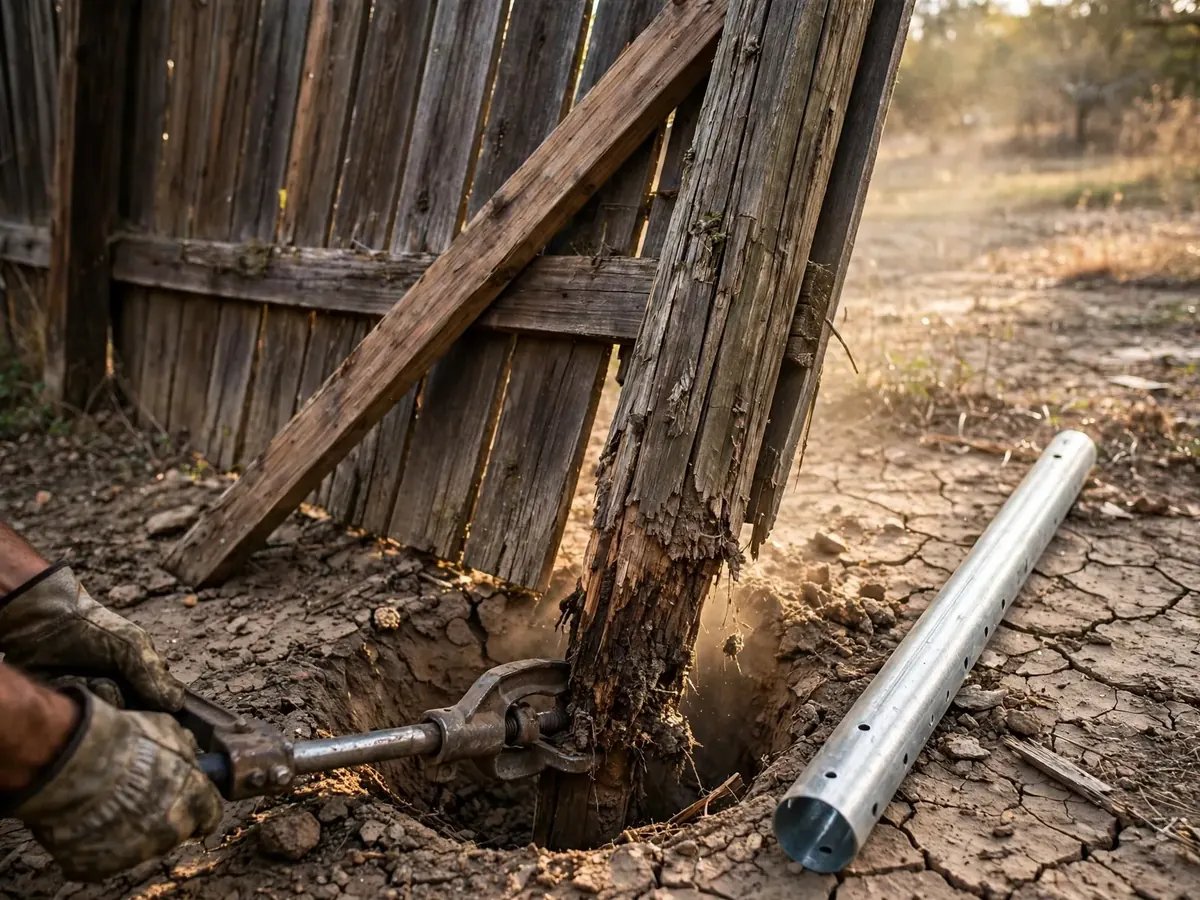
Dig a few inches around the base of a suspect post. Dark, soft wood that crumbles under a screwdriver means the post is done. Replacing it promptly keeps the rails and pickets on either side from cracking under the extra load.
Common Reasons Fort Worth Homeowners Call
- Broken or missing pickets
- Posts loose at the base
- Sagging between posts
- Storm or tree damage
Before You Call
- Find your survey if posts must be moved
- Note how many posts and feet of fence are affected
- Photograph damaged sections
- Check whether pets can get out
Fence Repair in Fort Worth: Talk to a Local Fence Repair Pro
Have the details from the checklist above ready, then call 877-753-1892. A fence repair pro serving Fort Worth can tell you what the job involves, what affects the cost and whether anything needs attention right away.
877-753-1892Fence Questions From Fort Worth Homeowners
Can one rotted post be replaced without replacing the fence?
Usually. The panels are detached, the old post and concrete are removed, a new post is set and the rails are reattached.
Why does my fence keep leaning?
Rot at the base of wood posts and shifting clay soil are the usual causes. Deeper footings or steel posts fix it.
What should Fort Worth homeowners know about fence projects?
Shrink-swell clay moves posts every season, so post depth, footing shape and steel posts matter more than picket style. Strong winds push on solid privacy fences, so closer post spacing and steel posts help them stay upright.