
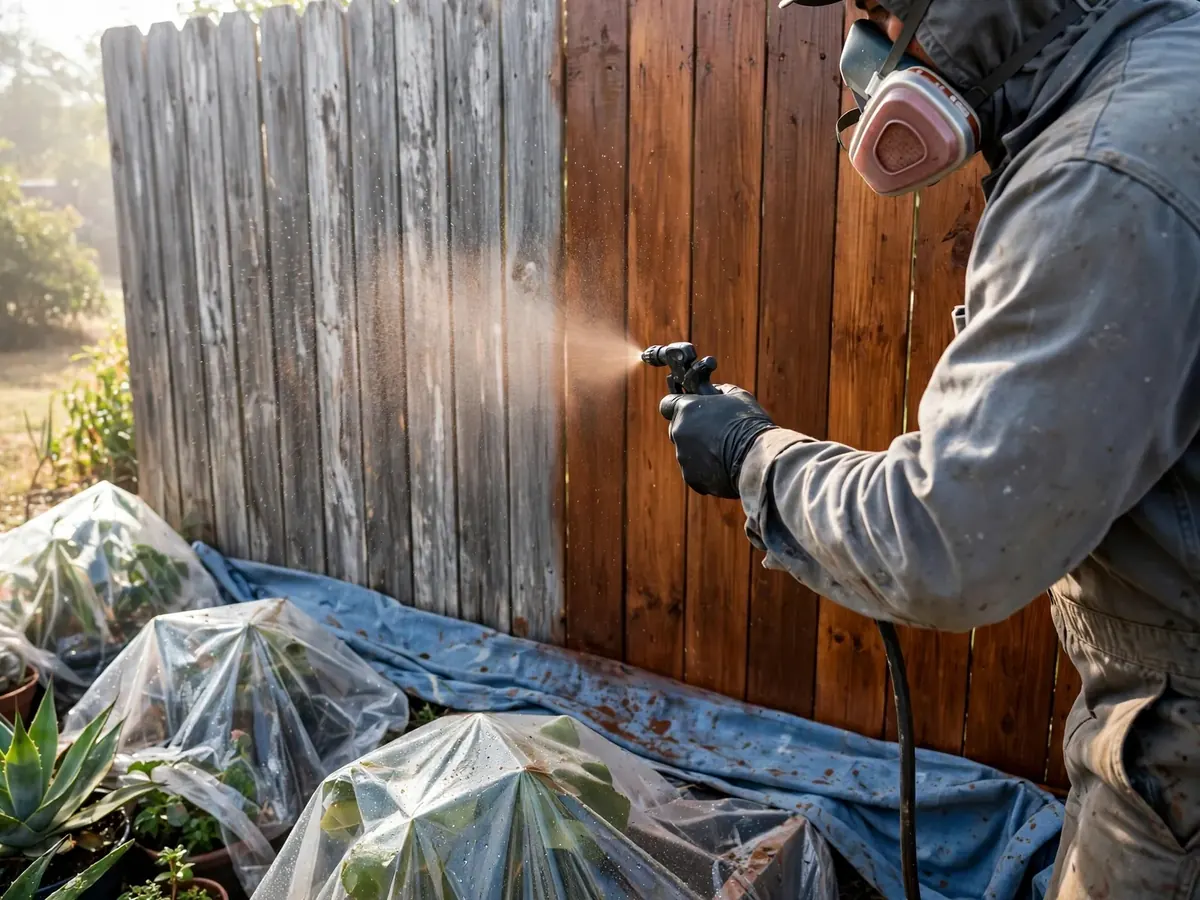
Fence Staining in Fort Worth: Local Conditions
Fort Worth mixes historic neighborhoods near downtown with new master-planned communities on its northern and western edges. Fort Worth is the Tarrant County seat, known for its Stockyards.
Ground conditions range from clay in the east to rockier land in the west. In established Fort Worth neighborhoods, matching the character of the street matters. Fort Worth shares shifting clay with North Richland Hills, so solutions that work well there usually suit Fort Worth too.
- Local codes can affect how tall the fence can be and where it can sit, especially near streets.
- HOA rules often specify board-on-board styles, a set stain color and finished sides facing the street.
Materials That Suit Fort Worth
Backyards are mostly cedar privacy; ornamental iron and aluminum handle front yards and pools, and the most upscale areas favor iron with masonry. Hail storms are common enough in Fort Worth that many owners plan for occasional repairs.
Spraying vs. Brushing
Hot sun dries the stain too fast to soak in, and wind carries overspray onto cars and neighboring houses. Most professional crews spray and back-brush for the best of both.
Calm, mild days give the best results for spraying. Before finalizing plans, confirm Fort Worth's requirements for height and placement.
Something to keep in mind: Ask what the fence staining pro expects to fail first on your lot, and how they've built to delay it.
Why Texas Fences Gray So Fast
Graying is a surface change; the wood underneath is often still sound. Unstained cedar in full sun can start to gray within months.
Graying is mostly cosmetic at first, but once the surface fibers loosen, water soaks in deeper and speeds up rot.
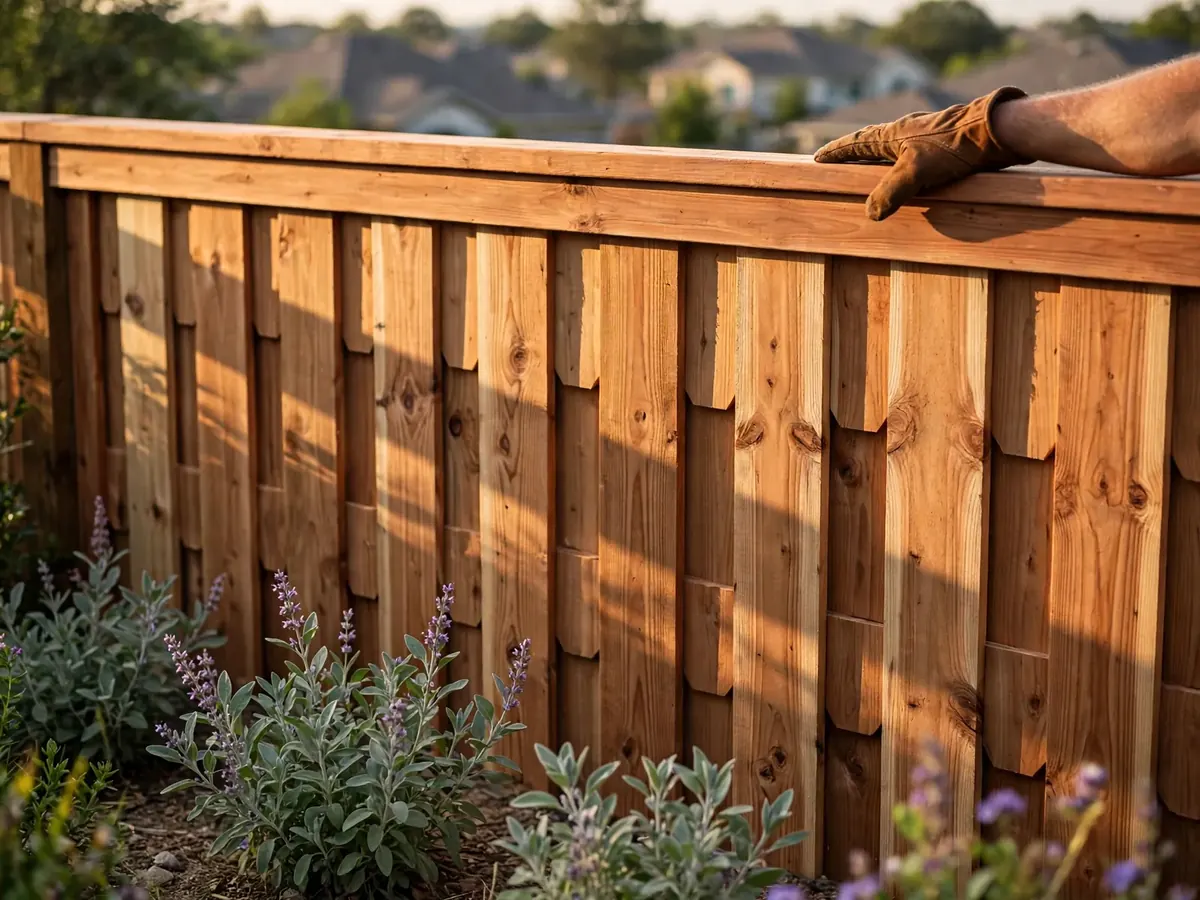
Cleaning and Prep Before Stain
Stain sticks to clean, dry wood. Low-pressure washing avoids raising fibers or gouging the wood.
Wood needs a few dry days after washing before stain goes on; trapped moisture causes blotching and peeling.
Something to keep in mind: Get the scope, materials and cleanup in writing before work begins, so everyone agrees on what's included.
Choosing a Stain Color and Type
Solid stains hide grain completely and behave more like paint. Darker stains hide weathering longer but can make a fence hotter to the touch.
Testing a small area first shows how the color looks on your fence, which can be very different from the can. If your Fort Worth neighborhood has an HOA, approval is usually the first step and sets the style.
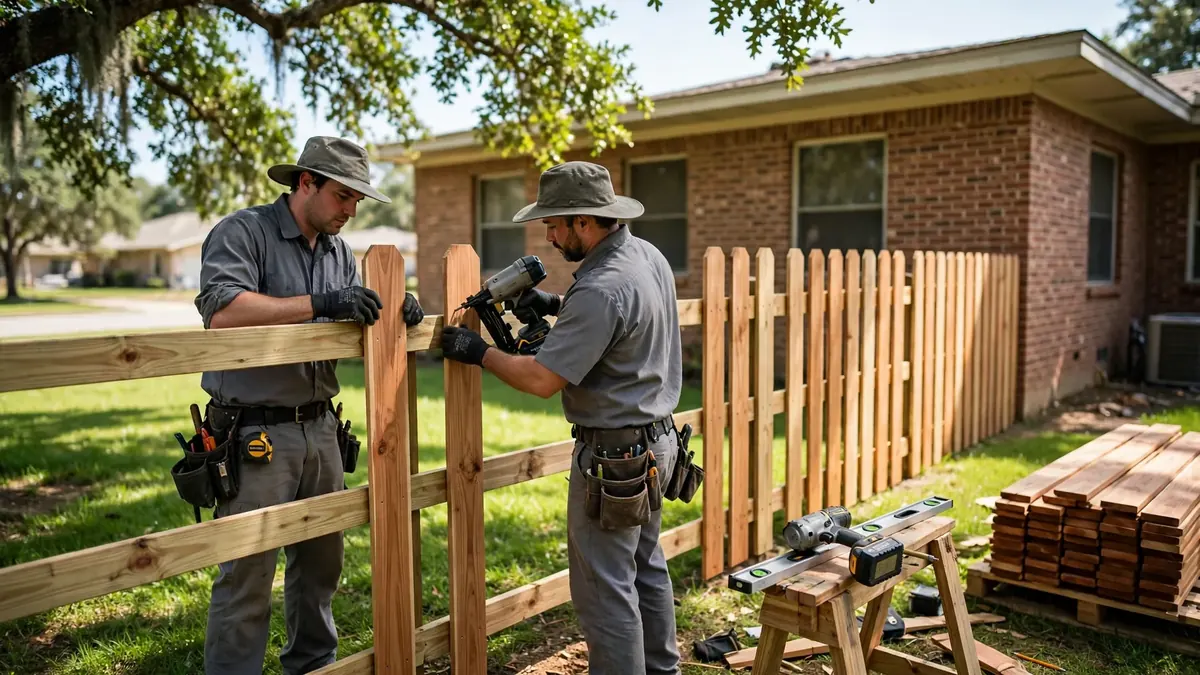
When to Restain
Waiting too long means more cleaning and more stain to bring the wood back. Restaining is a good time to check for loose pickets and rotted posts. Fixing them before the stain goes on saves redoing the work.
Restaining before the wood turns fully gray takes less prep and less product.
Before you decide: Neighbors usually care most about access during the work and which side gets the finished face, so settle both up front.
Common Reasons Fort Worth Homeowners Call
In Fort Worth, these are the signs that most often lead to a call:
- Mildew or black spots
- Water soaking in instead of beading
- Splintering pickets
Quick Checks Before the Call
- Plan to move cars and outdoor furniture
- Check HOA-approved stain colors
- Trim plants back from the fence
- Notice whether nearby fence stains or the house foundation show signs of soil movement
- Look up your city's height and setback rules, or ask the fence staining pro to
Planning Fence Staining in Fort Worth: What to Expect
One call to 877-753-1892 gets the conversation started with a fence staining pro who works around Fort Worth. Bring your measurements, photos and any HOA requirements. Have a question about your fence stain? A quick call is the fastest way to get it answered.
877-753-1892Fence Stain Questions From Fort Worth Homeowners
How soon can a new fence be stained in Fort Worth?
Once the wood has dried enough to absorb stain, often a few weeks to a couple of months depending on the lumber and the weather. For a Fort Worth home, it's worth confirming this before work starts.
Is a fence stain a good DIY project in Fort Worth?
DIY can save labor, but renting augers, hauling concrete and disposing of the old fence add up, so compare honestly. DIY makes the most sense for short runs and simple designs.
What should Fort Worth homeowners know about fence stain projects?
On Fort Worth's clay, it's worth asking how deep each footing will go before comparing anything else. Housing ranges from early 1900s homes near downtown Fort Worth to newer master-planned communities to the north.