
Local Conditions That Shape Fence Repair in Magnolia
Magnolia is a Montgomery County city northwest of Houston. West toward Waller, Hempstead and Sealy, the suburbs turn into acreages and ranchland.
Many homes are on wooded acreage. In Magnolia, building for tropical storm winds means deeper posts, stronger connections and closer spacing. Constant humidity is a common thread between Magnolia and Cleveland.
- Wet, slow-drying conditions mean wood at ground level stays damp for days after rain.
- Big trees drop limbs on fences in storms and push posts out of line with their roots.
What Holds Up Around Magnolia
Subdivisions specify capped cedar privacy fences, while acreage farther out uses wire, pipe and wood rail fencing. If your Magnolia neighborhood has an HOA, approval is usually the first step and sets the style.
Rotted Post Replacement
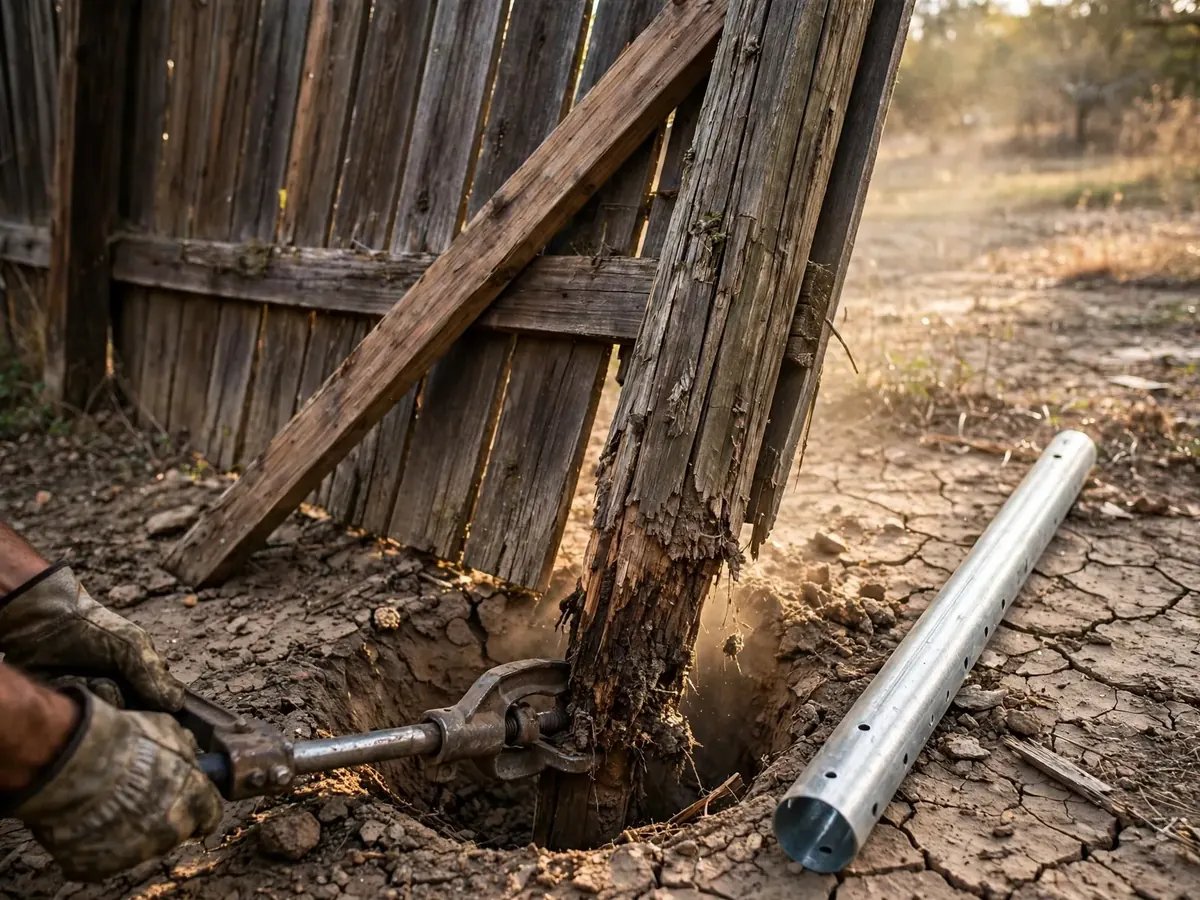
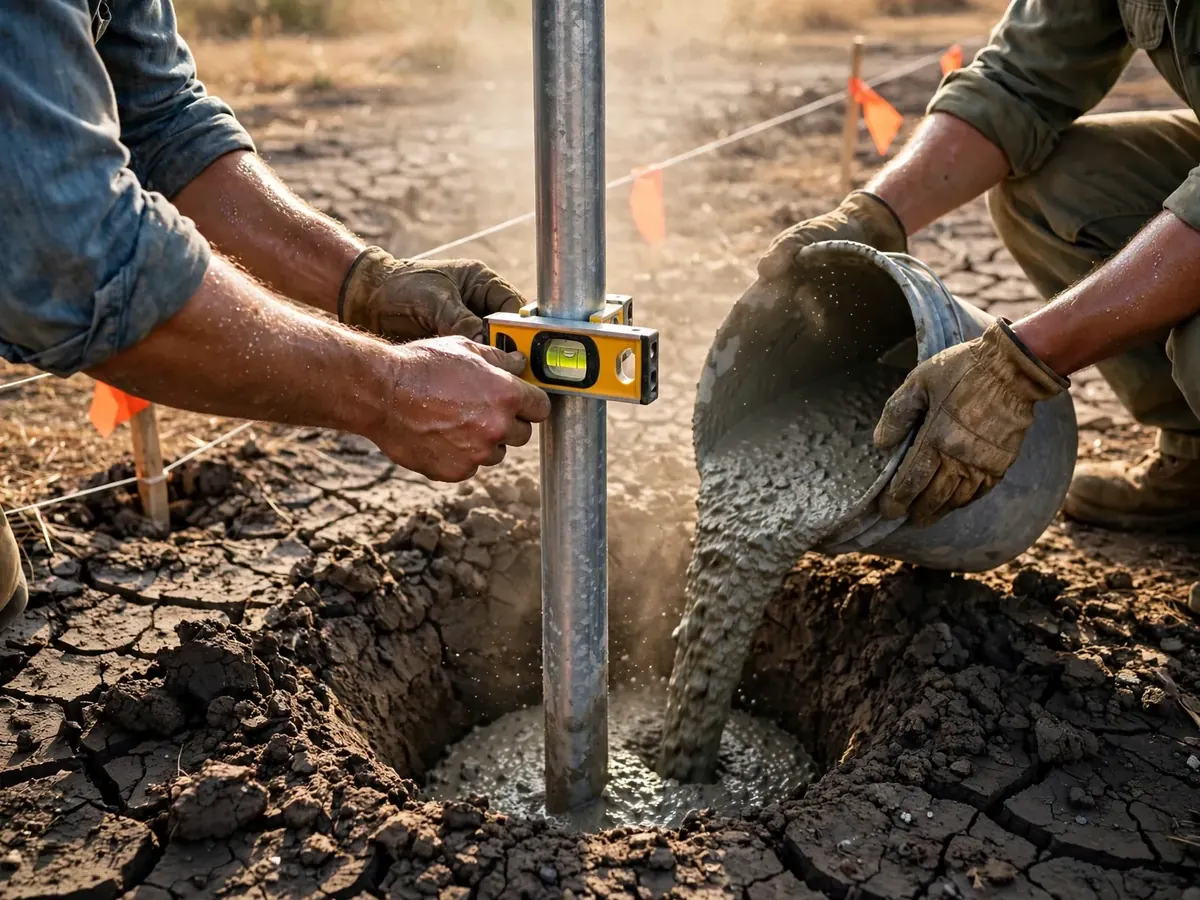
A post can often be replaced without removing the panels: the old post comes out, a new one goes in with concrete, and the rails are reattached. Steel posts with brackets are a common replacement that won't rot again.
Replacing a single post is often possible without taking the panel down, which keeps the repair quick. Magnolia's humidity keeps wood damp longer, so rot resistance and airflow deserve extra attention.
A common concern: If you DIY, consider hiring out just the posts and footings, which is where experience matters most.
Storm-Damaged Fences in Magnolia
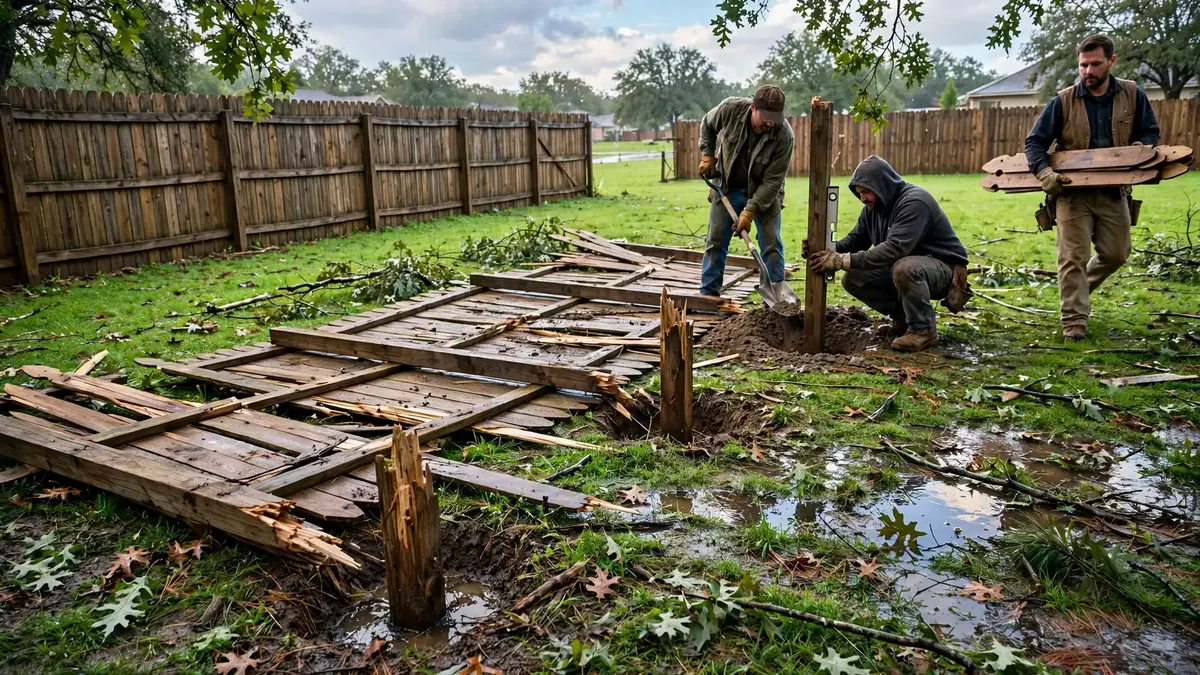
Have the neighboring posts checked before reattaching panels. If the fence was already old, a storm can be the moment to decide between repair and replacement.
A fence that failed in one storm often has neighbors that are close to failing, so check the posts on either side of a downed section. Magnolia's mature trees are an asset, but they require planning around roots and limbs.
Leaning Fences and Shifting Posts
In shifting clay, posts can lean even when they're not rotted. Leaning that gets worse after rain usually points to soil movement rather than rot.
Fixing a lean early usually means resetting one or two posts; waiting can mean a whole section. Magnolia lots that hold water need materials that tolerate wet conditions.
One practical point: If the fence is on the property line, talk to your neighbor before work starts about access and debris.
Fence Damage From Trees and Roots
Big trees near a fence line are beautiful but hard on fences. Roots lift posts and footings, and storms drop limbs onto panels.
An arborist can tell whether a tree near the fence is a risk in the next storm.
Repair or Replace?
Fences built on wood posts usually start failing post by post after 10 to 15 years. The answer depends on the posts.
A useful rule: if more than about a third of the posts are loose or rotted, a new fence often costs only a little more than patching and lasts far longer. In Magnolia's newer neighborhoods, upgrades often replace the original builder materials.
A question many homeowners raise: Get the scope, materials and cleanup in writing before work begins, so everyone agrees on what's included.
Other Fence Situations in Magnolia
Broken Pickets, Rails and Sagging Sections
New cedar pickets will look brighter than old ones at first; they usually weather to match within a season or two.
Common Reasons Magnolia Homeowners Call
If any of these sound familiar at your Magnolia home, it's a good time to talk to a fence repair pro:
- Storm or tree damage
- Posts loose at the base
- Broken or missing pickets
Before You Call
- Photograph damaged sections
- Check whether pets can get out
- Note how many posts and feet of fence are affected
- Pull your HOA's architectural guidelines and the approval form; most Magnolia associations want them before work is scheduled
- Mention any past flood damage to the area
Planning Fence Repair in Magnolia: What to Expect
Dial 877-753-1892 to talk to a fence repair pro who works in Magnolia. Have your questions ready, from permits to materials, and take notes. Call now and get your Magnolia fence project moving.
877-753-1892Fence Questions From Magnolia Homeowners
Can one rotted post be replaced without replacing the fence?
In most cases. The crew detaches the panels, digs out the old post and its concrete, sets a new post and reattaches the rails. Ask about this on your first call, since conditions vary across Magnolia.
How long does a fence project take in Magnolia?
Rain delays are common in the rainy spring and hurricane season, so build a little slack into your plans. If you're working around an event or a new pet, say so on the first call; it helps the fence repair pro plan materials and crew time.
What should Magnolia homeowners know about fence projects?
If your Magnolia neighborhood has an HOA, approval is usually the first step and sets the style. North of Houston the land is wooded, so storm-felled pines and oaks are a frequent cause of fence damage.