
Fence Repair in Plano: Local Conditions
Plano's neighborhoods are mostly 1970s to 1990s subdivisions, many now on their second or third fence. Alley-loaded homes with back fences are common.
Plano is a Collin County city with many corporate headquarters. Builder-grade work in newer Plano subdivisions often wears out sooner than homeowners expect. Plano shares shifting clay with The Colony, so solutions that work well there usually suit Plano too.
- Municipal codes cover height, setbacks and visibility at corners, which can change a fence plan.
- The fences that came with newer homes were often built quickly and are now leaning or graying.
Materials That Suit Plano
HOA-approved cedar privacy fences with a top cap, ornamental iron along greenbelts and ponds, and masonry columns at corners are the usual mix here. If your Plano neighborhood has an HOA, approval is usually the first step and sets the style.
Repair or Replace?
A partial replacement, such as one side of the yard, can be a middle path. Fences built on wood posts usually start failing post by post after 10 to 15 years.
Repair makes sense when the posts are sound and the damage is limited to pickets, rails or one section. Plano's permit and zoning rules can shape the design, so check them early.
A frequent worry, answered: DIY can save labor, but renting augers, hauling concrete and disposing of the old fence add up, so compare honestly.
Storm-Damaged Fences in Plano
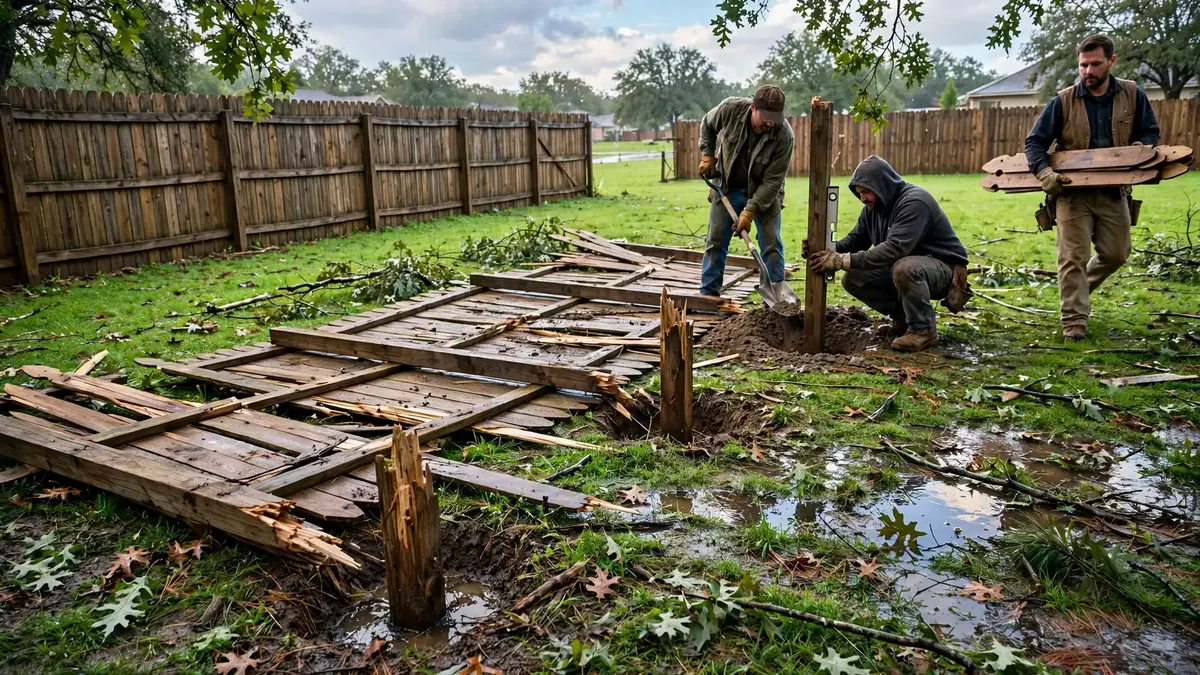
When a whole run goes down in a storm, the posts on either side are often weakened too. Have the neighboring posts checked before reattaching panels.
If your neighbor's fence fell into yours, sort out who's responsible before the repair starts. Open exposure in Plano means the fence should be built for gusts.
Leaning Fences and Shifting Posts
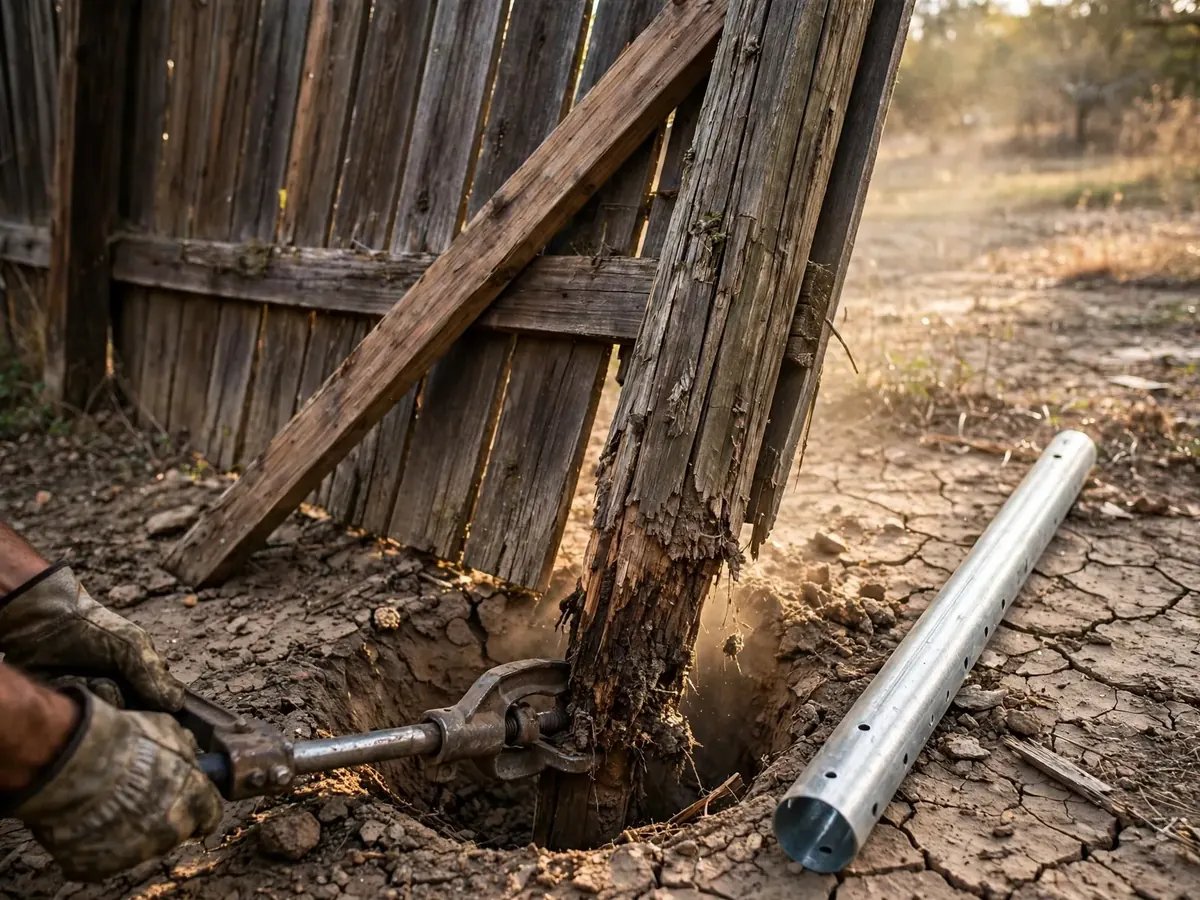
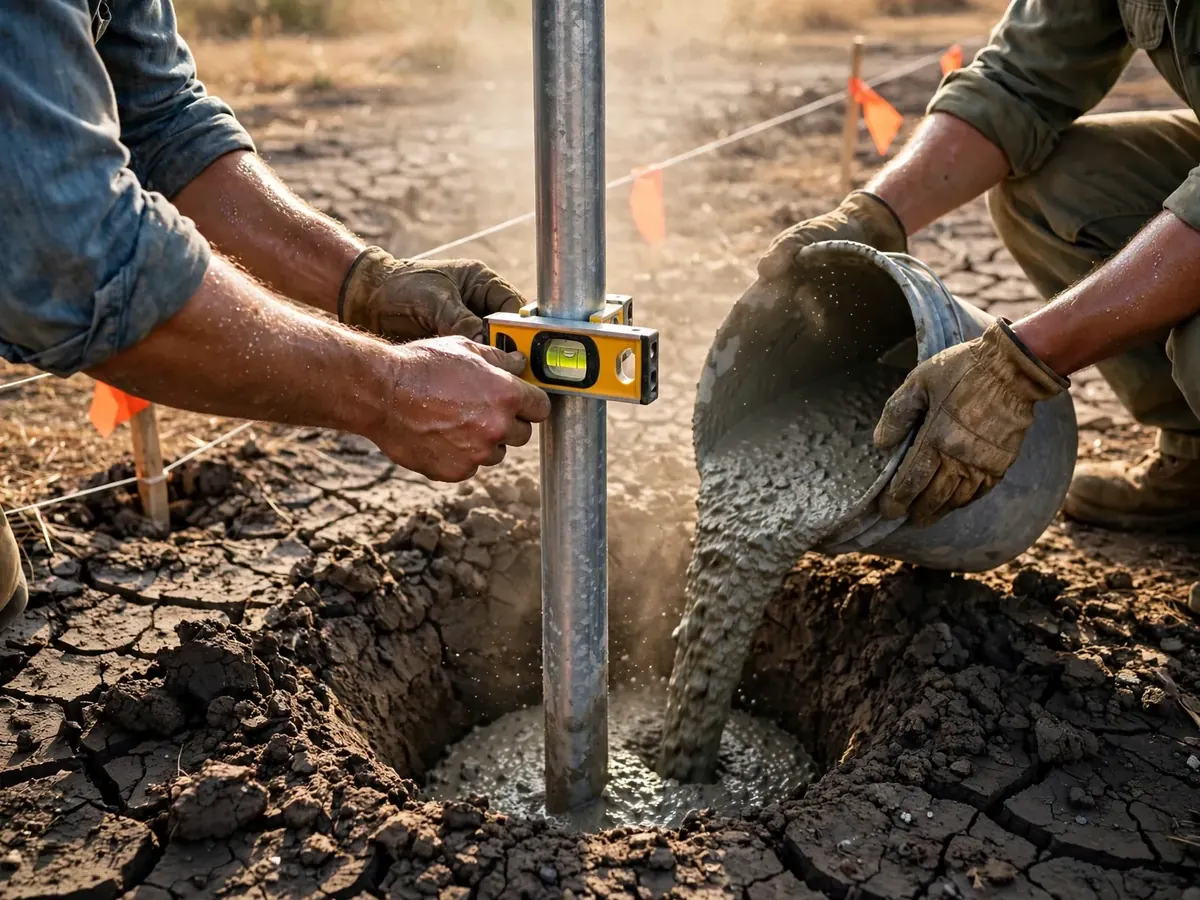
In shifting clay, posts can lean even when they're not rotted. Steel repair posts can be set next to a rotted wood post and bolted to it as a quick fix.
If several posts lean the same way, check for a common cause, such as a downspout, sprinkler or slope sending water along that side. Because much of Plano sits on shrink-swell clay, the details below the ground matter more here than in sandy or rocky areas.
A common concern: A fence that's built well and stained on schedule can last many years; one built on shallow wood posts may start leaning within a few seasons.
Broken Pickets, Rails and Sagging Sections
If the posts are solid, replacing a few pickets or a rail is a small job. Refastening with exterior screws and replacing cracked boards keeps the fence tight without a full rebuild.
Screws hold better than nails when reattaching loose pickets.
Fence Damage From Trees and Roots
Big trees near a fence line are beautiful but hard on fences. Cutting large roots near a tree can harm it, so moving the post is often the better option.
An arborist can tell whether a tree near the fence is a risk in the next storm.
A common concern: Spring is busy for fence crews; booking a little ahead of the season gives you more scheduling choices.
Rotted Post Replacement
Rot tends to start just below the soil line, where the post stays wet but gets air. Old concrete is usually broken out and removed before the new post is set.
Posts near sprinklers or downspouts rot first, so check those spots.
When to Pick Up the Phone
In Plano, these are the signs that most often lead to a call:
- Storm or tree damage
- Posts loose at the base
- Sections leaning or swaying
What to Have Ready
- Photograph damaged sections
- Check whether pets can get out
- Find your survey if posts must be moved
- Notice whether nearby fences or the house foundation show signs of soil movement
- Note corner-lot sight lines if your property is on a corner
Fence Repair in Plano: Talk to a Local Fence Repair Pro
Call 877-753-1892 when you're ready. Sharing photos and a rough measurement of your Plano project makes the conversation more specific. Booking is a phone call away; call today and lock in a time that suits you.
877-753-1892Fence Questions From Plano Homeowners
Why does my fence keep leaning?
Rot at the base of wood posts and shifting clay soil are the usual causes. Deeper footings or steel posts fix it. For a Plano home, it's worth confirming this before work starts.
Do I need to talk to my neighbor before replacing a shared fence in Plano?
If the fence is on the property line, talk to your neighbor before work starts about access and debris. If a neighbor wants to split the cost, get the agreement in writing, even an email, before the old fence comes down.
What should Plano homeowners know about fence projects?
Spring hail around Plano makes it worth choosing materials that are easy to repair. The area shares North Texas's expansive clay and frequent spring hail.