
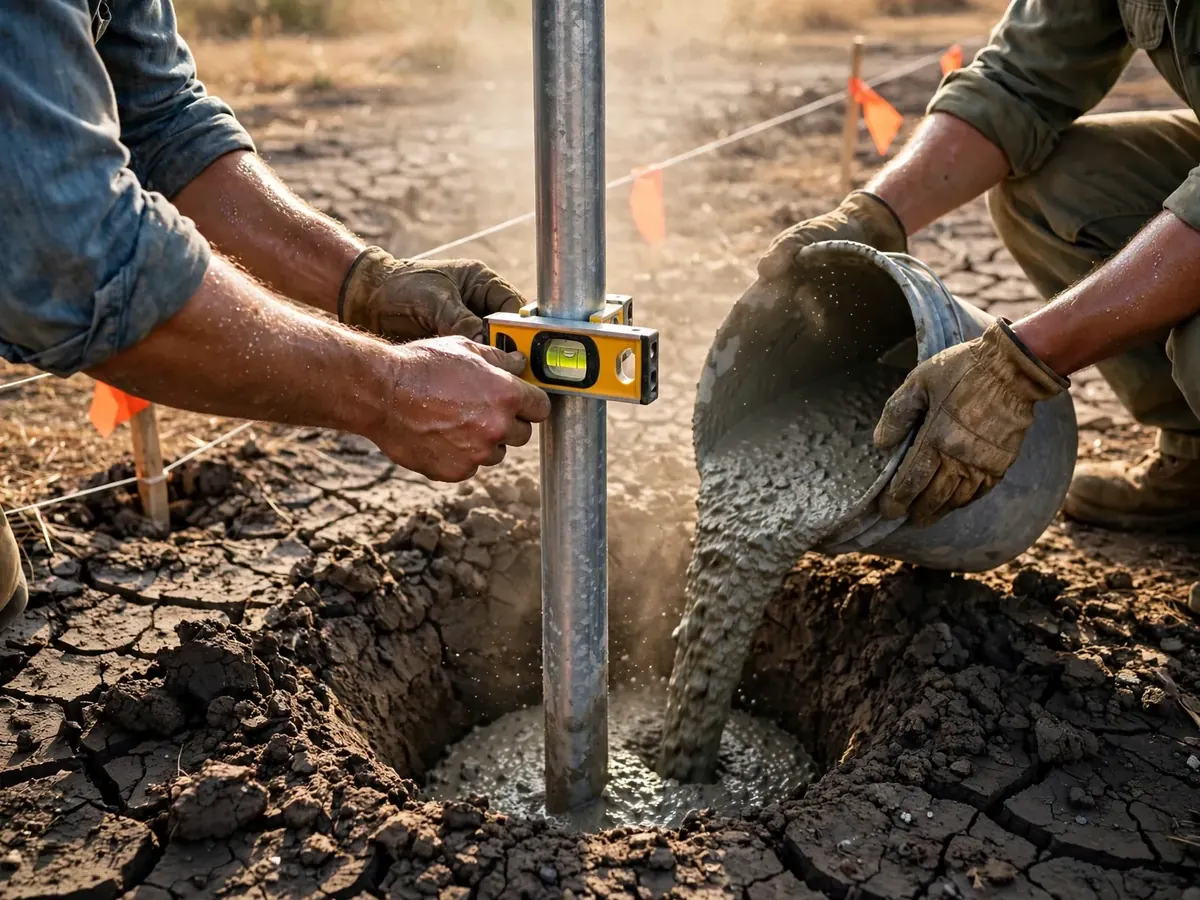
Fence Repair in The Colony: Local Conditions
The Colony sits on the east shore of Lewisville Lake in Denton County. The area shares North Texas's expansive clay and frequent spring hail.
Many homes date from the 1970s and 1980s. In HOA communities around The Colony, approval comes before scheduling a crew. Like Anna in the same region, The Colony has to plan around shifting clay.
- HOA guidelines often set fence height, style, stain color and which side faces out.
- After a hailstorm, cracked pickets and dented panels are common, and replacing a few boards is routine.
What Holds Up Around The Colony
HOA-approved cedar privacy fences with a top cap, ornamental iron along greenbelts and ponds, and masonry columns at corners are the usual mix here. Builder-grade work in newer The Colony subdivisions often wears out sooner than homeowners expect.
Repair or Replace?
The answer depends on the posts. If most are solid and only a few sections are damaged, repair makes sense.
Repairing now and planning a replacement in a few years is a valid choice if the budget is tight. Many The Colony homes are on their first fence, and builder-grade materials show their age quickly.
Before you decide: Ask what the fence repair pro expects to fail first on your lot, and how they've built to delay it.
Storm-Damaged Fences in The Colony
After a strong storm, look at where the fence failed. If the fence was already old, a storm can be the moment to decide between repair and replacement.
Temporary bracing with 2x4s can keep pets in for a few days while you wait for a repair crew. In windy The Colony, designs that let some air through can last longer.
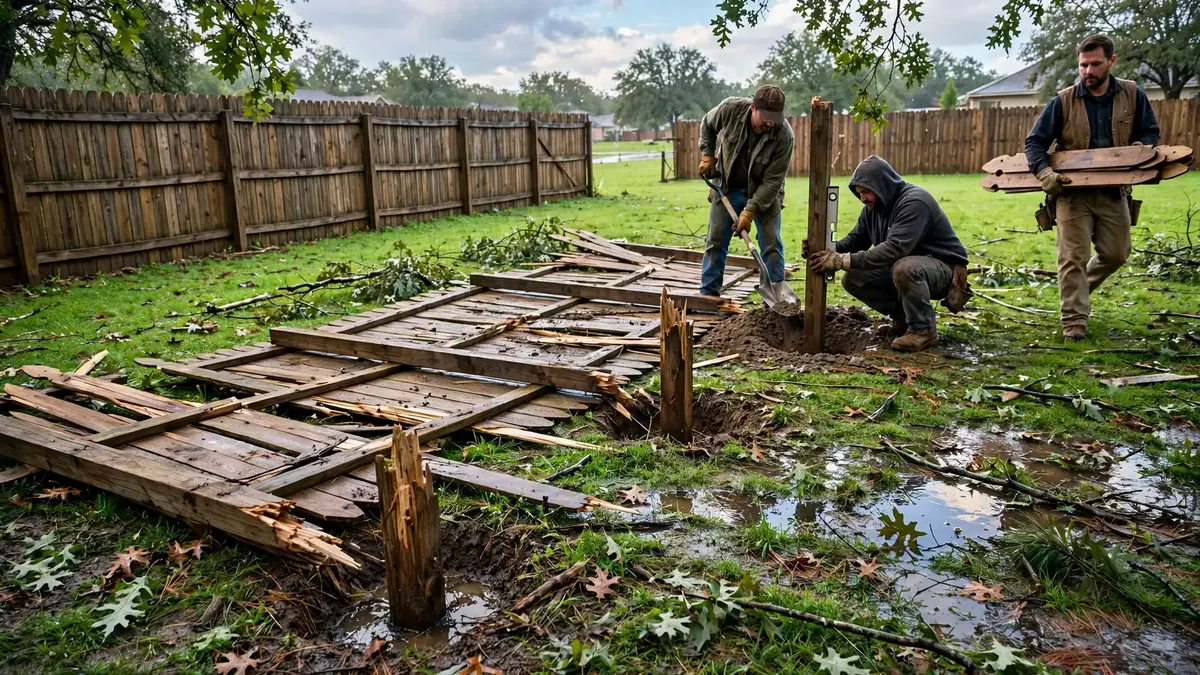
Leaning Fences and Shifting Posts
Lean is worst after wet springs and dry summers, as the ground swells and shrinks. Fixing a leaning section early keeps it from pulling down the panels on either side.
If the lean follows a drainage path, redirecting water may be part of the fix. On The Colony's clay, it's worth asking how deep each footing will go before comparing anything else.
One practical point: If a neighbor wants to split the cost, get the agreement in writing, even an email, before the old fence comes down.
Rotted Post Replacement
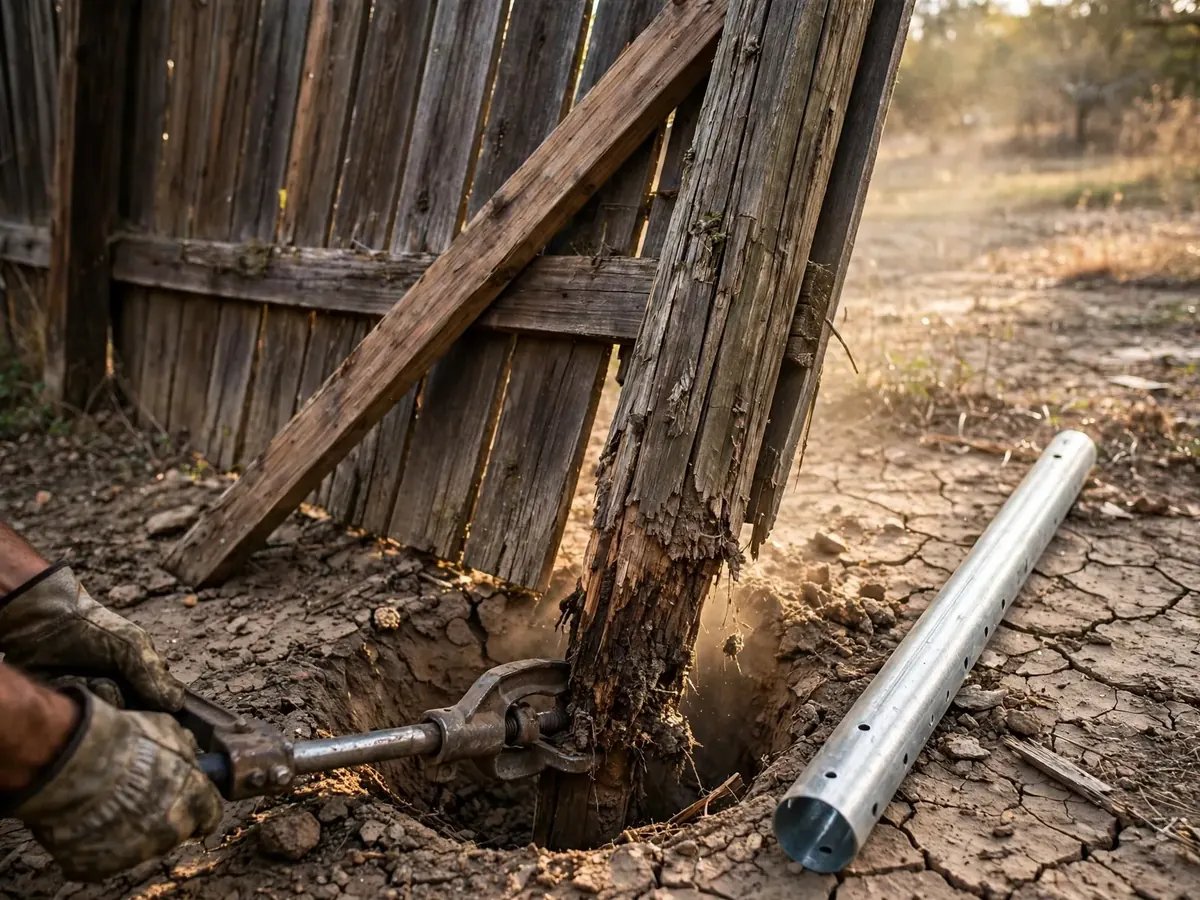
Old concrete is usually broken out and removed before the new post is set. Dig a few inches around the base of a suspect post. Dark, soft wood that crumbles under a screwdriver means the post is done. Replacing it promptly keeps the rails and pickets on either side from cracking under the extra load.
Replacing rotted posts with steel is one of the most cost-effective fence upgrades.
Fence Damage From Trees and Roots
Removing a hazardous tree before a storm is often cheaper than repairing the fence after one. Big trees near a fence line are beautiful but hard on fences.
An arborist can tell whether a tree near the fence is a risk in the next storm.
A frequent worry, answered: Spring is busy for fence crews; booking a little ahead of the season gives you more scheduling choices.
Broken Pickets, Rails and Sagging Sections
Matching picket style and height keeps a repair from standing out. A sagging section between posts usually has a broken or undersized rail.
Screws hold better than nails when reattaching loose pickets.
Common Reasons The Colony Homeowners Call
The Colony homeowners usually reach out when one of these shows up:
- Sections leaning or swaying
- Posts loose at the base
- Broken or missing pickets
Quick Checks Before the Call
- Find your survey if posts must be moved
- Photograph damaged sections
- Check whether pets can get out
- Mention any leaning or settling you've seen nearby
- Pull your HOA's architectural guidelines and the approval form; most The Colony associations want them before work is scheduled
Getting Fence Repair in The Colony Started
Dial 877-753-1892 to talk to a fence repair pro who works in The Colony. Have your questions ready, from permits to materials, and take notes. Pick up the phone today and get your fence project on the calendar.
877-753-1892Fence Questions From The Colony Homeowners
Why does my fence keep leaning?
Rot at the base of wood posts and shifting clay soil are the usual causes. Deeper footings or steel posts fix it. Your fence repair pro can tell you what applies on your specific The Colony property.
How do I choose a fence repair pro in The Colony?
Get the scope, materials and cleanup in writing before work begins, so everyone agrees on what's included. Good fence repair pros explain how they'll set posts and handle your soil without being asked; vague answers are a warning sign.
What should The Colony homeowners know about fence projects?
Spring hail around The Colony makes it worth choosing materials that are easy to repair. Frisco, McKinney, Prosper and Celina are among the fastest-growing cities in Texas, so many fences and decks here are less than 15 years old and installed by builders.