
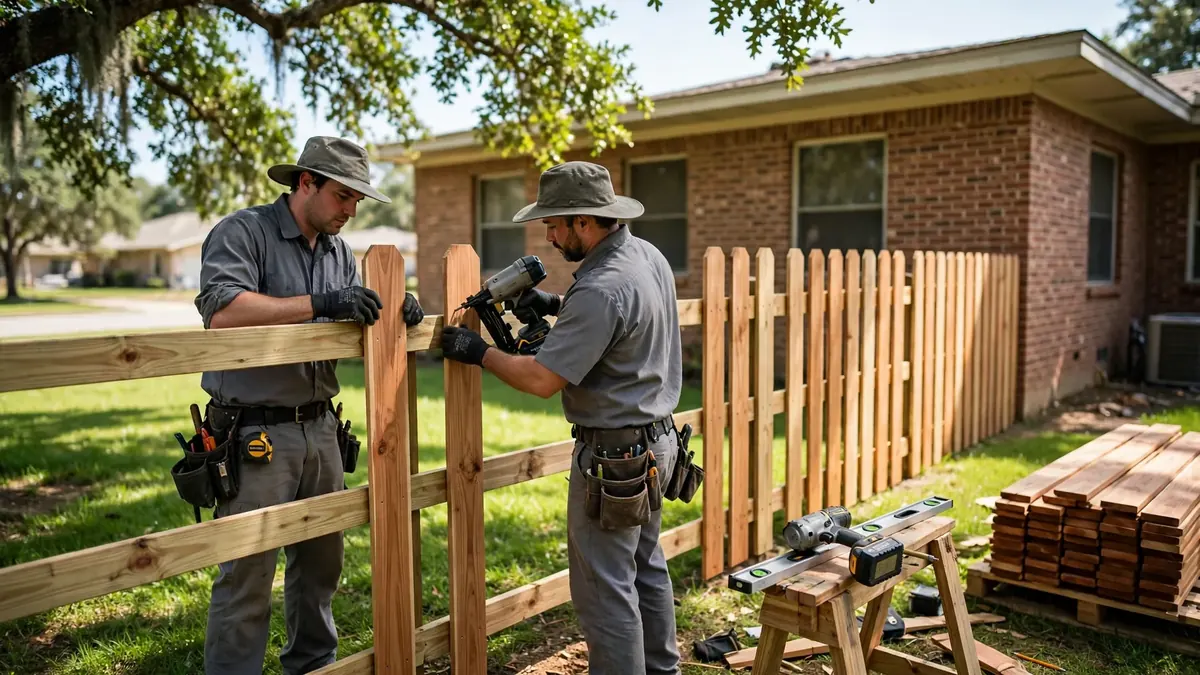
What to Know About Fence Staining in Dallas
Dallas neighborhoods range from 1920s homes near downtown to postwar ranch houses with alley-loaded back fences. Dallas is the Dallas County seat and the center of North Texas.
Its neighborhoods sit on heavy clay that swells and shrinks with the seasons. Freeze events in Dallas can crack concrete that holds water, so drainage helps. Dallas shares shifting clay with Garland, so solutions that work well there usually suit Dallas too.
- Municipal codes cover height, setbacks and visibility at corners, which can change a fence plan.
- HOA guidelines often set fence height, style, stain color and which side faces out.
Materials That Suit Dallas
Board-on-board cedar on steel posts is the default backyard fence here; ornamental iron or aluminum shows up in front yards and around pools, and masonry columns are common in newer subdivisions. Dallas' older homes often reveal surprises, like buried footings or old posts, once work begins.
Spraying vs. Brushing
Staining both sides of a shared fence needs the neighbor's permission and access. Most professional crews spray and back-brush for the best of both.
Rough-sawn cedar soaks up more stain than smooth boards, so expect to use more product on it. City codes in Dallas may set limits that affect your design.
One practical point: If your HOA needs to approve the plan, start that first, since crews can't begin without it.
Cleaning and Prep Before Stain
Too much pressure raises the grain and gouges soft cedar. Repairs should be done before staining so new boards get the same coat.
Masking hardware and gate latches keeps them clean and working. Older Dallas homes often have quirks, like settled ground or old footings, that affect new work.
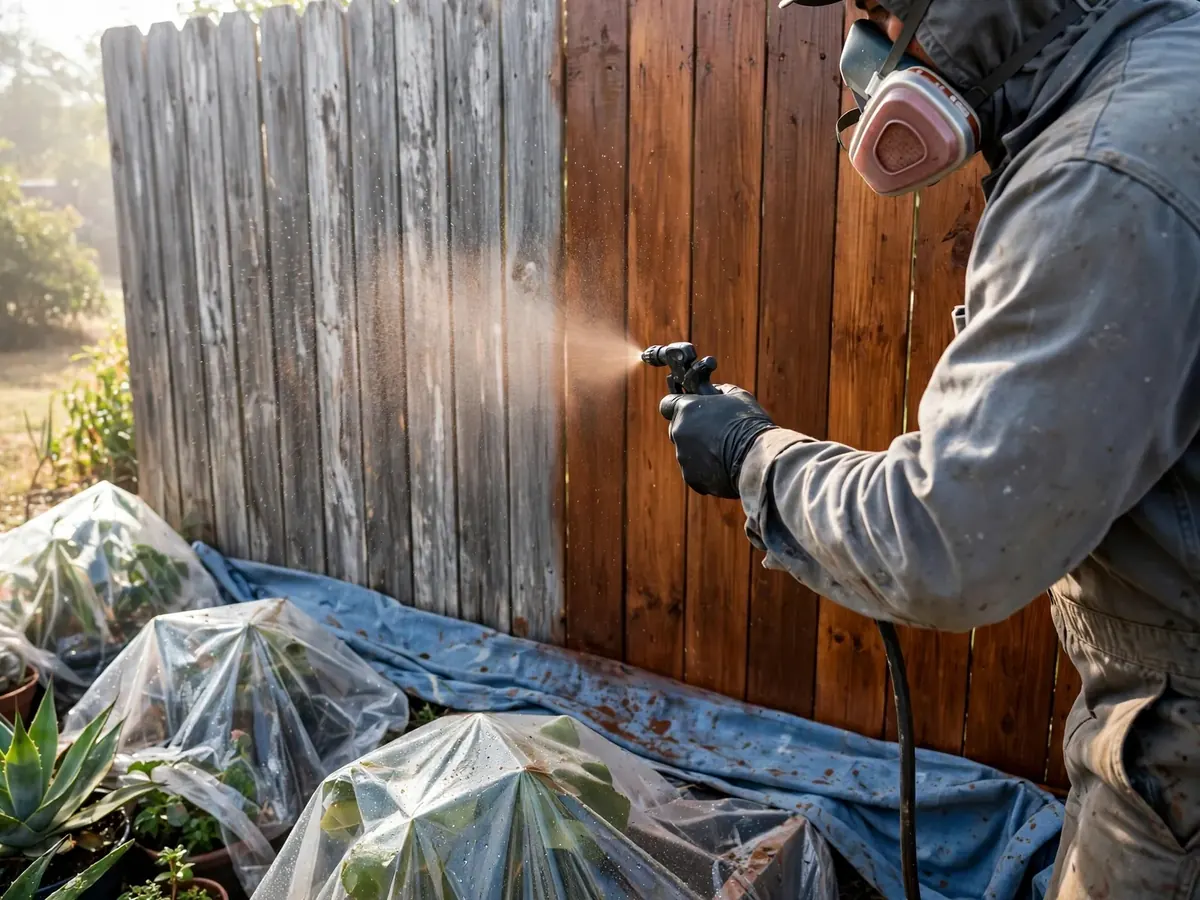
Choosing a Stain Color and Type
Darker stains hide weathering longer but can make a fence hotter to the touch. Many Dallas HOAs list approved stain colors, often a cedar tone or a natural brown, so check before buying.
Lighter stains show weathering sooner; medium tones hide it longer. If your Dallas neighborhood has an HOA, approval is usually the first step and sets the style.
Something to keep in mind: If the fence is on the property line, talk to your neighbor before work starts about access and debris.
Why Texas Fences Gray So Fast
A pigmented, semi-transparent stain blocks much of that UV. Unstained cedar in full sun can start to gray within months.
Staining early protects the color you liked when the fence was new.
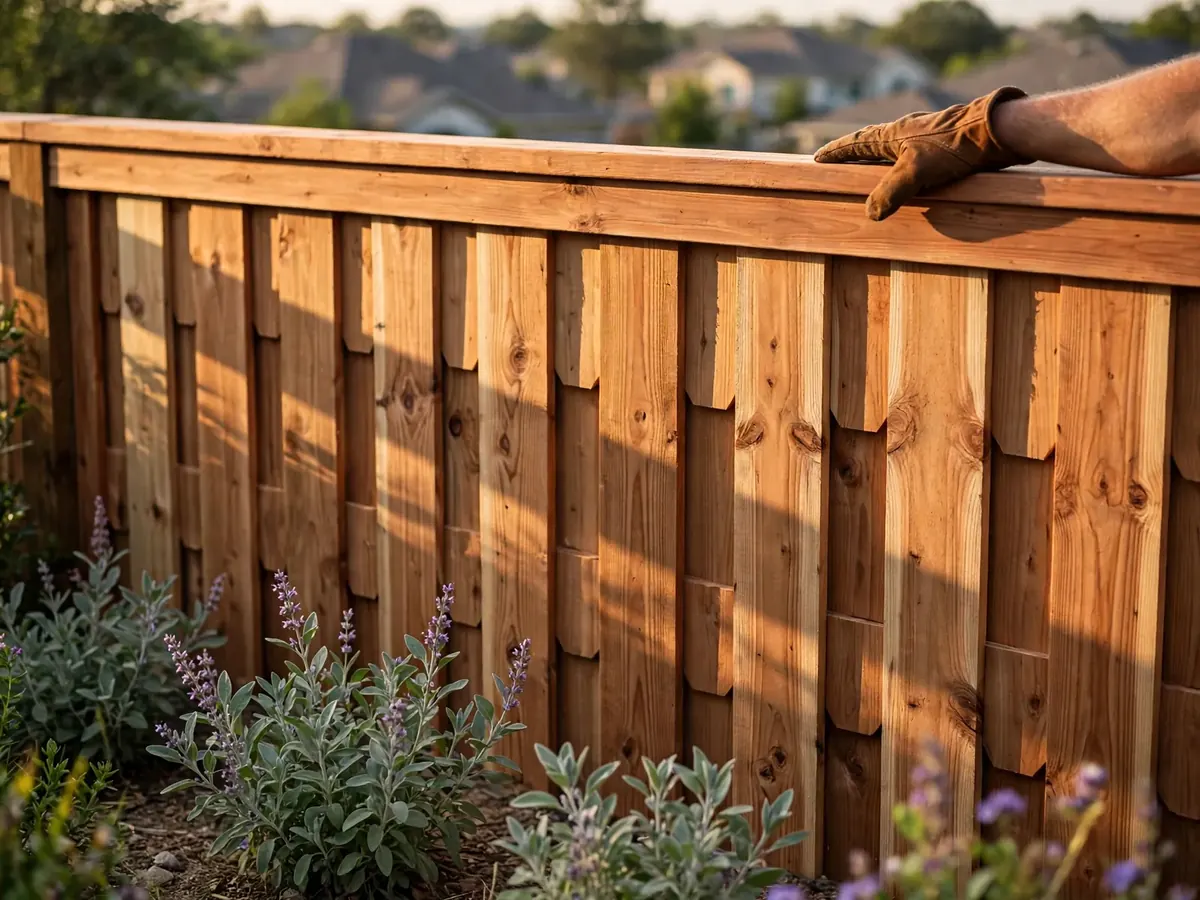
When to Restain
Waiting too long means more cleaning and more stain to bring the wood back. Spring and fall are popular staining seasons because temperatures are moderate.
Restaining before the wood turns fully gray takes less prep and less product.
A question many homeowners raise: A fence on steel posts, kept stained, often outlives two fences built on wood posts.
Signs It's Time to Call in Dallas
Watch for these around your Dallas property:
- Mildew or black spots
- Splintering pickets
- Gray, faded wood
Before You Call
- Check HOA-approved stain colors
- Trim plants back from the fence
- Plan to move cars and outdoor furniture
- Look up your city's height and setback rules, or ask the fence staining pro to
- Note your HOA's approved colors and styles so the fence staining pro can quote the right materials
Fence Staining in Dallas: Talk to a Local Fence Staining Pro
A quick call to 877-753-1892 is the easiest way to get a Dallas-specific answer. Ask about timelines, permits and how materials affect cost. Call today to ask your questions or book your fence stain project.
877-753-1892Fence Stain Questions From Dallas Homeowners
Should I use a clear sealer or a stain?
Choose a pigmented semi-transparent stain; the pigment blocks UV, so it lasts longer than a clear sealer in strong sun. Ask about this on your first call, since conditions vary across Dallas.
Is a new fence stain in Dallas worth the cost?
Sticker shock is common, but the biggest savings usually come from choosing the right height and post type, not the cheapest pickets. If budget is the sticking point, consider phasing the work: replace the sections that face the street or the dog run first, and finish the rest when it makes sense.
What should Dallas homeowners know about fence stain projects?
On Dallas' clay, it's worth asking how deep each footing will go before comparing anything else. Much of Dallas County sits on Blackland Prairie clay that swells when wet and shrinks in drought, which slowly pushes fence posts and deck footings out of line.