
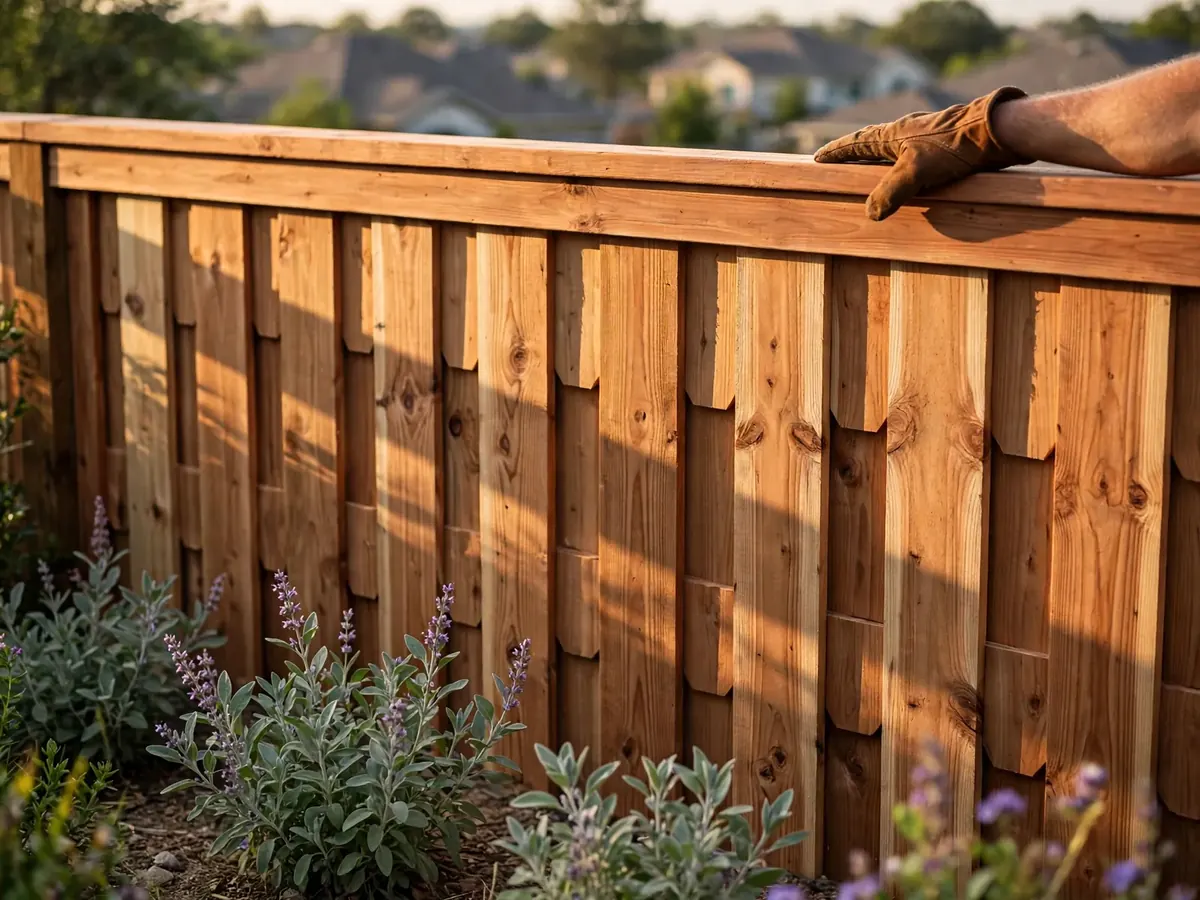
What to Know About Fence Staining in San Angelo
San Angelo sits on the Concho River in West Texas ranch country. It's home to Goodfellow Air Force Base and Angelo State University, with older and newer neighborhoods side by side.
San Angelo is the Tom Green County seat, at the meeting of the Concho rivers. In windy San Angelo, designs that let some air through can last longer. Dry heat is a common thread between San Angelo and Abilene.
- Local codes can affect how tall the fence can be and where it can sit, especially near streets.
- In dry, sunny conditions, stain is the main defense against cracked and weathered boards.
Materials That Suit San Angelo
Ranches rely on steel pipe and pipe-and-cable; in town, steel-framed wood fences, cedar and masonry walls handle the wind best. Ranch land around San Angelo sets a practical standard: built to hold livestock and last.
When to Restain
When water stops beading on the wood and the color fades, it's time for another coat. In full sun, that may be every two years; in shade, longer. Regular maintenance coats are faster and cheaper than restoring a fence that has gone fully gray.
Sun-facing sides wear out first, so some homeowners restain those sides more often. UV protection matters in San Angelo; it's the difference between a fence stain that weathers gracefully and one that cracks.
A frequent worry, answered: Lifespan comes down to water: keep wood dry at the ground line and the fence lasts.
Why Texas Fences Gray So Fast
The south- and west-facing sides of a fence gray first, because they get the most afternoon sun. Staining those sides more often keeps the whole fence looking even. A pigmented, semi-transparent stain blocks much of that UV.
Graying is mostly cosmetic at first, but once the surface fibers loosen, water soaks in deeper and speeds up rot. Before finalizing plans, confirm San Angelo's requirements for height and placement.
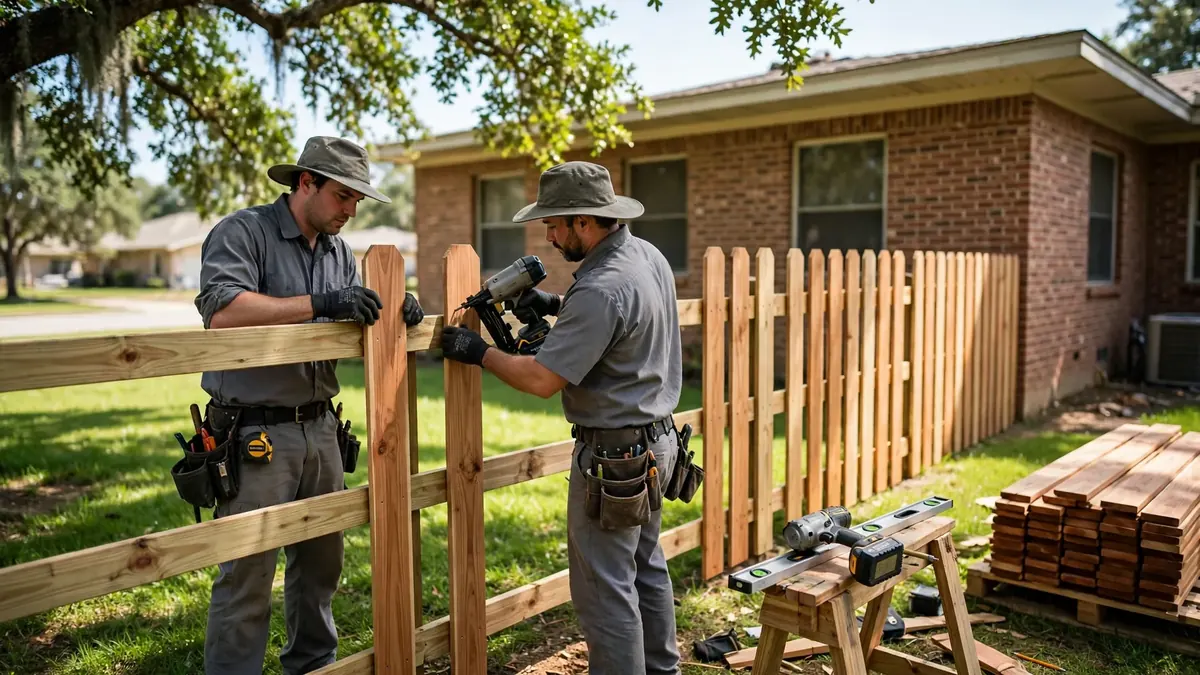
Spraying vs. Brushing
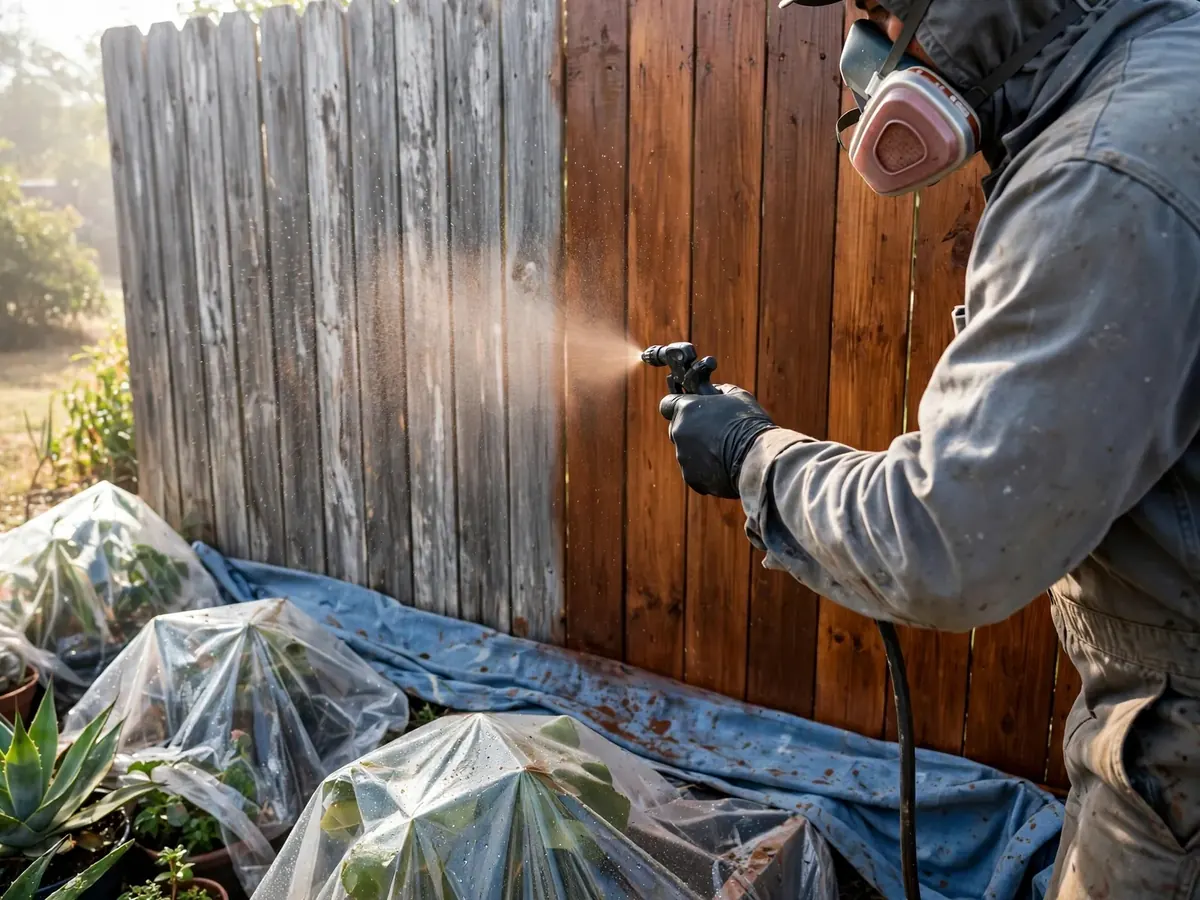
Spraying gets stain into the gaps between pickets that brushes miss. Many homeowners stain only their side.
Calm, mild days give the best results for spraying.
A question many homeowners raise: DIY makes the most sense for short runs and simple designs.
Choosing a Stain Color and Type
Solid stains hide grain completely and behave more like paint. Test a stain on a hidden section first.
Look at the stain on a few boards in sun and shade before committing.
Cleaning and Prep Before Stain
If water soaks into the wood immediately and the surface feels fuzzy, the fence needs a cleaning and light wash before any stain will last. A wood cleaner or brightener removes gray fibers and restores color before staining.
Stain sticks to clean wood, not to dirt and mildew, so cleaning is what makes a stain job last.
One practical point: Neighbors usually care most about access during the work and which side gets the finished face, so settle both up front.
Signs It's Time to Call in San Angelo
San Angelo homeowners usually reach out when one of these shows up:
- Splintering pickets
- HOA notice about fence color
- Mildew or black spots
Before You Call
- Plan to move cars and outdoor furniture
- Check HOA-approved stain colors
- Trim plants back from the fence
- Know what animals the fence stain needs to hold and how many gates you need
- Mark where vehicles, trailers and animals need to pass
Getting Fence Staining in San Angelo Started
Ready to talk it through? Dial 877-753-1892, mention you're in San Angelo, and share photos if you have them. You'll hear what the job involves before anything is scheduled. Pick up the phone today and get your fence stain project on the calendar.
877-753-1892Fence Stain Questions From San Angelo Homeowners
Do I need my neighbor's permission to stain the fence?
To stain their side or work from their yard, yes. Many homeowners stain only their side. For a San Angelo home, it's worth confirming this before work starts.
What should I ask a fence staining pro before hiring?
Get the scope, materials and cleanup in writing before work begins, so everyone agrees on what's included. A good fence builder will tell you what they don't know until they start digging, such as rock or roots.
What should San Angelo homeowners know about fence stain projects?
Caliche under San Angelo lots can slow digging and hold water around footings, so drainage matters. Pipe fencing made from used oilfield pipe is a regional tradition on ranches across the Permian Basin.