
What to Know About Ranch Fencing in Gilmer
Gilmer is the Upshur County seat, home of the East Texas Yamboree. Falling limbs and trees during storms are a common cause of fence and deck damage here.
Homes here are often on rural tracts with timber, pasture and creeks. Rural Gilmer properties often need longer runs and sturdier gates than suburban lots. Sandy soil is a common thread between Gilmer and Whitehouse.
- On acreage, the fence often has to keep animals in as well as people out.
- Root growth and falling branches make tree-lined fences a common repair call.
Choosing Materials in Gilmer
Pine and cedar privacy fences are common, with treated posts or steel posts in sandy soil; wire and wood fencing on acreages. In established Gilmer neighborhoods, matching the character of the street matters.
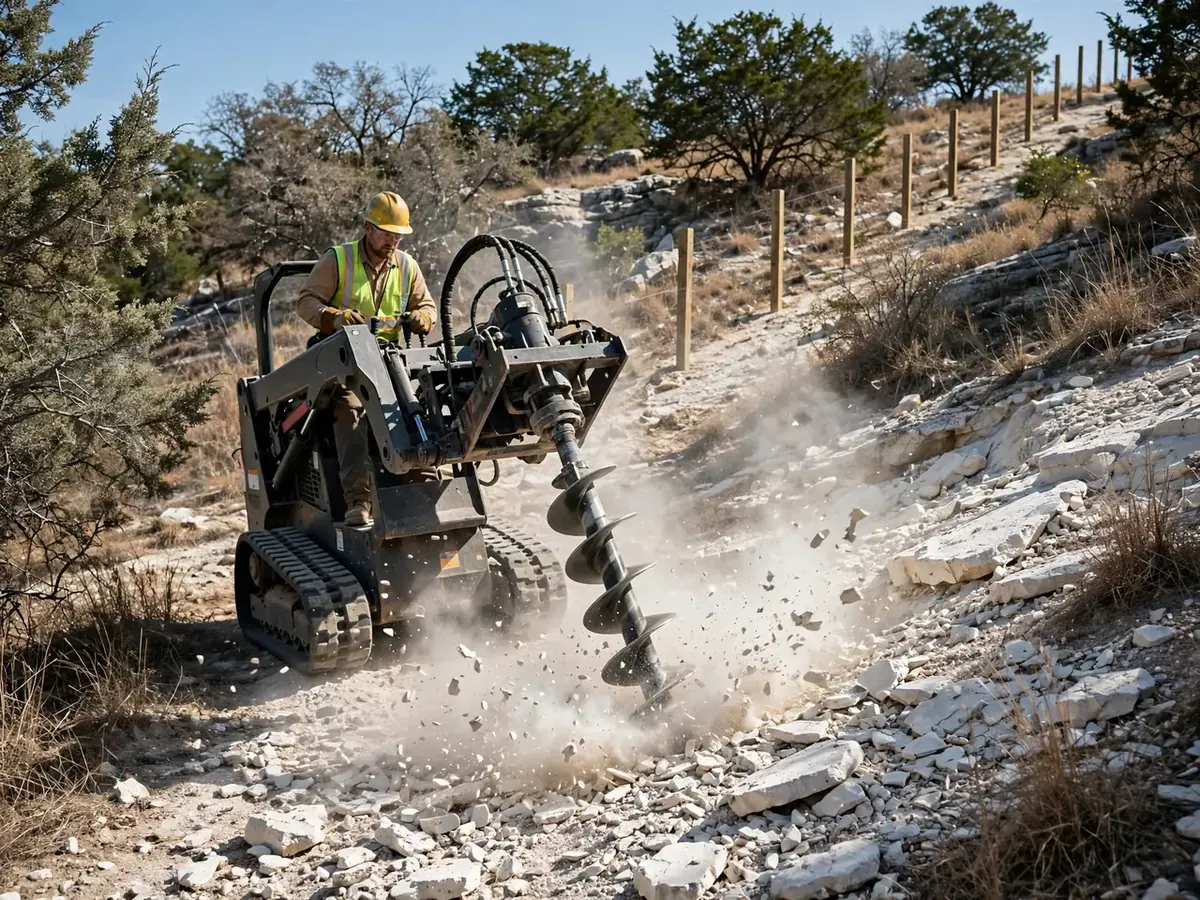
Clearing the Fence Line and Marking Boundaries
Marking corners with stakes before clearing keeps the line straight. Brush, cedar and mesquite along an old fence line make it hard to build or repair.
Clearing a wider strip makes future maintenance easier. Around Gilmer's big trees, plan for falling limbs and root growth.
A frequent worry, answered: Setting a long line of posts straight and plumb takes practice; many DIY fences wander and lean within a few years.
Corners, Braces and Gates
Gate posts are usually the largest posts on the fence. Corner assemblies often use two or three posts tied together with braces and wire.
Gates should open in the direction animals and vehicles naturally move.
Pipe and Pipe-and-Cable Fences Near Gilmer
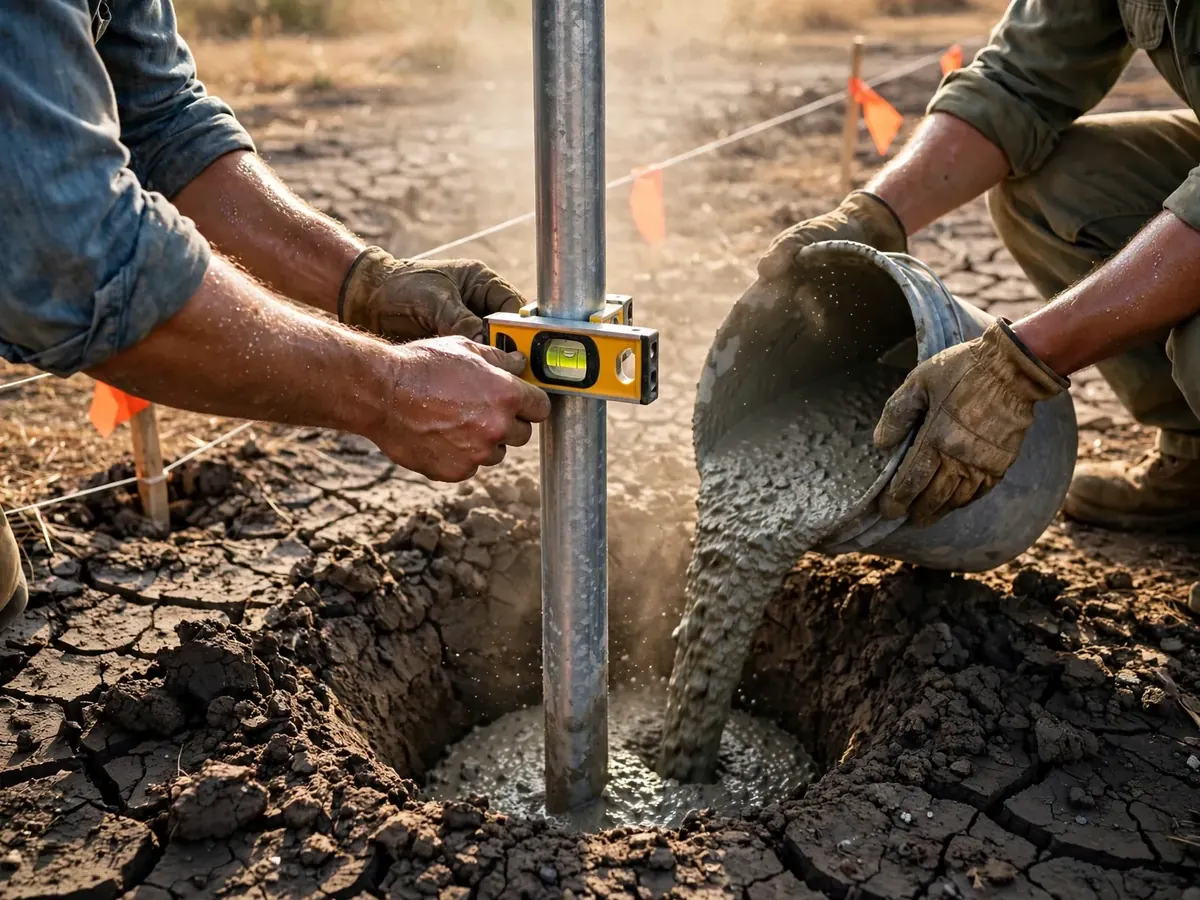
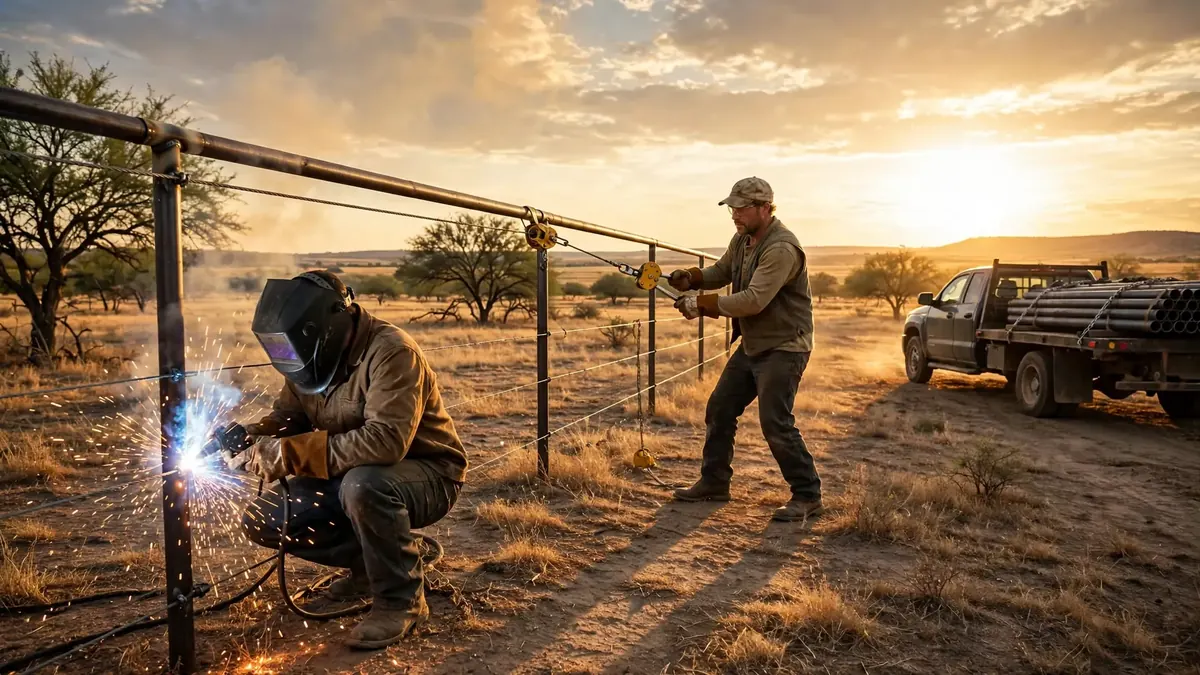
Pipe fencing is a Texas ranch tradition, often built from steel pipe welded on site and set in concrete or driven. It lasts for decades and handles cattle and horses. Ask whether the fence will be painted and how the post caps will be finished to keep water out.
Cable fences are a good middle ground between wire and full pipe fencing.
A frequent worry, answered: If you're working around an event or a new pet, say so on the first call; it helps the ranch fence builder plan materials and crew time.
Game and Deer Fencing
Gates in game fences must be as tall as the fence itself. Deer will jump a standard fence easily.
Deer can clear a standard fence with ease, so game fences are usually 7 to 8 feet tall.
Barbed Wire and Field Fence
Long wire runs on rolling ground need extra braces where the grade changes. Stays between posts keep wire strands evenly spaced.
Choosing the wire to fit the animal saves money and frustration.
Before you decide: Ask what the ranch fence builder expects to fail first on your lot, and how they've built to delay it.
Other Ranch Fence Situations in Gilmer
Horse Fencing
Horses need visible, smooth fencing like pipe, no-climb wire or rail fencing, not barbed wire.
When to Pick Up the Phone
Around Gilmer, a call usually follows one of these:
- Horses or cattle getting out
- New acreage without livestock fencing
- Deer damaging gardens or orchards
Quick Checks Before the Call
- Mark gate locations and widths
- Know the property boundaries or have a survey
- Note the animals you need to hold
- Mark where vehicles, trailers and animals need to pass
- Note large trees near the work area and any overhanging limbs
Getting Ranch Fencing in Gilmer Started
A quick call to 877-753-1892 is the easiest way to get a Gilmer-specific answer. Ask about timelines, permits and how materials affect cost. The sooner you call, the sooner your ranch fence work can be scheduled.
877-753-1892Ranch Fence Questions From Gilmer Homeowners
Why does my wire fence sag?
Usually the corner or brace posts have shifted. Rebuilding the braces tightens the run. For a Gilmer home, it's worth confirming this before work starts.
How do I choose a ranch fence builder in Gilmer?
Not sure who to trust? Ask how long they've worked locally, whether they carry insurance, and who you'll deal with once work starts. Get the scope, materials and cleanup in writing before work begins, so everyone agrees on what's included.
What should Gilmer homeowners know about ranch fence projects?
In Gilmer's sandy ground, setting posts and footings deeper makes up for the looser soil. Humidity and shade keep wood damp longer, so rot and termites matter more than in drier parts of the state.