
Common Situations Behind Ranch Fencing Services
Pipe and Pipe-and-Cable Fences in Texas
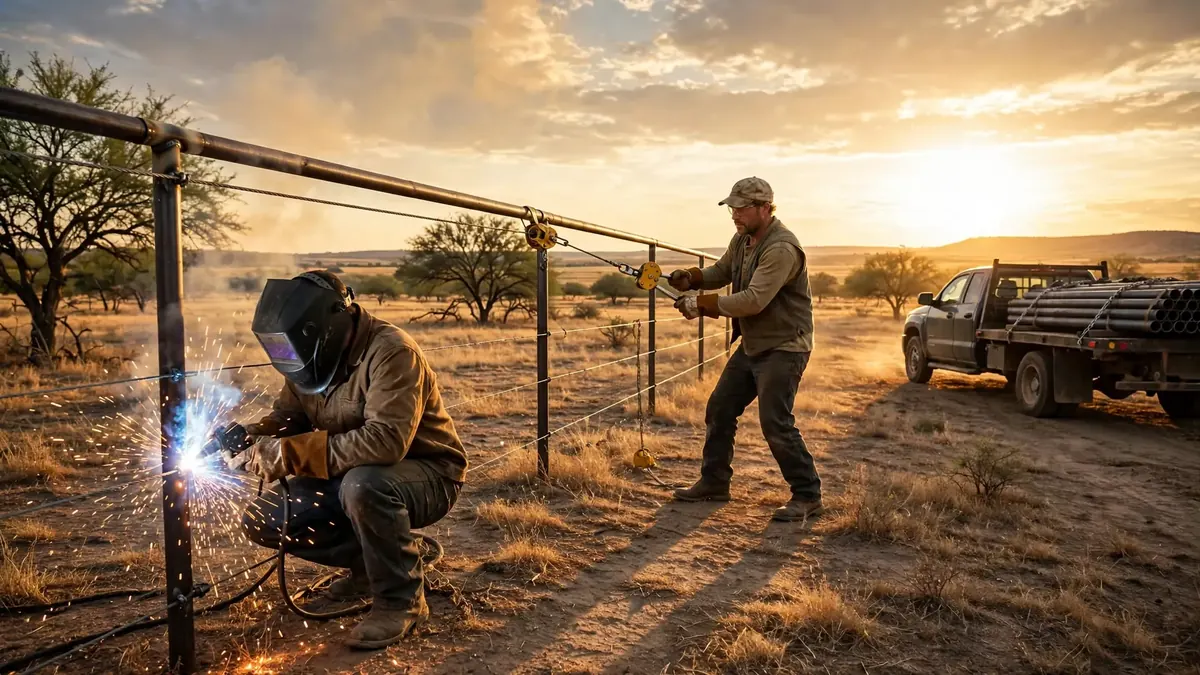
Welded pipe fences are strong and long-lived; pipe-and-cable adds tensioned cable runs between pipe posts.
Barbed Wire and Field Fence
Barbed wire suits cattle; woven field fence suits goats, sheep and smaller animals; both rely on strong braces.
Horse Fencing
Horses need visible, smooth fencing like pipe, no-climb wire or rail fencing, not barbed wire.
Game and Deer Fencing
High fences keep deer and wildlife in or out; they need taller posts and careful bracing.
Corners, Braces and Gates
Strong corner and brace assemblies keep long fence runs tight for years.
Clearing the Fence Line and Marking Boundaries
Brush clearing, surveys and access planning come before the first post on rural land.
Signs It's Time to Call
- New acreage without livestock fencing
- Sagging wire and failing corner braces
- Horses or cattle getting out
- Deer damaging gardens or orchards
- Planning wider gates for equipment
What to Have Ready When You Call
- Know the property boundaries or have a survey
- Note the animals you need to hold
- Mark gate locations and widths
- Identify creeks, rock and brush along the line
Ranch Fencing Services by City
Open your city for local conditions, the options that hold up there and the number to call.
No matching city. Try another spelling, or call 877-753-1892.
Ranch Fencing Services: Common Questions
What is the best fence for cattle near Texas?
Barbed wire or pipe-and-cable with strong corner braces is common for cattle; pipe fencing lasts longest.
Is barbed wire safe for horses?
No. Pipe, no-climb wire or rail fencing is safer for horses.
Why does my wire fence sag?
Usually the corner or brace posts have shifted. Rebuilding the braces tightens the run.
Do I need a survey for ranch fencing?
It's strongly recommended so the fence goes on the right line.