
What to Know About Ranch Fencing in Panhandle
The surrounding land is wide-open plains and farmland. The Panhandle sees large hail, blizzards and hard freezes that the rest of Texas rarely gets.
Panhandle is the small Carson County seat northeast of Amarillo. Occasional hard freezes in Panhandle are a reason to make sure water can drain away from footings. Like Lubbock in the same region, Panhandle has to plan around steady wind.
- Acreages around town need fences sized for pets, horses or livestock rather than just privacy.
- Ranches nearby rely on welded pipe and tight wire fences built around strong braced corners.
Materials That Suit Panhandle
Wind favors steel-framed wood fences, masonry and pipe; ranches use pipe, barbed wire and pipe-and-cable. Ranch land around Panhandle sets a practical standard: built to hold livestock and last.
Pipe and Pipe-and-Cable Fences Near Panhandle
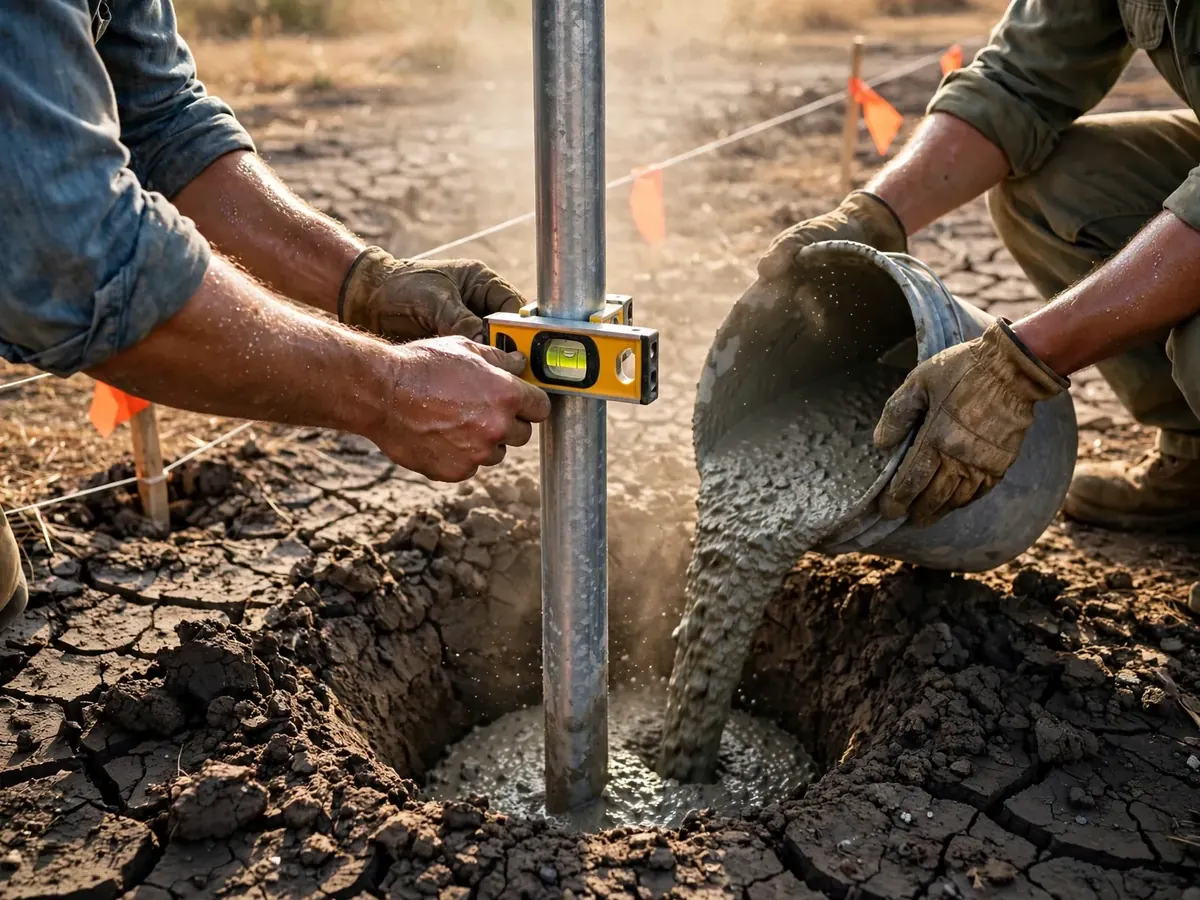
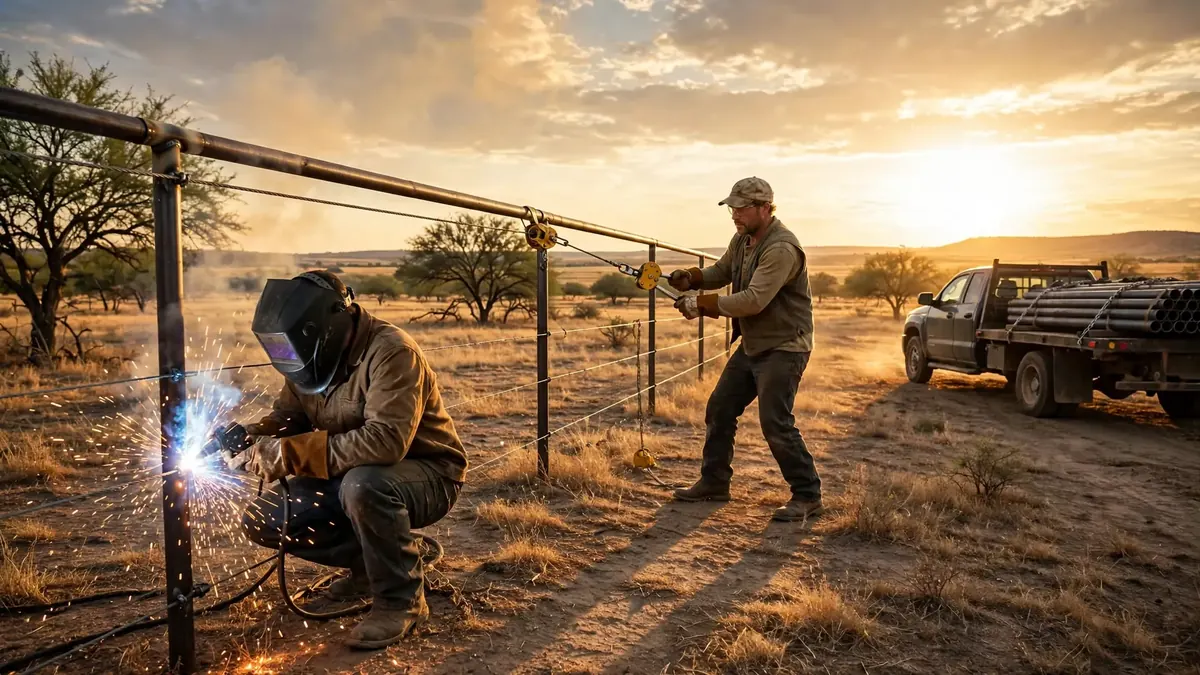
Pipe-and-cable fences combine pipe posts with tensioned steel cables between them. Painting the pipe slows rust, and capping open post tops keeps rainwater from rotting them from the inside.
Cable fences need strong end posts and tensioners to keep the cables tight over time. Around Panhandle's ranches, strong corners and gates matter most.
Something to keep in mind: If you DIY, consider hiring out just the posts and footings, which is where experience matters most.
Corners, Braces and Gates
Most ranch fence repairs start at a corner that moved. A well-built brace keeps wire tight for many years.
Over-building corners is rarely a mistake on a ranch fence. On Panhandle acreage, distance and animals shape the plan more than looks.
Clearing the Fence Line and Marking Boundaries
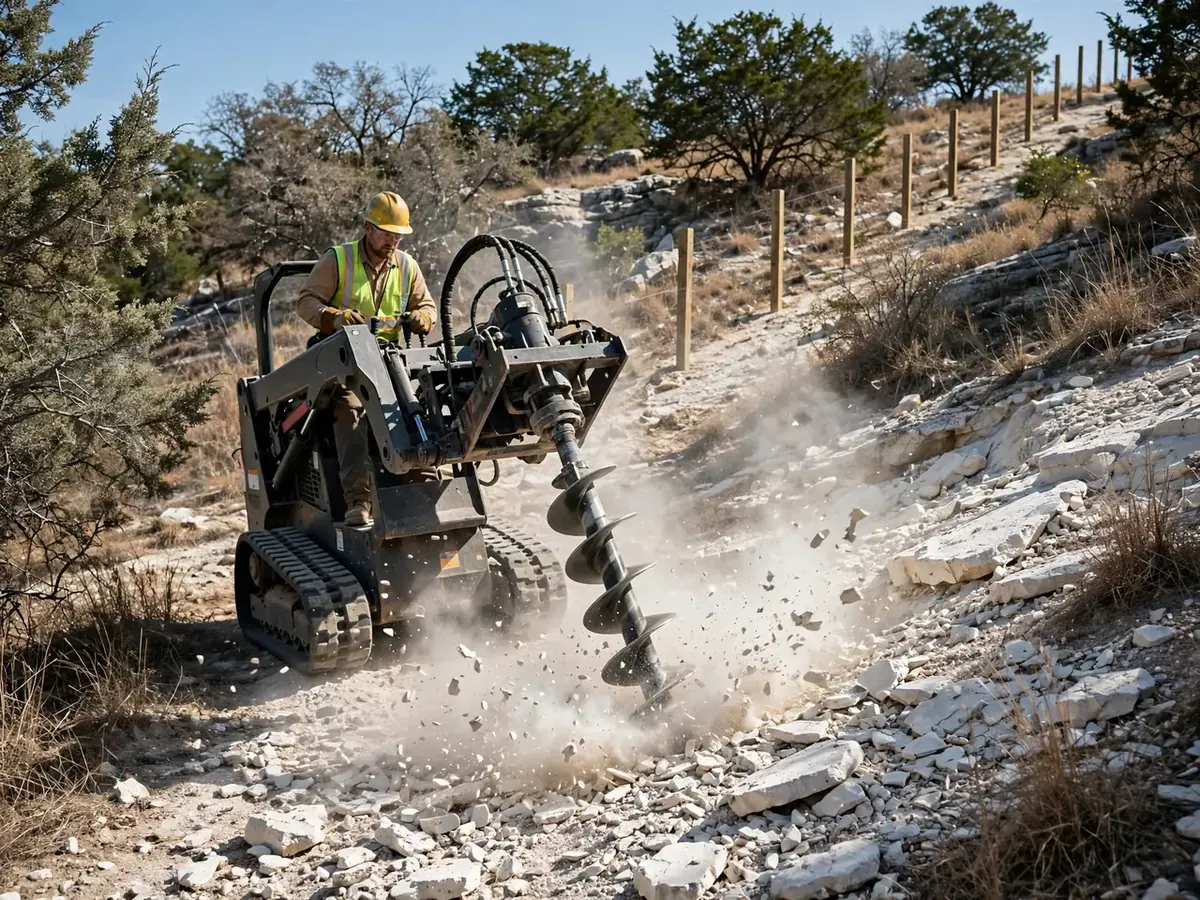
For larger tracts, the fence builder will walk the line and flag corners, gates and problem spots like creeks, rock and steep slopes. Mulching equipment can clear brush along a fence line quickly.
A clear strip on both sides of the fence makes building faster and later inspections easier.
A common concern: If your HOA needs to approve the plan, start that first, since crews can't begin without it.
Barbed Wire and Field Fence
Field fence comes in rolls with different mesh sizes for different animals. Stays between posts keep wire strands evenly spaced.
Tight wire on strong braces needs less maintenance than slack wire on weak corners.
Horse Fencing
Electric wire along the top keeps horses from leaning on the fence. Horse fences are often 5 feet tall or more.
No-climb wire with a top rail or a sight board gives horses a visible barrier and keeps hooves from catching.
One practical point: Ask who handles permits, utility locates and HOA paperwork so nothing falls through the cracks.
Other Ranch Fence Situations in Panhandle
Game and Deer Fencing
High fences keep deer and wildlife in or out; they need taller posts and careful bracing.
Common Reasons Panhandle Homeowners Call
In Panhandle, these are the signs that most often lead to a call:
- Horses or cattle getting out
- Deer damaging gardens or orchards
- New acreage without livestock fencing
Quick Checks Before the Call
- Mark gate locations and widths
- Note the animals you need to hold
- Know the property boundaries or have a survey
- Note any corner or brace posts that already exist and their condition
- Check whether old footings or posts will need to be removed
Planning Ranch Fencing in Panhandle: What to Expect
Call 877-753-1892 and describe the project, your city and your timeline. You'll be pointed to a ranch fence builder who works in Panhandle. Ask about scheduling, permits and how the job will be priced before work begins. Make the call today and take the first step toward a ranch fence you can count on.
877-753-1892Ranch Fence Questions From Panhandle Homeowners
What is the best fence for cattle near Panhandle?
Barbed wire or pipe-and-cable with strong corner braces is common for cattle; pipe fencing lasts longest. In Panhandle, that comes down to your lot and how the ranch fence is built.
Do I need to talk to my neighbor before replacing a shared ranch fence in Panhandle?
If the fence is on the property line, talk to your neighbor before work starts about access and debris. If a neighbor wants to split the cost, get the agreement in writing, even an email, before the old fence comes down.
What should Panhandle homeowners know about ranch fence projects?
In windy Panhandle, designs that let some air through can last longer. Amarillo and Lubbock are among the windiest cities in the United States, so fence panels act like sails in a storm.