
Local Conditions That Shape Wrought Iron Fence Installation in Arlington
Older neighborhoods here mix 1950s–1970s ranch homes with alley-access lots, where the back fence often runs along a shared alley. Much of Dallas County sits on Blackland Prairie clay that swells when wet and shrinks in drought, which slowly pushes fence posts and deck footings out of line. North Texas is one of the most hail-prone metro areas in the country, and spring storms regularly bring damaging straight-line winds.
- Cities set rules on front-yard fence height, corner-lot sight lines and masonry walls, so check before building.
- HOA guidelines often set fence height, style, stain color and which side faces out.
What Holds Up Around Arlington
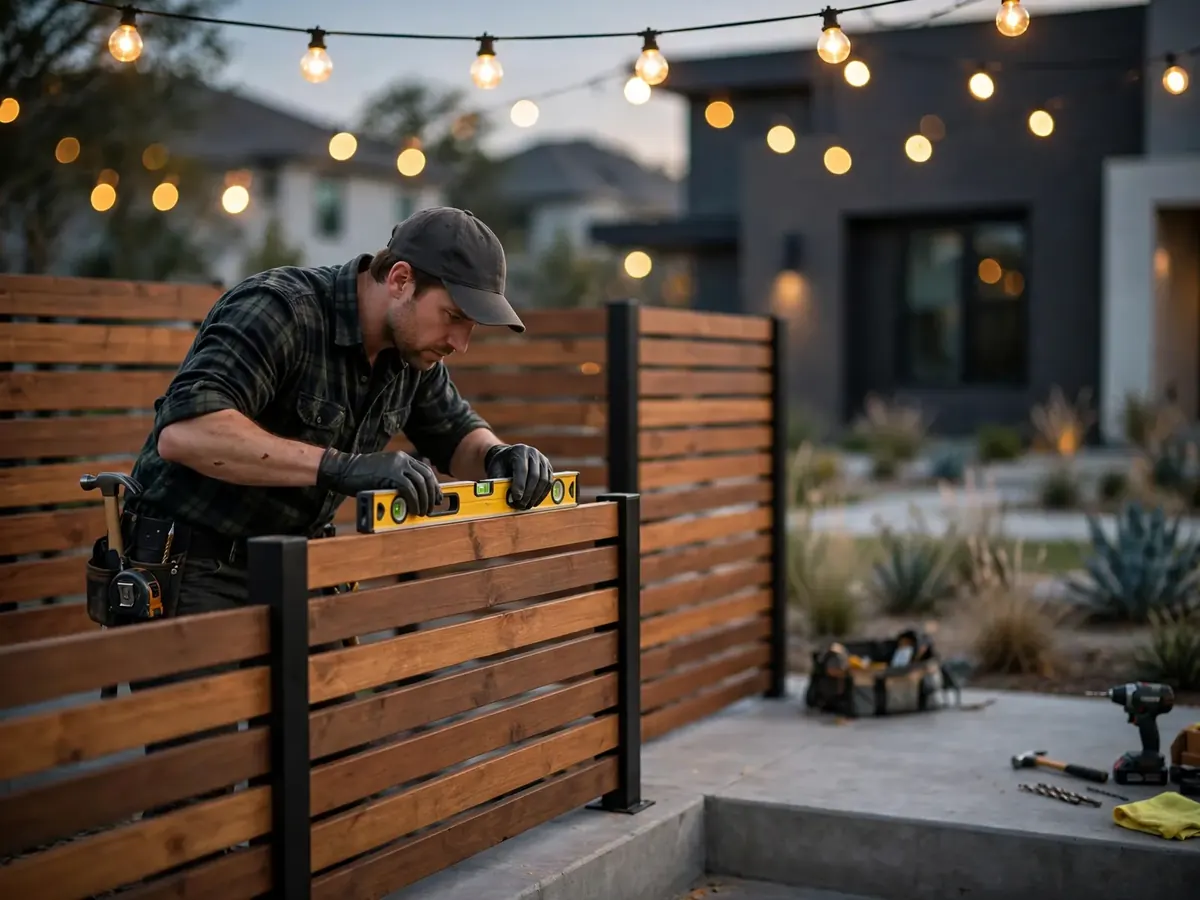
Board-on-board cedar on steel posts is the default backyard fence here; ornamental iron or aluminum shows up in front yards and around pools, and masonry columns are common in newer subdivisions.
Front-Yard Iron Fences in Arlington
A front-yard iron fence works best when it frames the house rather than walls it off. Keeping it low, open and matched to a walk gate gives security and curb appeal at the same time.
Pool Fences and Barriers
Pool fences have specific requirements in most Texas cities, typically based on the model pool barrier codes: a minimum height, limited gaps between pickets and gates that open outward and close and latch by themselves. Ornamental aluminum and steel are popular because they meet those rules and don't block the view of the pool.
Rust, Repainting and Upkeep
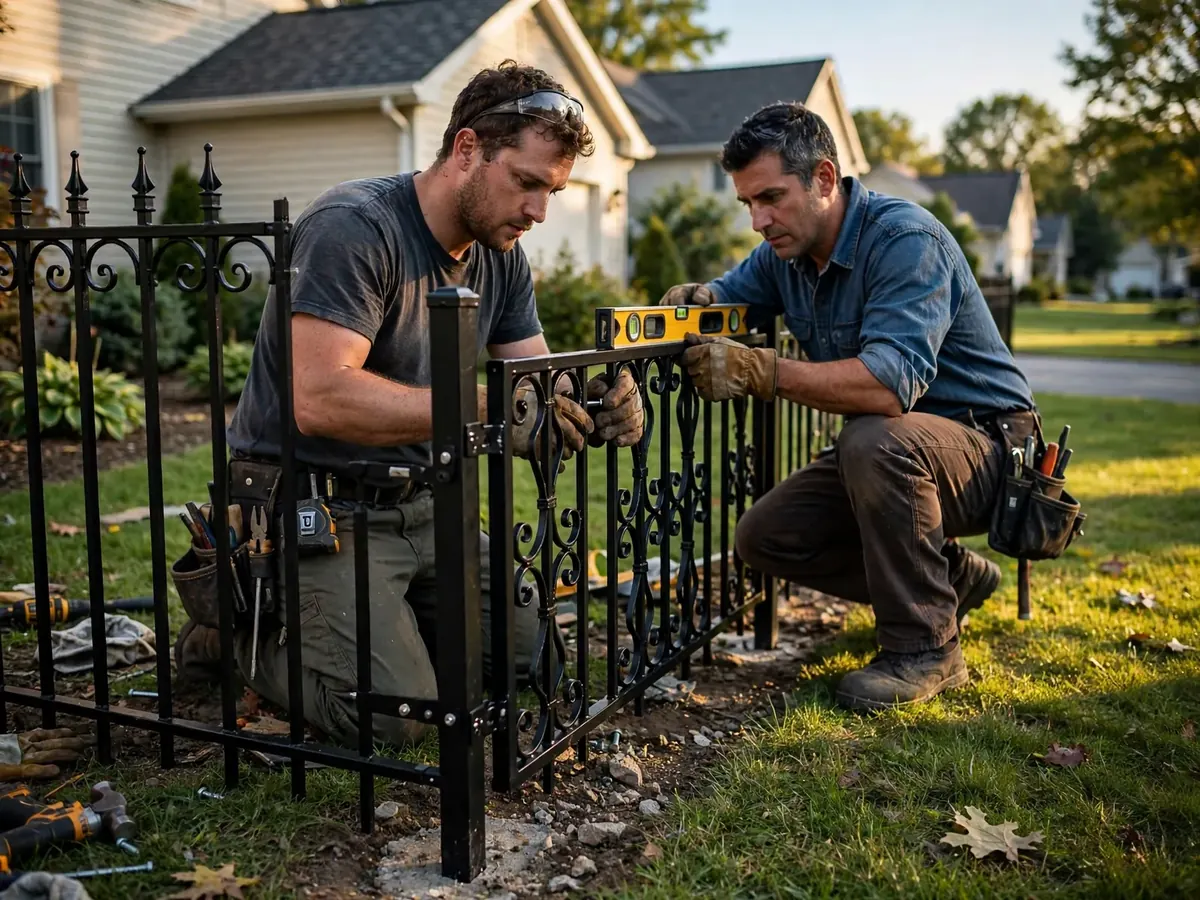
An older iron fence with rust can often be sanded and repainted instead of replaced. Severely rusted posts at ground level may need to be cut out and replaced.
Posts, Footings and Slopes
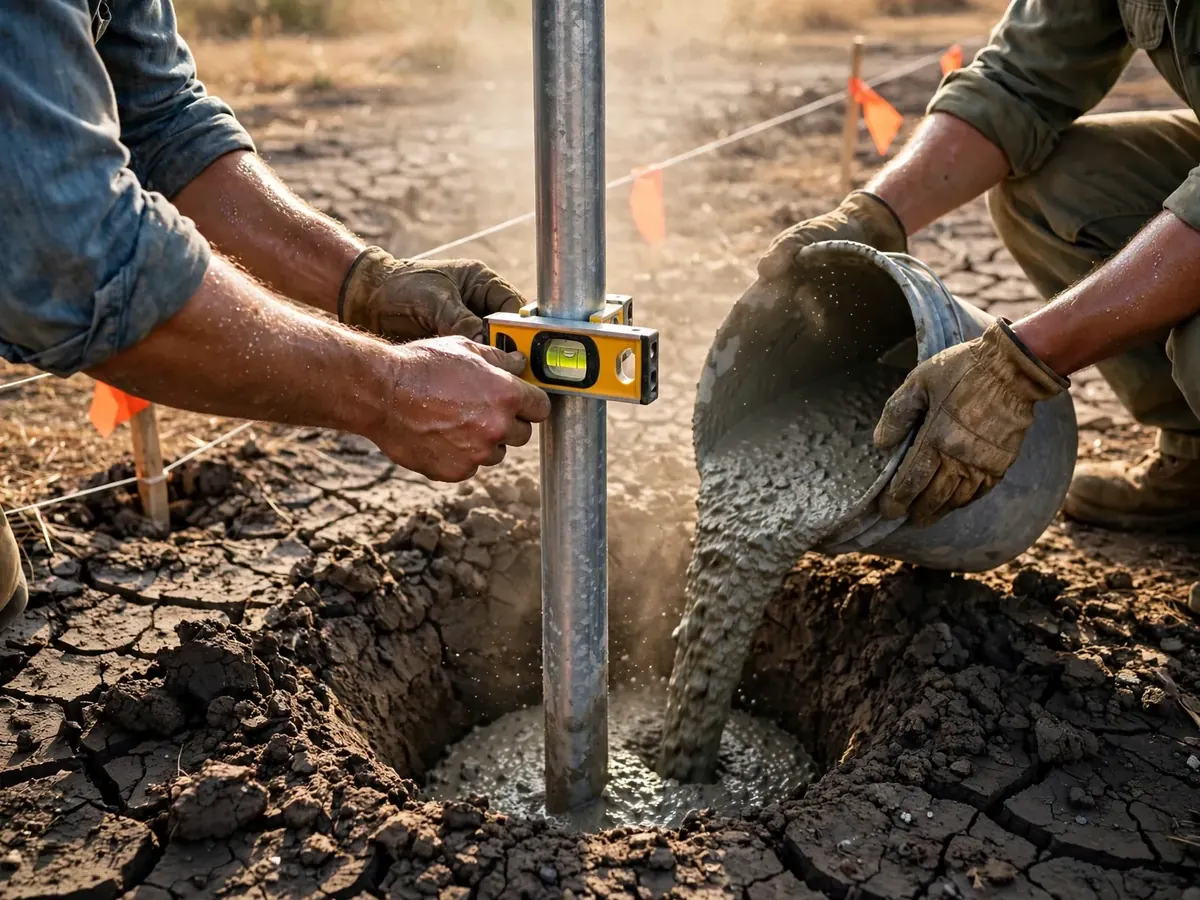
Ornamental panels are rigid, so the posts must be precisely spaced and plumb. On uneven ground, the installer will decide panel by panel whether to rack or step to keep the bottom gap even.
Wrought Iron vs. Steel vs. Aluminum
Most fences called wrought iron today are welded steel, which is strong and affordable but rusts if the coating is scratched. Powder-coated aluminum is lighter, doesn't rust and suits humid or coastal areas like Arlington's, though it's less rigid. Ask the installer which you're getting.
When to Pick Up the Phone
- Rust on an existing iron fence
- HOA calls for ornamental fencing
- Adding a matching driveway gate
- Planning a pool
What to Have Ready
- Check city front-yard and pool barrier rules
- Decide on steel or aluminum
- Measure the run and mark gate locations
- Note slopes in the yard
Wrought Iron Fence Installation in Arlington: Talk to a Local Ornamental Fence Installer
Call 877-753-1892 and describe the project, your city and your timeline. You'll be pointed to a ornamental fence installer who works in Arlington. Ask about scheduling, permits and how the job will be priced before work begins.
877-753-1892Iron Fence Questions From Arlington Homeowners
Do pool fences have special requirements?
Usually yes: minimum height, limited gaps and self-closing, self-latching gates. Check your city's pool barrier rules.
How tall can a front-yard iron fence be?
Many Texas cities limit front-yard fences to around 4 feet. Check your city's rules.
What should Arlington homeowners know about iron fence projects?
Older neighborhoods often have fences on wood posts that are near the end of their life. Shrink-swell clay moves posts every season, so post depth, footing shape and steel posts matter more than picket style.