
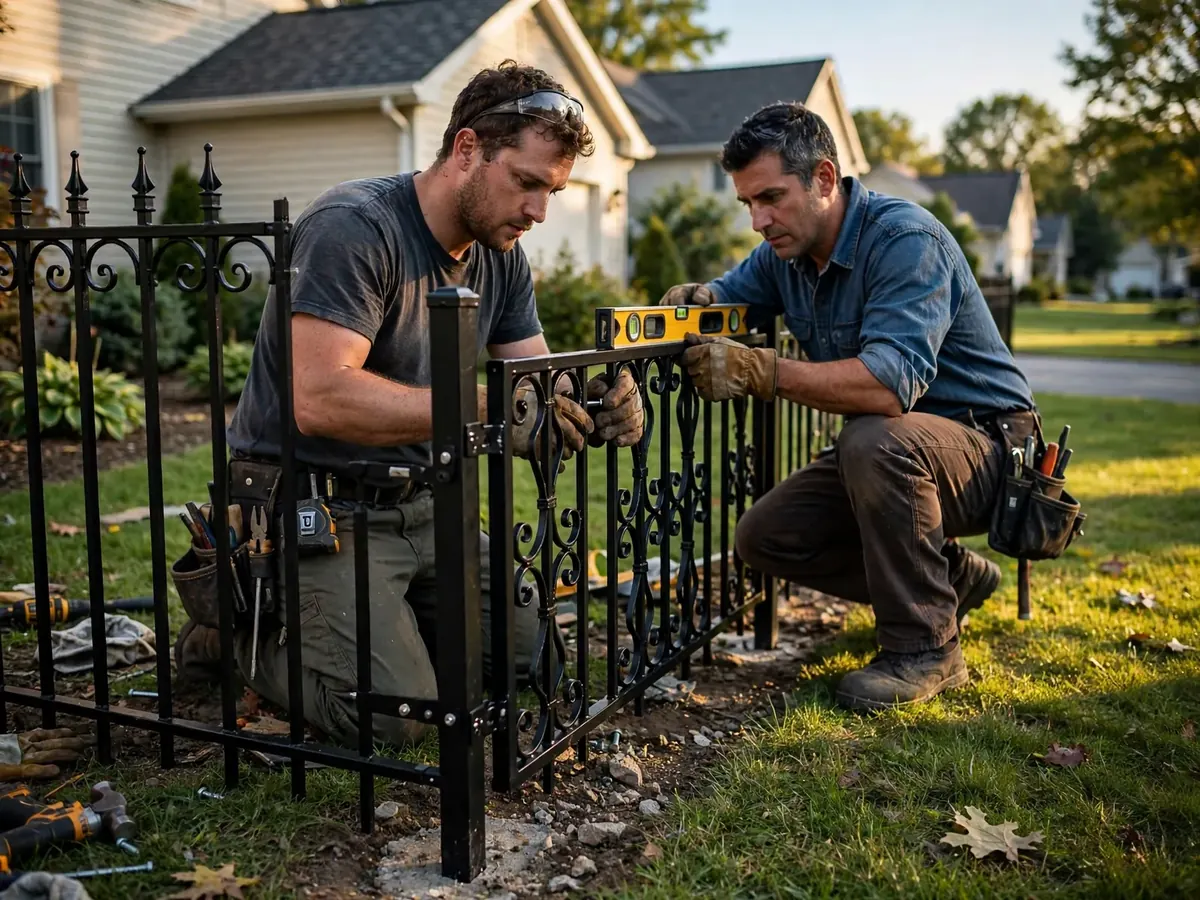
Common Situations Behind Wrought Iron Fence Installation Services
Front-Yard Iron Fences in Texas
Ornamental iron defines the front yard without blocking the house; cities often limit front-yard fence height.
Pool Fences and Barriers
Pool barriers usually require minimum heights, narrow picket gaps and self-closing, self-latching gates.
Wrought Iron vs. Steel vs. Aluminum
True wrought iron is rare; most ornamental fences are welded steel or aluminum, each with different upkeep.
Posts, Footings and Slopes
Iron fence posts need solid footings; panels are racked or stepped to follow sloped yards.
Rust, Repainting and Upkeep
Steel fences need occasional touch-ups where the coating is scratched; aluminum needs only washing.
Signs It's Time to Call
- Planning a pool
- Wanting security without blocking the view
- Rust on an existing iron fence
- HOA calls for ornamental fencing
- Adding a matching driveway gate
What to Have Ready When You Call
- Check city front-yard and pool barrier rules
- Measure the run and mark gate locations
- Decide on steel or aluminum
- Note slopes in the yard
Wrought Iron Fence Installation Services by City
Open your city for local conditions, the options that hold up there and the number to call.
No matching city. Try another spelling, or call 877-753-1892.
Wrought Iron Fence Installation Services: Common Questions
Is aluminum or steel better for an ornamental fence in Texas?
Aluminum resists rust and suits humid or coastal areas; powder-coated steel is heavier and stronger but needs touch-ups.
Do pool fences have special requirements?
Usually yes: minimum height, limited gaps and self-closing, self-latching gates. Check your city's pool barrier rules.
Can a rusty iron fence be restored?
Often. Surface rust can be sanded and repainted; badly rusted posts may need replacing.
How tall can a front-yard iron fence be?
Many Texas cities limit front-yard fences to around 4 feet. Check your city's rules.