
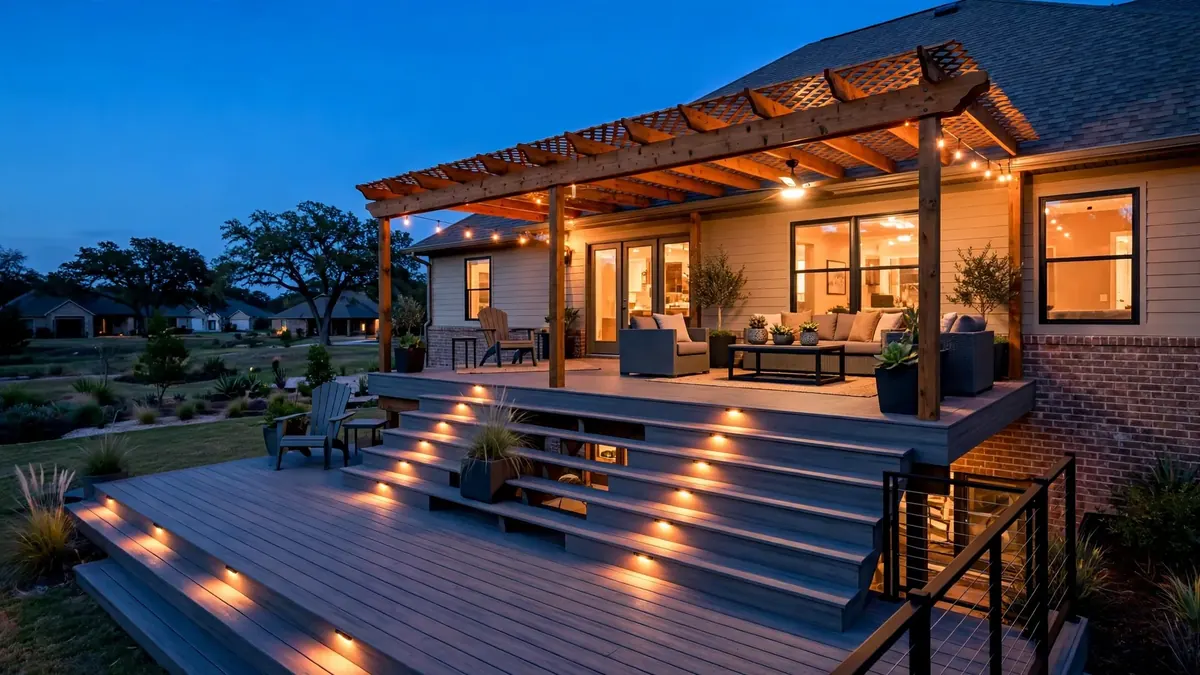
What to Know About Porch Installation in Del Valle
Del Valle is the area southeast of Austin around Austin-Bergstrom International Airport. Del Valle is an unincorporated part of southeast Travis County.
New subdivisions sit next to older rural homes. Builder-grade work in newer Del Valle subdivisions often wears out sooner than homeowners expect. A porch that suits Leander's shallow limestone isn't automatically right for Del Valle, where shifting clay matters more.
- Small builder patios on newer homes are often extended into covered porches.
- HOAs typically require approval for porch additions.
Permits and HOA Approval
Inspections often cover footings, framing and roofing. Bring drawings, materials and colors to the HOA at once.
Submitting complete drawings speeds up both permit and HOA review. Most Del Valle HOAs publish guidelines that settle style questions before you start.
A question many homeowners raise: Matching roofing materials to the house can take time to source.
Gable, Shed and Hip Porch Roofs
Hip roofs handle wind well. Tying a new porch roof into an existing roof requires careful flashing.
Hip roofs slope on all sides and tend to handle wind well. Hail storms are common enough in Del Valle that many owners plan for occasional repairs.
Covered Back Porches in Del Valle
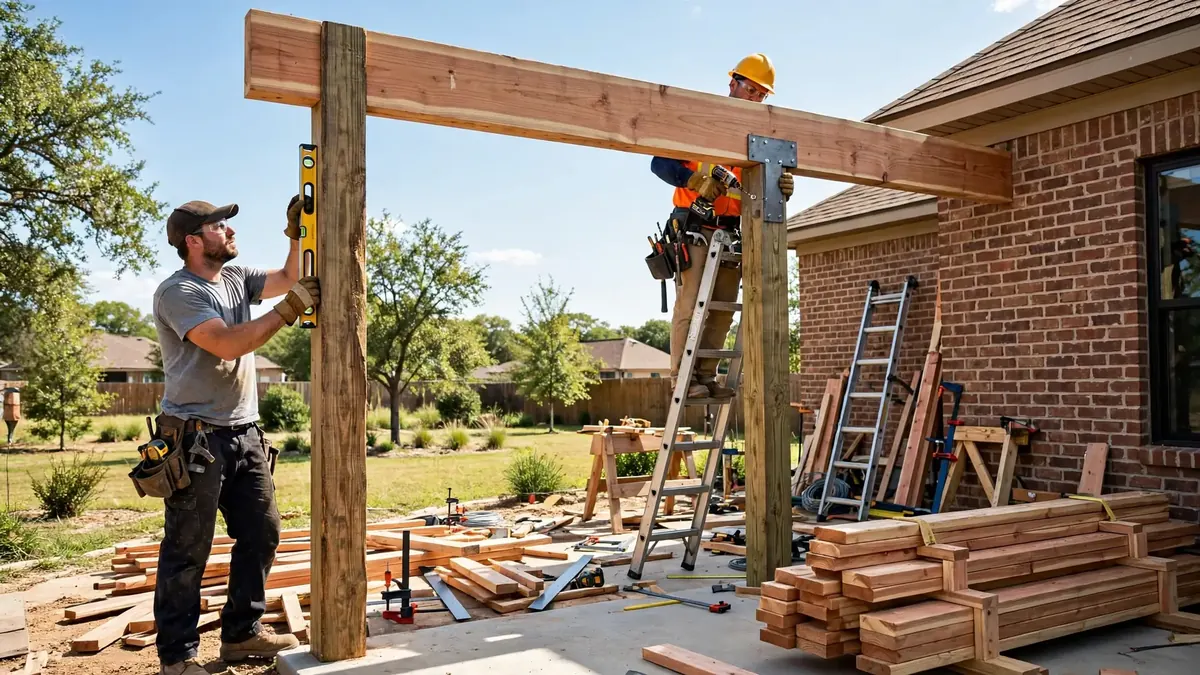
The roof can tie into the existing roofline or stand as a separate structure. West- and south-facing yards around Del Valle take the hardest afternoon sun.
Ceiling height affects airflow and light; taller ceilings feel more open and keep fans higher.
A frequent worry, answered: Ask how they'll tie the porch roof into the house and keep water out.
Posts, Beams and Wind Uplift
Footings for porch posts are sized for the roof weight they carry. A porch roof can catch wind like a sail.
Wind can lift a porch roof like an umbrella, so metal connectors tie posts to beams and footings. On Del Valle's clay, it's worth asking how deep each footing will go before comparing anything else.
Porch Floors, Fans and Lighting
Recessed lights in the porch ceiling keep the space clean and bright. Concrete, tile, wood and composite are all common porch floor choices.
Outdoor-rated fans and fixtures are built to handle humidity.
Something to keep in mind: Good flashing at the house wall prevents most porch problems.
Front Porches on New and Older Homes
Check setback rules before extending the front of the house; cities limit how close structures can come to the street. Columns sized in proportion to the house look more natural.
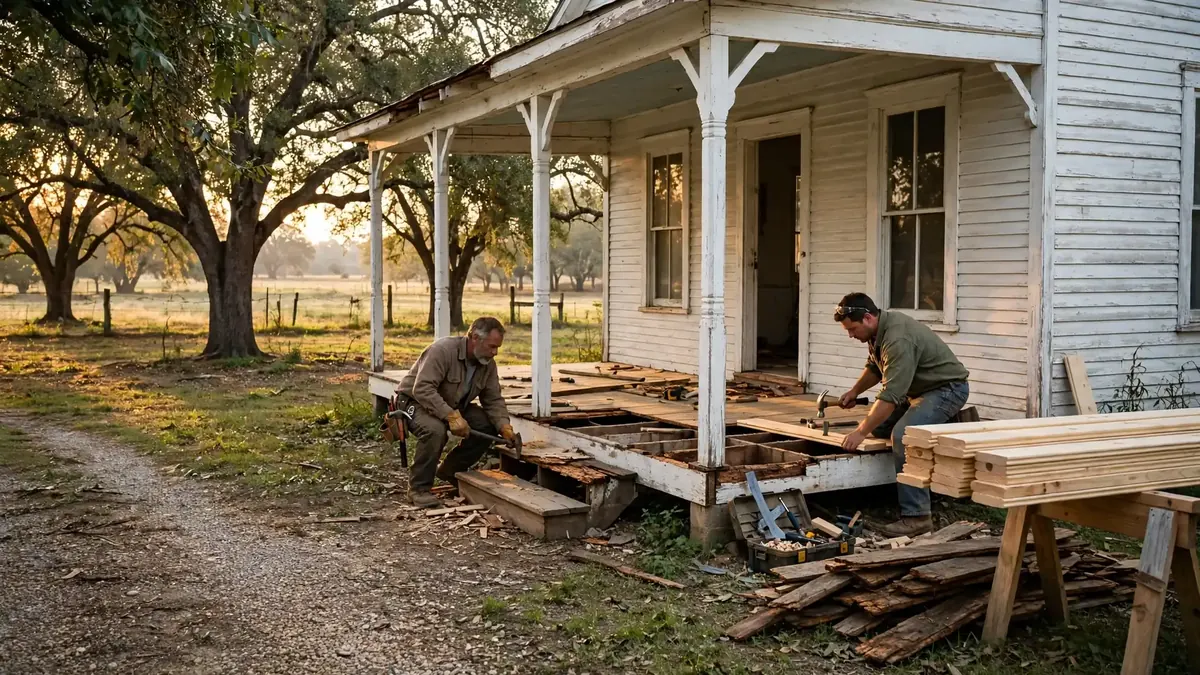
On older homes, matching columns, trim and roof lines keeps the porch from looking added on.
When to Pick Up the Phone
Around Del Valle, a call usually follows one of these:
- Too much sun on the patio
- Planning an outdoor kitchen area
- Wanting more outdoor living space
Before You Call
- Plan fans, lighting and outlets
- Note how the porch will meet the existing roof
- Check HOA rules and get approval
- Look up your city's height and setback rules, or ask the porch builder to
- Notice whether nearby porchs or the house foundation show signs of soil movement
Porch Installation in Del Valle: Talk to a Local Porch Builder
Call 877-753-1892 when you're ready. Sharing photos and a rough measurement of your Del Valle project makes the conversation more specific. Whether you're ready to book or just comparing options, call today.
877-753-1892Porch Questions From Del Valle Homeowners
How long does a covered porch take to build?
It depends on size, permits and weather; the permit and HOA approval often take longer than construction. Ask about this on your first call, since conditions vary across Del Valle.
Who handles permits for a porch in Del Valle?
Permits for roof additions are common and usually straightforward. Your porch builder can usually help prepare drawings for review.
What should Del Valle homeowners know about porch projects?
Del Valle has its own rules on height, setbacks and permits, so check before building. Winter Storm Uri in February 2021 brought days of hard freeze across Central Texas. Unlike Liberty Hill, where shallow limestone drives most decisions, in Del Valle it's shifting clay that deserves the closest attention.