
What to Know About Porch Repair in Georgetown
Georgetown has a historic town square and is home to many large newer subdivisions, including retirement communities. Its western neighborhoods sit on limestone, its eastern ones on clay.
Georgetown is the Williamson County seat along the San Gabriel River. In rocky parts of Georgetown, drilling rather than digging is normal, and it's worth asking how the crew handles it. Compared with Thorndale, where older homes is the bigger factor, Georgetown projects are shaped more by shallow limestone.
- Clay can settle porch posts and steps unevenly over time.
- Small builder patios on newer homes are often extended into covered porches.
Sagging Steps and Stairs
When stringers rot or the footing settles, steps sag and become uneven, a common trip hazard. Rebuilding them with proper footings and a handrail makes them safe. Steps that rock or sound hollow usually have a rotted stringer underneath. Replacing it is a smaller job than it looks.
Checking each step for movement once a year catches problems early. In Georgetown's clay, a porch that looks perfect on day one can drift out of line within a few seasons if the footings are shallow.
Something to keep in mind: Matching roofing materials to the house can take time to source.
Failing Posts, Columns and Beams
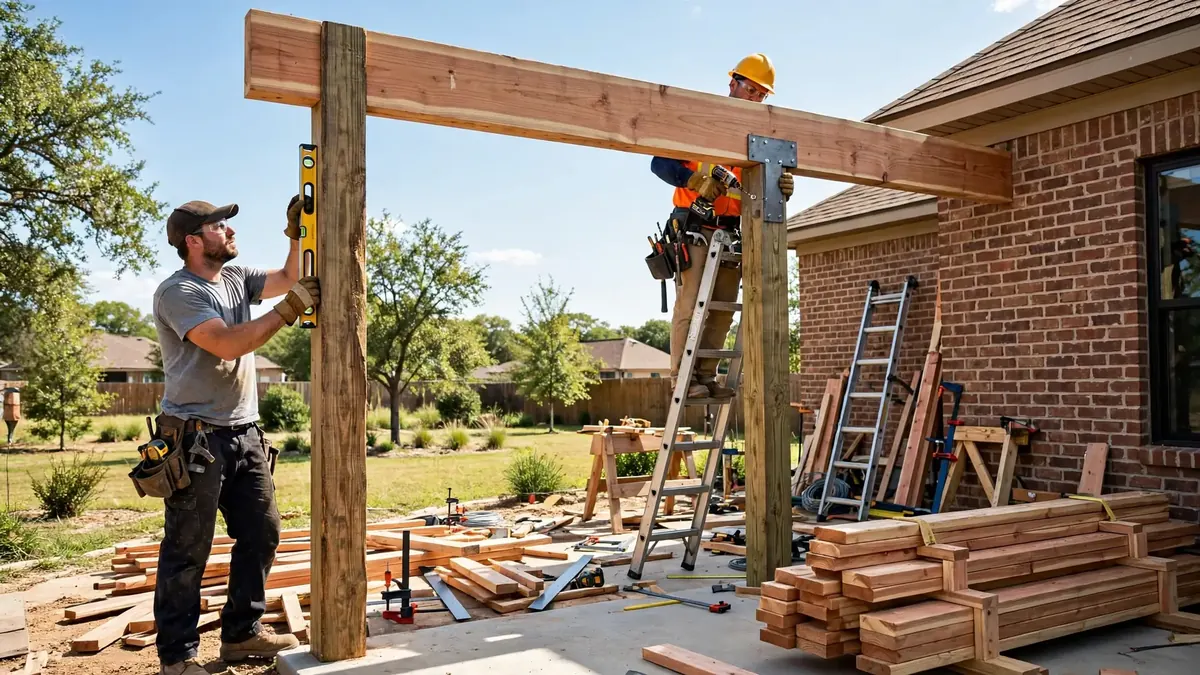
Decorative columns are often hollow covers around a structural post, and the post inside can rot unseen. A visible dip in the porch roofline or a gap at the top of a column is a sign the structure is moving and needs attention.
A porch roof that dips between posts can mean a failing beam.
Replacing Worn Screens and Doors
A sagging screen door often just needs its hinges tightened or its closer adjusted. Pet-resistant screen is worth considering if animals use the space.
Keeping a spare roll of screen and spline makes quick repairs easy. In newer parts of Georgetown, replacing the original builder porch is a common first upgrade.
A question many homeowners raise: Good flashing at the house wall prevents most porch problems.
Rotted Porch Floorboards in Georgetown
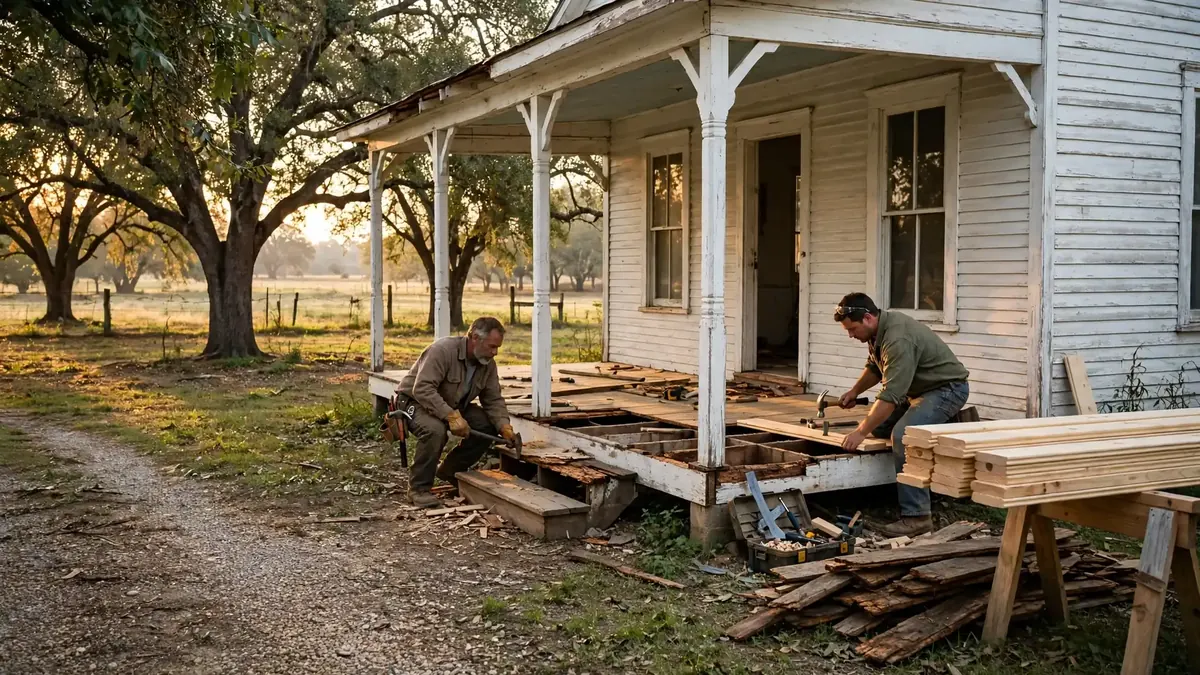
Tongue-and-groove porch flooring locks together, so replacing a few boards means carefully cutting out the damaged ones first. Soft spots that give underfoot usually mean the board or the joist beneath it is rotting.
Rot usually starts at board ends, near steps and along the outer edge.
Termite Damage
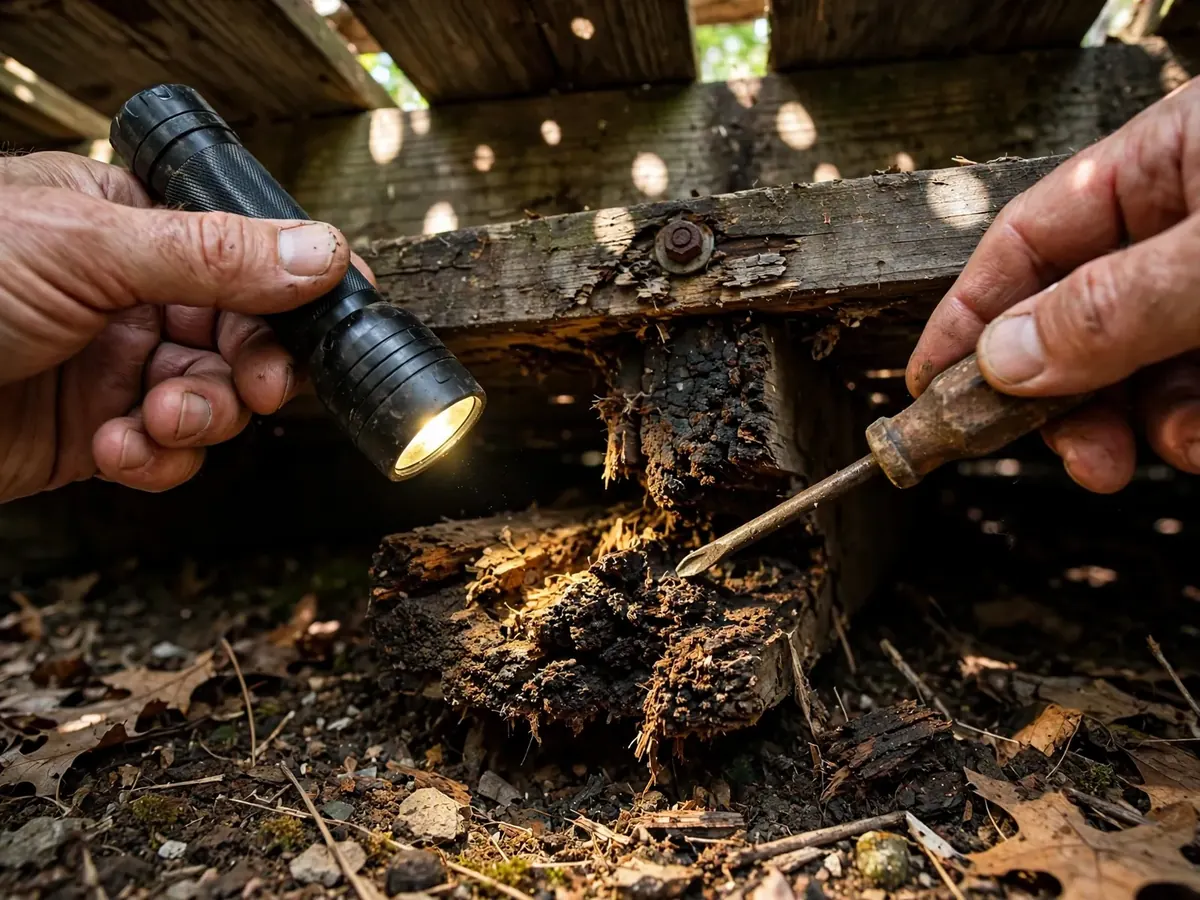
Termite-damaged wood often sounds hollow when tapped. Keeping wood off the soil and fixing drainage makes the porch less attractive to termites.
A termite inspection after repairs confirms the problem is gone.
If you're weighing it up: Screening an existing porch can be a reasonable DIY project.
Common Reasons Georgetown Homeowners Call
These are the moments that push Georgetown homeowners to pick up the phone:
- Columns rotted at the base
- Torn screens
- Sagging or uneven steps
What to Have Ready
- Photograph problem areas
- Check for signs of termites
- Keep people off unsafe steps
- Pull your HOA's architectural guidelines and the approval form; most Georgetown associations want them before work is scheduled
- Note whether rock shows at the surface where work will happen
Porch Repair in Georgetown: Talk to a Local Porch Repair Pro
Dial 877-753-1892 to talk to a porch repair pro who works in Georgetown. Have your questions ready, from permits to materials, and take notes. Booking is a phone call away; call today and lock in a time that suits you.
877-753-1892Porch Questions From Georgetown Homeowners
How do I prevent porch rot?
Keep the floor sloped, wood off the soil and paint or sealant in good shape. In Georgetown, that comes down to your lot and how the porch is built.
Who handles permits for a porch in Georgetown?
Your porch repair pro can usually help prepare drawings for review. Adding roof area usually means a permit; your city can confirm what's required.
What should Georgetown homeowners know about porch projects?
Spring hail around Georgetown makes it worth choosing materials that are easy to repair. Winter Storm Uri in February 2021 brought days of hard freeze across Central Texas. Georgetown and Elgin sit in the same part of the state, but Georgetown deals more with shallow limestone, while Elgin contends with older homes.