
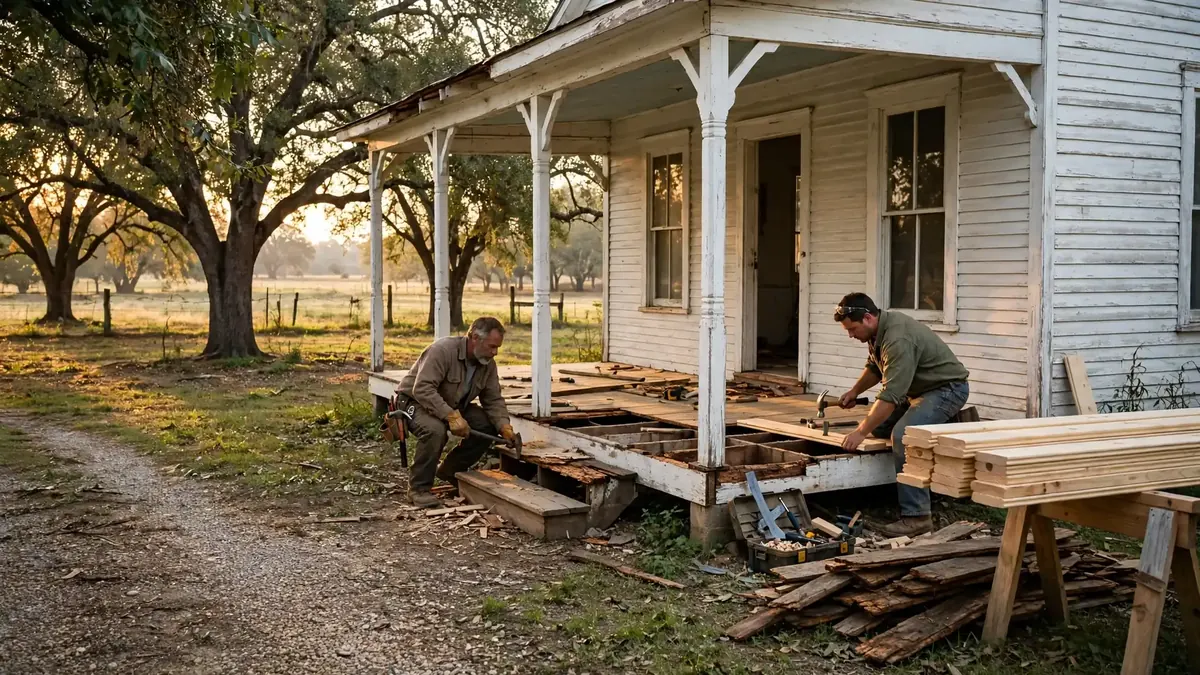
What to Know About Porch Repair in Cedar Park
Cedar Park sits northwest of Austin on Hill Country limestone. Cedar Park is a Williamson County suburb northwest of Austin.
Most homes are in HOA subdivisions on shallow, rocky soil. Before finalizing plans, confirm Cedar Park's requirements for height and placement. Cedar Park and Pflugerville sit in the same part of the state, but Cedar Park deals more with shallow limestone, while Pflugerville contends with shifting clay.
- Small builder patios on newer homes are often extended into covered porches.
- Larger homes often add outdoor kitchens and fireplaces to porches.
Replacing Worn Screens and Doors
Upgrading to heavier screen during repairs can reduce future tears. Rescreening panels and adjusting or replacing the screen door restores a screened porch quickly.
Pet doors built into screen doors save the mesh from damage. In Cedar Park's newer neighborhoods, upgrades often replace the original builder materials.
One practical point: Good flashing at the house wall prevents most porch problems.
Sagging Steps and Stairs
Stringers are the notched boards that carry the treads, and they rot first where they touch the ground. Front steps take the most traffic and often sit directly on soil.
Rocking steps usually mean a rotted stringer or a settled base.
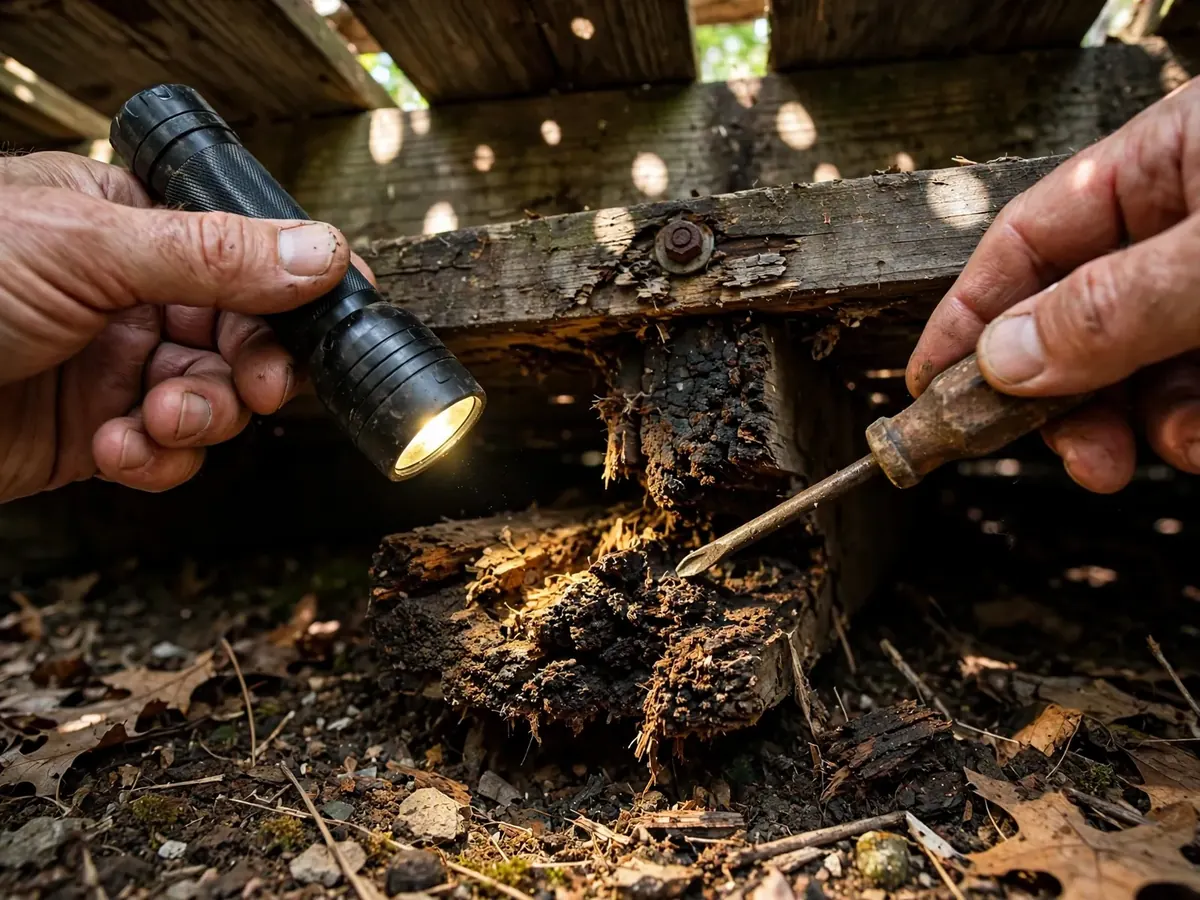
Rotted Porch Floorboards in Cedar Park
Tongue-and-groove porch flooring locks together, so replacing a few boards means carefully cutting out the damaged ones first. Paint peeling at the ends of porch boards is often the first visible sign that water is getting in.
Boards with a slight slope away from the house shed water better.
If you're weighing it up: Weather in the spring storm season can delay roofing and painting.
Failing Posts, Columns and Beams
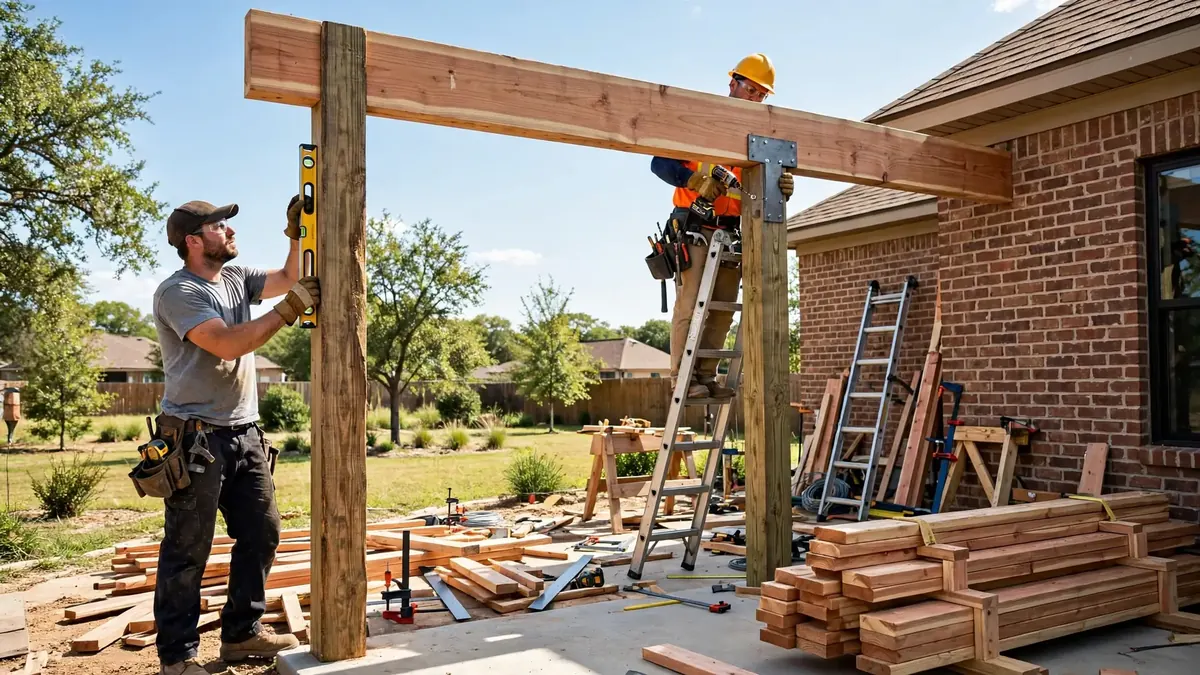
Repairs involve temporarily supporting the roof, replacing the post or beam and setting it on a proper base that keeps it off wet concrete. Replacing a column usually means temporarily supporting the beam it holds.
Raising post bases off the porch floor stops water from wicking into them.
Termite Damage
If you see mud tubes on the porch foundation, call for a termite inspection before any carpentry starts. Termite-damaged wood often sounds hollow when tapped.
Treating for termites before carpentry keeps them from attacking new wood.
If you're weighing it up: Get the plan, materials and scope in writing.
When to Pick Up the Phone
Around Cedar Park, a call usually follows one of these:
- Torn screens
- Columns rotted at the base
- Sagging or uneven steps
Before You Call
- Photograph problem areas
- Keep people off unsafe steps
- Check for signs of termites
- Note whether rock shows at the surface where work will happen
- Note your HOA's approved colors and styles so the porch repair pro can quote the right materials
Getting Porch Repair in Cedar Park Started
One call to 877-753-1892 gets the conversation started with a porch repair pro who works around Cedar Park. Bring your measurements, photos and any HOA requirements. Call now and get your Cedar Park porch project moving.
877-753-1892Porch Questions From Cedar Park Homeowners
Can rotted porch boards be replaced without rebuilding the porch in Cedar Park?
Usually, if the joists underneath are sound. For a Cedar Park home, it's worth confirming this before work starts.
Is a new porch in Cedar Park worth the cost?
Ask for an estimate that separates structure, roofing, electrical and finishes. Screening or covering an existing patio is often less expensive than building new.
What should Cedar Park homeowners know about porch projects?
Cedar Park's limestone holds footings firmly once they're set, which is one advantage of the hard digging. Winter Storm Uri in February 2021 brought days of hard freeze across Central Texas. Unlike Taylor, where shifting clay drives most decisions, in Cedar Park it's shallow limestone that deserves the closest attention.