
What to Know About Deck Installation in Leander
Leander is one of the fastest-growing cities in the Austin area, with many new subdivisions on rocky ground. New HOA neighborhoods dominate, many on shallow soil over rock.
Leander sits in Williamson and Travis counties, at the end of the region's commuter rail line. Leander's limestone holds footings firmly once they're set, which is one advantage of the hard digging. A deck that suits Rockdale's shifting clay isn't automatically right for Leander, where shallow limestone matters more.
- Newer homes often have bare backyards ready for a first deck.
- Associations often review deck plans, colors and railings.
Composite vs. Wood Decking in Leander
Ask the deck builder about heat ratings and surface temperatures. Capped composite boards have a protective shell that resists stains and fading.
Composite skips sanding and staining, but darker colors can get hot in full sun. Most Leander HOAs publish guidelines that settle style questions before you start.
One practical point: Ask how they flash the ledger and what fasteners they use.
Railings, Stairs and Code Requirements
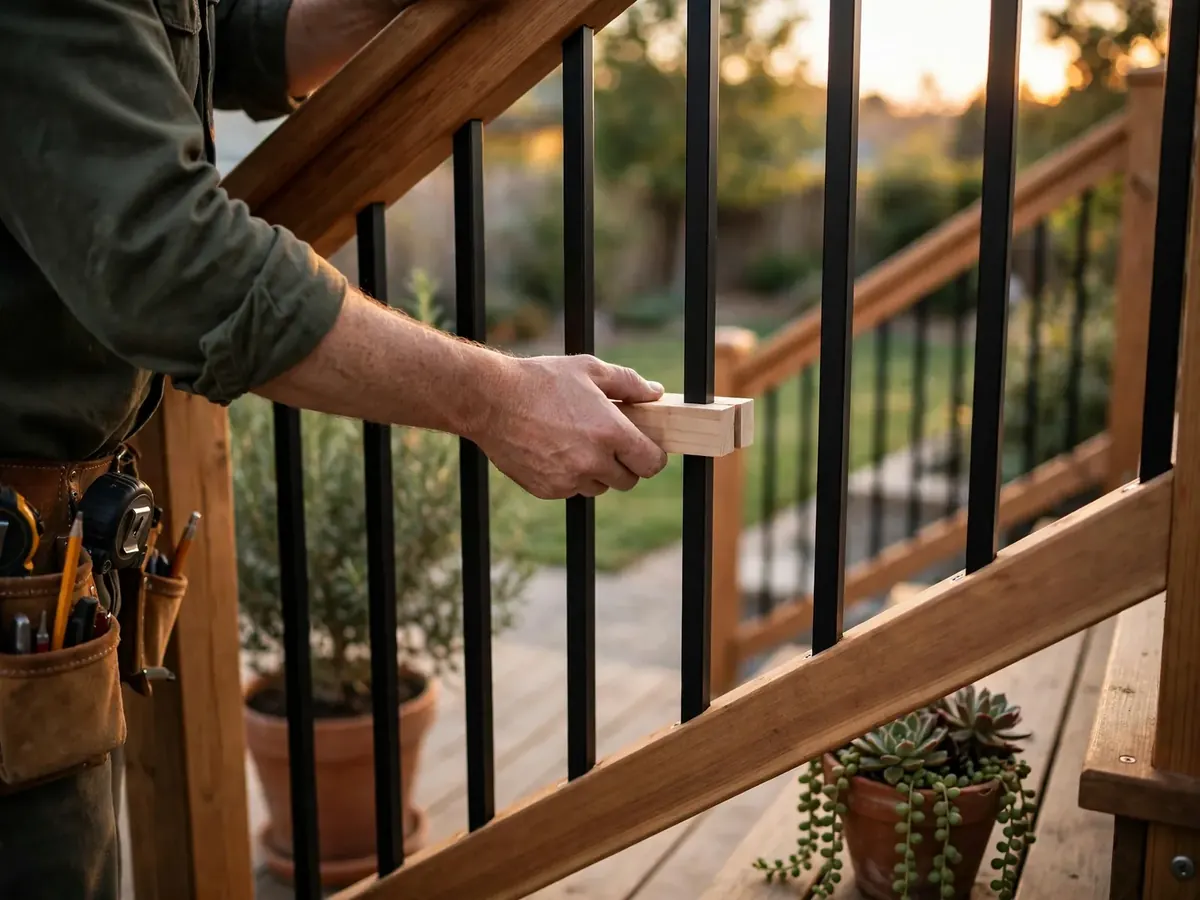
Railings are commonly required to be at least 36 inches high on residential decks. Balusters are spaced closely so a small sphere can't pass through, a common code test.
Stair rise and run are set by code so steps are comfortable and safe. In newer parts of Leander, replacing the original builder deck is a common first upgrade.
Permits and HOA Approval
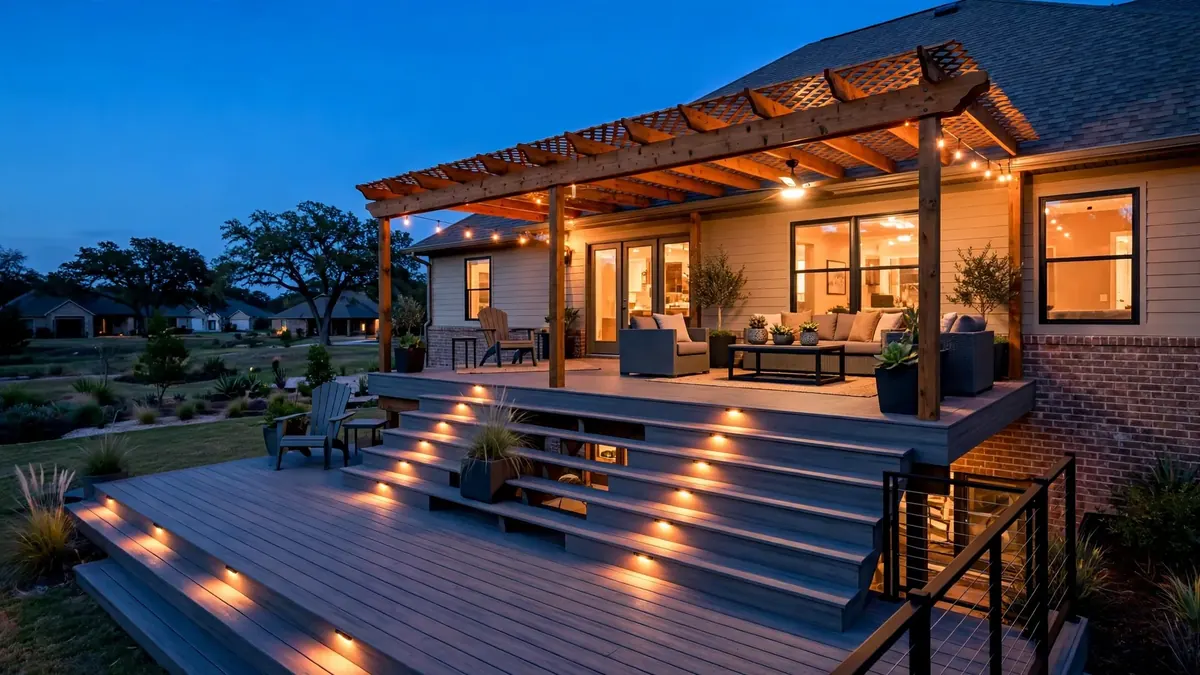
Permit applications usually need a site plan and framing details. Permit review often takes longer than building the deck.
HOAs often review materials, colors and height before approving a deck. Before finalizing plans, confirm Leander's requirements for height and placement.
Before you decide: Weather in the spring storm season can delay footings and staining, so plan with some flexibility.
Framing, Joists and the Ledger
The ledger, the board that attaches the deck to the house, is where many deck failures start. It needs proper bolts and flashing so water doesn't rot the house framing behind it. Joist tape on top of the framing helps keep water off the wood under the boards.
Freestanding decks avoid a ledger entirely by using their own beam next to the house.
Shade, Covers and Outdoor Living
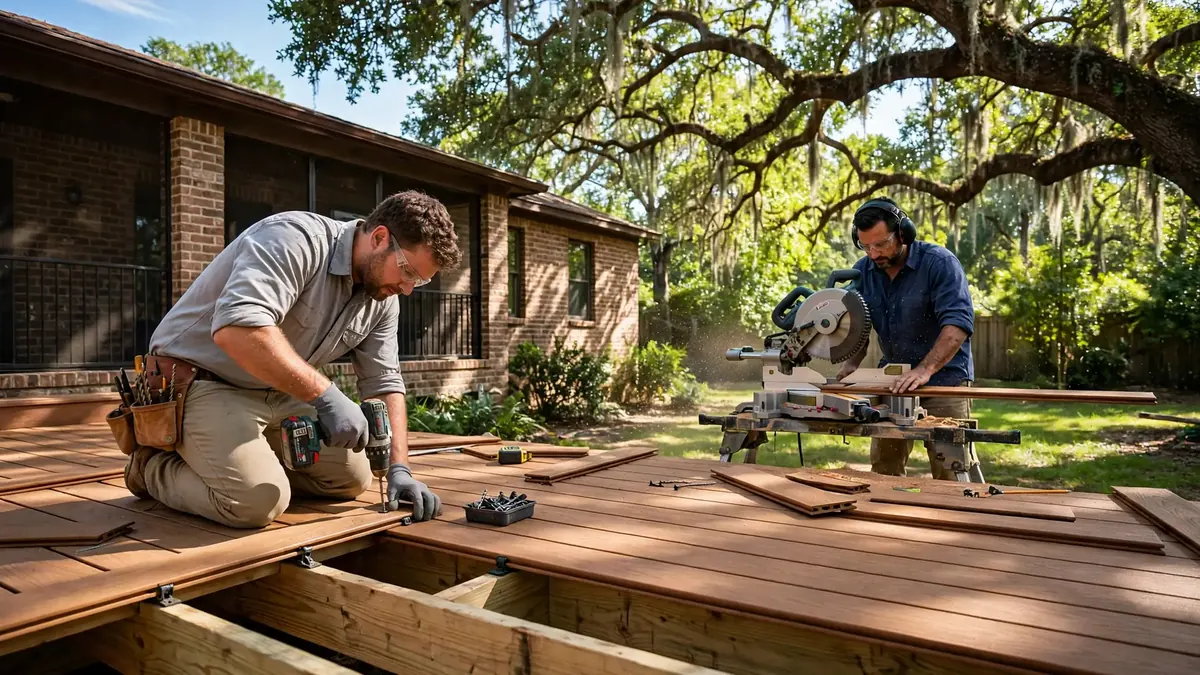
Track the sun on your yard for a day before choosing where shade goes. A cover in the wrong spot leaves the deck hot when you want to use it. Outdoor kitchens on decks need fire-safe surfaces and clearances around grills.
Plan outlets, lights and fans before building, since adding them later is harder.
Before you decide: If you DIY the boards, consider having a pro check the framing first.
Footings in Clay and Limestone
Concrete piers or footings set on undisturbed soil keep the deck from settling unevenly. Ask how deep the footings will go and how they'll handle the soil on your lot.
Footings are the deck's foundation, and their size and depth come from the deck's load and your local code.
Common Reasons Leander Homeowners Call
Leander homeowners usually reach out when one of these shows up:
- Old deck too far gone to repair
- HOA-approved plans in hand
- Planning for shade and entertaining
Before You Call
- Choose wood or composite
- Note where the sun hits in the afternoon
- Check HOA rules and get approval
- Pull your HOA's architectural guidelines and the approval form; most Leander associations want them before work is scheduled
- Note whether rock shows at the surface where work will happen
Planning Deck Installation in Leander: What to Expect
Give 877-753-1892 a call with your Leander address area and a rough idea of the scope. A deck builder can explain what the work involves and what to expect next. The sooner you call, the sooner your deck work can be scheduled.
877-753-1892Deck Questions From Leander Homeowners
Do I need a permit to build a deck in Leander?
Often, especially if it's attached to the house, larger than about 200 square feet or more than 30 inches high. Check with your city. Your deck builder can tell you what applies on your specific Leander property.
What makes a deck last longer in Leander?
Composite boards last a long time, but the framing underneath still needs care. Keeping water off the framing is the single biggest factor in deck lifespan.
What should Leander homeowners know about deck projects?
Hail storms are common enough in Leander that many owners plan for occasional repairs. West of I-35, Austin sits on Hill Country limestone that often needs a rock auger to set posts; east of I-35, Blackland Prairie clay swells and shrinks. Unlike Manor, where shifting clay drives most decisions, in Leander it's shallow limestone that deserves the closest attention.