
Local Conditions That Shape Fence Installation in Lockhart
Many properties here are acreages with deer, goats or horses, which changes fence height and wire choice. Flash flooding along creeks and rivers is a known risk in this part of Texas. The Hill Country has thin soil over limestone, so setting posts often means drilling into rock.
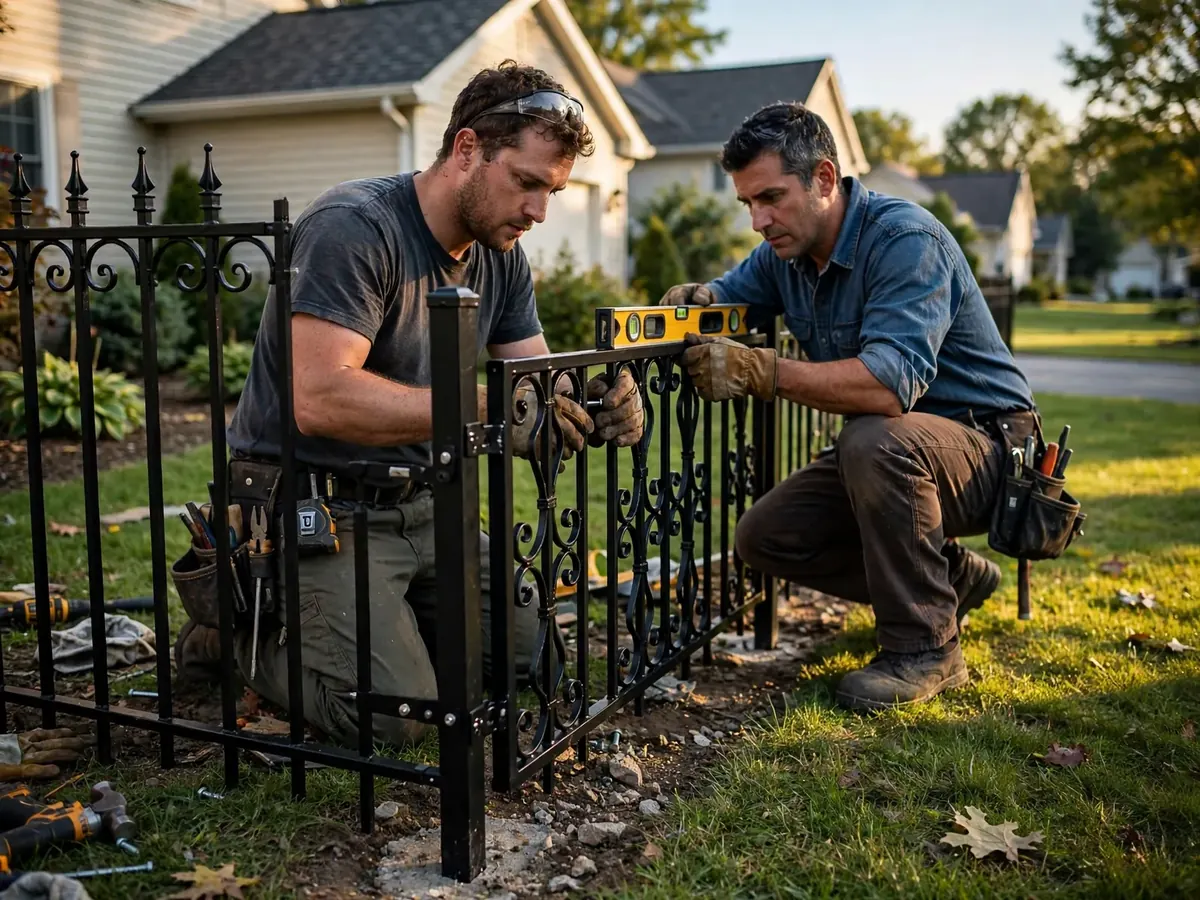
- Larger lots and estate homes often pair cedar privacy fencing with ornamental iron and masonry columns.
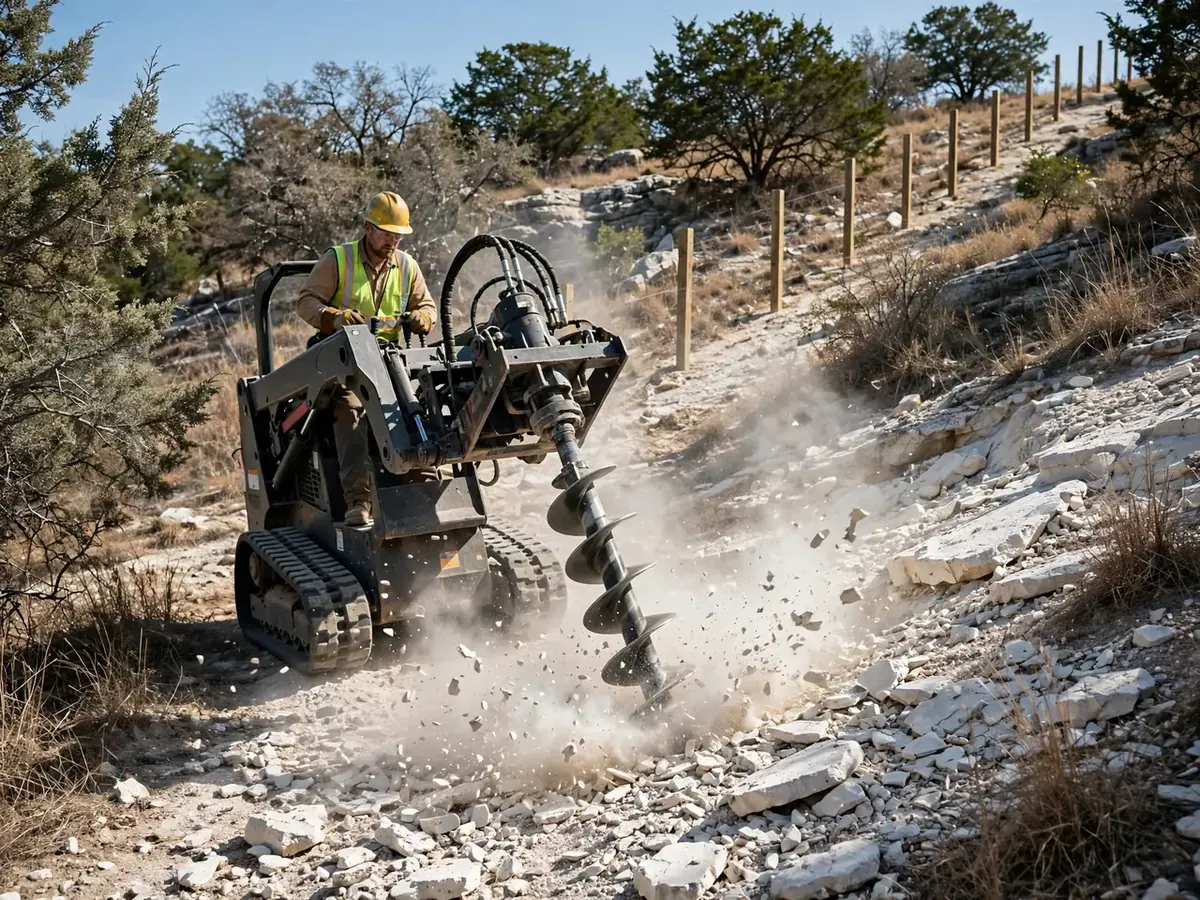
- Rock close to the surface means posts are drilled rather than dug, which affects equipment and timing.
Choosing Materials in Lockhart
Cedar post and wire, game fencing, pipe fencing and stone columns on acreages; cedar privacy and ornamental iron near town.
Ranch, Pipe and Wire Fencing on Acreage
For larger properties, a fence builder will walk the line, mark corners and gates, and plan around creeks, slopes and rock before quoting. Having a survey or plat helps avoid building on the wrong side of a property line.
Drilling Posts Into Limestone and Caliche
On limestone or caliche, a standard auger stops a few inches down. Fence crews use rock augers, jackhammers or core drills to reach a solid depth. It takes longer, but posts anchored in rock hold very well once they're in.
Board-on-Board and Shadowbox Styles
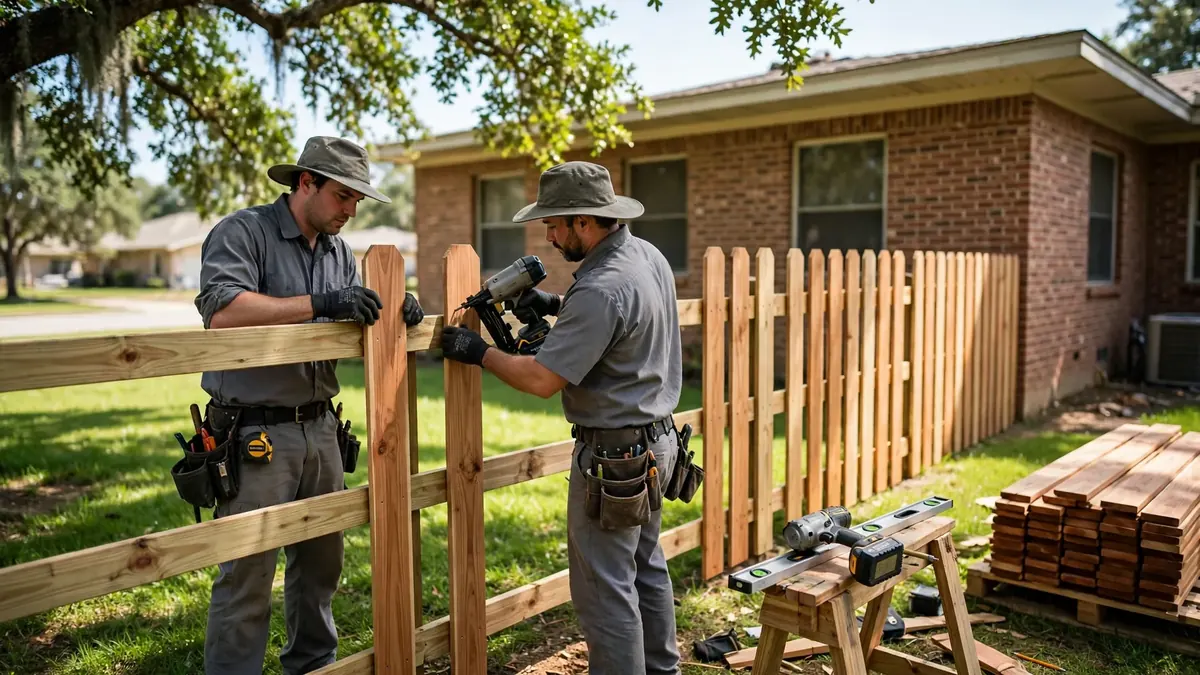
Many HOAs around Lockhart specify board-on-board with a top cap and require the finished side to face the street or the neighbor. Check your HOA's fence guidelines before choosing a style; they often list the approved stain color too.
Horizontal and Modern Fence Designs
Horizontal fences are popular in newer and remodeled homes around Lockhart. Long horizontal boards sag more than vertical pickets, so posts are usually spaced closer together, and many builders use steel posts or a hidden steel frame. Spacing between boards can be tight for privacy or wider for airflow.
Building a Fence That Stands Up to Wind
A 6-foot solid fence acts like a sail in a storm. In windy parts of Texas, closer post spacing, deeper footings, steel posts and three rails instead of two help it ride out gusts. Shadowbox or gapped designs let some wind pass through.
Vinyl and Composite Fences in Texas Heat
If you choose vinyl or composite, ask how the panels handle thermal expansion and wind. Posts and rail connections are designed differently from wood fences, and the installation instructions matter for any manufacturer coverage.
Other Fence Situations in Lockhart
Wrought Iron and Aluminum Fences
Ornamental iron and aluminum mark boundaries, secure pools and keep views open; aluminum resists rust near the coast.
Pet and Pool Fencing
Dogs need fences without gaps at the bottom or footholds to climb; pools need barriers with self-closing gates.
HOA Rules, Permits and Property Lines
Cities set height and front-yard rules, HOAs add style and color rules, and a survey prevents building on the wrong side of the line.
When to Pick Up the Phone
- Moving onto acreage that needs livestock fencing
- HOA requires an approved style
- Neighbors replacing a shared fence
- Planning a pool, a dog or new privacy
Before You Call
- Call 811 to have utility lines marked before digging
- Mark gates and where you need access for mowers or vehicles
- Measure the rough length of fence needed
- Check HOA fence guidelines and stain colors
- Find your survey or plat showing property lines
Getting Fence Installation in Lockhart Started
Have the details from the checklist above ready, then call 877-753-1892. A fence builder serving Lockhart can tell you what the job involves, what affects the cost and whether anything needs attention right away.
877-753-1892Fence Questions From Lockhart Homeowners
What fence material is best near the coast?
Aluminum, vinyl and cedar with stainless or galvanized fasteners hold up best in salt air and humidity.
Do I need a permit for a fence in Lockhart?
Texas has no statewide fence permit, but cities set rules on height, front-yard fences and masonry, and HOAs add their own. Check with your city and HOA before building.
What should Lockhart homeowners know about fence projects?
Intense sun dries and grays unprotected wood quickly, so staining every few years pays off. Spring hail splits and pits pickets and dents metal fencing, so storm repairs are routine.