
Local Conditions That Shape Fence Installation in Lubbock
Lubbock sits on the South Plains, where high winds, dust and hail are regular hazards. Flat, open lots are exposed to wind, dust and hail.
Lubbock is the Lubbock County seat and home to Texas Tech University. Open exposure in Lubbock means the fence should be built for gusts. Steady wind is a common thread between Lubbock and Slaton.
- City ordinances cover fence height, front-yard placement and sight lines at intersections.
- A privacy fence facing open ground takes the full force of the wind, so stronger posts are a sensible upgrade.
Choosing Materials in Lubbock
Steel-framed wood fences, masonry, and pipe fencing handle the wind best; ranch properties rely on pipe, barbed wire and pipe-and-cable. On Lubbock acreage, distance and animals shape the plan more than looks.
Ranch, Pipe and Wire Fencing on Acreage
Corner and brace posts carry the load, so they deserve the most attention. On acreage near Lubbock, the right fence depends on what it needs to hold.
Mixing materials is common: pipe near the house and barn where looks and strength matter, wire along back pastures where distance matters more. Around Lubbock's ranches, strong corners and gates matter most.
Before you decide: Ask who handles permits, utility locates and HOA paperwork so nothing falls through the cracks.
Building a Fence That Stands Up to Wind
Shadowbox or gapped designs let some wind pass through. A 6-foot solid fence acts like a sail in a storm.
Bracing corners and ends is especially important on long, solid runs exposed to open fields. Spring hail around Lubbock makes it worth choosing materials that are easy to repair.
Board-on-Board and Shadowbox Styles
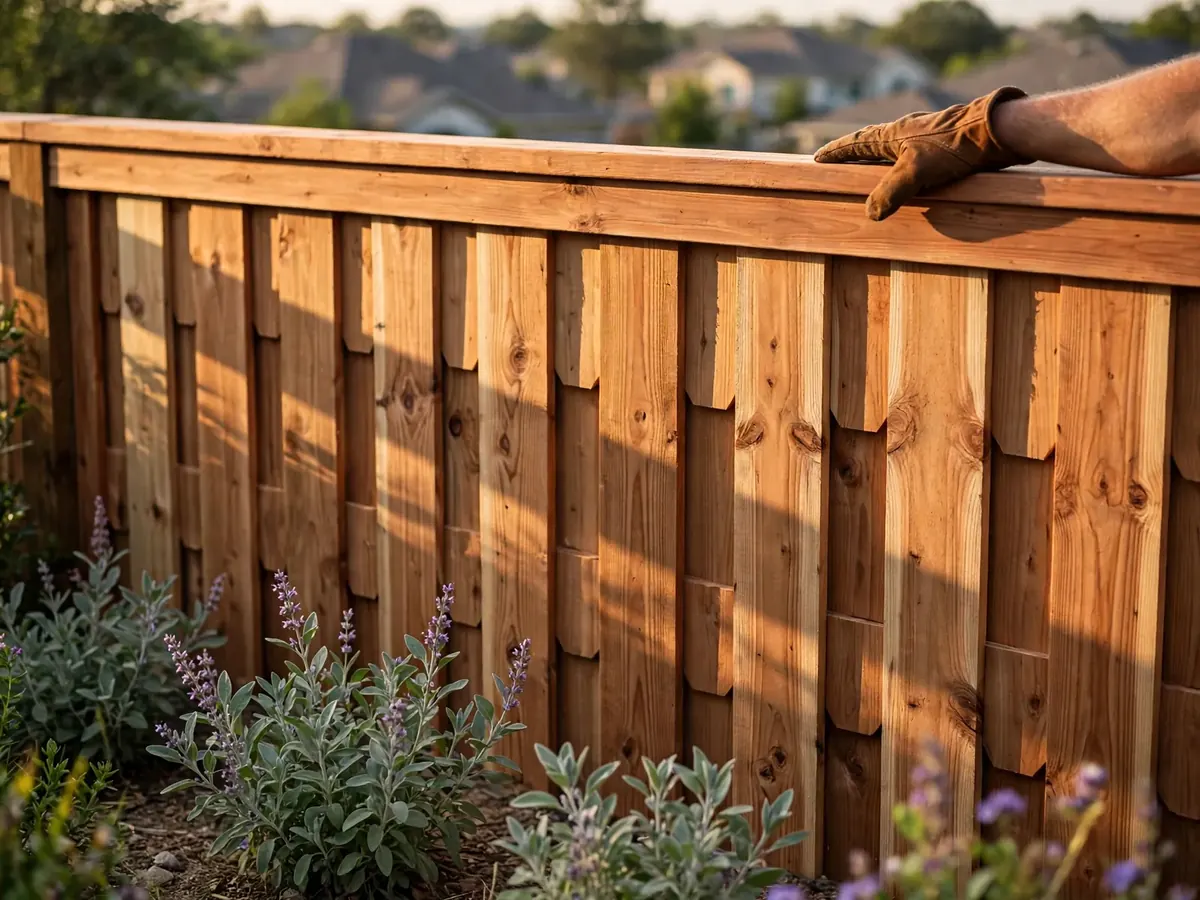
If your fence faces strong wind, a shadowbox design takes some load off the posts by letting air pass between the pickets. Shadowbox fences use the same pickets as board-on-board but alternate them on opposite sides of the rails.
On windy lots, shadowbox gives a little relief to the posts while still blocking most views.
Something to keep in mind: DIY makes the most sense for short runs and simple designs.
Steel Posts vs. Wood Posts
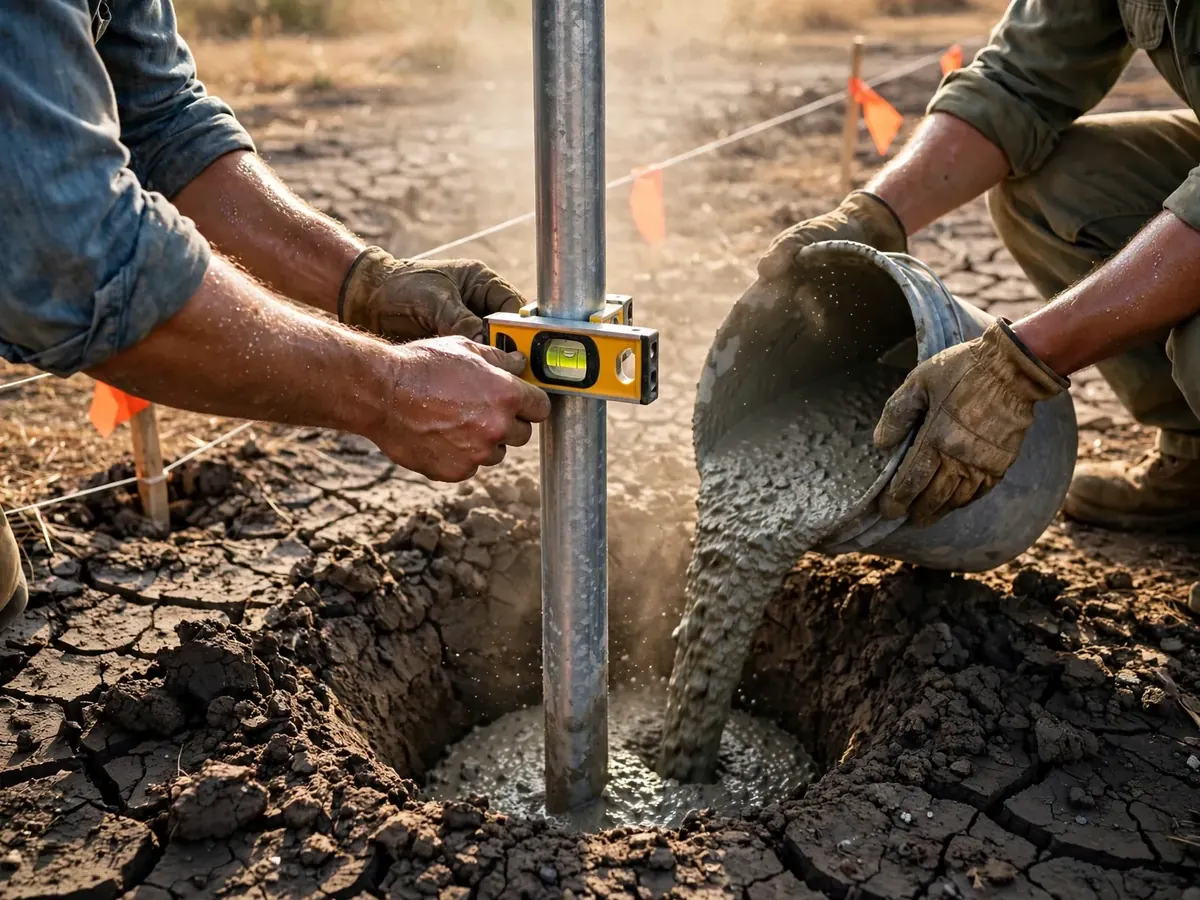
Galvanized steel posts set in concrete, with wood rails and pickets attached by brackets, are now the common upgrade and usually outlast the wood they hold up. If you want the look of wood all the way down, steel posts can be wrapped or hidden behind the pickets.
A good way to picture it: a wood post is a sponge planted in the ground, while a galvanized steel post is closer to a pipe that water can't soak into.
Vinyl and Composite Fences in Texas Heat
If you choose vinyl or composite, ask how the panels handle thermal expansion and wind. In Texas sun, though, cheaper vinyl can sag or become brittle.
Dark-colored vinyl absorbs more heat than white or tan, which is why light colors are the safer choice under strong Texas sun. UV protection matters in Lubbock; it's the difference between a fence that weathers gracefully and one that cracks.
Concerned about timing? Most of the wait is scheduling and approvals; once a crew starts, many residential fence projects take only a few days.
Drilling Posts Into Limestone and Caliche
Where rock lies under a few inches of soil, crews often set posts shallower but anchor them into the rock itself. Caliche can be as hard as concrete. Where it's shallow, some crews core through it; where it's deep, they may set posts in the caliche layer itself with less concrete. Either way, it's worth asking how they plan to handle it before work starts.
If rock is only under part of the line, the crew may use different methods on different sections.
More Fence Questions Around Lubbock
Pet and Pool Fencing
For climbers, avoid horizontal rails on the outside of the fence, since they act like a ladder.
Cedar Privacy Fences in Lubbock
Cedar is the most common privacy fence in Texas because it resists rot and insects better than pine and takes stain well.
Wrought Iron and Aluminum Fences
Ornamental fencing is a good fit where you want security without blocking breezes or views.
Signs It's Time to Call in Lubbock
If any of these sound familiar at your Lubbock home, it's a good time to talk to a fence builder:
- Moving onto acreage that needs livestock fencing
- Neighbors replacing a shared fence
- HOA requires an approved style
What to Have Ready
- Call 811 to have utility lines marked before digging
- Mark gates and where you need access for mowers or vehicles
- Find your survey or plat showing property lines
- Note corner-lot sight lines if your property is on a corner
- Know what animals the fence needs to hold and how many gates you need
Planning Fence Installation in Lubbock: What to Expect
Calling 877-753-1892 puts you in touch with a fence builder who knows Lubbock. Expect questions about length, height, access and soil; the more you can answer, the more useful the conversation. Call to book your project or simply ask what your Lubbock property needs.
877-753-1892Fence Questions From Lubbock Homeowners
Do I need a permit for a fence in Lubbock?
There's no statewide fence permit in Texas. Cities, however, regulate height, front-yard fences and masonry walls, and HOAs often require approval, so check both before you build. In Lubbock, that comes down to your lot and how the fence is built.
How long will a fence last in Lubbock?
Wondering how long it will last? In Lubbock's conditions, posts and drainage decide that more than the pickets, so ask about both. Lifespan comes down to water: keep wood dry at the ground line and the fence lasts.
What should Lubbock homeowners know about fence projects?
Freeze events in Lubbock can crack concrete that holds water, so drainage helps. The Panhandle sees large hail, blizzards and hard freezes that the rest of Texas rarely gets.