
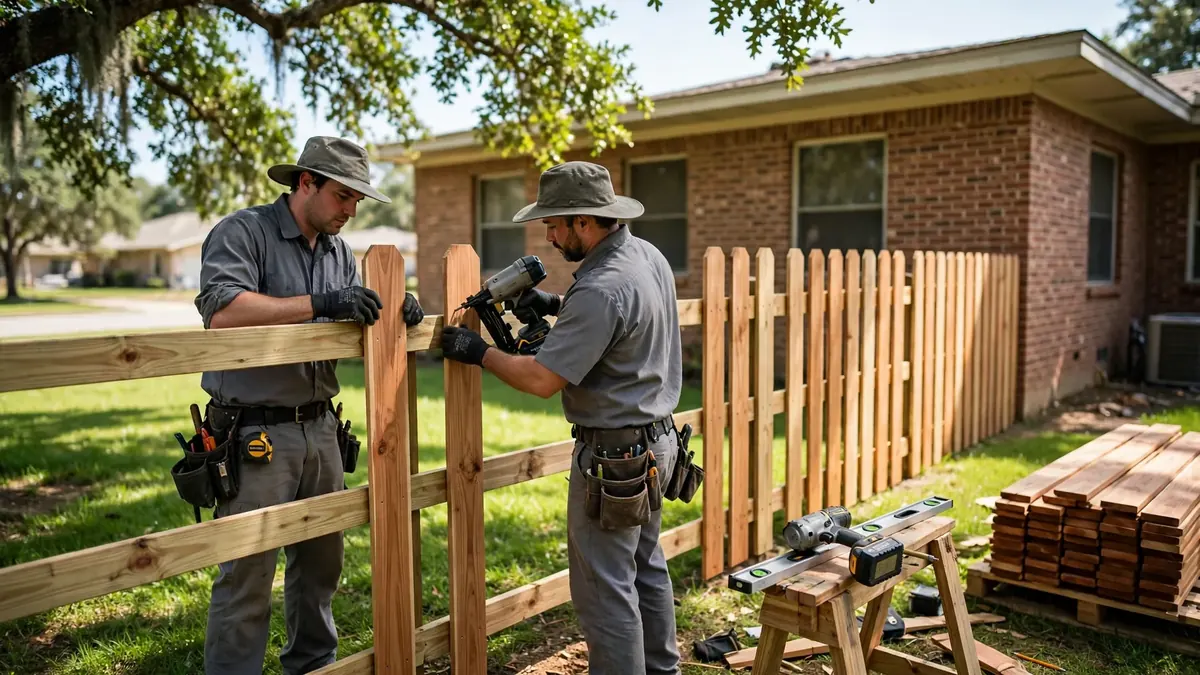
Local Conditions That Shape Fence Installation in Canyon
Canyon is home to West Texas A&M University and sits just south of Amarillo. Amarillo and Lubbock are among the windiest cities in the United States, so fence panels act like sails in a storm. The Panhandle sees large hail, blizzards and hard freezes that the rest of Texas rarely gets.
- Strong winds push on solid privacy fences, so closer post spacing and steel posts help them stay upright.
- Intense sun dries and grays unprotected wood quickly, so staining every few years pays off.
Choosing Materials in Canyon
Steel-framed wood fences, masonry, and pipe fencing handle the wind best; ranch properties rely on pipe, barbed wire and pipe-and-cable.
Ranch, Pipe and Wire Fencing on Acreage
For larger properties, a fence builder will walk the line, mark corners and gates, and plan around creeks, slopes and rock before quoting. Having a survey or plat helps avoid building on the wrong side of a property line.
Building a Fence That Stands Up to Wind
A 6-foot solid fence acts like a sail in a storm. In windy parts of Texas, closer post spacing, deeper footings, steel posts and three rails instead of two help it ride out gusts. Shadowbox or gapped designs let some wind pass through.
Vinyl and Composite Fences in Texas Heat
Vinyl doesn't rot or need stain, which appeals in humid areas with termites. In Texas sun, though, cheaper vinyl can sag or become brittle. Look for heavier-gauge, UV-stabilized products, and lighter colors that absorb less heat. Composite fencing is denser and handles heat better than most vinyl, at a higher cost.
Board-on-Board and Shadowbox Styles
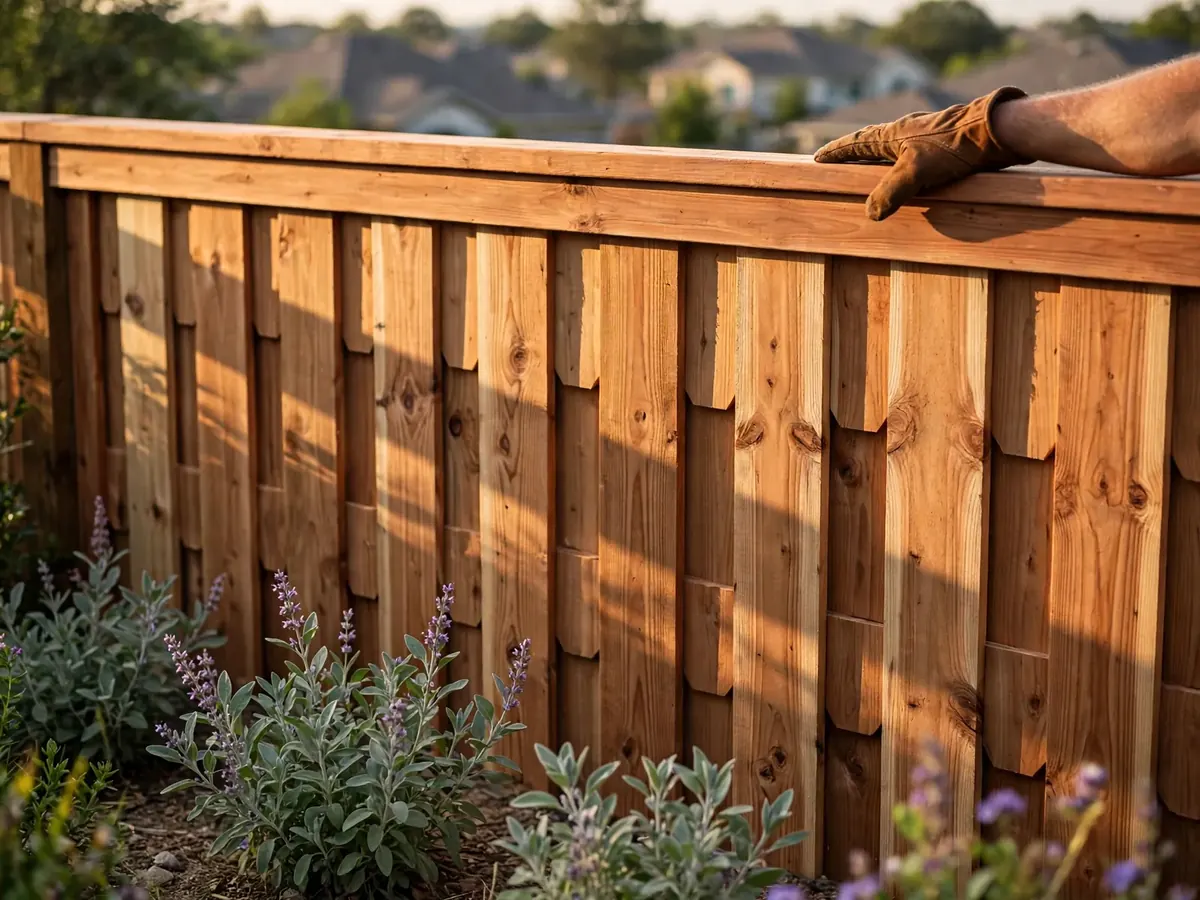
If your fence faces strong wind, a shadowbox design takes some load off the posts by letting air pass between the pickets. Board-on-board gives complete privacy but acts more like a solid wall in a storm, so post spacing and depth matter more.
Steel Posts vs. Wood Posts
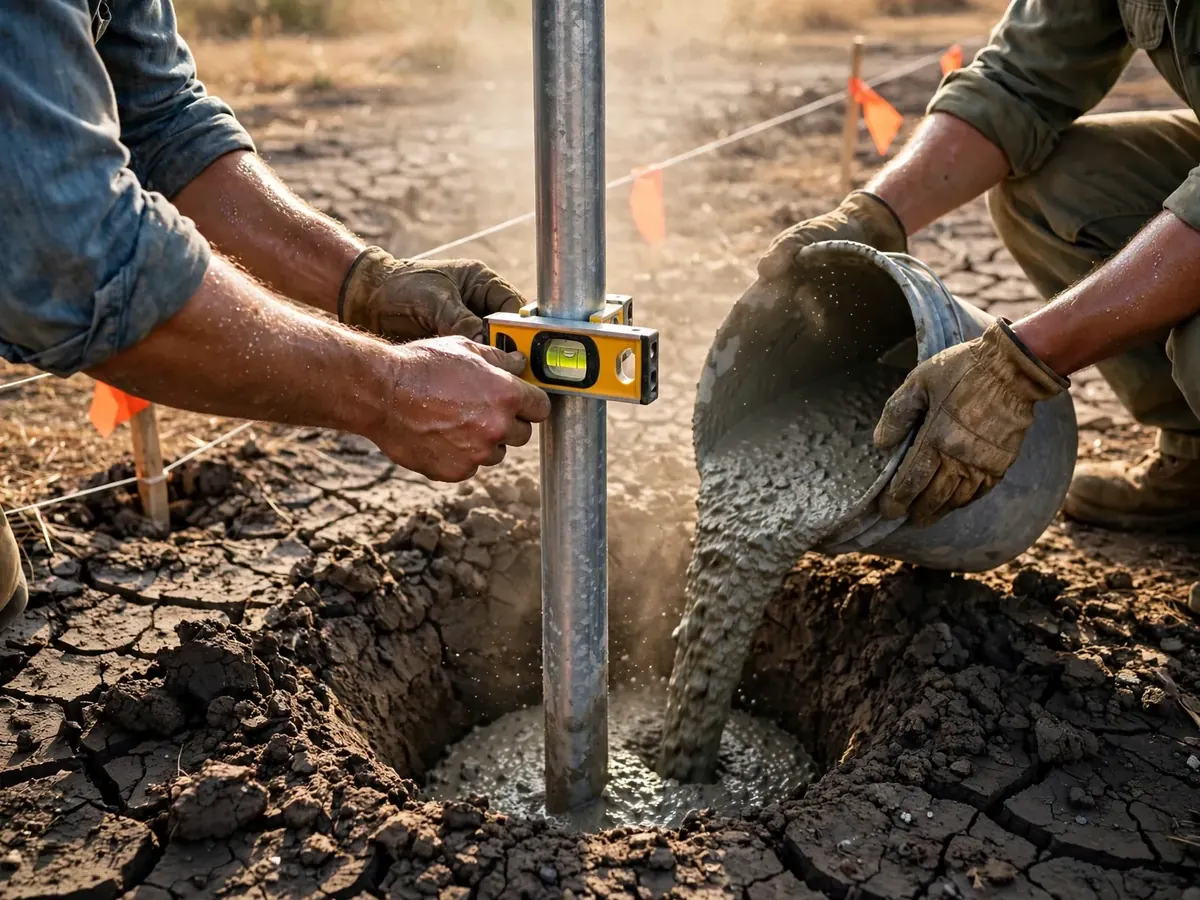
Most fence failures in Texas start at the posts, not the pickets. Wood posts rot at ground level, especially in wet clay, and termites go after them. Galvanized steel posts set in concrete, with wood rails and pickets attached by brackets, are now the common upgrade and usually outlast the wood they hold up.
Drilling Posts Into Limestone and Caliche
Expect a crew working on rocky ground around Canyon to bring heavier equipment, sometimes a track loader with a rock auger. Ask whether rock drilling is included in the estimate or charged separately once they see what's underground.
More Fence Questions Around Canyon
Horizontal and Modern Fence Designs
Horizontal slat fences give a modern look but need tighter post spacing to keep long boards from sagging.
Pet and Pool Fencing
Dogs need fences without gaps at the bottom or footholds to climb; pools need barriers with self-closing gates.
Wrought Iron and Aluminum Fences
Ornamental iron and aluminum mark boundaries, secure pools and keep views open; aluminum resists rust near the coast.
When to Pick Up the Phone
- HOA requires an approved style
- Neighbors replacing a shared fence
- Planning a pool, a dog or new privacy
- Moving onto acreage that needs livestock fencing
Before You Call
- Call 811 to have utility lines marked before digging
- Check HOA fence guidelines and stain colors
- Mark gates and where you need access for mowers or vehicles
- Measure the rough length of fence needed
- Find your survey or plat showing property lines
Getting Fence Installation in Canyon Started
Call 877-753-1892 and describe the project, your city and your timeline. You'll be pointed to a fence builder who works in Canyon. Ask about scheduling, permits and how the job will be priced before work begins.
877-753-1892Fence Questions From Canyon Homeowners
Are steel posts worth it?
In most of Texas, yes. Galvanized steel posts don't rot or attract termites and resist movement in clay soil better than wood posts.
What fence material is best near the coast?
Aluminum, vinyl and cedar with stainless or galvanized fasteners hold up best in salt air and humidity.
What should Canyon homeowners know about fence projects?
Acreages around town need fences sized for pets, horses or livestock rather than just privacy. Spring hail splits and pits pickets and dents metal fencing, so storm repairs are routine.