
Fence Installation in North Richland Hills: Local Conditions
Neighborhoods range from 1960s homes to newer subdivisions. Housing ranges from early 1900s homes near downtown Fort Worth to newer master-planned communities to the north.
North Richland Hills is a northeast Tarrant County suburb. In established North Richland Hills neighborhoods, matching the character of the street matters. Like Colleyville in the same region, North Richland Hills has to plan around shifting clay.
- HOA guidelines often set fence height, style, stain color and which side faces out.
- City ordinances cover fence height, front-yard placement and sight lines at intersections.
Materials That Suit North Richland Hills
Backyards are mostly cedar privacy; ornamental iron and aluminum handle front yards and pools, and the most upscale areas favor iron with masonry. Freeze events in North Richland Hills can crack concrete that holds water, so drainage helps.
Cedar Privacy Fences in North Richland Hills
Cedar is popular for good reasons: it's lighter than pine, resists insects and rot, and weathers to a silver gray if you don't stain it. Pre-stained or kiln-dried cedar can be stained sooner after installation than green lumber, which needs time to dry first.
Rot starts where wood stays wet longest, so a small gap between the pickets and the soil does more for lifespan than any single product. City codes in North Richland Hills may set limits that affect your design.
Sharing a fence with a neighbor? A short conversation before work starts about style, height and which side faces out heads off most disputes.
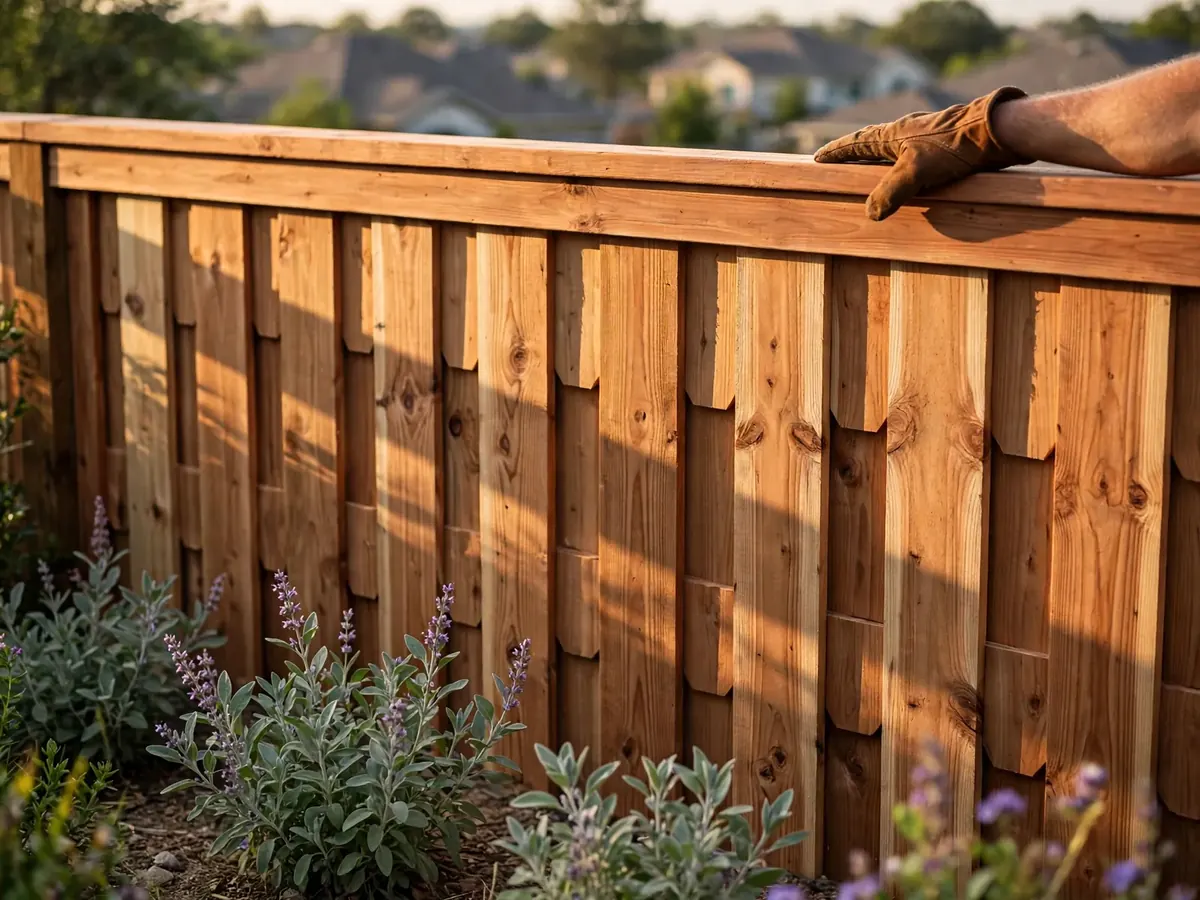
Board-on-Board and Shadowbox Styles
Standard side-by-side pickets shrink in Texas heat and open small gaps. Shadowbox fences use the same pickets as board-on-board but alternate them on opposite sides of the rails.
On windy lots, shadowbox gives a little relief to the posts while still blocking most views. If your North Richland Hills neighborhood has an HOA, approval is usually the first step and sets the style.
Wrought Iron and Aluminum Fences
Black is the most common finish, but bronze, white and other colors are widely available in powder coat. Ornamental fencing is often combined with wood privacy sections where a view is wanted in one place and privacy in another.
Ornamental fencing is a good fit where you want security without blocking breezes or views.
If you're weighing it up: If you're working around an event or a new pet, say so on the first call; it helps the fence builder plan materials and crew time.
Building a Fence That Stands Up to Wind
Steel posts at closer spacing are the most reliable upgrade for windy sites. A 6-foot solid fence acts like a sail in a storm.
Leaving a small gap at the bottom of pickets and choosing shadowbox styles can let some wind through and ease the strain. Open exposure in North Richland Hills means the fence should be built for gusts.
HOA Rules, Permits and Property Lines
A survey or plat shows where the line is. Many fence disputes start with a few inches.
A short email to your HOA before choosing materials can save a rejected application.
Something to keep in mind: DIY makes the most sense for short runs and simple designs.
Pet and Pool Fencing
Ornamental aluminum panels are a common choice because they're designed around those rules. A mow strip of concrete under the fence line stops digging and makes trimming easier.
Walking the fence line with your dog's habits in mind, such as favorite digging spots, helps plan reinforcements.
More Fence Questions Around North Richland Hills
Steel Posts vs. Wood Posts
Galvanized steel posts don't rot and resist movement in shifting soil; wood posts are cheaper but usually fail first.
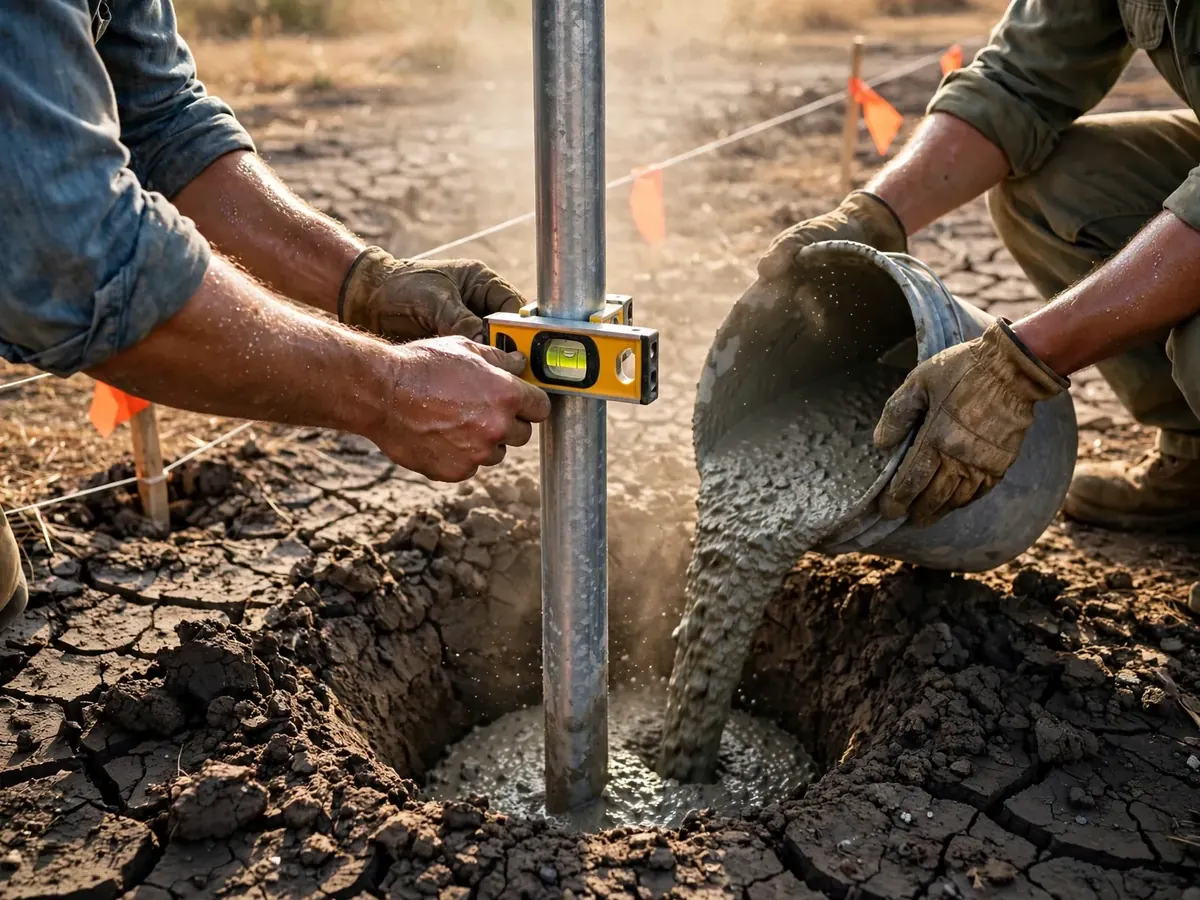
Setting Posts in Shifting Clay Soil
A post set roughly a third of its above-ground height into the ground, with a bell-shaped or wider footing, resists that seasonal heave far better than a shallow one.
Ranch, Pipe and Wire Fencing on Acreage
Long fences are built in stages: corners and braces first, then line posts, then wire or rails.
Signs It's Time to Call in North Richland Hills
Around North Richland Hills, a call usually follows one of these:
- Planning a pool, a dog or new privacy
- Moving onto acreage that needs livestock fencing
- Neighbors replacing a shared fence
Quick Checks Before the Call
- Check HOA fence guidelines and stain colors
- Measure the rough length of fence needed
- Find your survey or plat showing property lines
- Mention any leaning or settling you've seen nearby
- Check whether old footings or posts will need to be removed
Fence Installation in North Richland Hills: Talk to a Local Fence Builder
Dial 877-753-1892 to talk to a fence builder who works in North Richland Hills. Have your questions ready, from permits to materials, and take notes. Call today to talk through your fence plans and set a date.
877-753-1892Fence Questions From North Richland Hills Homeowners
How long does a cedar fence last in North Richland Hills?
A well-built cedar fence often lasts many years, longer with steel posts and regular staining. Wood posts and unstained pickets in wet or shifting soil wear out sooner. Your fence builder can tell you what applies on your specific North Richland Hills property.
How can I keep a North Richland Hills fence project within budget?
Worried a new fence will cost more than it's worth? Ask for an itemized estimate that separates posts, panels, gates and haul-off, so you can see where the money goes and trim the parts that matter least to you. Price is usually driven by length, height, post type and gates, so a shorter run of a better fence often beats a longer run of a cheaper one.
What should North Richland Hills homeowners know about fence projects?
Because much of North Richland Hills sits on shrink-swell clay, the details below the ground matter more here than in sandy or rocky areas. Fort Worth and the Mid-Cities share North Texas clay soils and some of the heaviest spring hail in the state.