
What to Know About Fence Installation in Sugar Land
Sugar Land is a master-planned suburb southwest of Houston with many HOA-governed neighborhoods. Flat, low ground and heavy clay mean water sits around posts after storms, which speeds up rot at the base of wood posts. Sugar Land, Missouri City, Pearland and Manvel are large suburban areas with master-planned communities, while farther south the land turns rural.
- Cities set rules on front-yard fence height, corner-lot sight lines and masonry walls, so check before building.
- HOA guidelines often set fence height, style, stain color and which side faces out.
What Holds Up Around Sugar Land
Cedar privacy fences on steel posts in subdivisions, with ornamental iron around retention ponds and pools; wire and pipe fencing on acreages to the south.
Cedar Privacy Fences in Sugar Land
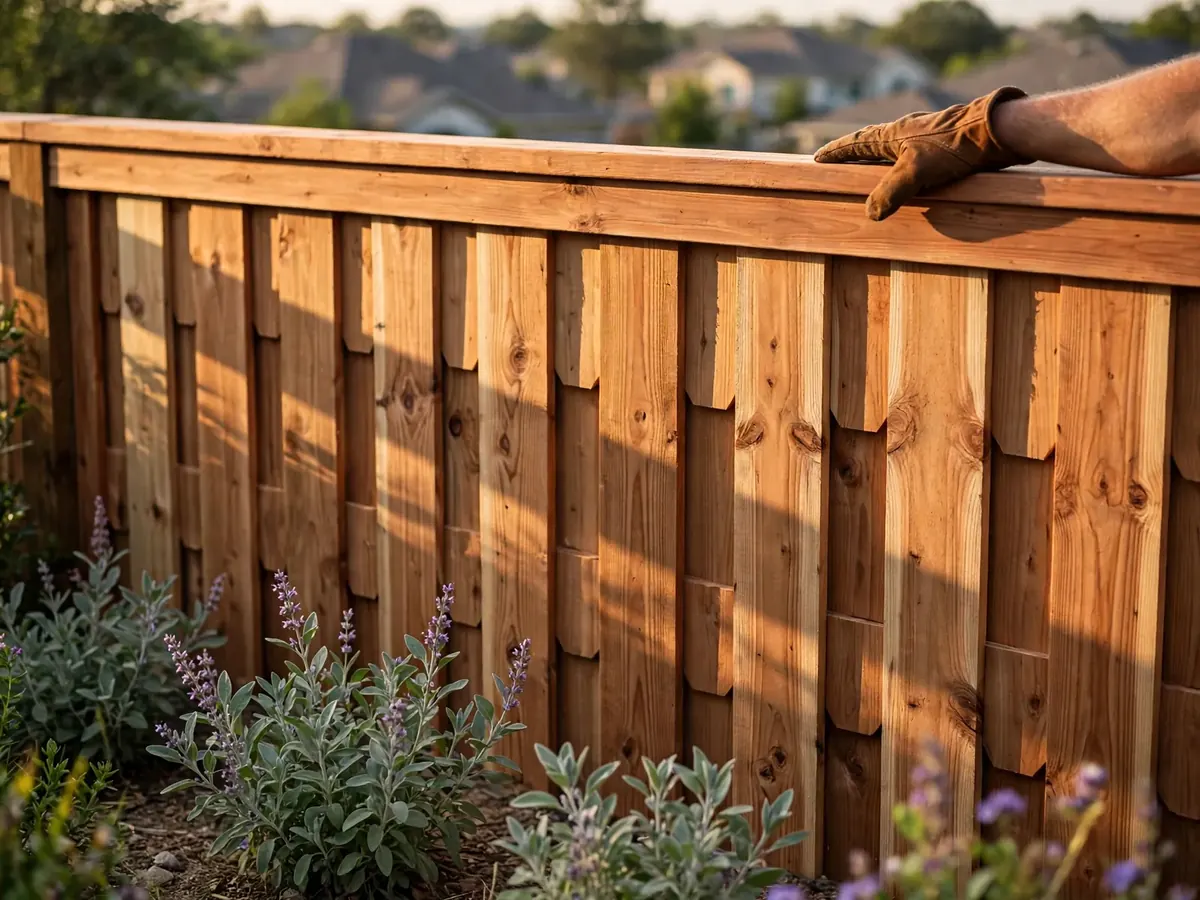
Cedar is popular for good reasons: it's lighter than pine, resists insects and rot, and weathers to a silver gray if you don't stain it. On a typical Sugar Land lot the main decisions are picket style, rail count and whether to add a top cap and trim board for a finished look.
Steel Posts vs. Wood Posts
If you want the look of wood all the way down, steel posts can be wrapped or hidden behind the pickets. In Sugar Land, where the ground and the weather work against posts, steel is worth the added cost over the life of the fence.
Pet and Pool Fencing
Pool fences usually need a specific height, limited gaps between pickets and a gate that closes and latches on its own. Ornamental aluminum panels are a common choice because they're designed around those rules.
Board-on-Board and Shadowbox Styles
Many HOAs around Sugar Land specify board-on-board with a top cap and require the finished side to face the street or the neighbor. Check your HOA's fence guidelines before choosing a style; they often list the approved stain color too.
HOA Rules, Permits and Property Lines
Many fence disputes start with a few inches. Before the crew sets the first post, confirm the line, any easements along the back of the lot and whether your city requires a permit for the height you want.
Setting Posts in Shifting Clay Soil
When a crew sets posts in clay, the concrete should be shaped so water runs away from the post, not into a cup around it. Water trapped against a wood post in clay is the fastest way to rot it.
Other Fence Situations in Sugar Land
Wrought Iron and Aluminum Fences
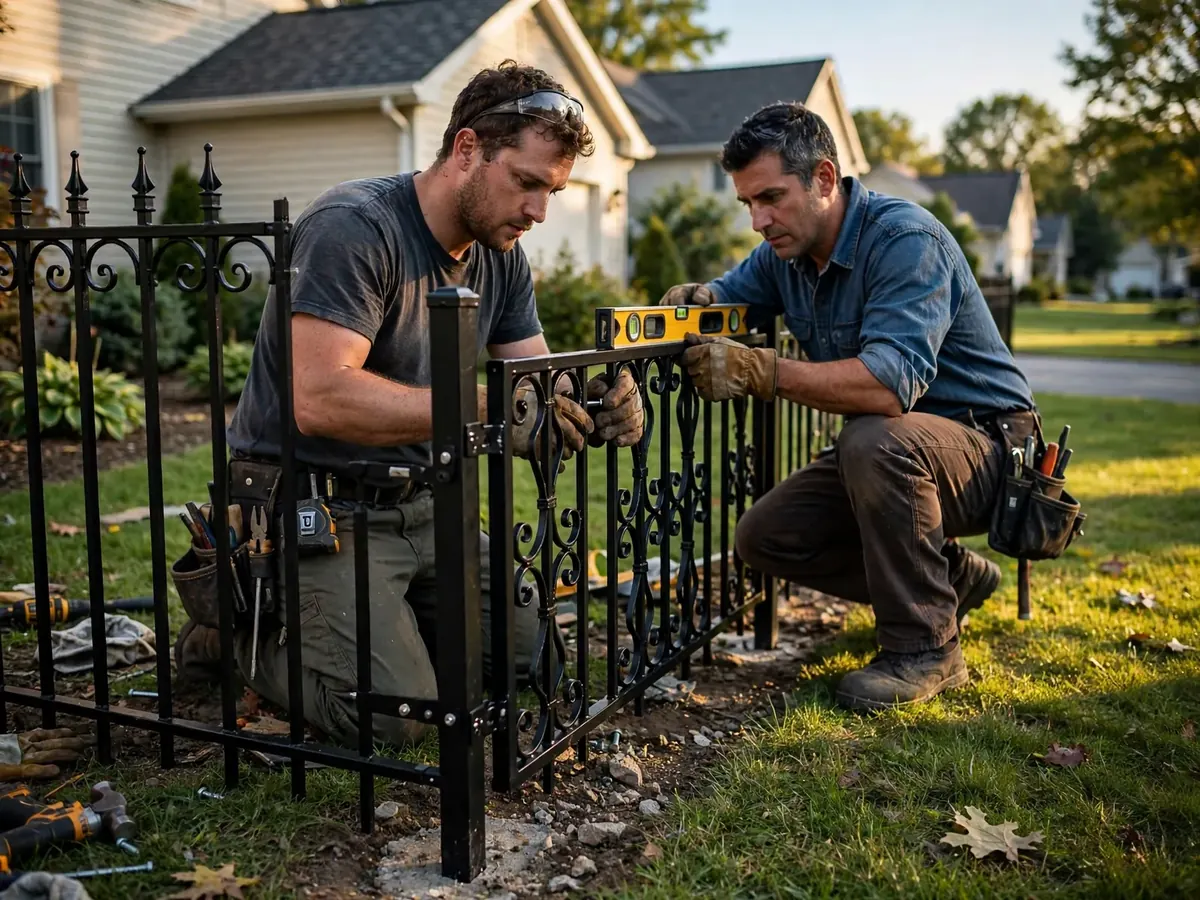
Ornamental iron and aluminum mark boundaries, secure pools and keep views open; aluminum resists rust near the coast.
Horizontal and Modern Fence Designs
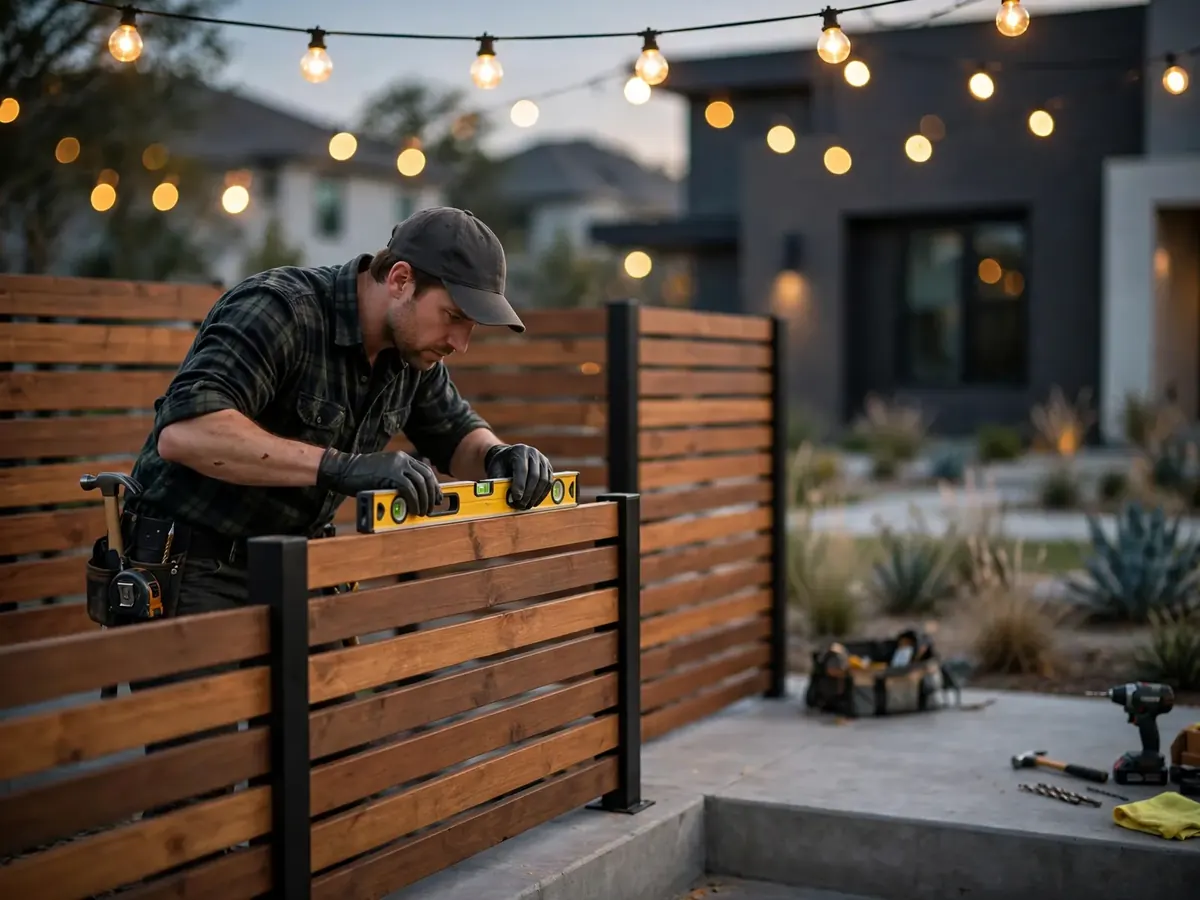
Horizontal slat fences give a modern look but need tighter post spacing to keep long boards from sagging.
Building a Fence That Stands Up to Wind
Solid privacy fences catch wind like a sail, so post depth, spacing and rail strength matter in storm-prone areas.
Common Reasons Sugar Land Homeowners Call
- Old fence leaning or sagging
- Planning a pool, a dog or new privacy
- Neighbors replacing a shared fence
- Moving onto acreage that needs livestock fencing
What to Have Ready
- Measure the rough length of fence needed
- Find your survey or plat showing property lines
- Mark gates and where you need access for mowers or vehicles
- Call 811 to have utility lines marked before digging
- Check HOA fence guidelines and stain colors
Fence Installation in Sugar Land: Talk to a Local Fence Builder
Call 877-753-1892 and describe the project, your city and your timeline. You'll be pointed to a fence builder who works in Sugar Land. Ask about scheduling, permits and how the job will be priced before work begins.
877-753-1892Fence Questions From Sugar Land Homeowners
Are steel posts worth it?
In most of Texas, yes. Galvanized steel posts don't rot or attract termites and resist movement in clay soil better than wood posts.
How long does a cedar fence last in Sugar Land?
A well-built cedar fence often lasts many years, longer with steel posts and regular staining. Wood posts and unstained pickets in wet or shifting soil wear out sooner.
What should Sugar Land homeowners know about fence projects?
Larger lots and estate homes often pair cedar privacy fencing with ornamental iron and masonry columns. Builder-installed fences in newer subdivisions often reach the end of their first life after 10 to 15 years.