
What to Know About Fence Installation in Stafford
Most homes are older single-family houses. Sugar Land, Missouri City, Pearland and Manvel are large suburban areas with master-planned communities, while farther south the land turns rural.
Stafford is a small Fort Bend County city southwest of Houston. Rural Stafford properties often need longer runs and sturdier gates than suburban lots. Constant humidity is a common thread between Stafford and Liverpool.
- HOA guidelines often set fence height, style, stain color and which side faces out.
- The fences that came with newer homes were often built quickly and are now leaning or graying.
Materials That Suit Stafford
Subdivision fences are mostly cedar on steel posts, with ornamental iron along ponds and pools and wire or pipe on the acreages to the south. In Stafford's newer neighborhoods, upgrades often replace the original builder materials.
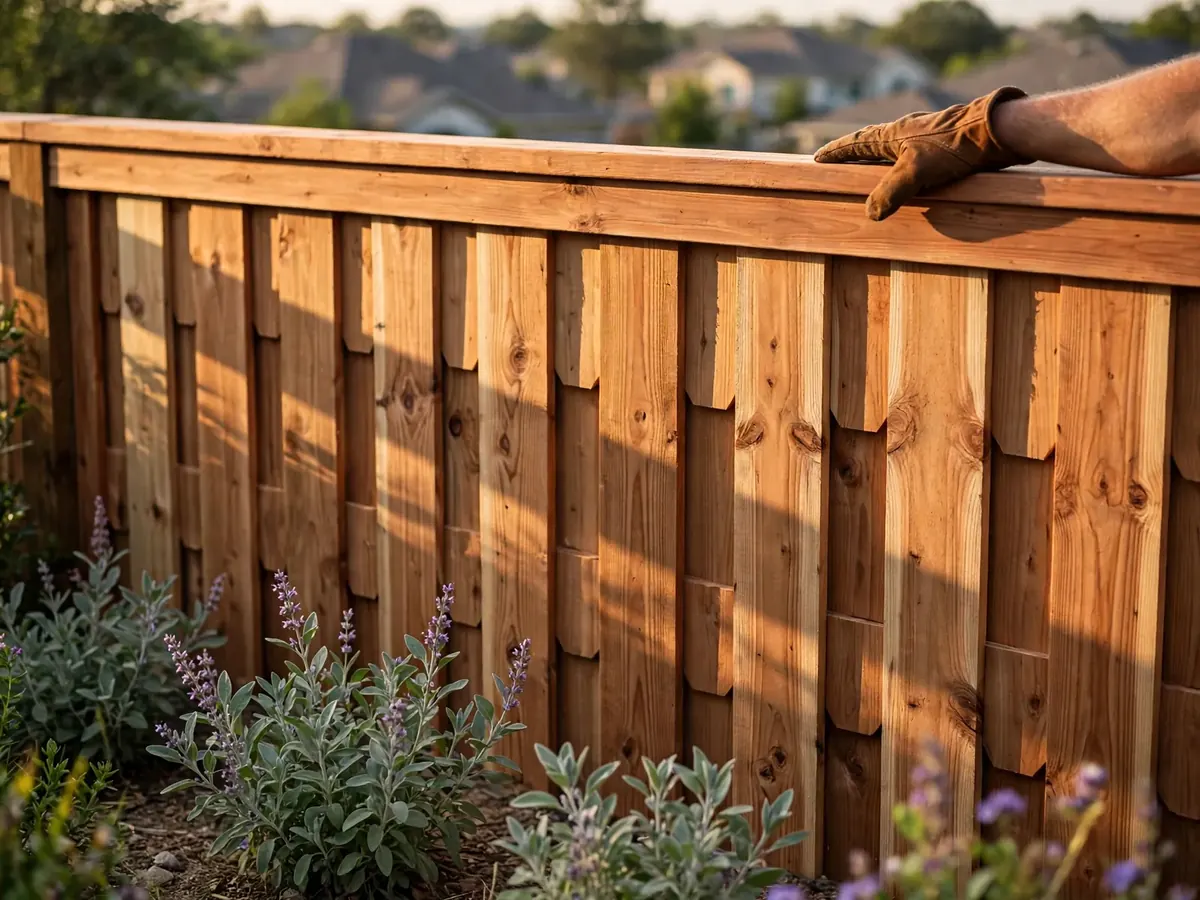
Cedar Privacy Fences in Stafford
A kickboard, a horizontal board along the bottom, keeps pickets off the soil and is easy to replace when it eventually wears. Six-foot cedar privacy fences are the standard backyard choice around Stafford.
A top cap and trim board add a finished look and also shed rain off the end grain of the pickets, which is where cedar takes on water first. In HOA communities around Stafford, approval comes before scheduling a crew.
Something to keep in mind: If you DIY, consider hiring out just the posts and footings, which is where experience matters most.
Steel Posts vs. Wood Posts
Deeper holes with a concrete footing that's crowned at the top to shed water help any post last longer. Wood posts are typically 4x4 pressure-treated pine or cedar, and the part just below the soil line is where they fail first.
A good way to picture it: a wood post is a sponge planted in the ground, while a galvanized steel post is closer to a pipe that water can't soak into. Because much of Stafford sits on shrink-swell clay, the details below the ground matter more here than in sandy or rocky areas.
Setting Posts in Shifting Clay Soil
Even a well-set post in clay can shift slightly; adjustable brackets make small corrections simple. If neighboring fences in your part of Stafford lean, the soil is probably the reason.
Builders who know clay talk about depth and drainage before they talk about pickets; that's a good sign. Stafford lots that hold water need materials that tolerate wet conditions.
A common concern: Spring is busy for fence crews; booking a little ahead of the season gives you more scheduling choices.
Board-on-Board and Shadowbox Styles
Standard side-by-side pickets shrink in Texas heat and open small gaps. Board-on-board gives complete privacy but acts more like a solid wall in a storm, so post spacing and depth matter more.
If you plan to stain, board-on-board takes longer to coat because the overlaps hide surfaces a sprayer has to reach from two angles. In newer parts of Stafford, replacing the original builder fence is a common first upgrade.
HOA Rules, Permits and Property Lines
A survey or plat shows where the line is. Many fence disputes start with a few inches.
A short email to your HOA before choosing materials can save a rejected application.
A common concern: Ask who handles permits, utility locates and HOA paperwork so nothing falls through the cracks.
Pet and Pool Fencing
Pool barrier rules often specify minimum height, maximum gaps and how gates open and latch. If you're fencing for a pool, check your city's pool barrier rules for height, gaps and self-closing, self-latching gates.
Pool safety is about layers: the fence, the gate and supervision all work together.
Other Fence Situations in Stafford
Wrought Iron and Aluminum Fences
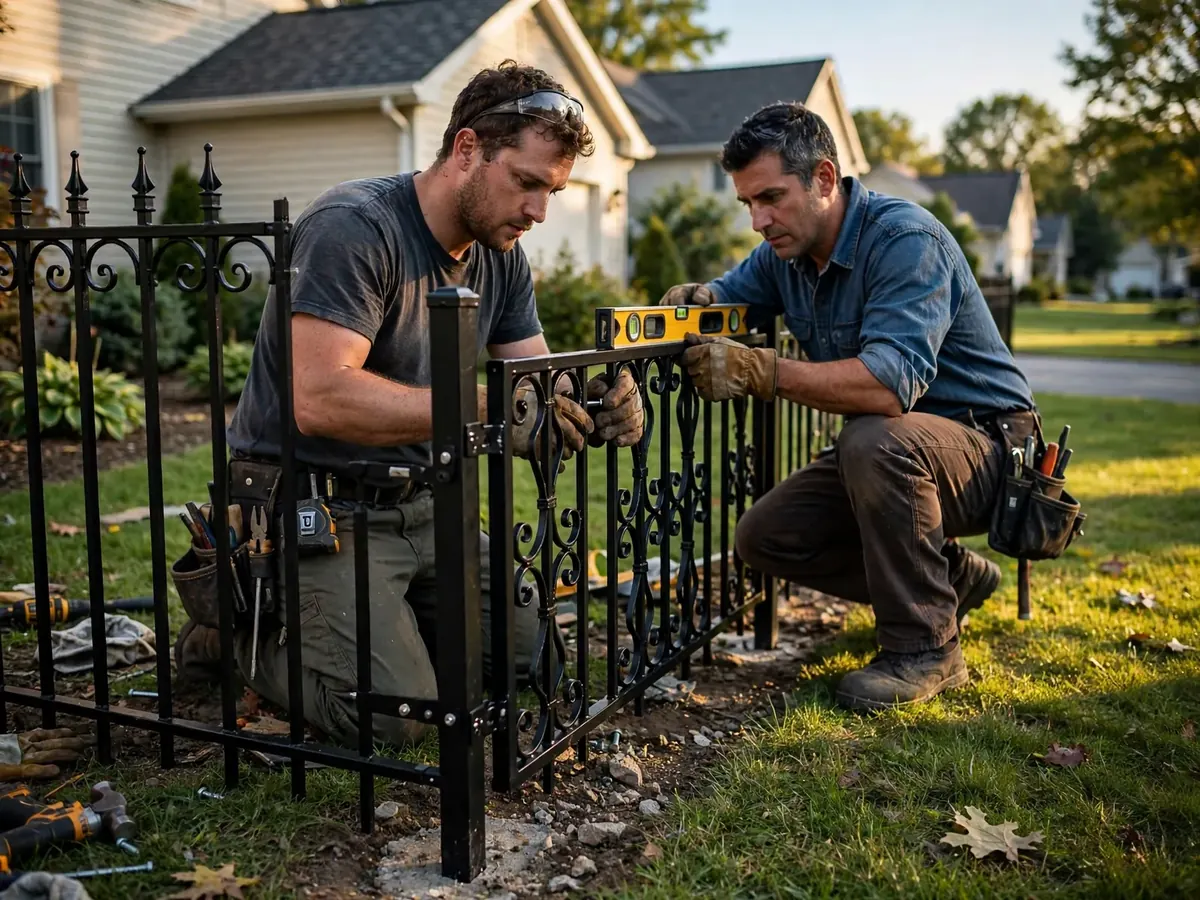
Ornamental iron and aluminum mark boundaries, secure pools and keep views open; aluminum resists rust near the coast.
Horizontal and Modern Fence Designs
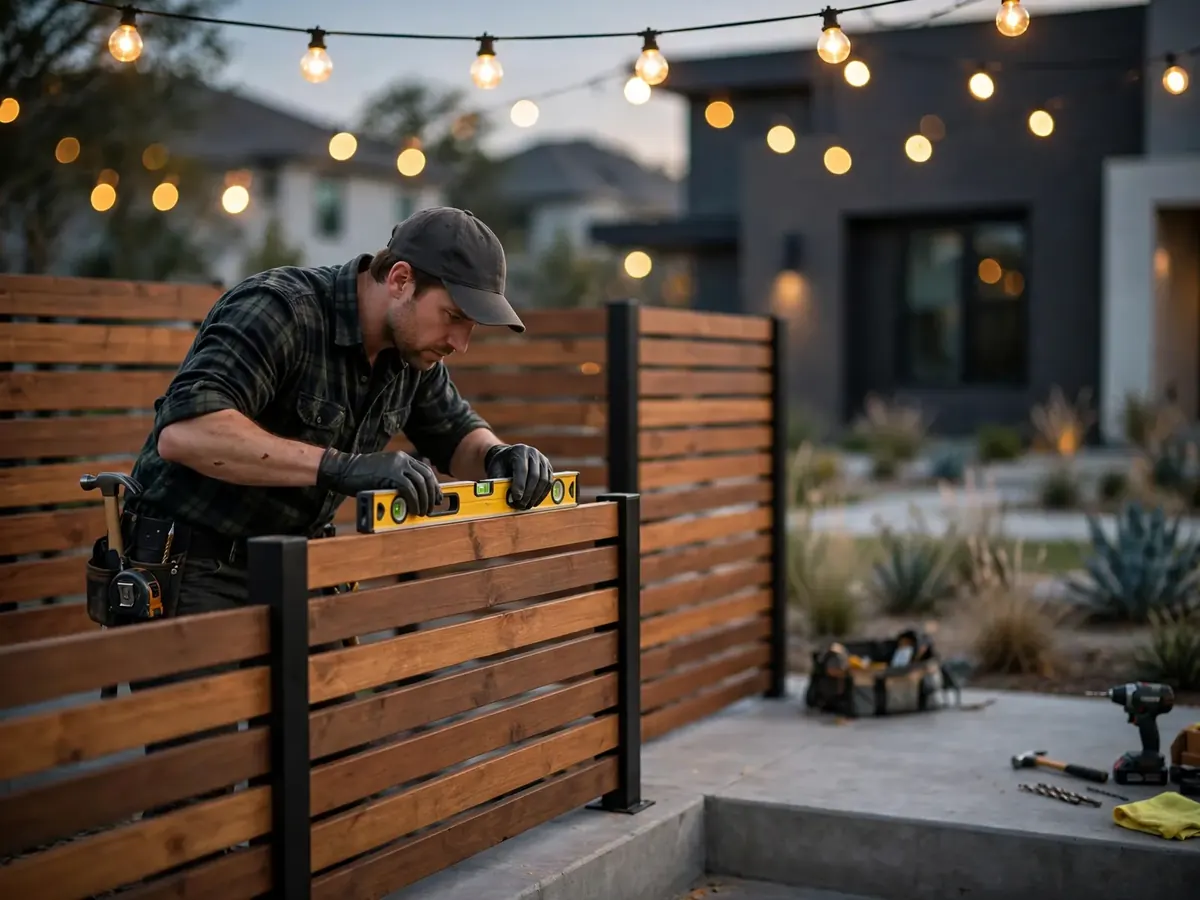
Because the boards span between posts, a 6-foot post spacing is common for horizontal fences instead of the usual 8 feet.
Vinyl and Composite Fences in Texas Heat
Manufacturer installation instructions often affect coverage, so it's worth confirming they'll be followed.
When to Pick Up the Phone
In Stafford, these are the signs that most often lead to a call:
- Old fence leaning or sagging
- Neighbors replacing a shared fence
- HOA requires an approved style
Quick Checks Before the Call
- Call 811 to have utility lines marked before digging
- Mark gates and where you need access for mowers or vehicles
- Check HOA fence guidelines and stain colors
- Notice whether nearby fences or the house foundation show signs of soil movement
- Walk the property line or gate location and note slopes, creeks and rock outcrops
Planning Fence Installation in Stafford: What to Expect
Call 877-753-1892 when you're ready. Sharing photos and a rough measurement of your Stafford project makes the conversation more specific. Call today to talk through your fence plans and set a date.
877-753-1892Fence Questions From Stafford Homeowners
How long does a cedar fence last in Stafford?
A well-built cedar fence often lasts many years, longer with steel posts and regular staining. Wood posts and unstained pickets in wet or shifting soil wear out sooner. For a Stafford home, it's worth confirming this before work starts.
What makes a fence last longer in Stafford?
Lifespan comes down to water: keep wood dry at the ground line and the fence lasts. Wondering how long it will last? In Stafford's conditions, posts and drainage decide that more than the pickets, so ask about both.
What should Stafford homeowners know about fence projects?
In humid Stafford, pressure-treated or naturally rot-resistant materials make a real difference. Flat, low ground and heavy clay mean water sits around posts after storms, which speeds up rot at the base of wood posts.