
Fence Repair in Deer Park: Local Conditions
Most homes are single-family houses on flat, low ground. Much of the area sits on gumbo clay that holds water, so posts set without good drainage can loosen and rot.
Deer Park is an east Harris County city near the Houston Ship Channel. Deer Park's older homes often reveal surprises, like buried footings or old posts, once work begins. Constant humidity is a common thread between Deer Park and La Porte.
- On older streets, fences have often been patched repeatedly, and the posts under them are tired.
- Wet, slow-drying conditions mean wood at ground level stays damp for days after rain.
Materials That Suit Deer Park
Cedar or pine privacy fencing on steel or treated posts is standard, with aluminum or iron in front yards and around pools in close-in neighborhoods. Deer Park's clay is the reason so many local fences lean; building deeper avoids joining them.
Rotted Post Replacement
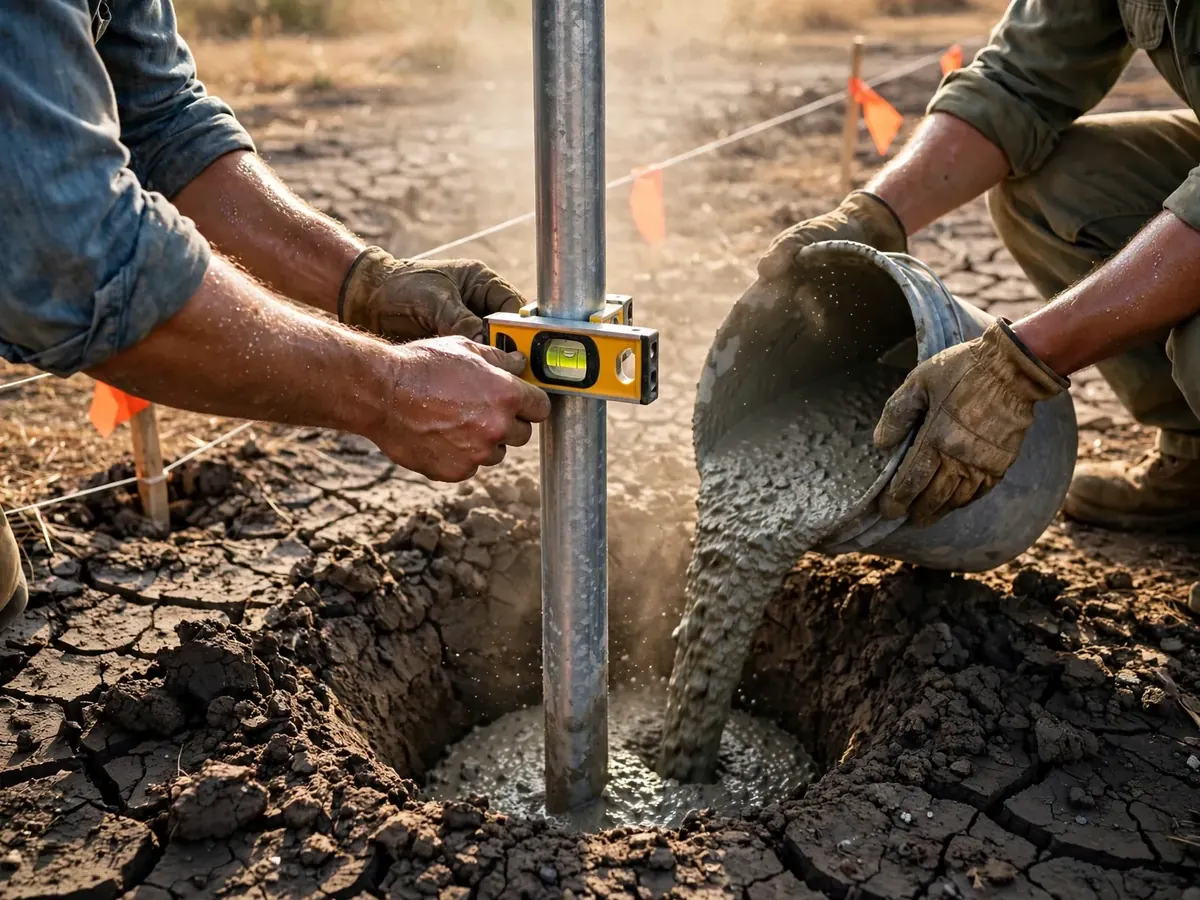
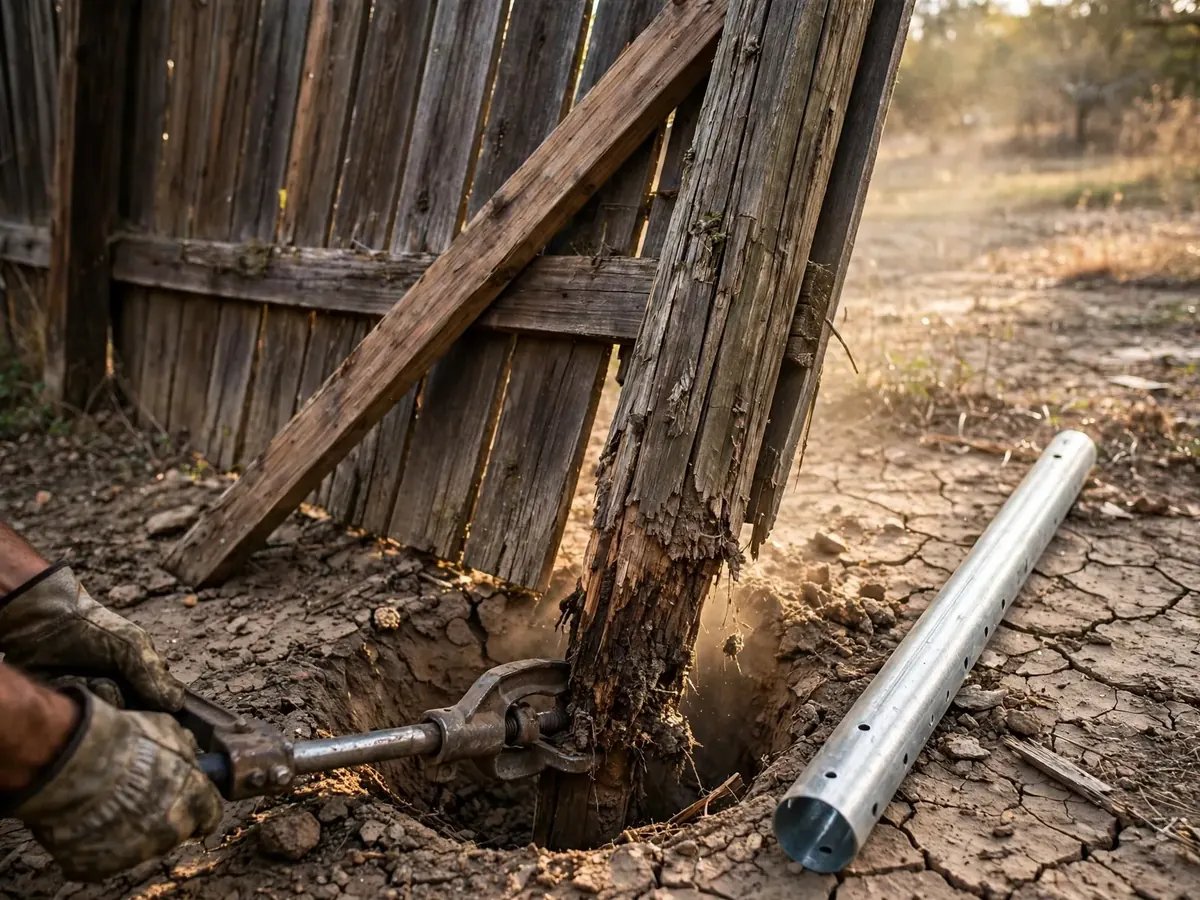
Termites and moisture are the main reasons wood posts fail early in humid parts of Texas. Steel posts with brackets are a common replacement that won't rot again.
When you replace a wood post, switching it to steel stops the same problem from coming back in the same spot. Deer Park's damp conditions reward materials and details that let wood dry out.
Worth knowing before you call: Ask who handles permits, utility locates and HOA paperwork so nothing falls through the cracks.
Leaning Fences and Shifting Posts
A leaning fence usually means one or more posts have rotted at the ground line or the soil has shifted. Pushing it back and bracing it only lasts until the next wet season. Resetting the post with a deeper footing, or replacing it with steel, fixes the cause. A post can be straightened with a new footing poured beside it, or replaced if the base has rotted.
If the lean follows a drainage path, redirecting water may be part of the fix. Deer Park's clay is the reason so many local fences lean; building deeper avoids joining them.
Broken Pickets, Rails and Sagging Sections
Rails crack most often where nails or screws are close to the end of the board. Adding a third rail or a center support stops the sag.
Sagging between posts is often a rail problem, not a post problem, so look at the rails before assuming the fence needs new posts. Before finalizing plans, confirm Deer Park's requirements for height and placement.
One practical point: If you DIY, consider hiring out just the posts and footings, which is where experience matters most.
Fence Damage From Trees and Roots
Cutting large roots near a tree can harm it, so moving the post is often the better option. Roots lift posts and footings, and storms drop limbs onto panels.
Flexible fence designs around big trees, such as a short gap or a bend in the line, avoid repeated damage.
Repair or Replace?
The answer depends on the posts. Replacing pickets on bad posts is rarely money well spent.
A useful rule: if more than about a third of the posts are loose or rotted, a new fence often costs only a little more than patching and lasts far longer.
One practical point: Spring is busy for fence crews; booking a little ahead of the season gives you more scheduling choices.
Storm-Damaged Fences in Deer Park
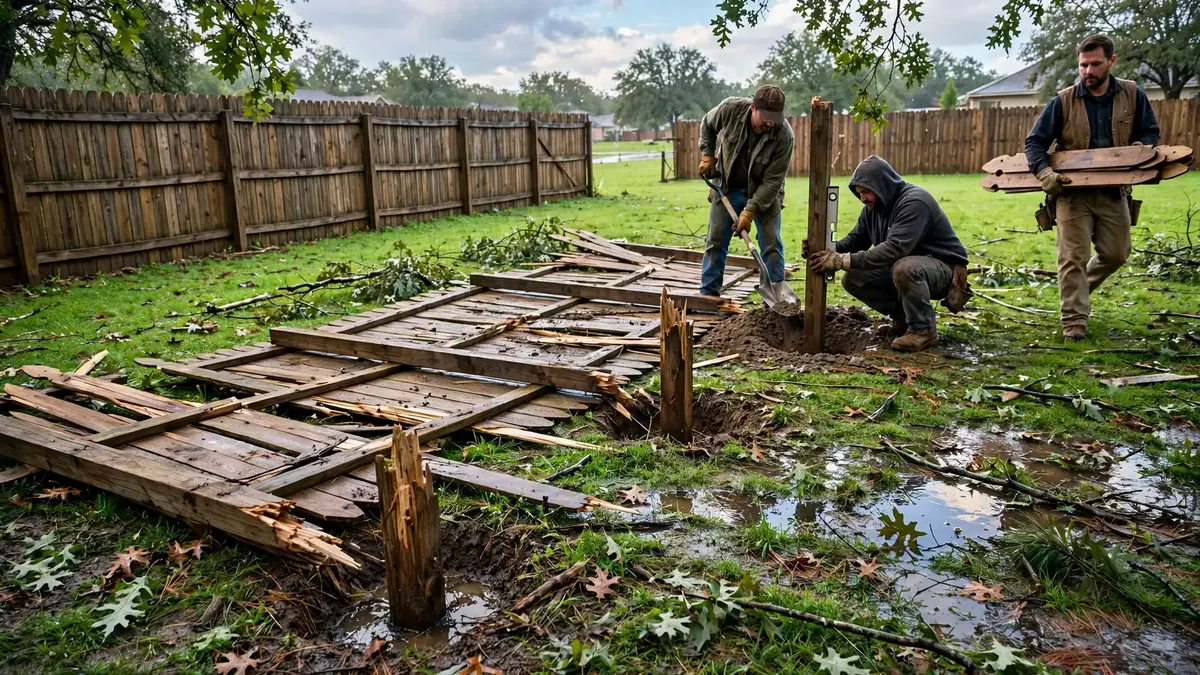
Replacing only the broken posts with steel posts can make the repaired section stronger than the rest. Take photos of storm damage before cleanup if you plan to file an insurance claim; many homeowner policies cover fences damaged by wind or falling trees.
Rebuilding storm-damaged sections with steel posts reduces the chance of the same failure next time. In Deer Park, building for tropical storm winds means deeper posts, stronger connections and closer spacing.
When to Pick Up the Phone
These are the moments that push Deer Park homeowners to pick up the phone:
- Storm or tree damage
- Posts loose at the base
- Broken or missing pickets
Quick Checks Before the Call
- Photograph damaged sections
- Check whether pets can get out
- Find your survey if posts must be moved
- Mention any past flood damage to the area
- Note any original features you want to keep or match
Getting Fence Repair in Deer Park Started
The quickest next step is a call to 877-753-1892. Describe the project and mention Deer Park; a fence repair pro will ask a few questions and talk through options. Call to book your project or simply ask what your Deer Park property needs.
877-753-1892Fence Questions From Deer Park Homeowners
Why does my fence keep leaning?
Rot at the base of wood posts and shifting clay soil are the usual causes. Deeper footings or steel posts fix it. For a Deer Park home, it's worth confirming this before work starts.
Is a new fence in Deer Park worth the cost?
Sticker shock is common, but the biggest savings usually come from choosing the right height and post type, not the cheapest pickets. Price is usually driven by length, height, post type and gates, so a shorter run of a better fence often beats a longer run of a cheaper one.
What should Deer Park homeowners know about fence projects?
Low ground in parts of Deer Park stays wet after storms, which speeds up rot and settling. Hurricane Beryl in July 2024 knocked down trees and fences across the area and left more than 2 million customers without power.