
Local Conditions That Shape Fence Repair in Kyle
Kyle is one of the fastest-growing cities in Hays County. Flash flooding along creeks and rivers is a known risk in this part of Texas.
Most homes are in newer subdivisions with HOA standards. Larger Kyle properties often need a mix of fence types for different areas. Like New Braunfels in the same region, Kyle has to plan around shallow limestone.
- Strong sun and dry air bleach and crack bare wood, so a stain every few years protects the investment.
- Hail splits wood pickets and dents metal, so many owners plan on occasional spot repairs after spring storms.
What Holds Up Around Kyle
On acreage, cedar post and wire, game fence, pipe and stone columns are typical; nearer town, cedar privacy and ornamental iron take over. Spring hail around Kyle makes it worth choosing materials that are easy to repair.
Storm-Damaged Fences in Kyle
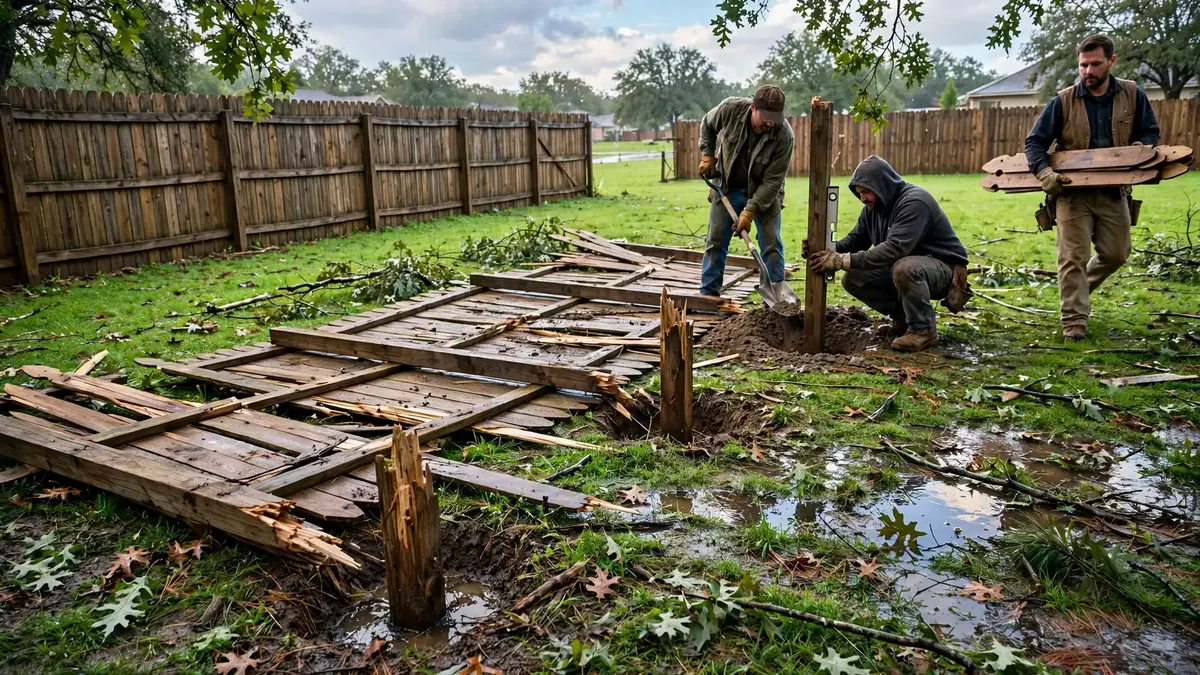
After a storm, repair crews tend to be booked up, so calling early helps. Take photos of storm damage before cleanup if you plan to file an insurance claim; many homeowner policies cover fences damaged by wind or falling trees.
A fence that failed in one storm often has neighbors that are close to failing, so check the posts on either side of a downed section. Hail storms are common enough in Kyle that many owners plan for occasional repairs.
Before you decide: Good fence repair pros explain how they'll set posts and handle your soil without being asked; vague answers are a warning sign.
Broken Pickets, Rails and Sagging Sections
Matching weathered cedar is hard, but new wood blends in after a season, and a stain evens the look. A sagging section between posts usually has a broken or undersized rail.
Screws hold better than nails when reattaching loose pickets. In dry Kyle, wood needs regular sealing to keep from cracking and graying.
Rotted Post Replacement
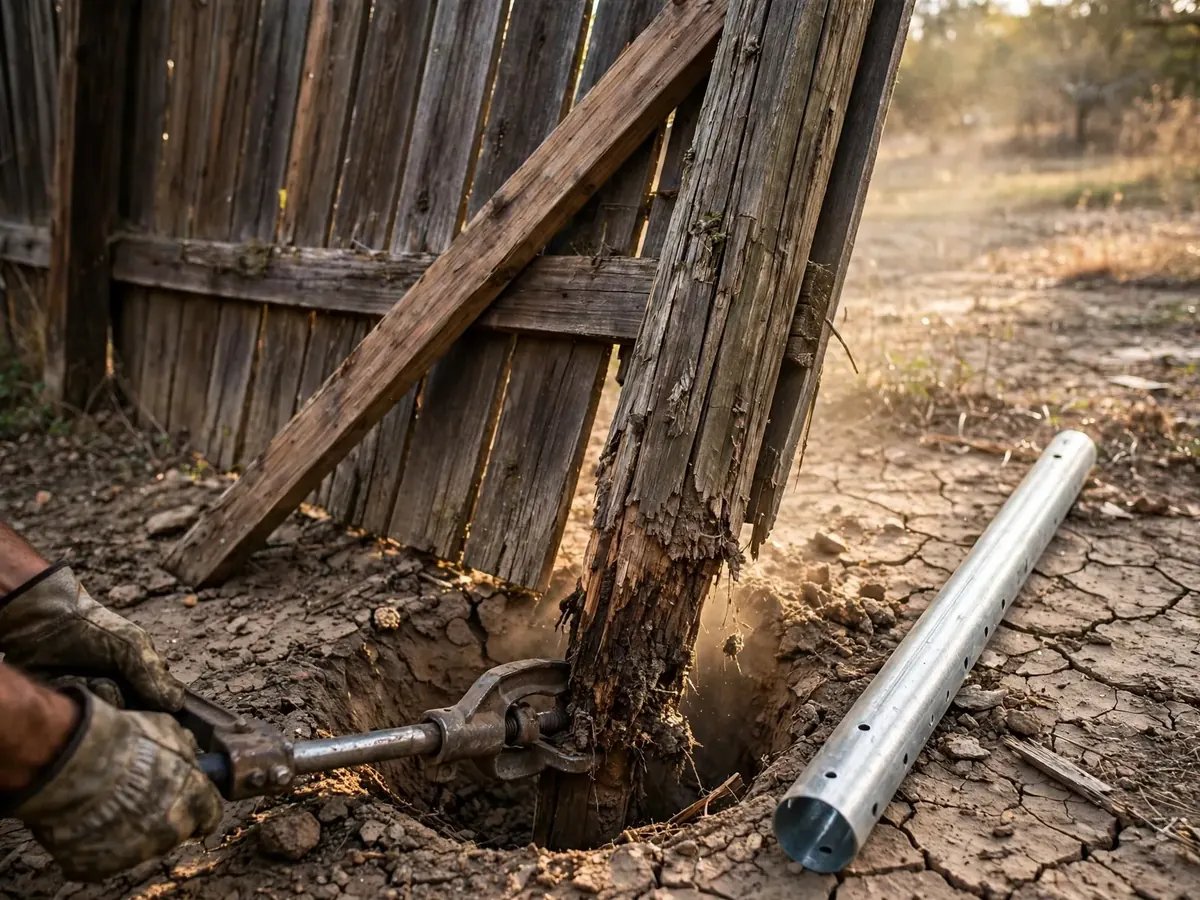
Termites and moisture are the main reasons wood posts fail early in humid parts of Texas. Replacing posts one at a time keeps the fence standing while the work is done.
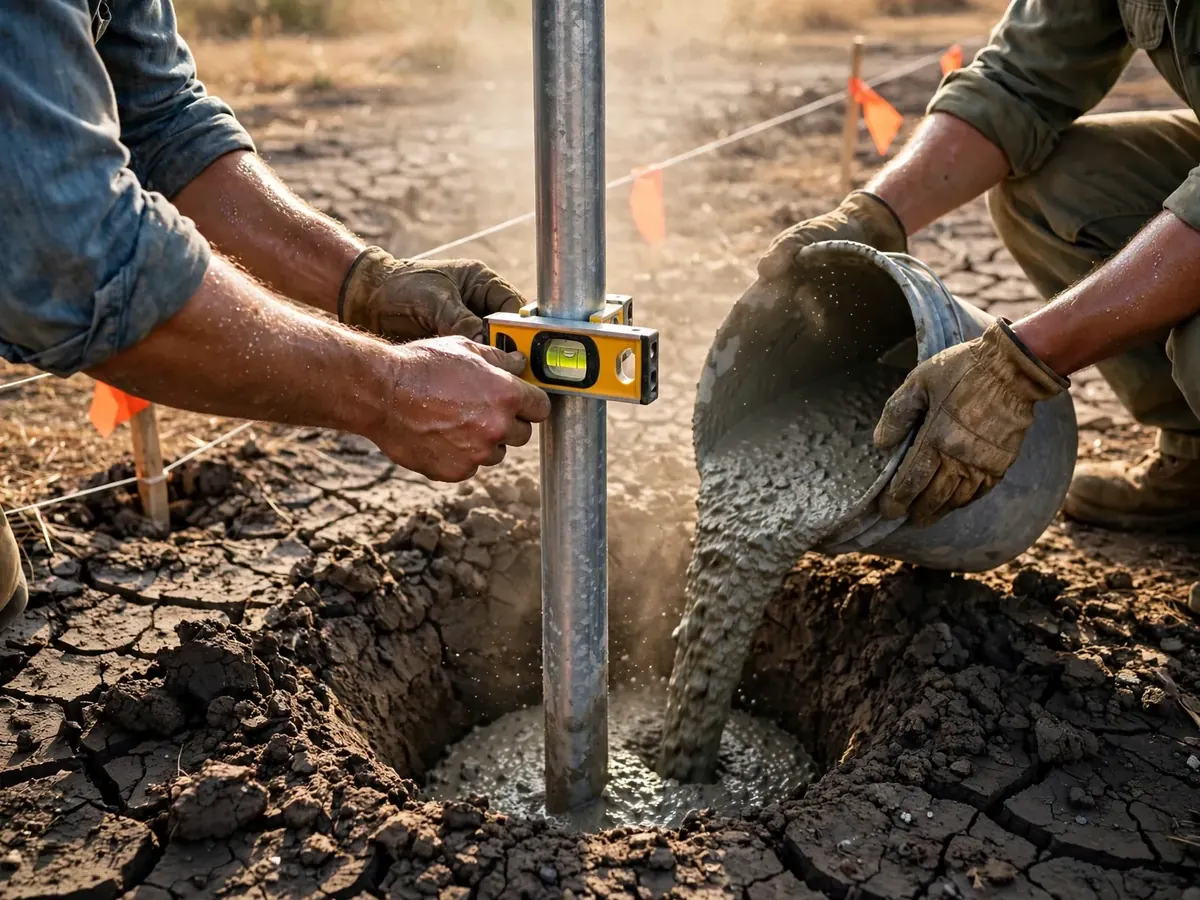
Replacing rotted posts with steel is one of the most cost-effective fence upgrades.
A question many homeowners raise: Rain delays are common in the spring storm season, so build a little slack into your plans.
Leaning Fences and Shifting Posts
Leaning that gets worse after rain usually points to soil movement rather than rot. If a section around Kyle leans more every year, ask about deeper footings or steel posts set below the most active soil layer.
Pushing a leaning section upright without fixing the post usually lasts only until the next wet season.
Repair or Replace?
The answer depends on the posts. If most are solid and only a few sections are damaged, repair makes sense.
If you plan to sell in the next few years, a repaired fence that looks consistent can be enough; if you're staying, investing in steel posts pays off longer.
A question many homeowners raise: If the fence is on the property line, talk to your neighbor before work starts about access and debris.
Fence Damage From Trees and Roots
Roots lift posts and footings, and storms drop limbs onto panels. If a neighbor's tree damaged your fence, Texas law and your insurance policy determine who pays; take photos and talk with your insurer.
An arborist can tell whether a tree near the fence is a risk in the next storm.
Common Reasons Kyle Homeowners Call
In Kyle, these are the signs that most often lead to a call:
- Sections leaning or swaying
- Sagging between posts
- Broken or missing pickets
Quick Checks Before the Call
- Photograph damaged sections
- Check whether pets can get out
- Find your survey if posts must be moved
- Walk the property line or gate location and note slopes, creeks and rock outcrops
- Note whether rock shows at the surface where work will happen
Fence Repair in Kyle: Talk to a Local Fence Repair Pro
Call 877-753-1892 when you're ready. Sharing photos and a rough measurement of your Kyle project makes the conversation more specific. The sooner you call, the sooner your fence work can be scheduled.
877-753-1892Fence Questions From Kyle Homeowners
How do I know whether to repair or replace?
Look at the posts. Sound posts mean a repair is worth it; widespread rot and brittle wood make replacement the better value. In Kyle, that comes down to your lot and how the fence is built.
Is a new fence in Kyle worth the cost?
Sticker shock is common, but the biggest savings usually come from choosing the right height and post type, not the cheapest pickets. Worried a new fence will cost more than it's worth? Ask for an itemized estimate that separates posts, panels, gates and haul-off, so you can see where the money goes and trim the parts that matter least to you.
What should Kyle homeowners know about fence projects?
In rocky parts of Kyle, drilling rather than digging is normal, and it's worth asking how the crew handles it. The Hill Country has thin soil over limestone, so setting posts often means drilling into rock.