
Ranch Fencing in Kyle: Local Conditions
Kyle is one of the fastest-growing cities in Hays County. Flash flooding along creeks and rivers is a known risk in this part of Texas.
Most homes are in newer subdivisions with HOA standards. Estate lots around Kyle often call for custom designs that match the house. Shallow limestone is a common thread between Kyle and Comfort.
- Acreage properties need fencing chosen for animals, equipment and distance rather than privacy alone.
- Pipe, pipe-and-cable and barbed wire fences are common on surrounding ranch land.
What Holds Up Around Kyle
Cedar post and wire, game fencing, pipe fencing and stone columns on acreages; cedar privacy and ornamental iron near town. Around Kyle's ranches, strong corners and gates matter most.
Horse Fencing
Horses can injure themselves on barbed wire, so pipe, no-climb wire with a top rail or board, and vinyl or wood rail fences are better choices. Electric wire along the top keeps horses from leaning on the fence.
Horses run into fences and lean over them, so visibility and smooth surfaces matter more than with cattle. On Kyle acreage, distance and animals shape the plan more than looks.
Before you decide: Rain delays are common in the spring storm season, so build a little slack into your plans.
Game and Deer Fencing
Deer will jump a standard fence easily. Gates in game fences must be as tall as the fence itself.
Deer can clear a standard fence with ease, so game fences are usually 7 to 8 feet tall. Ranch land around Kyle sets a practical standard: built to hold livestock and last.
Pipe and Pipe-and-Cable Fences Near Kyle
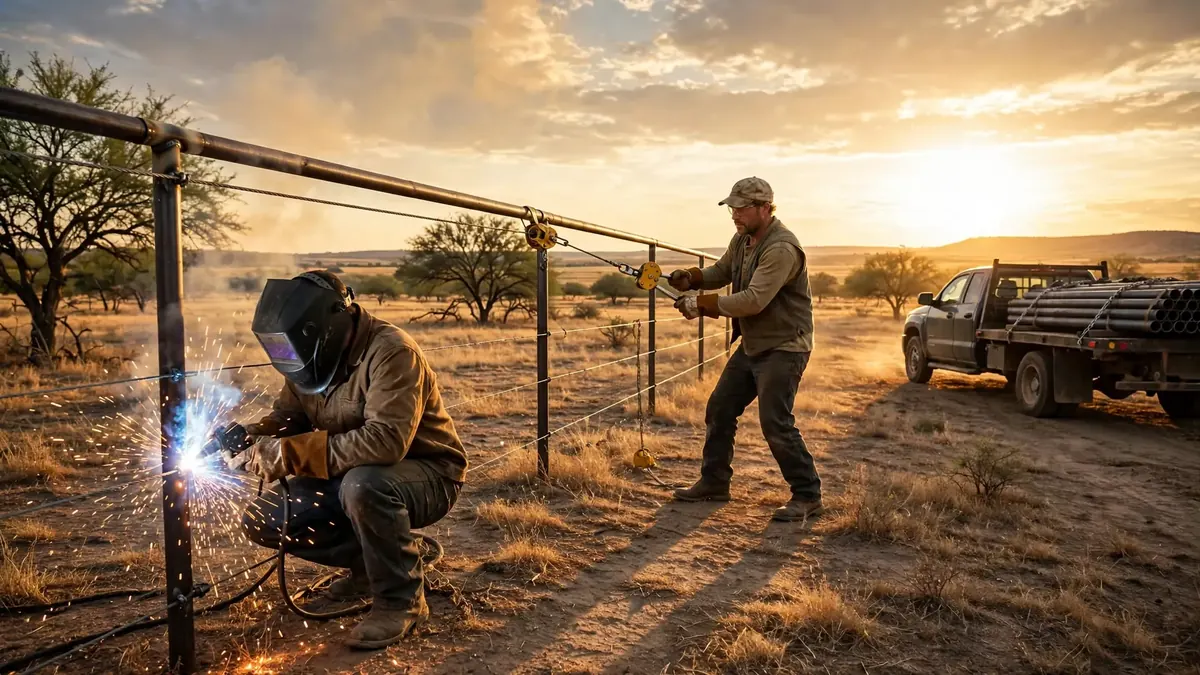
Pipe fence posts are usually set every eight to ten feet, with top rails or cables welded on. Painting the pipe slows rust, and capping open post tops keeps rainwater from rotting them from the inside.
Cable fences need strong end posts and tensioners to keep the cables tight over time. Kyle's strong sun dries and fades materials quickly, so UV protection matters.
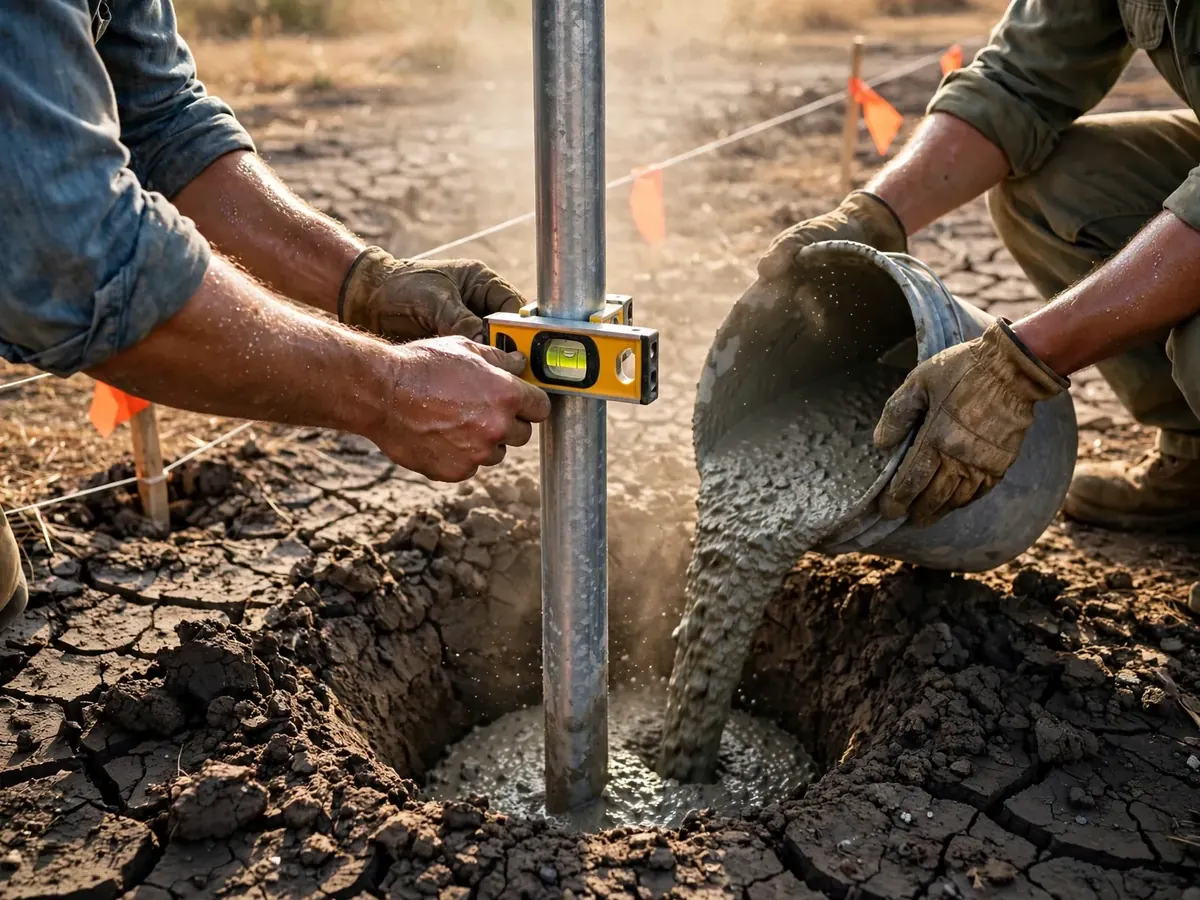
Thinking about doing it yourself? Pickets are easy; setting posts plumb and deep enough to survive the spring storm season is the part most DIY fences get wrong.
Clearing the Fence Line and Marking Boundaries
Plan gate locations for trucks, trailers and equipment before building. For larger tracts, the fence builder will walk the line and flag corners, gates and problem spots like creeks, rock and steep slopes.
Cedar and mesquite regrow quickly, so plan on keeping the line clear after the fence is built.
Barbed Wire and Field Fence
Stays between posts keep wire strands evenly spaced. Ask how the builder plans to handle dips and creek crossings.
Steel T-posts drive quickly, but the fence depends on braced corners to stay tight.
A question many homeowners raise: Ask what the ranch fence builder expects to fail first on your lot, and how they've built to delay it.
Corners, Braces and Gates
A well-built brace keeps wire tight for many years. Corner assemblies often use two or three posts tied together with braces and wire.
Over-building corners is rarely a mistake on a ranch fence.
When to Pick Up the Phone
Watch for these around your Kyle property:
- Sagging wire and failing corner braces
- Horses or cattle getting out
- Planning wider gates for equipment
Before You Call
- Know the property boundaries or have a survey
- Mark gate locations and widths
- Note the animals you need to hold
- Ask neighbors whether they hit rock when they built
- Note any corner or brace posts that already exist and their condition
Ranch Fencing in Kyle: Talk to a Local Ranch Fence Builder
Call 877-753-1892 when you're ready. Sharing photos and a rough measurement of your Kyle project makes the conversation more specific. Pick up the phone today and get your ranch fence project on the calendar.
877-753-1892Ranch Fence Questions From Kyle Homeowners
Why does my wire fence sag?
Usually the corner or brace posts have shifted. Rebuilding the braces tightens the run. Ask about this on your first call, since conditions vary across Kyle.
What should I ask a ranch fence builder before hiring?
Not sure who to trust? Ask how long they've worked locally, whether they carry insurance, and who you'll deal with once work starts. Ask who handles permits, utility locates and HOA paperwork so nothing falls through the cracks.
What should Kyle homeowners know about ranch fence projects?
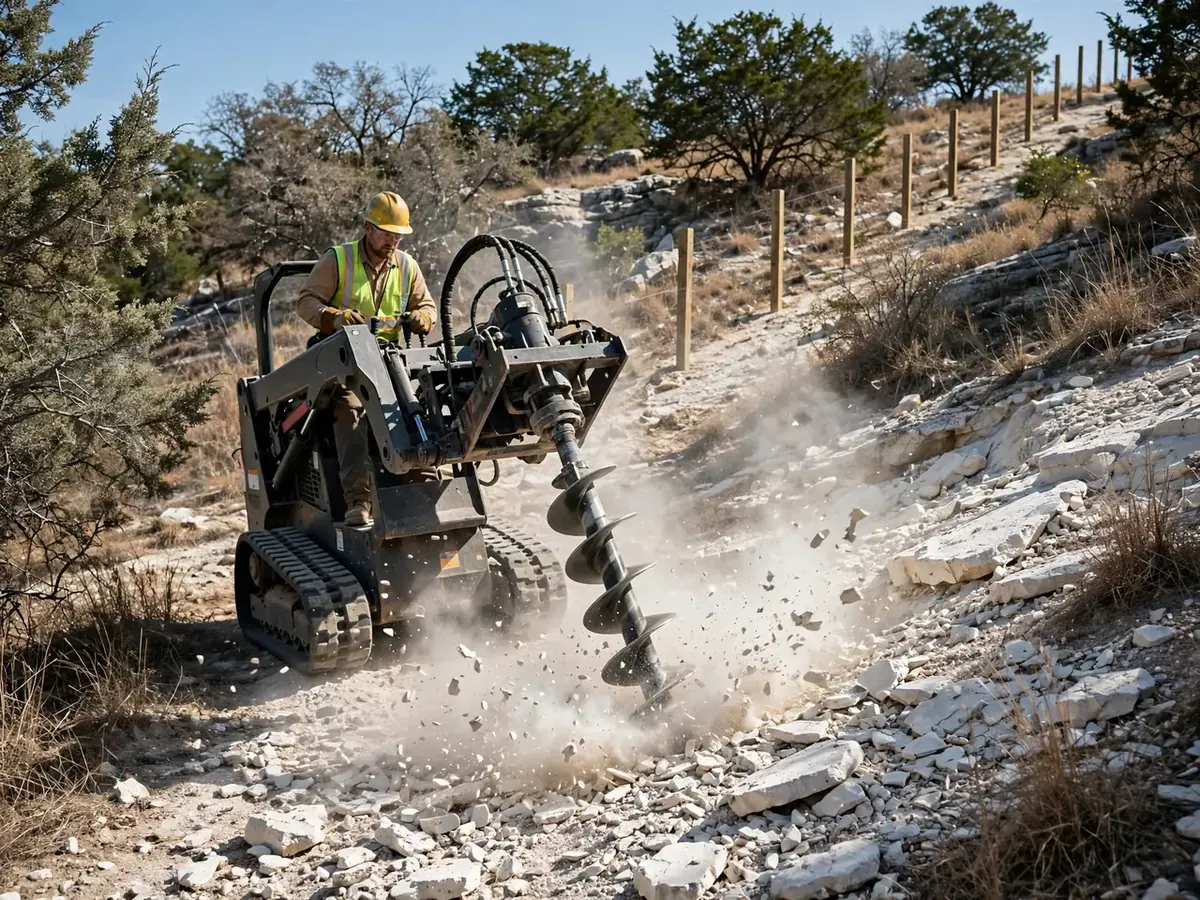
Kyle's limestone holds footings firmly once they're set, which is one advantage of the hard digging. The Hill Country has thin soil over limestone, so setting posts often means drilling into rock.