
What to Know About Fence Repair in Lancaster
Neighborhoods range from older homes near the square to newer ones on the edges. Black clay soils here are especially prone to shrinking and swelling, which makes post depth and concrete footings matter more.
Lancaster is a southern Dallas County city with a historic town square. Hail storms are common enough in Lancaster that many owners plan for occasional repairs. Like Waxahachie in the same region, Lancaster has to plan around shifting clay.
- Shrink-swell clay moves posts every season, so post depth, footing shape and steel posts matter more than picket style.
- The fences that came with newer homes were often built quickly and are now leaning or graying.
Materials That Suit Lancaster
Cedar privacy fences in town, with pipe, wire and pipe-and-cable fencing on acreages; steel posts help in the shifting clay. Open exposure in Lancaster means the fence should be built for gusts.
Storm-Damaged Fences in Lancaster
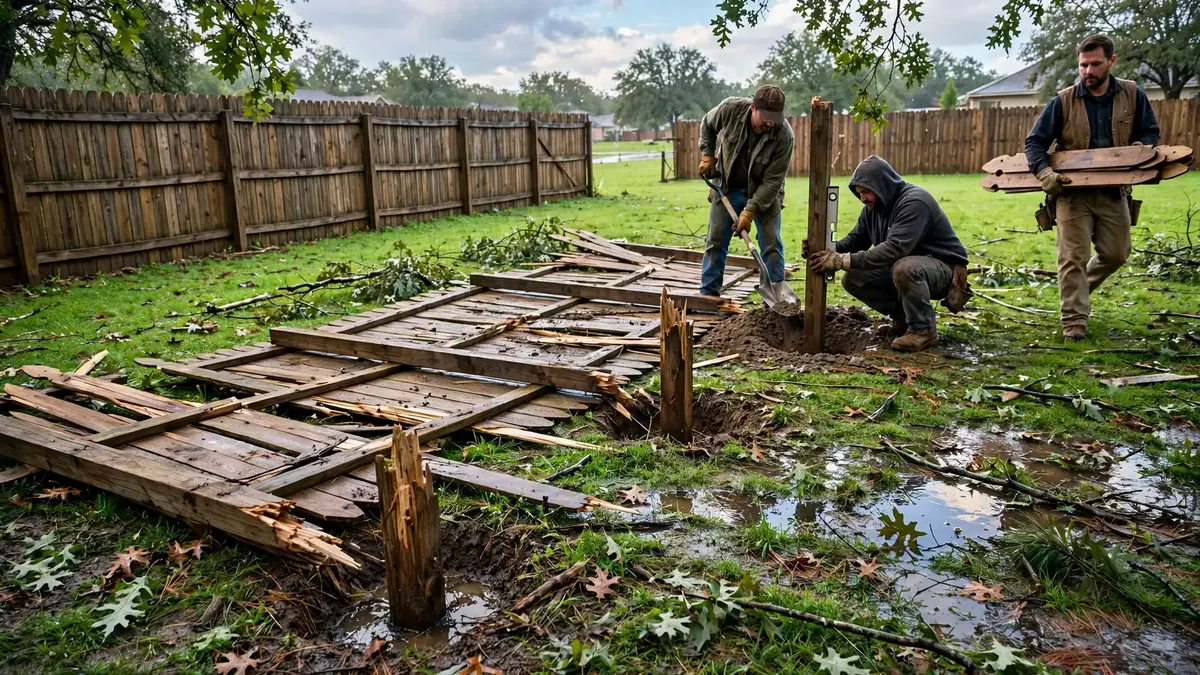
After a storm passes Lancaster, walk the whole fence line, not just the section that fell. Panels that are still standing may have cracked posts or pulled brackets that will give way in the next blow. A fence repair pro can document what failed and why.
A fence that failed in one storm often has neighbors that are close to failing, so check the posts on either side of a downed section. In windy Lancaster, designs that let some air through can last longer.
A common concern: If your HOA needs to approve the plan, start that first, since crews can't begin without it.
Leaning Fences and Shifting Posts
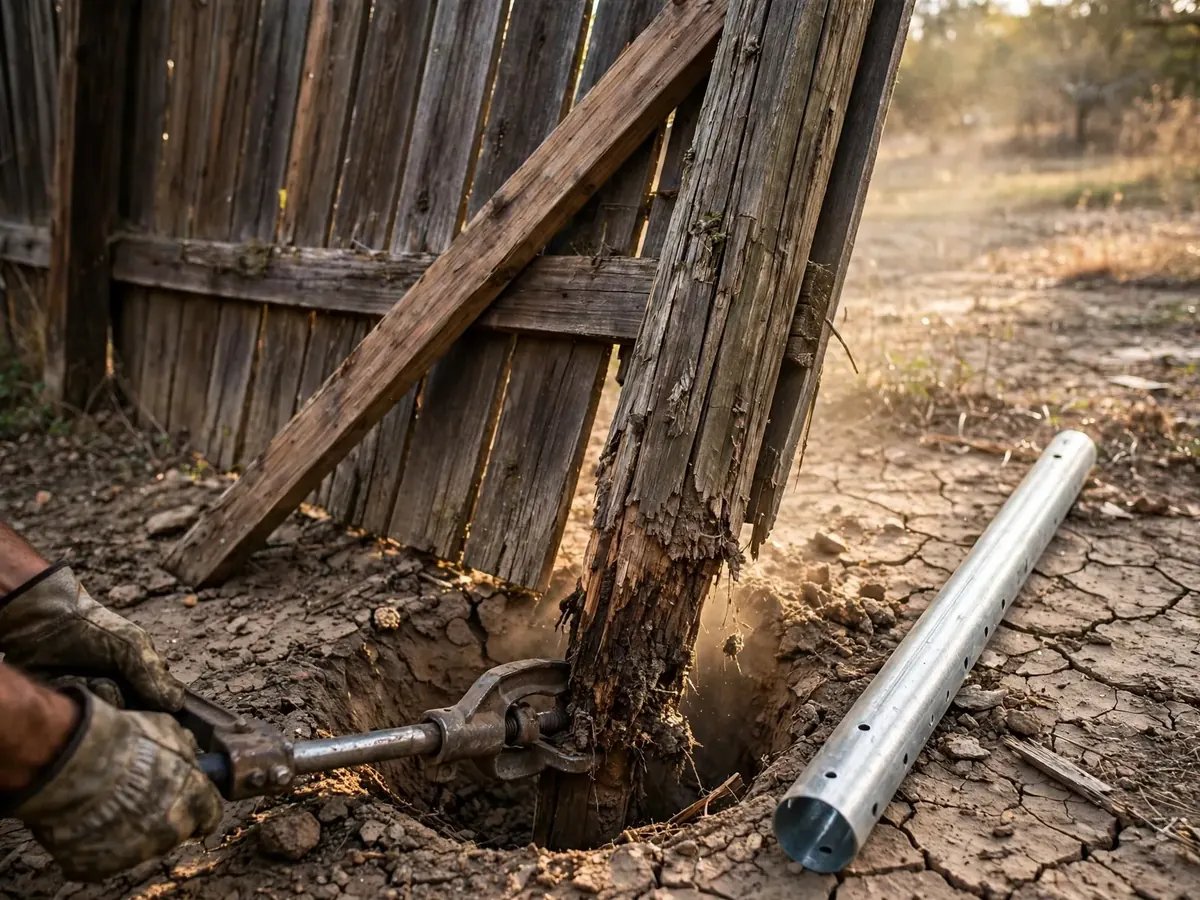
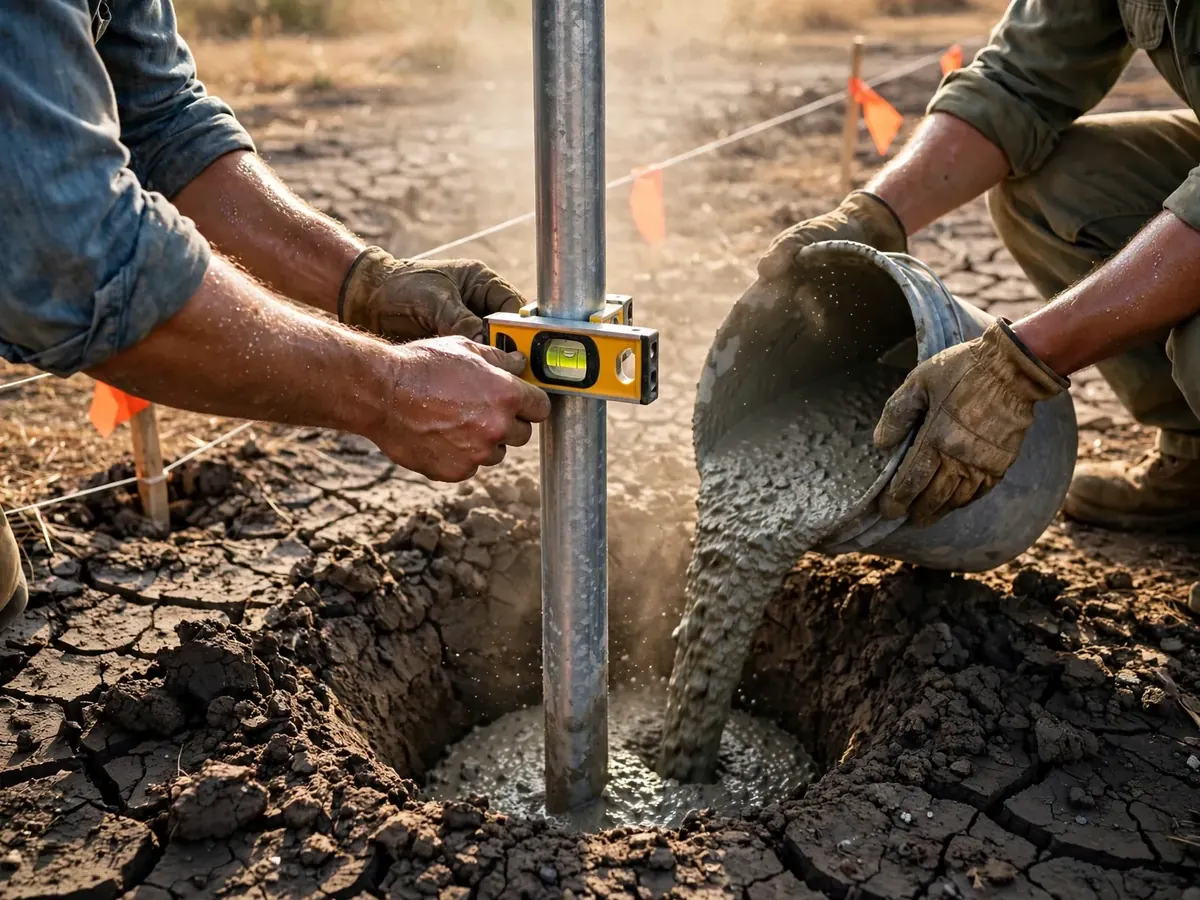
A leaning fence usually means one or more posts have rotted at the ground line or the soil has shifted. Pushing it back and bracing it only lasts until the next wet season. Resetting the post with a deeper footing, or replacing it with steel, fixes the cause. Leaning that gets worse after rain usually points to soil movement rather than rot.
Fixing a lean early usually means resetting one or two posts; waiting can mean a whole section. On Lancaster's clay, it's worth asking how deep each footing will go before comparing anything else.
Repair or Replace?
If half the posts are rotten, pickets are gray and brittle, and the fence leans everywhere, replacement usually costs less over time. The answer depends on the posts.
If you plan to sell in the next few years, a repaired fence that looks consistent can be enough; if you're staying, investing in steel posts pays off longer. Builder-grade work in newer Lancaster subdivisions often wears out sooner than homeowners expect.
A frequent worry, answered: A fence on steel posts, kept stained, often outlives two fences built on wood posts.
Rotted Post Replacement
Rot tends to start just below the soil line, where the post stays wet but gets air. Replacing posts one at a time keeps the fence standing while the work is done.
A screwdriver test at the base of each post finds rot quickly: if the tip sinks in easily, the post is failing.
Broken Pickets, Rails and Sagging Sections
Pickets crack and warp in dry heat, and rails split where they're nailed. Matching weathered cedar is hard, but new wood blends in after a season, and a stain evens the look.
Keeping a few spare pickets from the original build makes future repairs easy to match.
Something to keep in mind: Many neighbors are happy to share the cost of a shared fence when asked early.
Fence Damage From Trees and Roots
A limb that fell on a fence may have damaged posts that look fine from above. Big trees near a fence line are beautiful but hard on fences.
Flexible fence designs around big trees, such as a short gap or a bend in the line, avoid repeated damage.
When to Pick Up the Phone
These are the moments that push Lancaster homeowners to pick up the phone:
- Sections leaning or swaying
- Storm or tree damage
- Broken or missing pickets
Before You Call
- Find your survey if posts must be moved
- Photograph damaged sections
- Check whether pets can get out
- Mark where vehicles, trailers and animals need to pass
- Mention any leaning or settling you've seen nearby
Getting Fence Repair in Lancaster Started
The quickest next step is a call to 877-753-1892. Describe the project and mention Lancaster; a fence repair pro will ask a few questions and talk through options. The sooner you call, the sooner your fence work can be scheduled.
877-753-1892Fence Questions From Lancaster Homeowners
Is storm damage to my fence covered by insurance in Lancaster?
Many homeowner policies cover fences damaged by wind or falling trees. Check your policy and document the damage. For a Lancaster home, it's worth confirming this before work starts.
How do I choose a fence repair pro in Lancaster?
Get the scope, materials and cleanup in writing before work begins, so everyone agrees on what's included. A good fence builder will tell you what they don't know until they start digging, such as rock or roots.
What should Lancaster homeowners know about fence projects?
Rural Lancaster properties often need longer runs and sturdier gates than suburban lots. South and east of Dallas, subdivisions give way quickly to acreages and small farms, so a single town can need both a backyard privacy fence and a pasture fence.