
Local Conditions That Shape Fence Repair in Red Oak
Red Oak is an Ellis County city just south of the Dallas County line. Black clay soils here are especially prone to shrinking and swelling, which makes post depth and concrete footings matter more.
Neighborhoods mix newer homes with older ones on bigger lots. Freeze events in Red Oak can crack concrete that holds water, so drainage helps. Shifting clay is a common thread between Red Oak and Midlothian.
- Spring hail splits and pits pickets and dents metal fencing, so storm repairs are routine.
- The fences that came with newer homes were often built quickly and are now leaning or graying.
Choosing Materials in Red Oak
Inside town limits, cedar privacy fencing is the norm; out on acreage it's pipe, wire or pipe-and-cable, and steel posts earn their keep in the clay. Larger Red Oak properties often need a mix of fence types for different areas.
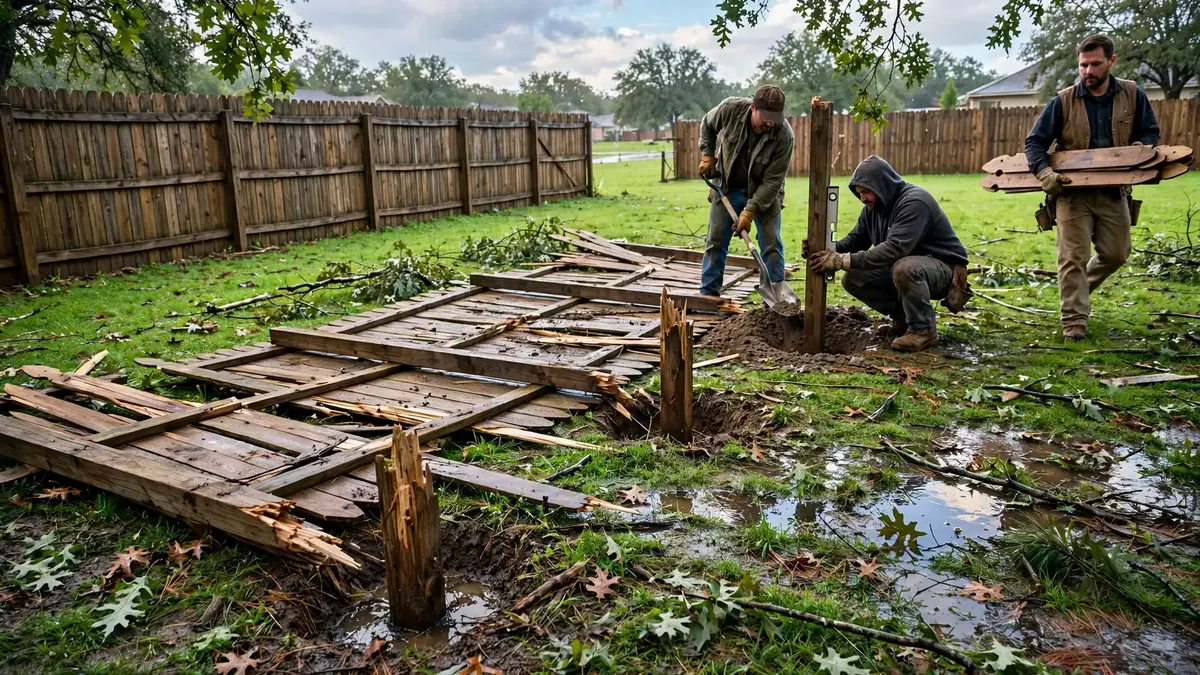
Storm-Damaged Fences in Red Oak
After a storm, repair crews tend to be booked up, so calling early helps. Posts snapped at ground level usually mean rot; posts pulled out with the concrete mean shallow footings or saturated soil.
If your neighbor's fence fell into yours, sort out who's responsible before the repair starts. Open exposure in Red Oak means the fence should be built for gusts.
Sharing a fence with a neighbor? A short conversation before work starts about style, height and which side faces out heads off most disputes.
Leaning Fences and Shifting Posts
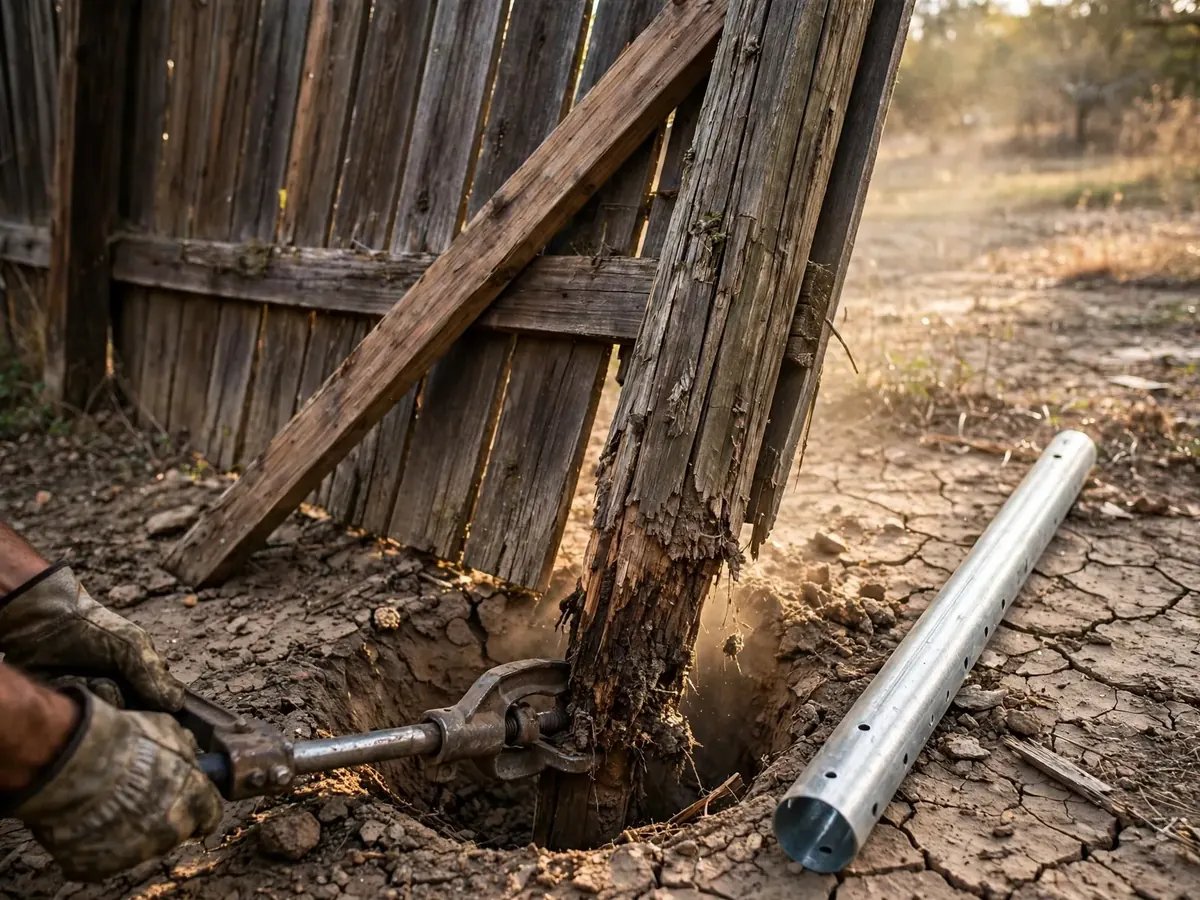
In shifting clay, posts can lean even when they're not rotted. Steel repair posts can be set next to a rotted wood post and bolted to it as a quick fix.
If the lean follows a drainage path, redirecting water may be part of the fix. Red Oak's clay is the reason so many local fences lean; building deeper avoids joining them.
Repair or Replace?
The answer depends on the posts. Replacing pickets on bad posts is rarely money well spent.
Repair makes sense when the posts are sound and the damage is limited to pickets, rails or one section. In Red Oak's newer neighborhoods, upgrades often replace the original builder materials.
A frequent worry, answered: A good fence builder will tell you what they don't know until they start digging, such as rock or roots.
Rotted Post Replacement
Termites and moisture are the main reasons wood posts fail early in humid parts of Texas. Replacing posts one at a time keeps the fence standing while the work is done.
Posts near sprinklers or downspouts rot first, so check those spots.
Broken Pickets, Rails and Sagging Sections
Pickets crack and warp in dry heat, and rails split where they're nailed. Refastening with exterior screws and replacing cracked boards keeps the fence tight without a full rebuild.
New cedar pickets will look brighter than old ones at first; they usually weather to match within a season or two.
Wondering how long it will last? In Red Oak's conditions, posts and drainage decide that more than the pickets, so ask about both.
Fence Damage From Trees and Roots
When roots have lifted a post, it can sometimes be shifted a foot or two along the line to clear them, with a short rail adjustment. That keeps the tree and the fence both healthy. Removing a hazardous tree before a storm is often cheaper than repairing the fence after one.
Overhanging limbs that touch the fence will rub through pickets over time, so trimming them is cheap prevention.
Common Reasons Red Oak Homeowners Call
Around Red Oak, a call usually follows one of these:
- Storm or tree damage
- Posts loose at the base
- Broken or missing pickets
What to Have Ready
- Note how many posts and feet of fence are affected
- Photograph damaged sections
- Check whether pets can get out
- Mention any leaning or settling you've seen nearby
- Mark where vehicles, trailers and animals need to pass
Fence Repair in Red Oak: Talk to a Local Fence Repair Pro
Call 877-753-1892 when you're ready. Sharing photos and a rough measurement of your Red Oak project makes the conversation more specific. Call today to ask your questions or book your fence project.
877-753-1892Fence Questions From Red Oak Homeowners
Can one rotted post be replaced without replacing the fence?
In most cases. The crew detaches the panels, digs out the old post and its concrete, sets a new post and reattaches the rails. For a Red Oak home, it's worth confirming this before work starts.
Should I build the fence myself?
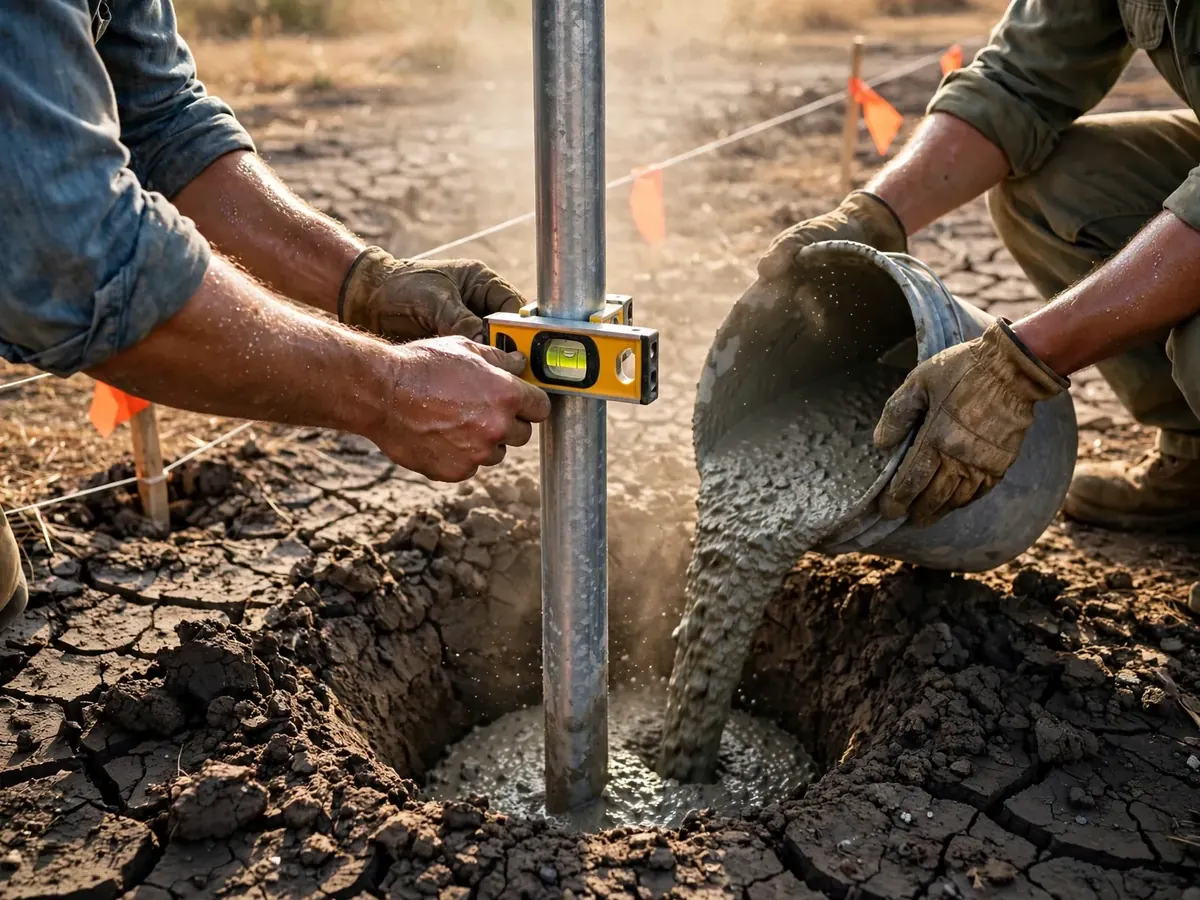
Setting a long line of posts straight and plumb takes practice; many DIY fences wander and lean within a few years. DIY makes the most sense for short runs and simple designs.
What should Red Oak homeowners know about fence projects?
Spring hail around Red Oak makes it worth choosing materials that are easy to repair. South and east of Dallas, subdivisions give way quickly to acreages and small farms, so a single town can need both a backyard privacy fence and a pasture fence.