
Fence Repair in Spring: Local Conditions
Katy, Cypress, Tomball, Spring, The Woodlands and Conroe include some of the fastest-growing master-planned communities in Texas. North of Houston the land is wooded, so storm-felled pines and oaks are a frequent cause of fence damage. West toward Waller, Hempstead and Sealy, the suburbs turn into acreages and ranchland.
- Humidity keeps wood damp longer, so rot at the base of posts is the most common failure.
- Cities set rules on front-yard fence height, corner-lot sight lines and masonry walls, so check before building.
Choosing Materials in Spring
HOA-approved cedar privacy fences with a top cap in subdivisions; wire, pipe and wood rail fencing on acreages farther out.
Rotted Post Replacement
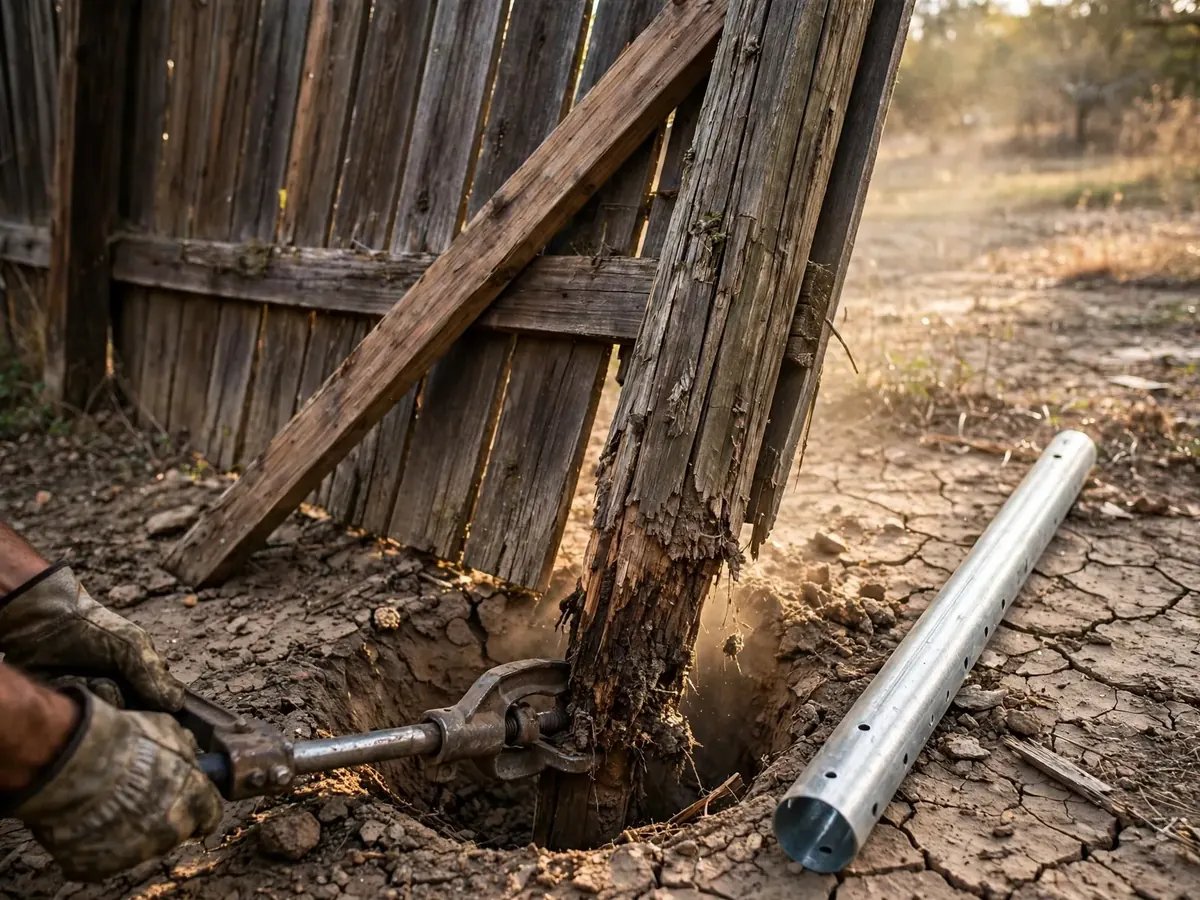
Push on the fence near each post. If it moves more at the base than at the top, the post is likely rotted at ground level. A post can often be replaced without removing the panels: the old post comes out, a new one goes in with concrete, and the rails are reattached.
Repair or Replace?
Ask the fence repair pro to check a few posts at the ground line and give you an honest read on how much life the fence has left.
Storm-Damaged Fences in Spring
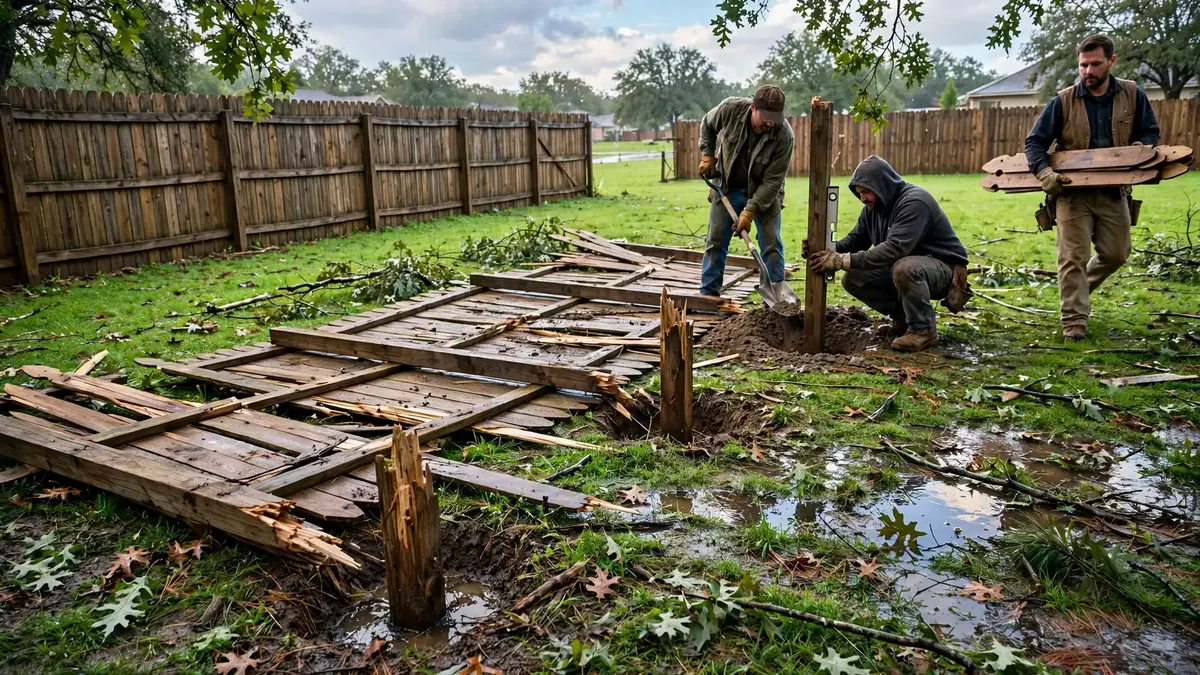
After a storm passes Spring, walk the whole fence line, not just the section that fell. Panels that are still standing may have cracked posts or pulled brackets that will give way in the next blow.
Fence Damage From Trees and Roots
Big trees near a fence line are beautiful but hard on fences. Roots lift posts and footings, and storms drop limbs onto panels. A fence repair pro can reroute posts around roots and rebuild crushed sections.
Leaning Fences and Shifting Posts
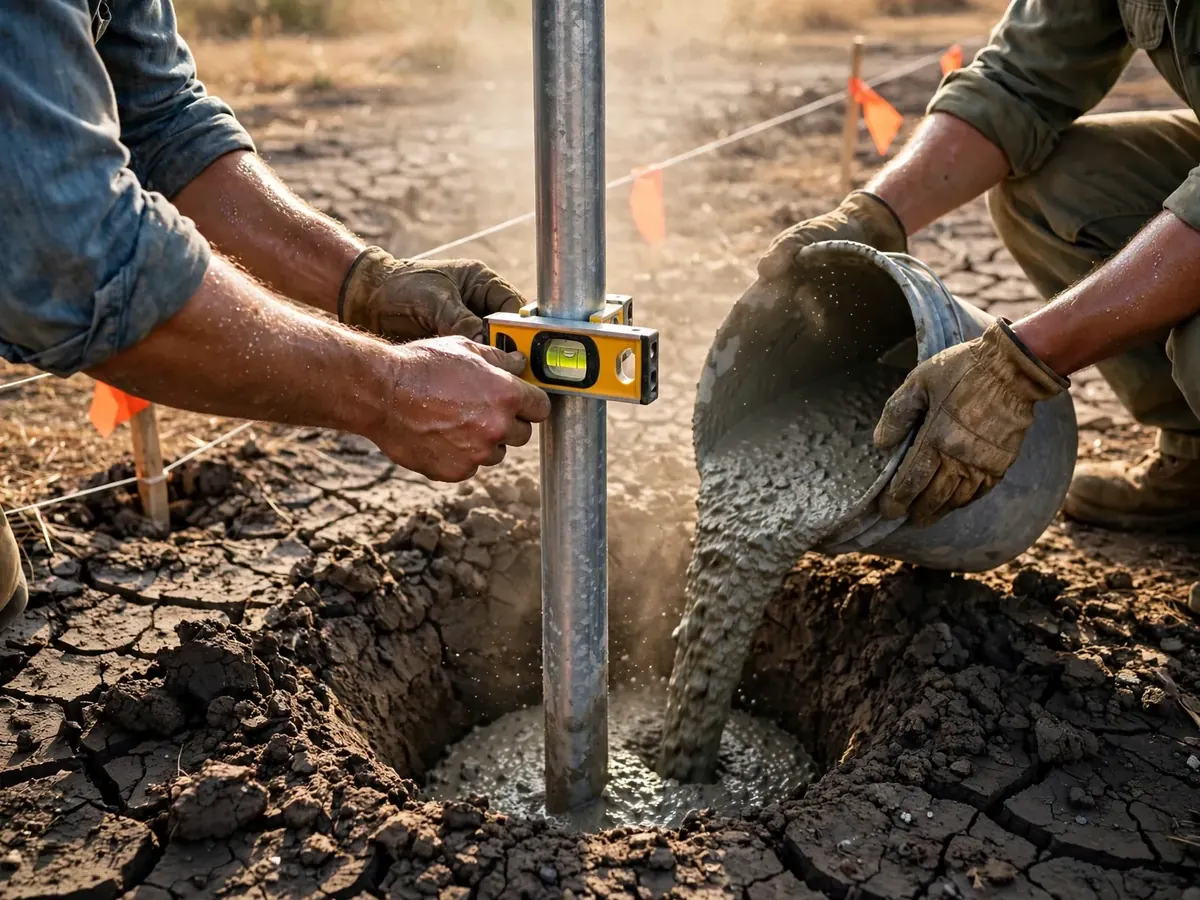
A leaning fence usually means one or more posts have rotted at the ground line or the soil has shifted. Pushing it back and bracing it only lasts until the next wet season. Resetting the post with a deeper footing, or replacing it with steel, fixes the cause.
Broken Pickets, Rails and Sagging Sections
Pickets crack and warp in dry heat, and rails split where they're nailed. If the posts are solid, replacing a few pickets or a rail is a small job. Matching weathered cedar is hard, but new wood blends in after a season, and a stain evens the look.
Common Reasons Spring Homeowners Call
- Posts loose at the base
- Sections leaning or swaying
- Broken or missing pickets
- Storm or tree damage
Before You Call
- Find your survey if posts must be moved
- Note how many posts and feet of fence are affected
- Check whether pets can get out
- Photograph damaged sections
Planning Fence Repair in Spring: What to Expect
Have the details from the checklist above ready, then call 877-753-1892. A fence repair pro serving Spring can tell you what the job involves, what affects the cost and whether anything needs attention right away.
877-753-1892Fence Questions From Spring Homeowners
Why does my fence keep leaning?
Rot at the base of wood posts and shifting clay soil are the usual causes. Deeper footings or steel posts fix it.
Is storm damage to my fence covered by insurance in Spring?
Many homeowner policies cover fences damaged by wind or falling trees. Check your policy and document the damage.
What should Spring homeowners know about fence projects?
Big trees drop limbs on fences in storms and push posts out of line with their roots. Low ground that stays wet after storms speeds up rot at the base of wood posts.