
Local Conditions That Shape Fence Installation in Spring
Most homes are in subdivisions under tall pines. West toward Waller, Hempstead and Sealy, the suburbs turn into acreages and ranchland.
Spring is a large unincorporated area in north Harris County. In low parts of Spring, drainage around footings is part of a durable build. Constant humidity is a common thread between Spring and Bellville.
- Municipal codes cover height, setbacks and visibility at corners, which can change a fence plan.
- The fences that came with newer homes were often built quickly and are now leaning or graying.
What Holds Up Around Spring
Subdivisions specify capped cedar privacy fences, while acreage farther out uses wire, pipe and wood rail fencing. On Spring acreage, distance and animals shape the plan more than looks.
Cedar Privacy Fences in Spring
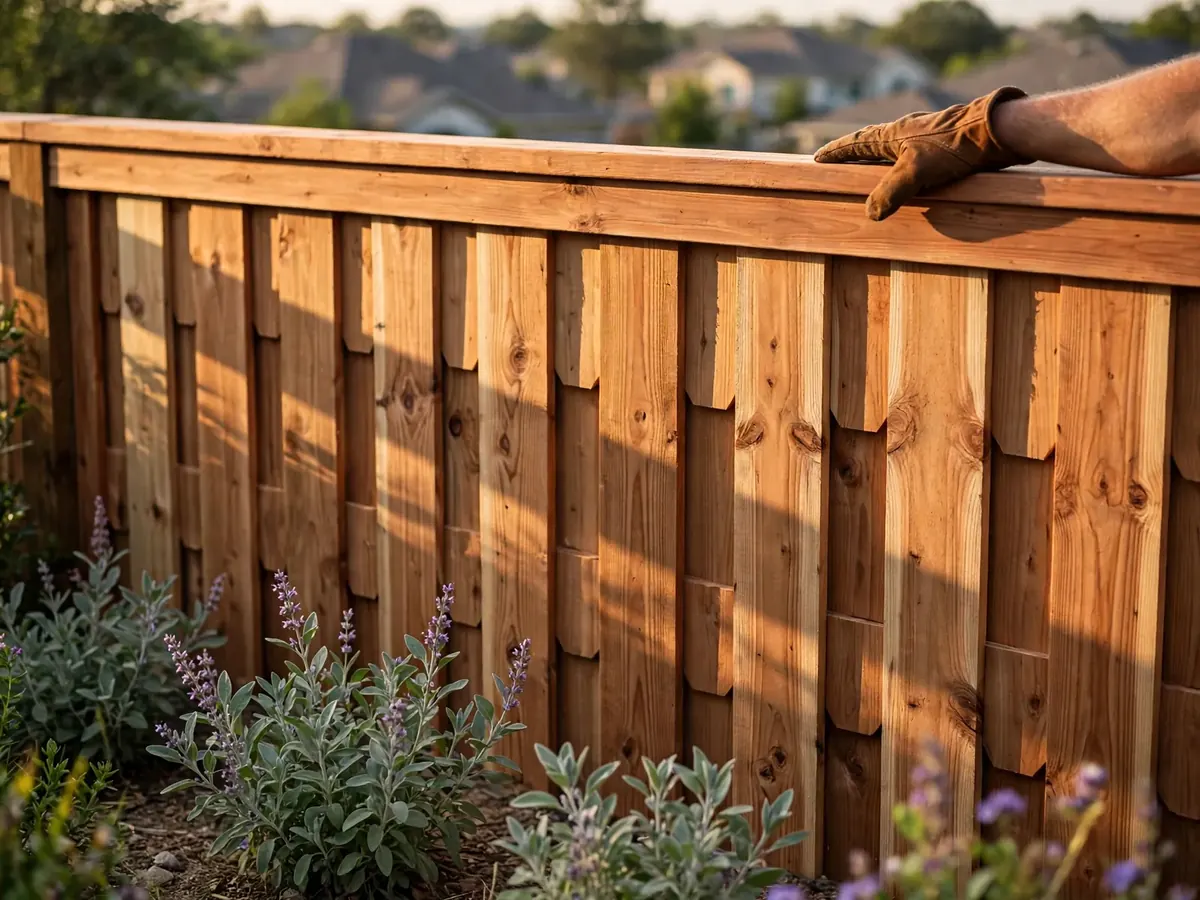
Six-foot cedar privacy fences are the standard backyard choice around Spring. Western red cedar costs more than the more common Texas or Japanese cedar but holds its shape better; ask which species you're getting.
Think of the pickets as the face of the fence and the posts and rails as its skeleton: you notice the face, but the skeleton decides whether it's still straight in ten years. City codes in Spring may set limits that affect your design.
Worth knowing before you call: Rain delays are common in the rainy spring and hurricane season, so build a little slack into your plans.
Steel Posts vs. Wood Posts
If you want the look of wood all the way down, steel posts can be wrapped or hidden behind the pickets. In shifting soil and high wind, depth matters as much as the post material.
Steel posts can be painted to match the stain or hidden behind a wood wrap if you don't want them to show. In Spring, steel posts and treated lumber reduce termite risk.
HOA Rules, Permits and Property Lines
Corner lots often have height limits near the street so drivers can see cross traffic. HOAs around Spring often add requirements for style, height and stain color.
A short email to your HOA before choosing materials can save a rejected application. Most Spring HOAs publish guidelines that settle style questions before you start.
A question many homeowners raise: Ask who handles permits, utility locates and HOA paperwork so nothing falls through the cracks.
Pet and Pool Fencing
Pool barrier rules often specify minimum height, maximum gaps and how gates open and latch. Ornamental aluminum panels are a common choice because they're designed around those rules.
Pool safety is about layers: the fence, the gate and supervision all work together. Builder-grade work in newer Spring subdivisions often wears out sooner than homeowners expect.
Vinyl and Composite Fences in Texas Heat
In Texas sun, though, cheaper vinyl can sag or become brittle. If you choose vinyl or composite, ask how the panels handle thermal expansion and wind.
Composite boards are usually heavier than vinyl and wood, so the posts and rails must be sized to carry that weight over the years. In humid Spring, pressure-treated or naturally rot-resistant materials make a real difference.
If you're weighing it up: DIY can save labor, but renting augers, hauling concrete and disposing of the old fence add up, so compare honestly.
Board-on-Board and Shadowbox Styles
Standard side-by-side pickets shrink in Texas heat and open small gaps. With board-on-board, each picket overlaps the next by an inch or so, so even fully dried wood leaves no gap to see through.
On windy lots, shadowbox gives a little relief to the posts while still blocking most views.
Other Fence Situations in Spring
Wrought Iron and Aluminum Fences
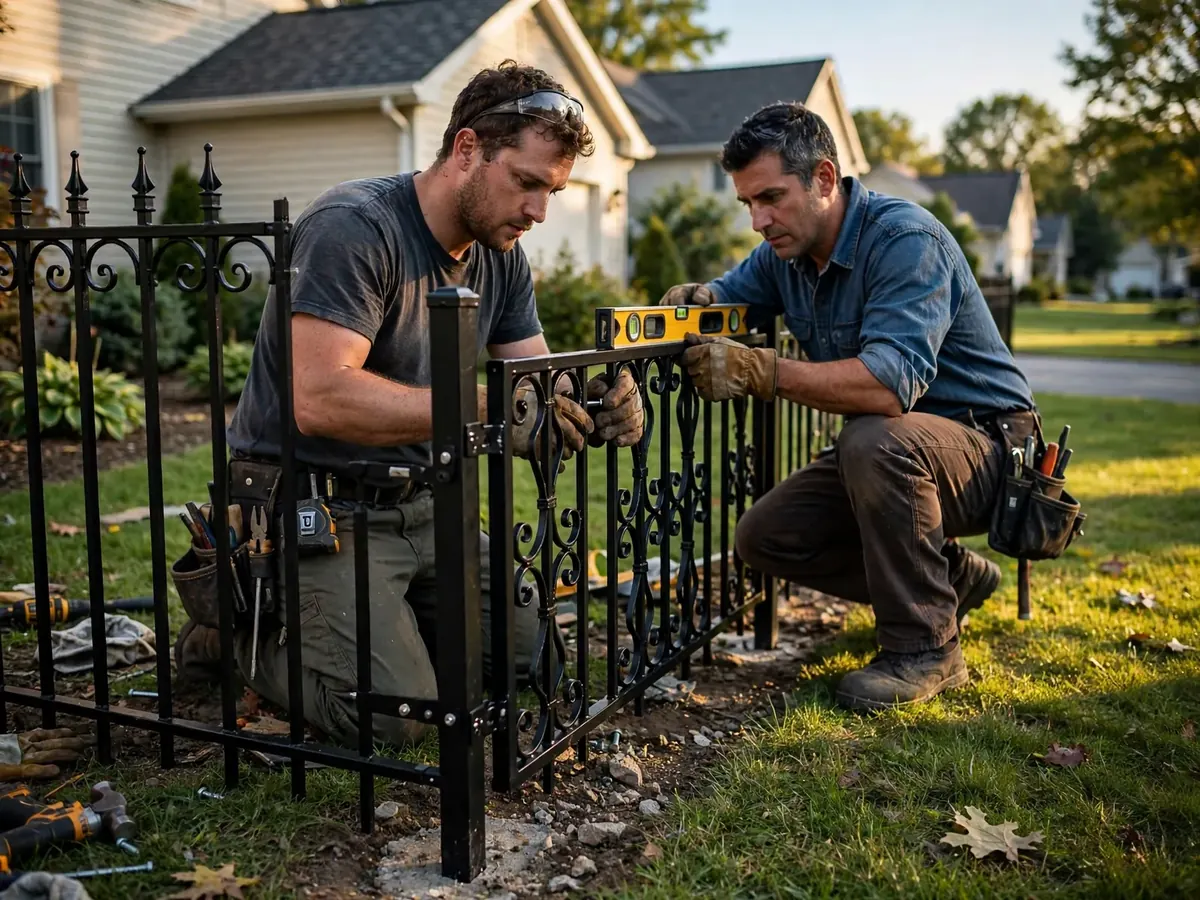
Picket spacing matters if you have small dogs or children: many ornamental styles come with tighter spacing or a pressed-spear top for that reason.
Horizontal and Modern Fence Designs
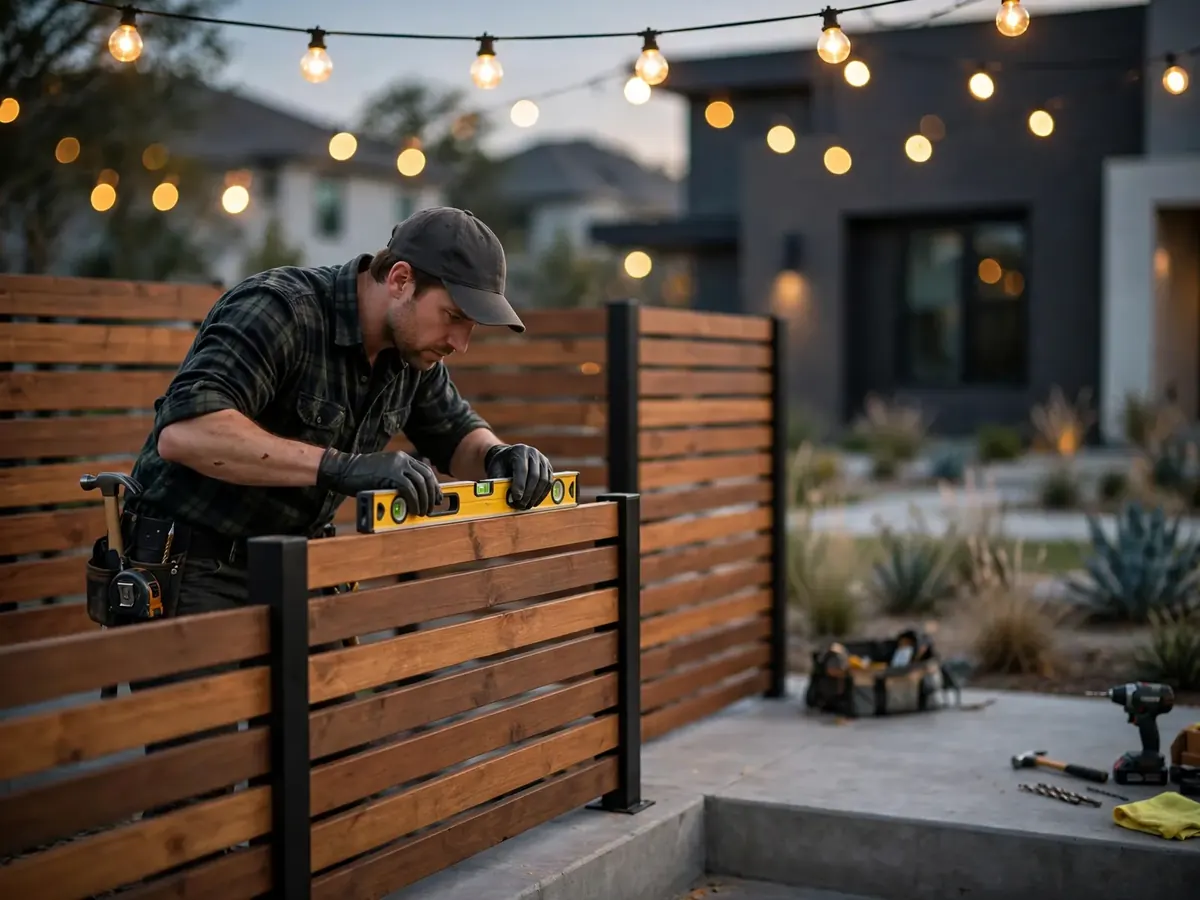
Horizontal boards make a yard look wider, much as horizontal stripes do on a wall.
Building a Fence That Stands Up to Wind
A solid 6-foot privacy fence catches wind like a sail, so the loads on its posts are far higher than most people expect.
Signs It's Time to Call in Spring
These are the moments that push Spring homeowners to pick up the phone:
- Moving onto acreage that needs livestock fencing
- HOA requires an approved style
- Old fence leaning or sagging
What to Have Ready
- Measure the rough length of fence needed
- Find your survey or plat showing property lines
- Check HOA fence guidelines and stain colors
- Mark where vehicles, trailers and animals need to pass
- Mention roots that have lifted the ground nearby
Getting Fence Installation in Spring Started
Pick up the phone and dial 877-753-1892. A fence builder familiar with Spring can talk through materials, timing and what affects the price. Have a question about your fence? A quick call is the fastest way to get it answered.
877-753-1892Fence Questions From Spring Homeowners
Are steel posts worth it?
In most of Texas, yes. Galvanized steel posts don't rot or attract termites and resist movement in clay soil better than wood posts. For a Spring home, it's worth confirming this before work starts.
How can I keep a Spring fence project within budget?
Price is usually driven by length, height, post type and gates, so a shorter run of a better fence often beats a longer run of a cheaper one. If budget is the sticking point, consider phasing the work: replace the sections that face the street or the dog run first, and finish the rest when it makes sense.
What should Spring homeowners know about fence projects?
In Spring, building for tropical storm winds means deeper posts, stronger connections and closer spacing. North of Houston the land is wooded, so storm-felled pines and oaks are a frequent cause of fence damage.