
Local Conditions That Shape Fence Staining in Spring
Most homes are in subdivisions under tall pines. West toward Waller, Hempstead and Sealy, the suburbs turn into acreages and ranchland.
Spring is a large unincorporated area in north Harris County. Spring lots that hold water need materials that tolerate wet conditions. Constant humidity is a common thread between Spring and Conroe.
- First-generation fences in newer neighborhoods are reaching the age where repairs give way to replacement.
- City ordinances cover fence height, front-yard placement and sight lines at intersections.
Materials That Suit Spring
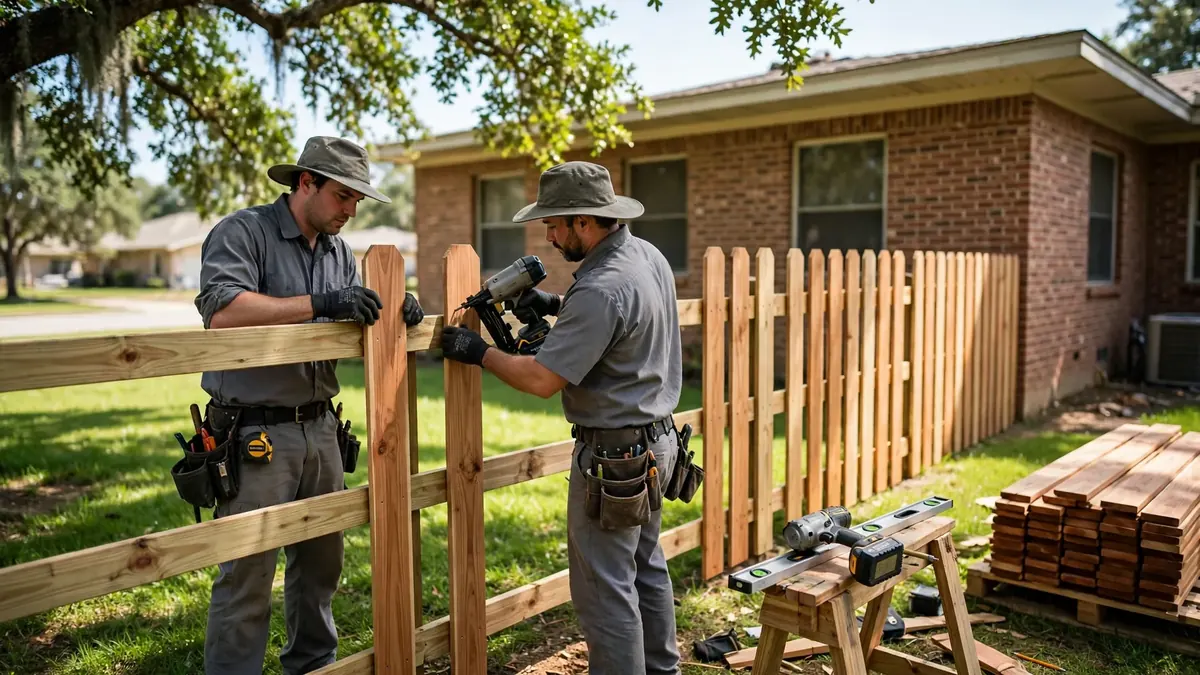
Subdivisions specify capped cedar privacy fences, while acreage farther out uses wire, pipe and wood rail fencing. In Spring, steel posts and treated lumber reduce termite risk.
Spraying vs. Brushing
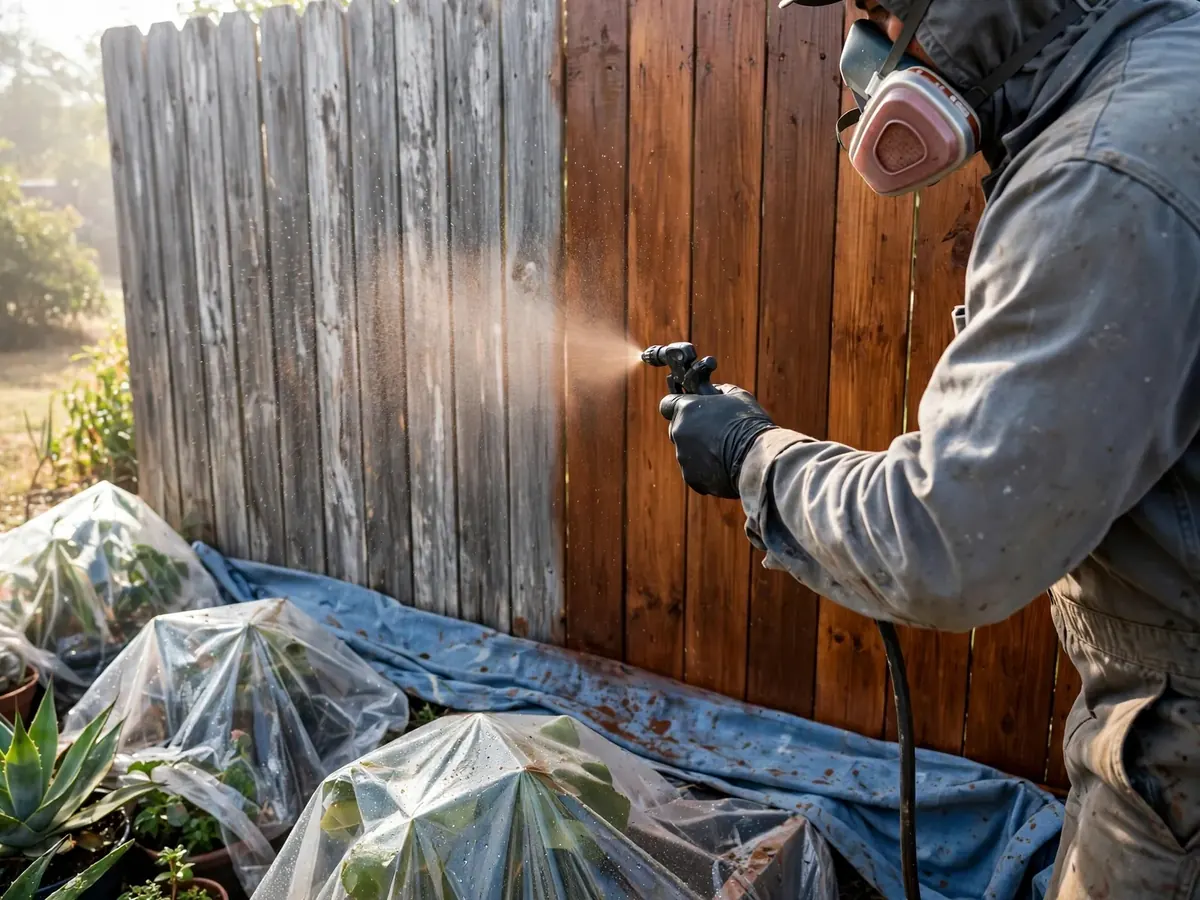
Plants, cars, the house and neighboring fences need to be covered, since overspray drifts on windy days. Hot sun dries the stain too fast to soak in, and wind carries overspray onto cars and neighboring houses.
Calm, mild days give the best results for spraying. Spring's permit and zoning rules can shape the design, so check them early.
Worth knowing before you call: Get the scope, materials and cleanup in writing before work begins, so everyone agrees on what's included.
Cleaning and Prep Before Stain
Too much pressure raises the grain and gouges soft cedar. Stain sticks to clean, dry wood.
Protecting plants, concrete and cars from overspray is part of good prep and should be part of the plan. In Spring, moisture management matters as much as the material itself.
Choosing a Stain Color and Type
Many Spring HOAs list approved stain colors, often a cedar tone or a natural brown, so check before buying. Darker stains hide weathering longer but can make a fence hotter to the touch.
Oil-based stains soak into the wood and fade gradually, while many water-based stains sit closer to the surface and are easier to clean up. Many Spring neighborhoods have HOAs, so check their guidelines before choosing styles and colors.
Thinking about doing it yourself? Pickets are easy; setting posts plumb and deep enough to survive the rainy spring and hurricane season is the part most DIY fences get wrong.
When to Restain
Regular maintenance coats are faster and cheaper than restoring a fence that has gone fully gray. Spring and fall are popular staining seasons because temperatures are moderate.
Keeping a simple record of when the fence was last stained makes it easy to plan the next coat.
Why Texas Fences Gray So Fast
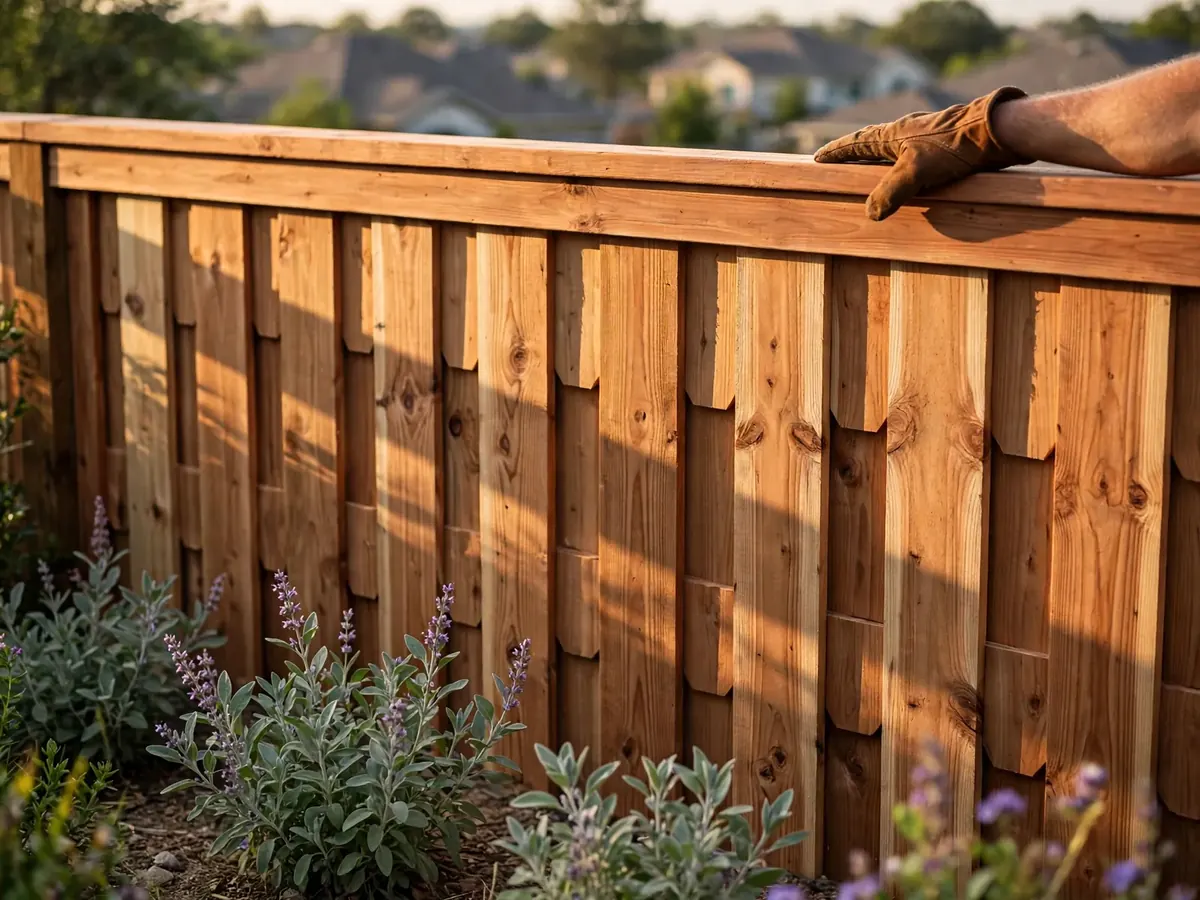
Unstained cedar in full sun can start to gray within months. A pigmented, semi-transparent stain blocks much of that UV.
Staining early protects the color you liked when the fence was new. Many Spring homes are on their first fence stain, and builder-grade materials show their age quickly.
Something to keep in mind: If you're working around an event or a new pet, say so on the first call; it helps the fence staining pro plan materials and crew time.
Common Reasons Spring Homeowners Call
Around Spring, a call usually follows one of these:
- HOA notice about fence color
- Splintering pickets
- Gray, faded wood
What to Have Ready
- Check HOA-approved stain colors
- Trim plants back from the fence
- Note whether you want one or both sides stained
- Pull your HOA's architectural guidelines and the approval form; most Spring associations want them before work is scheduled
- Note large trees near the work area and any overhanging limbs
Fence Staining in Spring: Talk to a Local Fence Staining Pro
Pick up the phone and dial 877-753-1892. A fence staining pro familiar with Spring can talk through materials, timing and what affects the price. Make the call today and take the first step toward a fence stain you can count on.
877-753-1892Fence Stain Questions From Spring Homeowners
How soon can a new fence be stained in Spring?
Once the wood has dried enough to absorb stain, often a few weeks to a couple of months depending on the lumber and the weather. For a Spring home, it's worth confirming this before work starts.
What if my neighbor shares the fence stain?
Neighbors usually care most about access during the work and which side gets the finished face, so settle both up front. If the fence is on the property line, talk to your neighbor before work starts about access and debris.
What should Spring homeowners know about fence stain projects?
Hurricane season makes wind resistance a practical concern in Spring, not just a design detail. North of Houston the land is wooded, so storm-felled pines and oaks are a frequent cause of fence damage.