
Fence Repair in Tyler: Local Conditions
Tyler is known as the Rose Capital and sits in the Piney Woods of East Texas. Tyler is the Smith County seat, known as the Rose Capital of America.
Tall pines and hardwoods shade many lots, so fences and decks dry slowly after rain. Tyler's damp conditions reward materials and details that let wood dry out. Sandy soil is a common thread between Tyler and Marshall.
- Older fences frequently stand on posts set decades ago, without gravel or crowned concrete.
- Humidity keeps wood damp longer, so rot at the base of posts is the most common failure.
Materials That Suit Tyler
Pine and cedar privacy fences are common, with treated posts or steel posts in sandy soil; wire and wood fencing on acreages. Termites are active around Tyler, so keeping wood off the soil and using treated lumber helps.
Fence Damage From Trees and Roots
If a neighbor's tree damaged your fence, Texas law and your insurance policy determine who pays; take photos and talk with your insurer. Cutting large roots near a tree can harm it, so moving the post is often the better option.
Large roots can lift posts just as clay does; shifting the post a short distance along the line often avoids cutting the root. Around Tyler's big trees, plan for falling limbs and root growth.
Before you decide: Spring is busy for fence crews; booking a little ahead of the season gives you more scheduling choices.
Rotted Post Replacement
Replacing posts one at a time keeps the fence standing while the work is done. Rot tends to start just below the soil line, where the post stays wet but gets air.
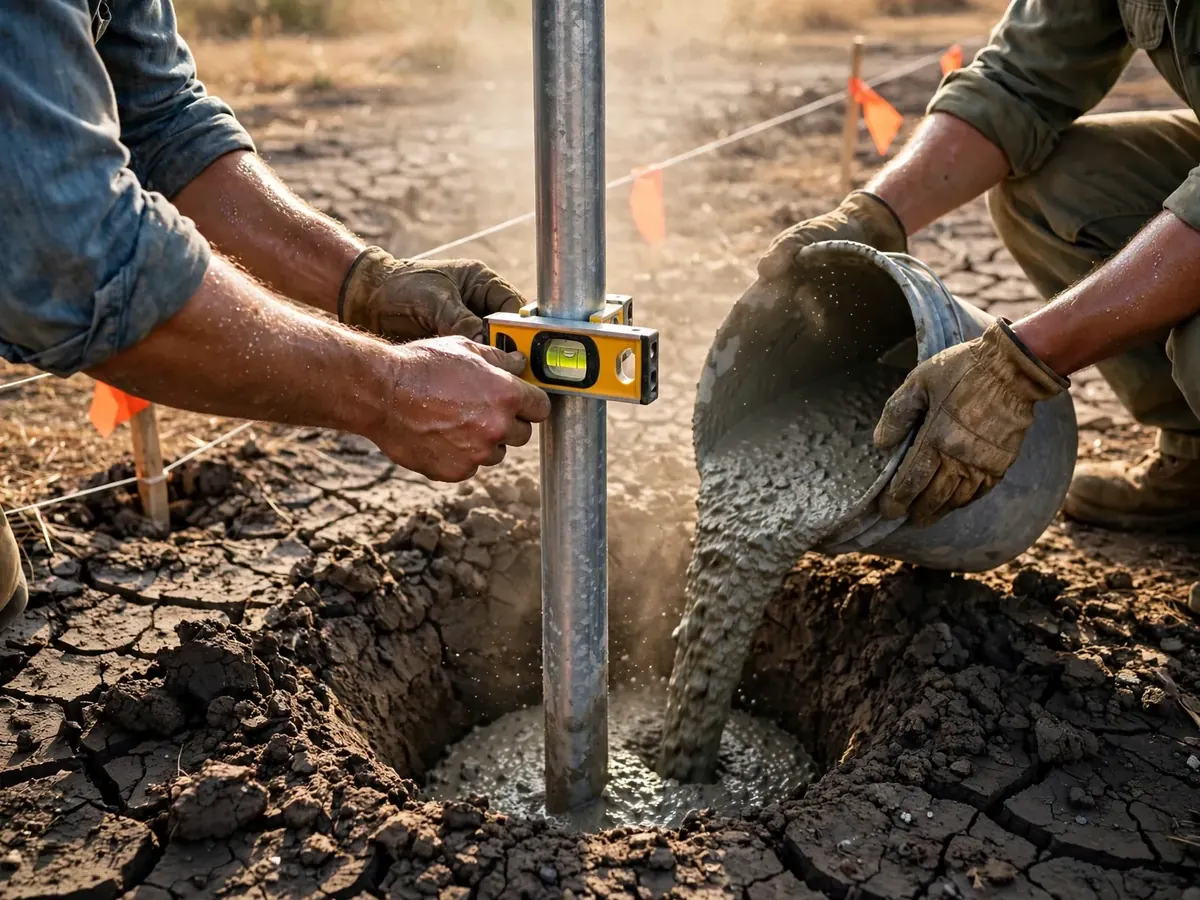
Replacing rotted posts with steel is one of the most cost-effective fence upgrades. In Tyler, steel posts and treated lumber reduce termite risk.
Leaning Fences and Shifting Posts
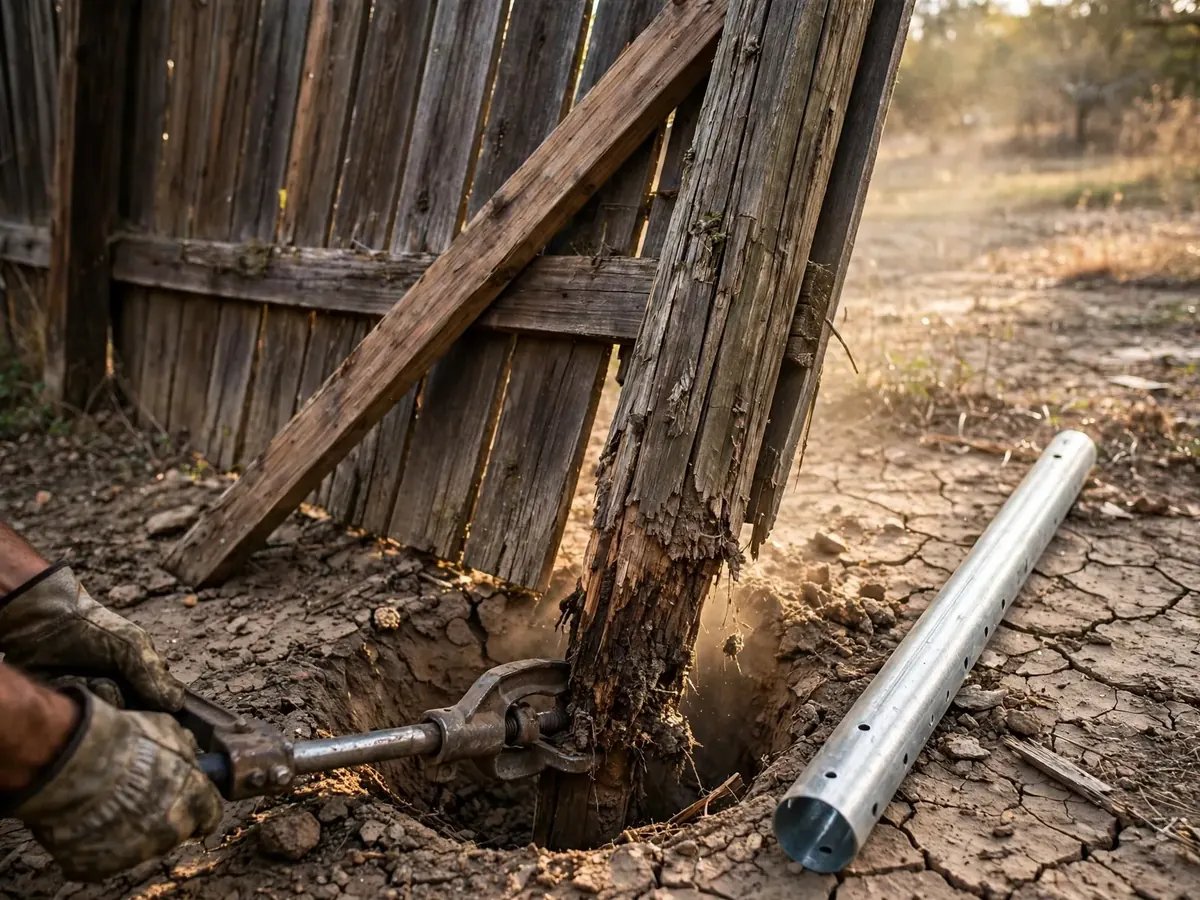
Steel repair posts can be set next to a rotted wood post and bolted to it as a quick fix. Leaning that gets worse after rain usually points to soil movement rather than rot.
Pushing a leaning section upright without fixing the post usually lasts only until the next wet season.
One practical point: DIY makes the most sense for short runs and simple designs.
Broken Pickets, Rails and Sagging Sections
A sagging section between posts usually has a broken or undersized rail. Matching picket style and height keeps a repair from standing out.
New cedar pickets will look brighter than old ones at first; they usually weather to match within a season or two. In established Tyler neighborhoods, matching the character of the street matters.
Repair or Replace?
If most are solid and only a few sections are damaged, repair makes sense. The answer depends on the posts.
Repairing now and planning a replacement in a few years is a valid choice if the budget is tight. Before finalizing plans, confirm Tyler's requirements for height and placement.
A question many homeowners raise: Get the scope, materials and cleanup in writing before work begins, so everyone agrees on what's included.
Storm-Damaged Fences in Tyler
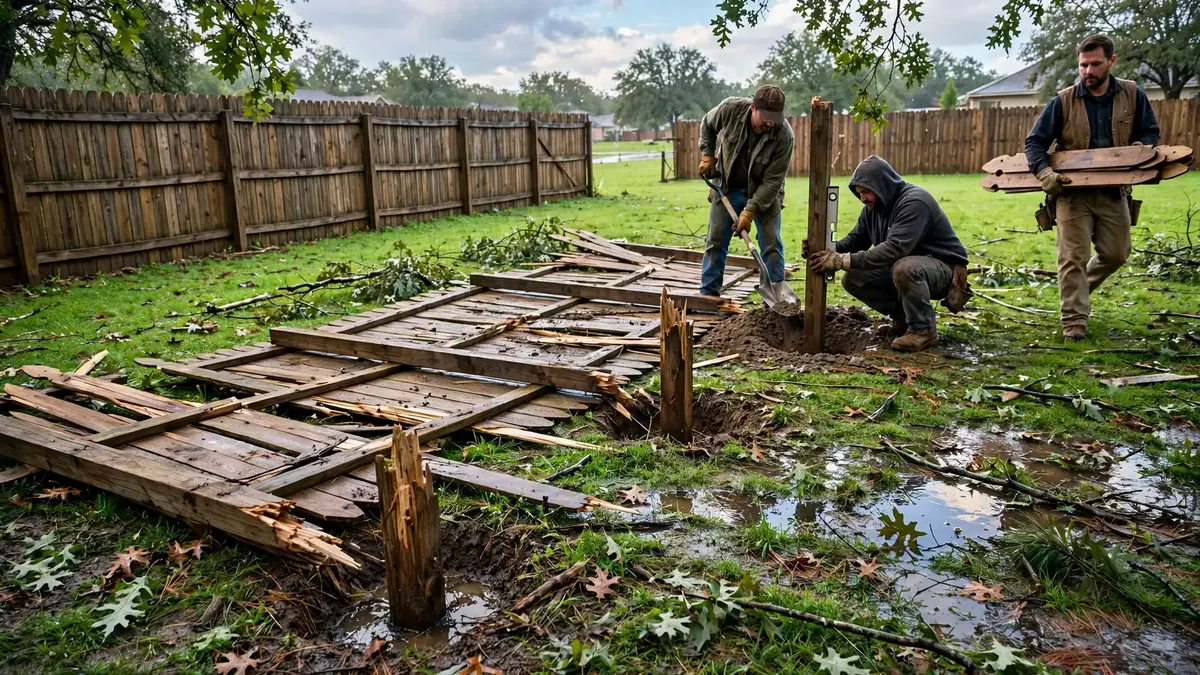
After a strong storm, look at where the fence failed. Downed fence sections are often salvageable if the pickets and rails are intact; it's the posts that usually need replacing.
Temporary bracing with 2x4s can keep pets in for a few days while you wait for a repair crew.
When to Pick Up the Phone
Watch for these around your Tyler property:
- Storm or tree damage
- Sections leaning or swaying
- Sagging between posts
Quick Checks Before the Call
- Note how many posts and feet of fence are affected
- Photograph damaged sections
- Check whether pets can get out
- Mark where vehicles, trailers and animals need to pass
- Note any original features you want to keep or match
Getting Fence Repair in Tyler Started
One call to 877-753-1892 gets the conversation started with a fence repair pro who works around Tyler. Bring your measurements, photos and any HOA requirements. Booking is a phone call away; call today and lock in a time that suits you.
877-753-1892Fence Questions From Tyler Homeowners
Is storm damage to my fence covered by insurance in Tyler?
Often, if wind or a falling tree caused it, though deductibles and policies vary. Photograph the damage and review your policy before repairs. Your fence repair pro can tell you what applies on your specific Tyler property.
What makes a fence last longer in Tyler?
Ask what the fence repair pro expects to fail first on your lot, and how they've built to delay it. A fence on steel posts, kept stained, often outlives two fences built on wood posts.
What should Tyler homeowners know about fence projects?
In Tyler's sandy ground, setting posts and footings deeper makes up for the looser soil. East Texas is Piney Woods country, with sandy and red clay soils, tall pines and hardwoods, and more rain than the rest of North Texas.