
Local Conditions That Shape Fence Installation in Tyler
Tyler is known as the Rose Capital and sits in the Piney Woods of East Texas. Tall pines and hardwoods shade many lots, so fences and decks dry slowly after rain.
Tyler is the Smith County seat, known as the Rose Capital of America. Tyler's older homes often reveal surprises, like buried footings or old posts, once work begins. Like Ore City in the same region, Tyler has to plan around sandy soil.
- City ordinances cover fence height, front-yard placement and sight lines at intersections.
- Wet, slow-drying conditions mean wood at ground level stays damp for days after rain.
Choosing Materials in Tyler
Pine and cedar privacy fences are everywhere, set on treated or steel posts in the sandy soil, with wire and wood rail fences on acreage. On Tyler acreage, distance and animals shape the plan more than looks.
Cedar Privacy Fences in Tyler
Cedar is popular for good reasons: it's lighter than pine, resists insects and rot, and weathers to a silver gray if you don't stain it. On a typical Tyler lot the main decisions are picket style, rail count and whether to add a top cap and trim board for a finished look.
Rot starts where wood stays wet longest, so a small gap between the pickets and the soil does more for lifespan than any single product. City codes in Tyler may set limits that affect your design.
Something to keep in mind: Rain delays are common in the wet spring, so build a little slack into your plans.
Steel Posts vs. Wood Posts
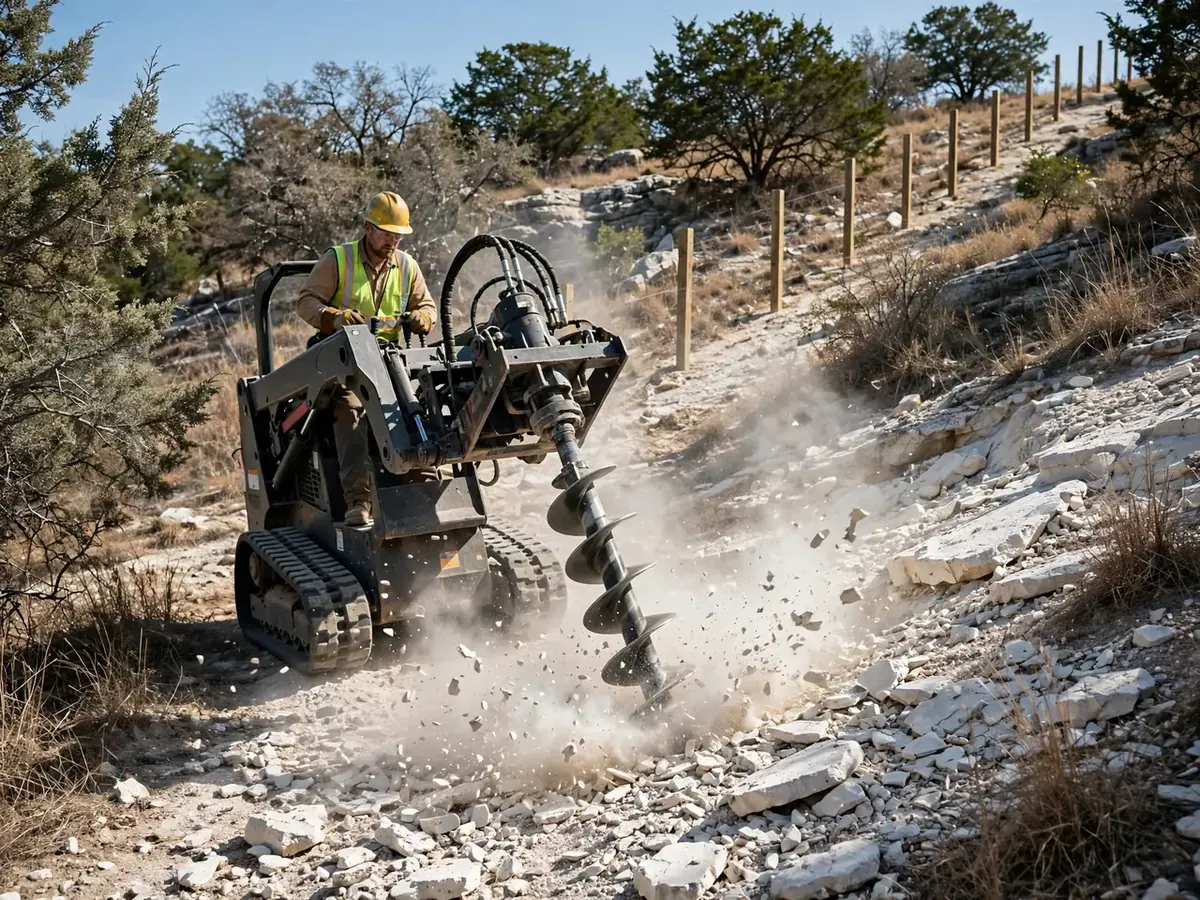
Deeper holes with a concrete footing that's crowned at the top to shed water help any post last longer. In shifting soil and high wind, depth matters as much as the post material.
Steel posts can be painted to match the stain or hidden behind a wood wrap if you don't want them to show. In Tyler, steel posts and treated lumber reduce termite risk.
Vinyl and Composite Fences in Texas Heat
In Texas sun, though, cheaper vinyl can sag or become brittle. If you choose vinyl or composite, ask how the panels handle thermal expansion and wind.
Manufacturer installation instructions often affect coverage, so it's worth confirming they'll be followed. In humid Tyler, pressure-treated or naturally rot-resistant materials make a real difference.
Something to keep in mind: Setting a long line of posts straight and plumb takes practice; many DIY fences wander and lean within a few years.
Ranch, Pipe and Wire Fencing on Acreage
Ask the fence builder how they'll handle long runs and changes in grade. Wire fences cost less per foot but need well-built H-braces at corners and gates to stay tight.
Mixing materials is common: pipe near the house and barn where looks and strength matter, wire along back pastures where distance matters more. Larger Tyler properties often need a mix of fence types for different areas.
Wrought Iron and Aluminum Fences
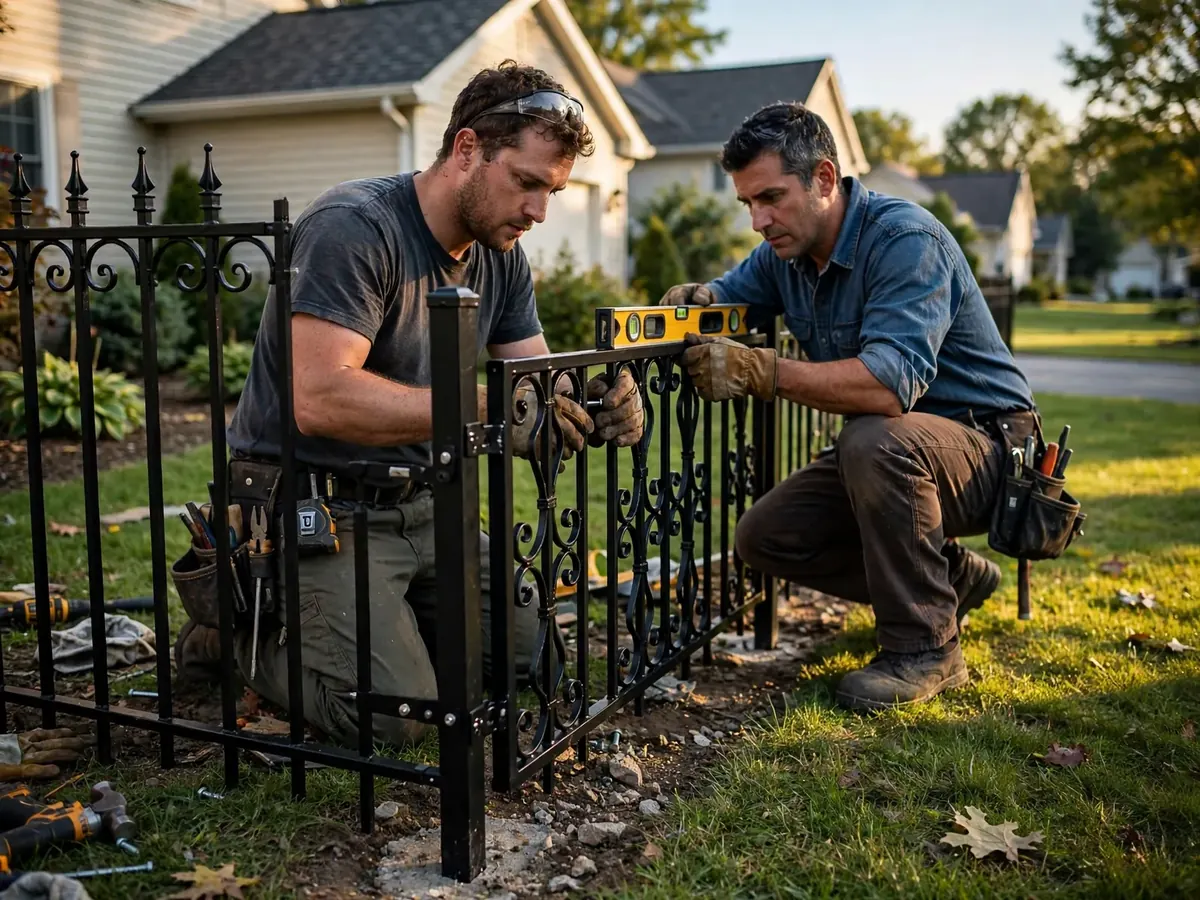
Iron and aluminum fences go up as panels between posts set in concrete. Ornamental aluminum and steel panels are designed with those rules in mind; confirm the requirements with your city.
Ornamental fencing is a good fit where you want security without blocking breezes or views.
A common concern: Ask who handles permits, utility locates and HOA paperwork so nothing falls through the cracks.
Board-on-Board and Shadowbox Styles
Board-on-board overlaps each picket so there's no see-through even after the wood dries out. Standard side-by-side pickets shrink in Texas heat and open small gaps.
Think of board-on-board as overlapping shingles on a roof: the overlap is what keeps the gaps closed as each board moves.
More Fence Questions Around Tyler
Setting Posts in Shifting Clay Soil
Builders who know clay talk about depth and drainage before they talk about pickets; that's a good sign.
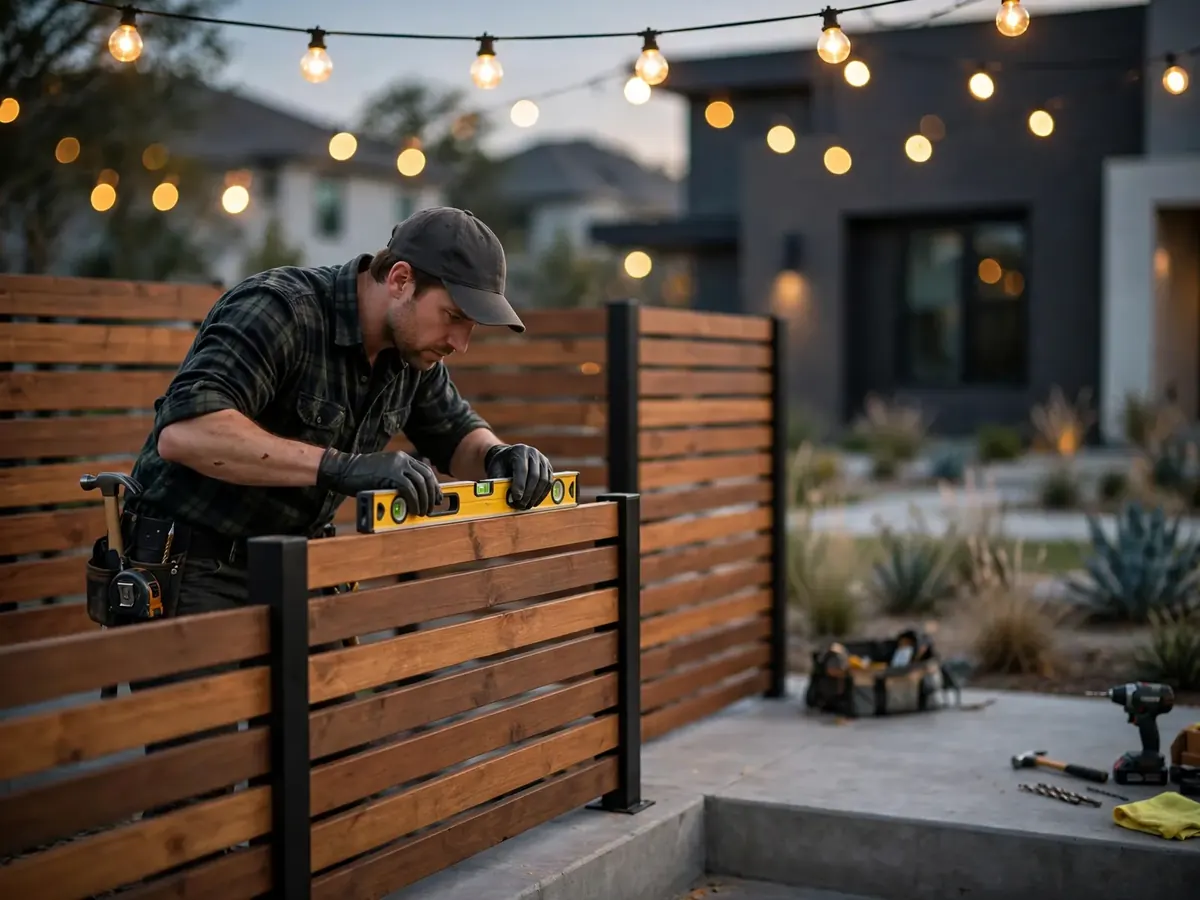
Horizontal and Modern Fence Designs
Mixing materials, such as horizontal cedar with black metal posts, gives a clean architectural look.
HOA Rules, Permits and Property Lines
A survey or plat shows where the property line runs; many homeowners set the fence a few inches inside it to avoid disputes.
When to Pick Up the Phone
Around Tyler, a call usually follows one of these:
- HOA requires an approved style
- Old fence leaning or sagging
- Neighbors replacing a shared fence
Quick Checks Before the Call
- Measure the rough length of fence needed
- Check HOA fence guidelines and stain colors
- Call 811 to have utility lines marked before digging
- Mark where vehicles, trailers and animals need to pass
- Look up your city's height and setback rules, or ask the fence builder to
Getting Fence Installation in Tyler Started
One call to 877-753-1892 gets the conversation started with a fence builder who works around Tyler. Bring your measurements, photos and any HOA requirements. The sooner you call, the sooner your fence work can be scheduled.
877-753-1892Fence Questions From Tyler Homeowners
Are steel posts worth it?
In most of Texas, yes. Galvanized steel posts don't rot or attract termites and resist movement in clay soil better than wood posts. Your fence builder can tell you what applies on your specific Tyler property.
Is a new fence in Tyler worth the cost?
Sticker shock is common, but the biggest savings usually come from choosing the right height and post type, not the cheapest pickets. A cheaper fence that needs new posts in a few years can cost more in the end than a sturdier one built once.
What should Tyler homeowners know about fence projects?
In Tyler's sandy ground, setting posts and footings deeper makes up for the looser soil. Humidity and shade keep wood damp longer, so rot and termites matter more than in drier parts of the state.