
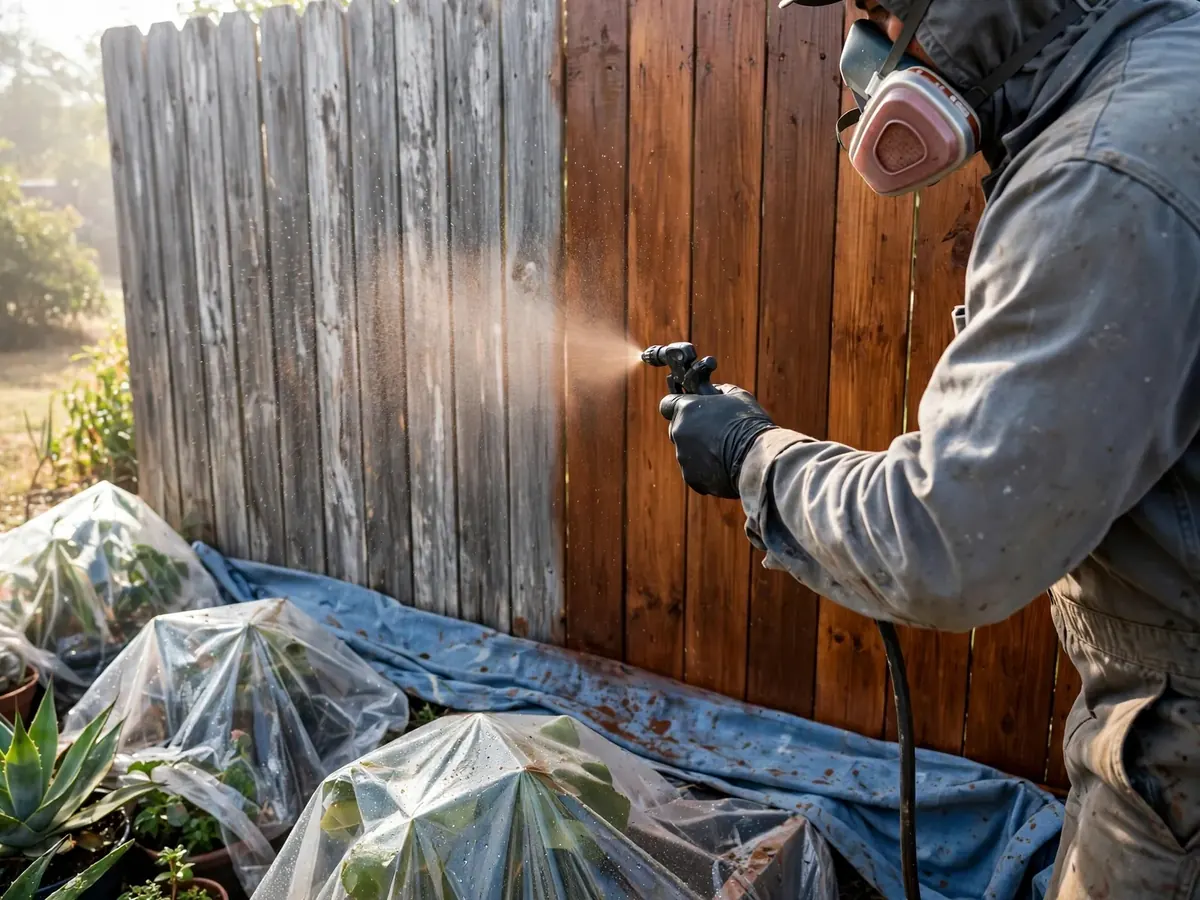
What to Know About Fence Staining in Tyler
Tyler is known as the Rose Capital and sits in the Piney Woods of East Texas. Tyler is the Smith County seat, known as the Rose Capital of America.
Tall pines and hardwoods shade many lots, so fences and decks dry slowly after rain. Freeze events in Tyler can crack concrete that holds water, so drainage helps. Sandy soil is a common thread between Tyler and Longview.
- Municipal codes cover height, setbacks and visibility at corners, which can change a fence plan.
- With humidity this high, rot at the ground line is the usual way wood fences fail.
What Holds Up Around Tyler
Pine and cedar privacy fences are common, with treated posts or steel posts in sandy soil; wire and wood fencing on acreages. In Tyler's sandy ground, setting posts and footings deeper makes up for the looser soil.
Cleaning and Prep Before Stain
Low-pressure washing avoids raising fibers or gouging the wood. Repairs should be done before staining so new boards get the same coat.
Stain sticks to clean wood, not to dirt and mildew, so cleaning is what makes a stain job last. In Tyler, moisture management matters as much as the material itself.
If you're weighing it up: Rain delays are common in the wet spring, so build a little slack into your plans.
When to Restain
Splash some water on the fence. If it beads, the stain is still working. If it soaks in and darkens the wood, it's time for another coat. Spring and fall are popular staining seasons because temperatures are moderate.
Sun-facing sides wear out first, so some homeowners restain those sides more often. Before finalizing plans, confirm Tyler's requirements for height and placement.
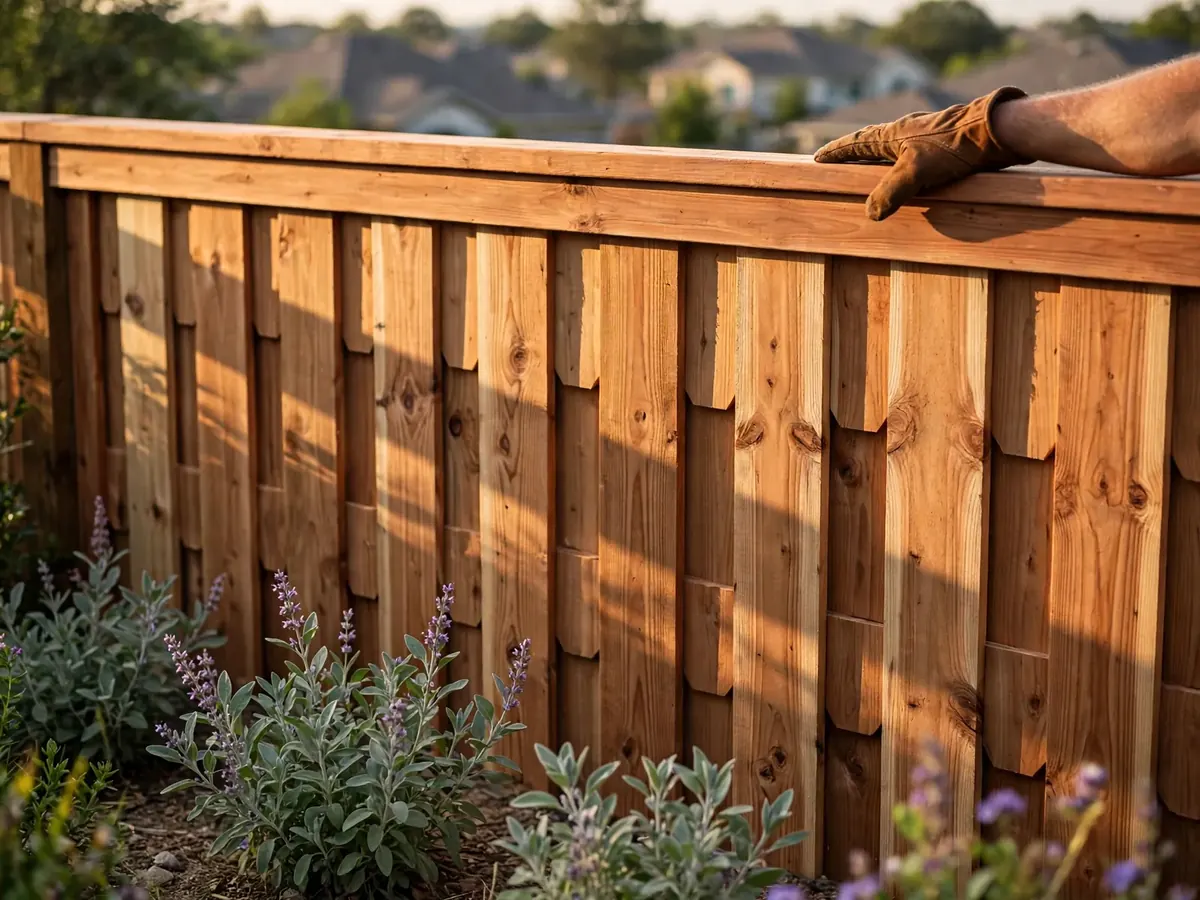
Spraying vs. Brushing
Many homeowners stain only their side. Calm, mild days are best for staining.
Rough-sawn cedar soaks up more stain than smooth boards, so expect to use more product on it.
One practical point: Lifespan comes down to water: keep wood dry at the ground line and the fence lasts.
Why Texas Fences Gray So Fast
Sunlight breaks down lignin at the wood surface, which turns cedar gray and leaves it more prone to cracking and moisture. Unstained cedar in full sun can start to gray within months.
A gray fence can usually be cleaned back to near its original color before staining.
Choosing a Stain Color and Type
Test a stain on a hidden section first. Ask the fence staining pro which products hold up best in your area.
Look at the stain on a few boards in sun and shade before committing.
One practical point: If a neighbor wants to split the cost, get the agreement in writing, even an email, before the old fence comes down.
Common Reasons Tyler Homeowners Call
Around Tyler, a call usually follows one of these:
- Gray, faded wood
- Water soaking in instead of beading
- Splintering pickets
Quick Checks Before the Call
- Note whether you want one or both sides stained
- Check HOA-approved stain colors
- Trim plants back from the fence
- Mark where vehicles, trailers and animals need to pass
- Note any original features you want to keep or match
Getting Fence Staining in Tyler Started
Dial 877-753-1892 to talk to a fence staining pro who works in Tyler. Have your questions ready, from permits to materials, and take notes. Have a question about your fence stain? A quick call is the fastest way to get it answered.
877-753-1892Fence Stain Questions From Tyler Homeowners
How often should a fence be restained?
In Texas sun, many fences need a maintenance coat every two to three years. In Tyler, that comes down to your lot and how the fence stain is built.
Should I build the fence stain myself?
DIY makes the most sense for short runs and simple designs. If you DIY, consider hiring out just the posts and footings, which is where experience matters most.
What should Tyler homeowners know about fence stain projects?
Sandy soil around Tyler drains well but grips footings less firmly, so wider footings help. Humidity and shade keep wood damp longer, so rot and termites matter more than in drier parts of the state.