
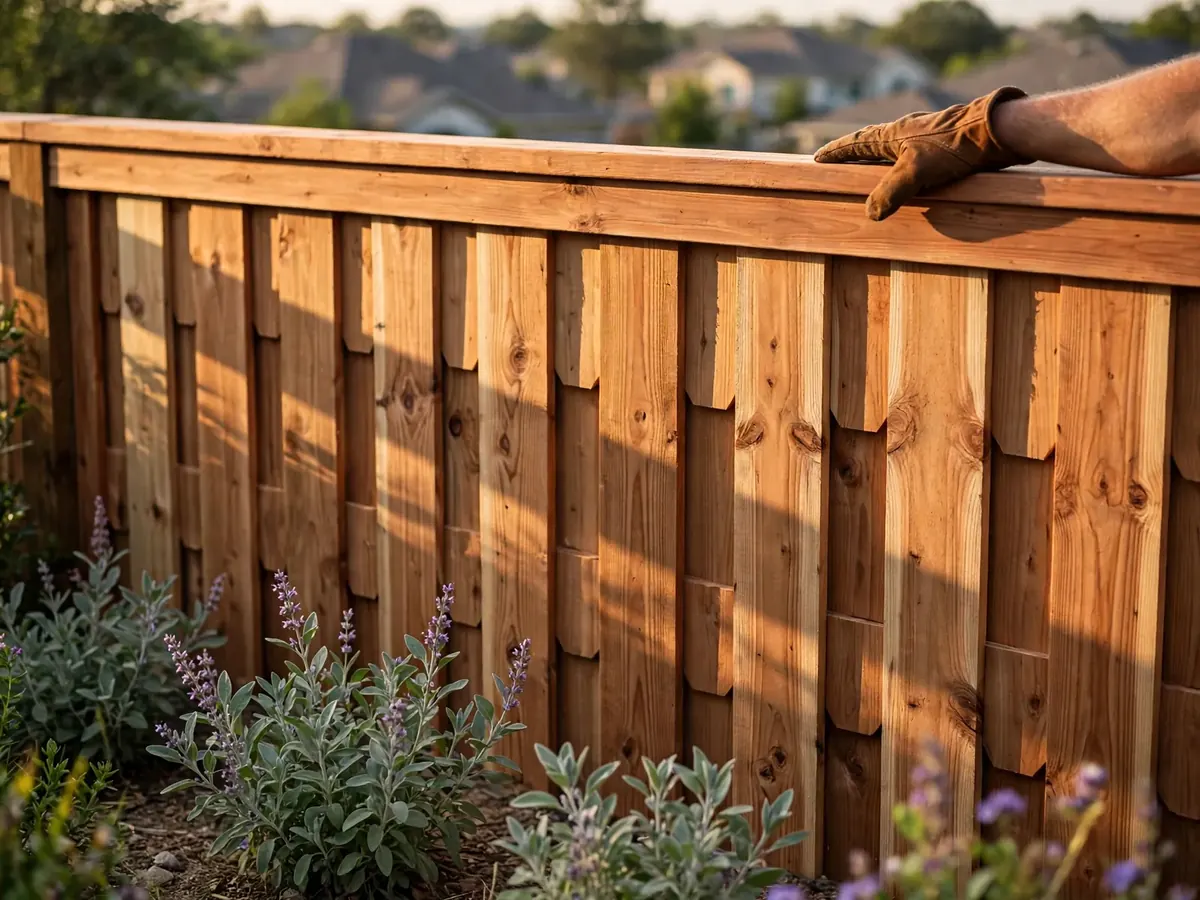
What to Know About Fence Staining in Grapevine
Grapevine sits next to DFW Airport and Grapevine Lake, with a historic Main Street. Housing ranges from early 1900s homes near downtown Fort Worth to newer master-planned communities to the north.
Neighborhoods mix older homes and newer, larger houses. Grapevine's clay is the reason so many local fence stains lean; building deeper avoids joining them. Shifting clay is a common thread between Grapevine and Keller.
- Municipal codes cover height, setbacks and visibility at corners, which can change a fence plan.
- In HOA communities, the approved fence design is often spelled out down to the cap and trim.
Materials That Suit Grapevine
Backyards are mostly cedar privacy; ornamental iron and aluminum handle front yards and pools, and the most upscale areas favor iron with masonry. In established Grapevine neighborhoods, matching the character of the street matters.
Spraying vs. Brushing
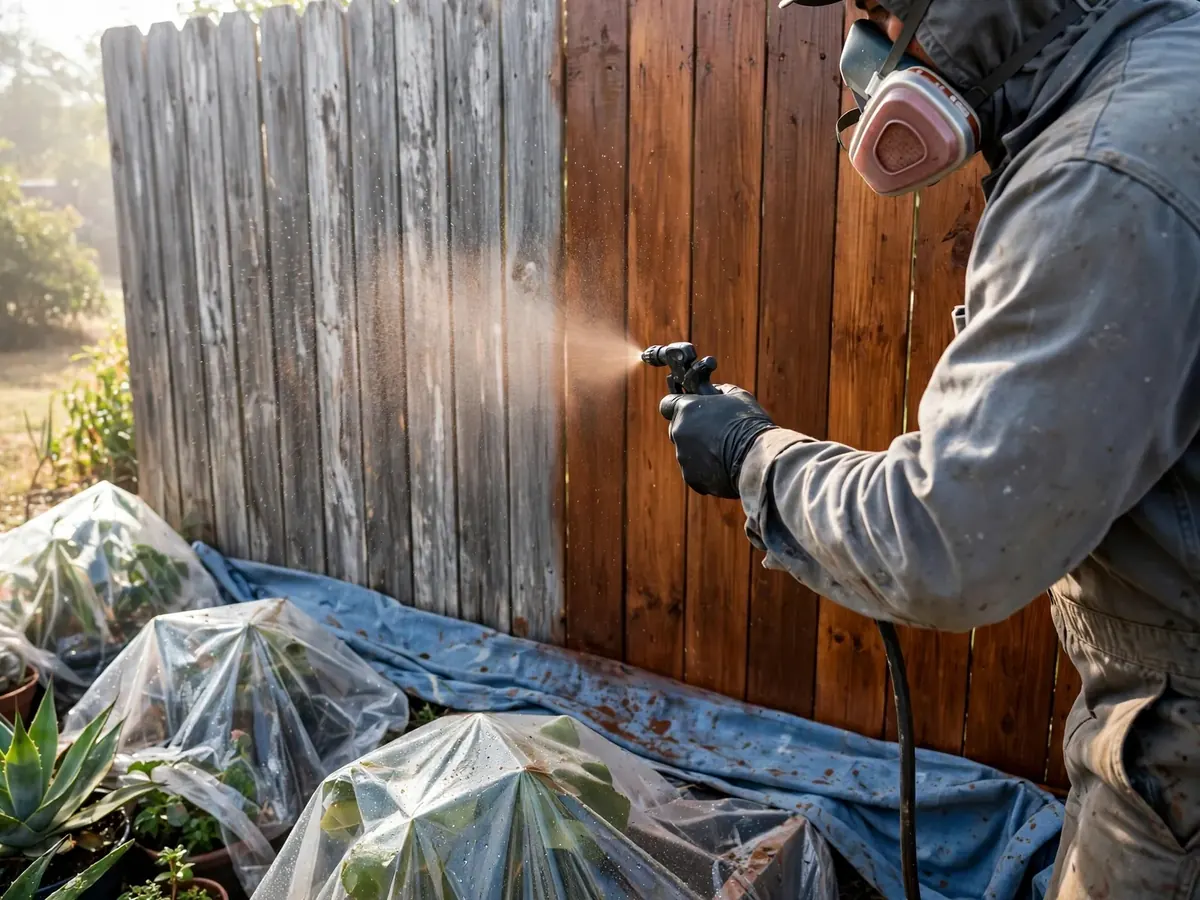
Many homeowners stain only their side. Spraying gets stain into the gaps between pickets that brushes miss.
On windy days spraying wastes stain and risks drift onto cars and houses, so crews often brush or wait. Before finalizing plans, confirm Grapevine's requirements for height and placement.
One practical point: Setting a long line of posts straight and plumb takes practice; many DIY fences wander and lean within a few years.
Cleaning and Prep Before Stain
A wood cleaner or brightener removes gray fibers and restores color before staining. Stain sticks to clean, dry wood.
Masking hardware and gate latches keeps them clean and working. In established Grapevine neighborhoods, matching the character of the street matters.
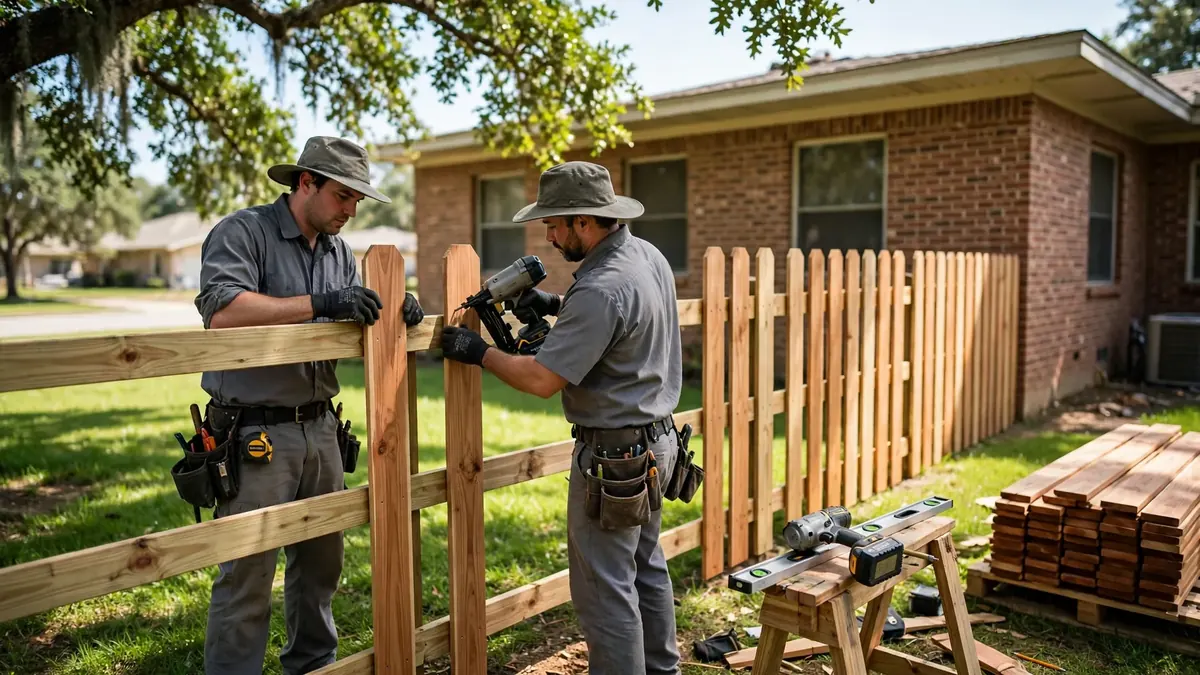
Choosing a Stain Color and Type
Darker stains hide weathering longer but can make a fence hotter to the touch. The same color looks different on new cedar, weathered cedar and pine, and the HOA's sample may not match your fence.
Look at the stain on a few boards in sun and shade before committing. In HOA communities around Grapevine, approval comes before scheduling a crew.
A question many homeowners raise: Price is usually driven by length, height, post type and gates, so a shorter run of a better fence often beats a longer run of a cheaper one.
Why Texas Fences Gray So Fast
The south- and west-facing sides of a fence gray first, because they get the most afternoon sun. Staining those sides more often keeps the whole fence looking even. Fences facing south and west get the most sun and gray fastest.
Graying is mostly cosmetic at first, but once the surface fibers loosen, water soaks in deeper and speeds up rot.
When to Restain
Spring and fall are popular staining seasons because temperatures are moderate. A maintenance coat goes on faster than the first coat because the wood is already protected.
Restaining before the wood turns fully gray takes less prep and less product.
Worth knowing before you call: Lifespan comes down to water: keep wood dry at the ground line and the fence lasts.
When to Pick Up the Phone
Around Grapevine, a call usually follows one of these:
- Splintering pickets
- Mildew or black spots
- Gray, faded wood
Before You Call
- Check HOA-approved stain colors
- Trim plants back from the fence
- Plan to move cars and outdoor furniture
- Notice whether nearby fence stains or the house foundation show signs of soil movement
- Check whether old footings or posts will need to be removed
Getting Fence Staining in Grapevine Started
Give 877-753-1892 a call with your Grapevine address area and a rough idea of the scope. A fence staining pro can explain what the work involves and what to expect next. Call now and get your Grapevine fence stain project moving.
877-753-1892Fence Stain Questions From Grapevine Homeowners
How often should a fence be restained?
Under strong Texas sun, a maintenance coat every two to three years is typical. Your fence staining pro can tell you what applies on your specific Grapevine property.
What if my neighbor shares the fence stain?
Many neighbors are happy to share the cost of a shared fence when asked early. If a neighbor wants to split the cost, get the agreement in writing, even an email, before the old fence comes down.
What should Grapevine homeowners know about fence stain projects?
Spring hail around Grapevine makes it worth choosing materials that are easy to repair. Fort Worth and the Mid-Cities share North Texas clay soils and some of the heaviest spring hail in the state.